# Coffee Tasting & Sensory Training
Develop your palate with the SCA cupping protocol, flavor wheel exercises, and aroma kit drills used by professional cuppers. A practical training manual for hobbyists and aspiring Q-graders alike. Part of The Coffee Encyclopedia, sponsored by PuertoRicoCoffeeShop.com.
# Coffee Cupping: The Professional Tasting Method
## Summary
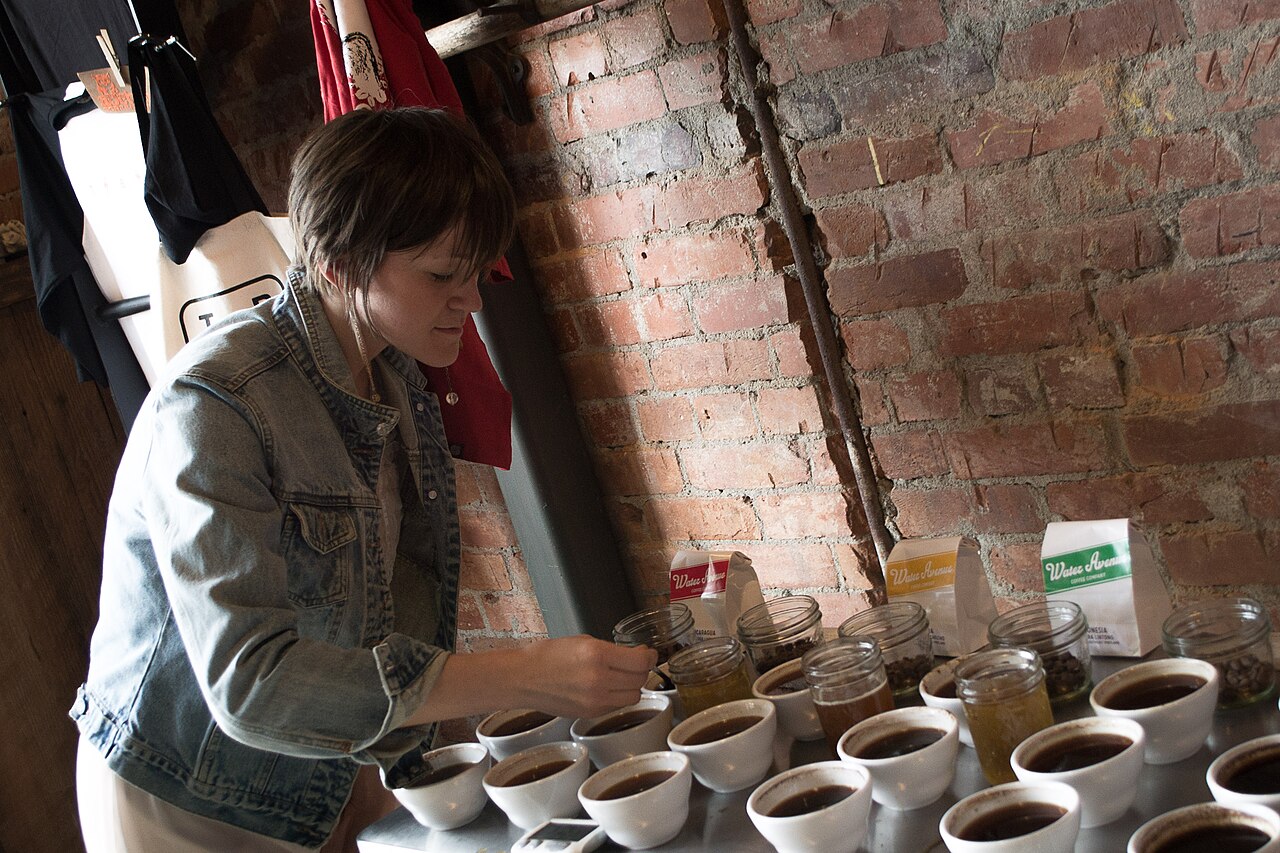
Coffee cupping is the standardized sensory evaluation method used by coffee professionals worldwide to assess quality, identify defects, compare origins, and communicate coffee characteristics using shared vocabulary. Developed over decades and codified by the Specialty Coffee Association (SCA), cupping provides objective methodology for what is fundamentally a subjective experience — tasting coffee. Through precisely controlled preparation, standardized tasting techniques, and numerical scoring on a 100-point scale, cupping enables traders to evaluate coffees before purchase, roasters to develop profiles, competitions to rank coffees, and professionals to communicate across language and cultural barriers. Understanding cupping illuminates how the coffee industry determines quality and how specialty coffee achieves its prices.
## Why Cupping Matters
Before cupping existed as standardized practice, coffee quality evaluation was informal, inconsistent, and nearly impossible to communicate reliably. A buyer in Europe describing a Colombian coffee's characteristics to another buyer in Japan had no shared vocabulary, no standardized preparation, no common reference points. Trade depended heavily on reputation, trust, and samples shipped back and forth.
Cupping changed everything. The standardized method means:
**Objective quality measurement:** A score of 85 points means essentially the same thing in Ethiopia, Colombia, and Japan. Cupping produces comparable quality assessments across the global coffee industry.
**Shared vocabulary:** Terms like "bright acidity," "chocolate notes," "clean cup," and "uniformity" carry specific meanings within cupping protocol, enabling meaningful communication.
**Market pricing:** Specialty coffee pricing depends heavily on cupping scores. Coffees scoring 80+ points command premium prices; coffees scoring below 80 enter commodity markets.
**Quality control:** Producers, exporters, importers, and roasters use cupping to maintain consistency across harvests, lots, and shipments.
**Competitive evaluation:** Coffee competitions (Cup of Excellence, Best of Panama, various specialty competitions) rely on cupping methodology to rank coffees.
**Training and education:** The cupping method provides the foundation for coffee professional training worldwide.
Cupping is the foundational skill that separates coffee professionals from casual enthusiasts. Every major coffee decision — what to buy, how to roast, which origins to promote — depends ultimately on cupping evaluation.
## The SCA Cupping Protocol
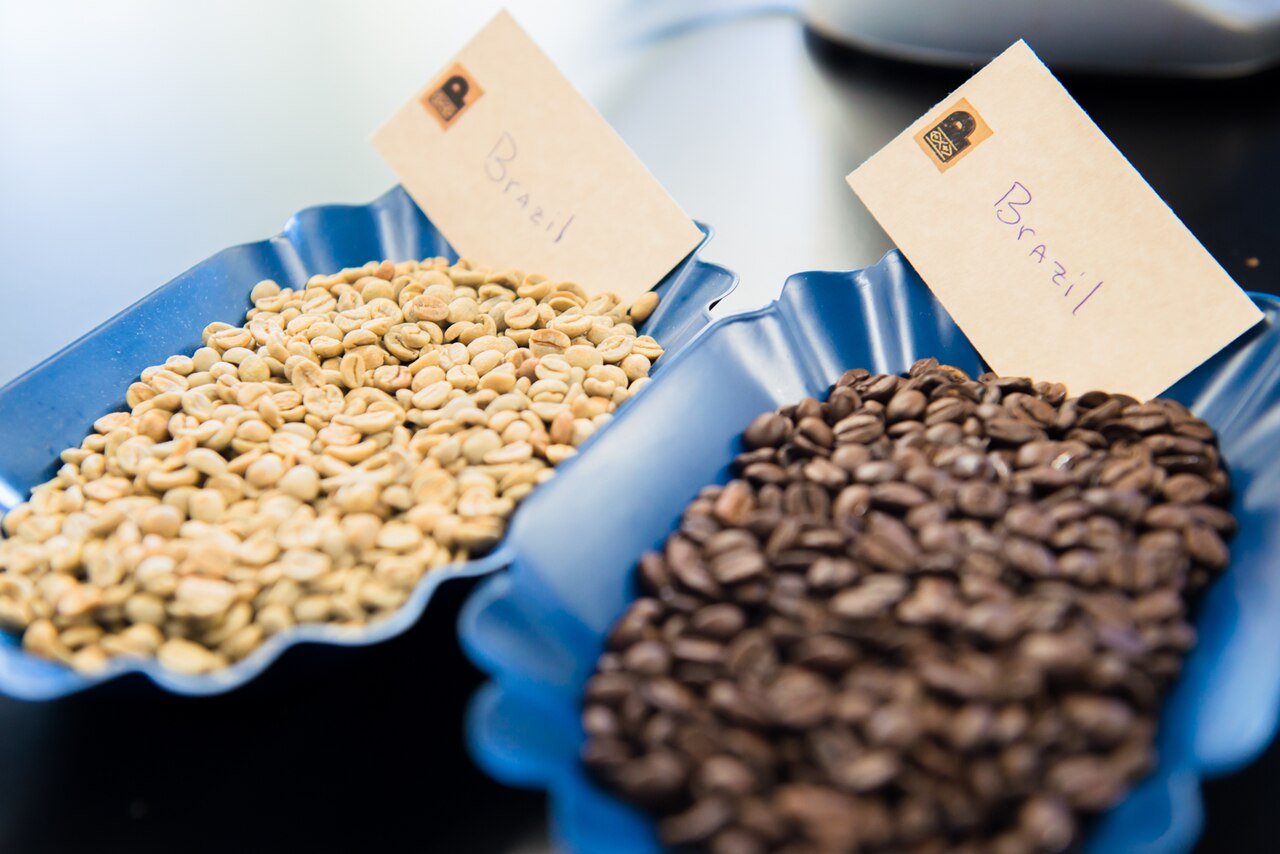
The Specialty Coffee Association (SCA) — the major global coffee industry organization — maintains the most widely adopted cupping protocol. The SCA method has specific standards:
**Coffee sample:**
- 8.25 grams of coffee per cup
- Medium grind, specifically calibrated for cupping (slightly finer than drip, coarser than espresso)
- Freshly ground, used within 15 minutes of grinding
**Water:**
- 150ml per cup (producing 1:18 ratio by weight)
- Temperature: 93°C (200°F) at pour
- Filtered or bottled water (chlorinated tap water affects taste)
**Cups:**
- Identical glass or ceramic cups across evaluation
- Typically 5 cups per coffee sample to evaluate consistency
**Timing:**
- Dry fragrance evaluation: immediately after grinding
- Wet aroma: immediately after water pouring
- Break: 4 minutes after pouring
- First sipping: 8-10 minutes after pouring (when coffee has cooled enough to taste)
- Full evaluation: continues as coffee cools, with multiple sipping passes
**Environment:**
- Neutral, odor-free space
- Proper lighting for visual evaluation
- Quiet to enable focused sensory attention
This precise standardization ensures that results are reproducible — the same coffee cupped under identical protocol by trained tasters produces similar results.
## The Cupping Process Step by Step
*Watch: Cupping Coffee with the SCA Form — Trish Rothgeb, Wrecking Ball Coffee*
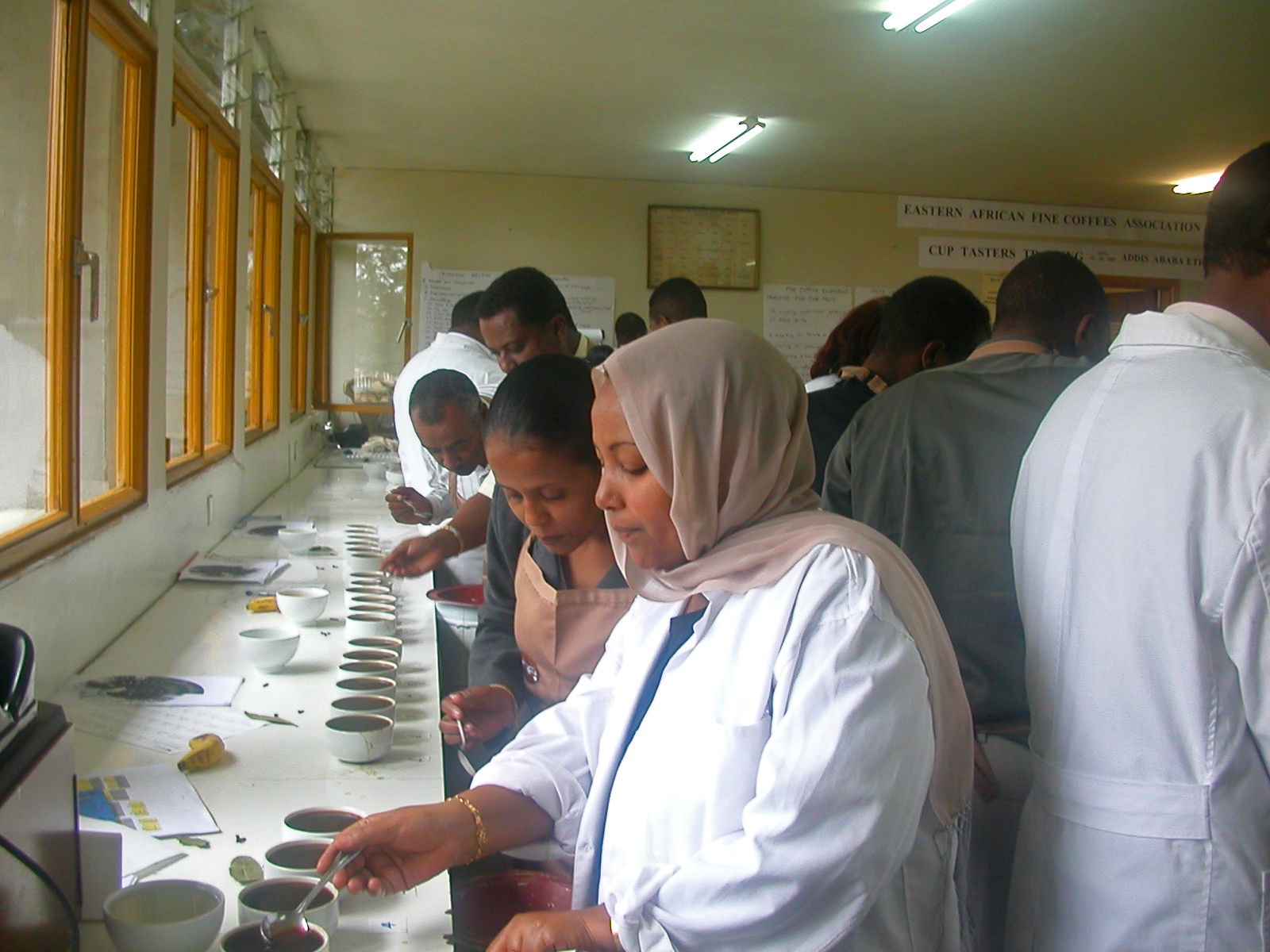
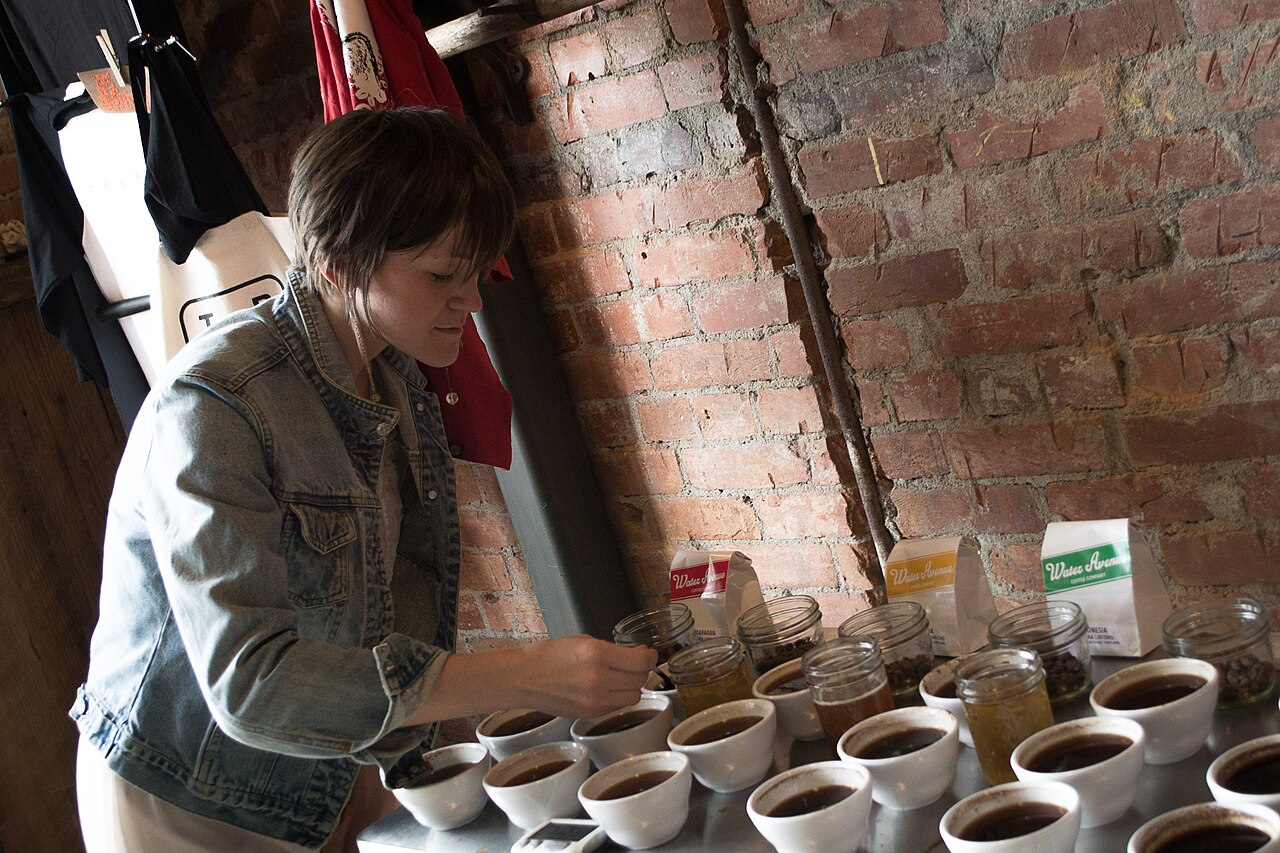
A standard cupping evaluates 4-6 samples (sometimes more) simultaneously, with 5 cups per sample for consistency evaluation. Each step has specific purposes:
### 1. Dry Fragrance
Immediately after grinding, tasters lift each cup and smell the dry coffee grounds. This evaluates:
- Intensity of aroma
- Specific aromatic notes (floral, fruity, spicy, etc.)
- Overall fragrance character
- Presence of any off-odors
Scores are noted on evaluation forms.
### 2. Wet Aroma
Water is poured into each cup, saturating the grounds. Tasters smell the aroma rising from the wet grounds. This evaluates:
- How the aroma transforms with hot water contact
- Additional volatile compounds released by heat
- Any negative notes emerging with heat
### 3. The Break
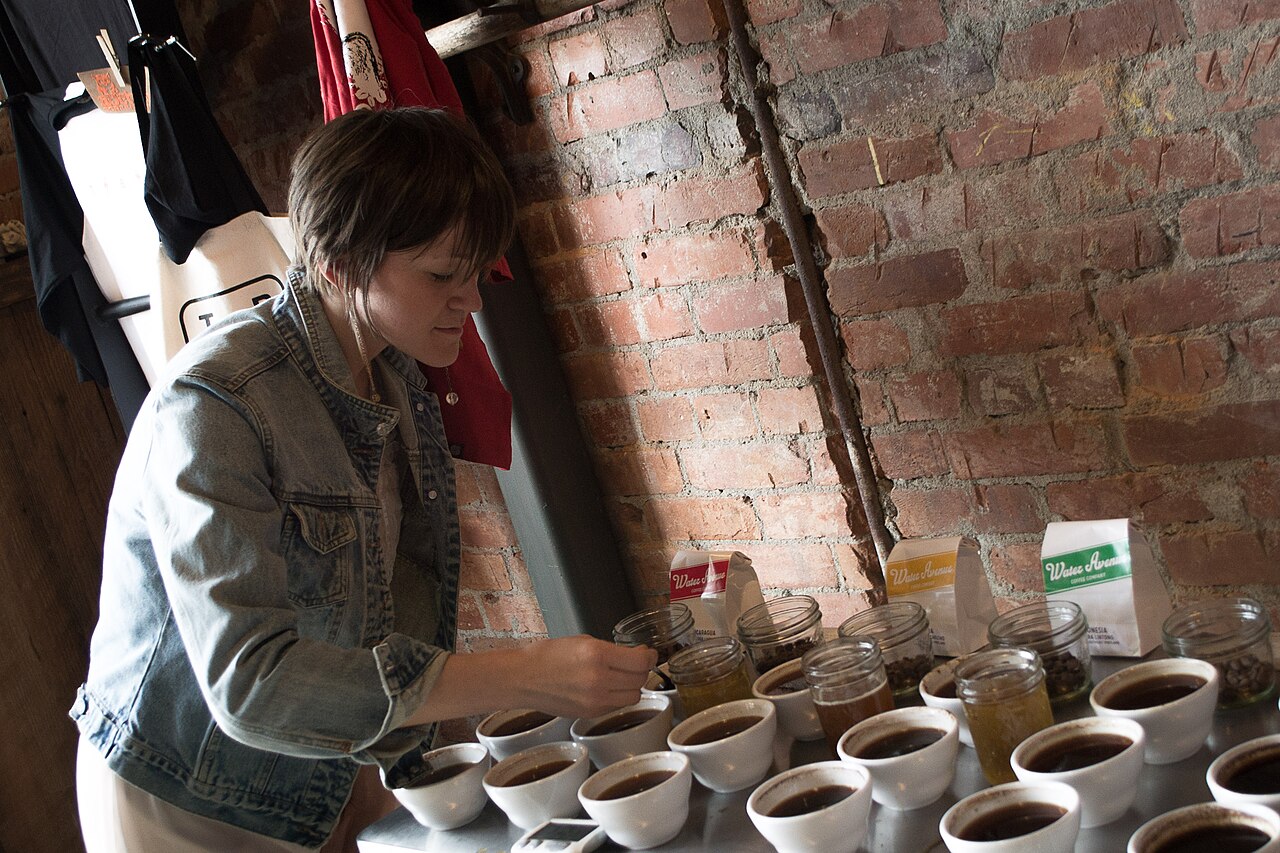
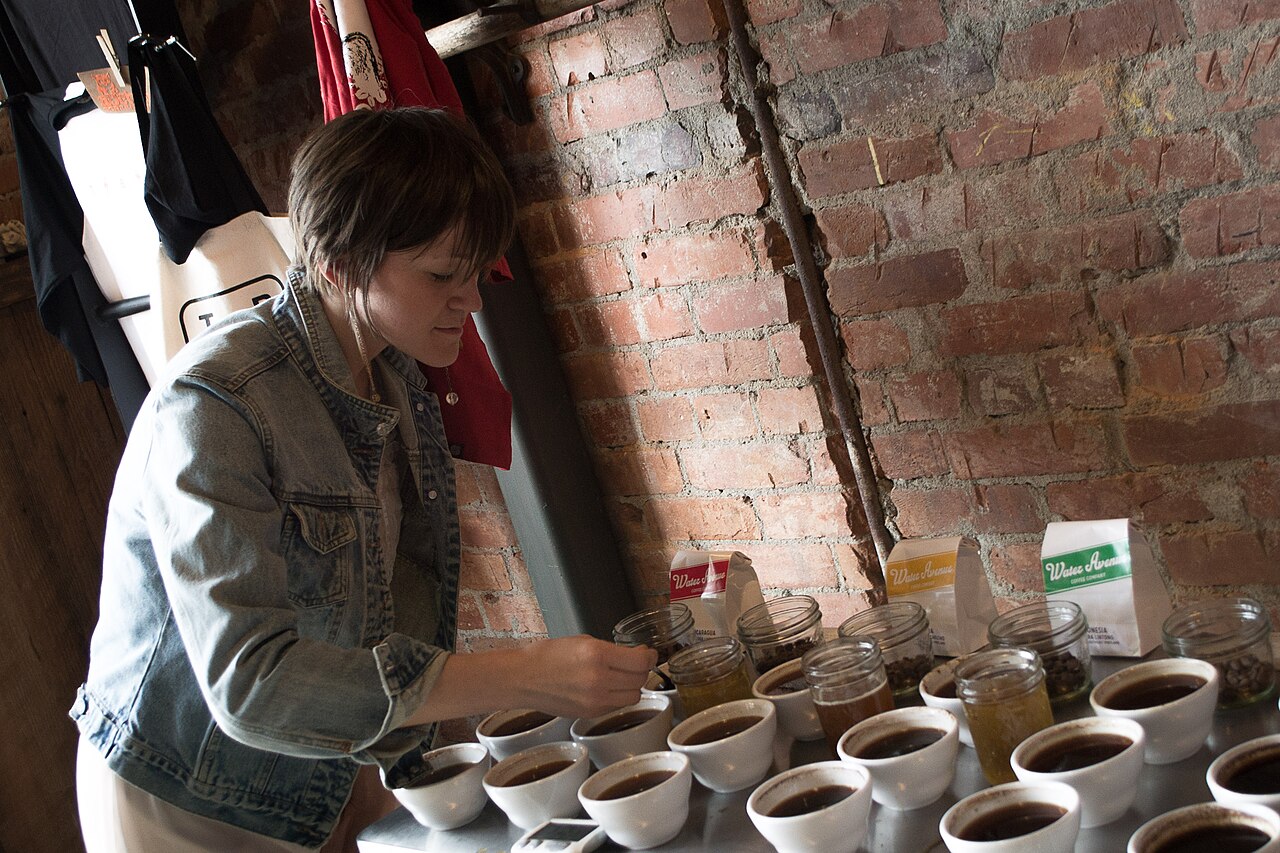
Four minutes after pouring, grounds form a crust on the cup surface. Tasters lean close to each cup, use a cupping spoon to push the crust down and simultaneously inhale deeply. This releases intense aromatic compounds trapped beneath the crust — one of cupping's most revealing moments.
The break smell provides the clearest reading of the coffee's true aromatic character. Experienced cuppers find the most intense and distinctive aromas here.
### 4. Skimming
After the break, floating grounds and foam are skimmed off the surface using a spoon, preparing cups for tasting.
### 5. First Tasting (Hot Phase)
When coffee cools enough to drink (typically 8-10 minutes post-pour), tasting begins. Tasters use cupping spoons to:
**Slurp aggressively:** Loud slurping aerates the coffee, distributes it across the entire palate, and releases aromatic compounds into the retronasal passage (aroma perceived through the nose while tasting).
**Evaluate multiple dimensions:**
- Flavor: specific taste notes
- Acidity: brightness, specific acid character
- Body: mouthfeel, weight, texture
- Balance: how all elements work together
- Sweetness: natural sweetness character
- Uniformity: consistency across the 5 cups of each sample
- Clean cup: absence of defects
- Overall impression
### 6. Extended Tasting (Cooling Phase)
Over 20-45 minutes, tasters return to cups repeatedly as coffee cools. Many characteristics change with temperature:
- Acidity often brightens as coffee cools
- Sweetness intensifies
- Defects become more apparent
- Complex flavors emerge
Complete evaluation requires observing coffee across multiple temperature stages.
### 7. Scoring and Notes
Tasters record numerical scores for each dimension on SCA evaluation forms. Final total establishes the coffee's cupping score on the 100-point scale.
## The 100-Point Scoring Scale
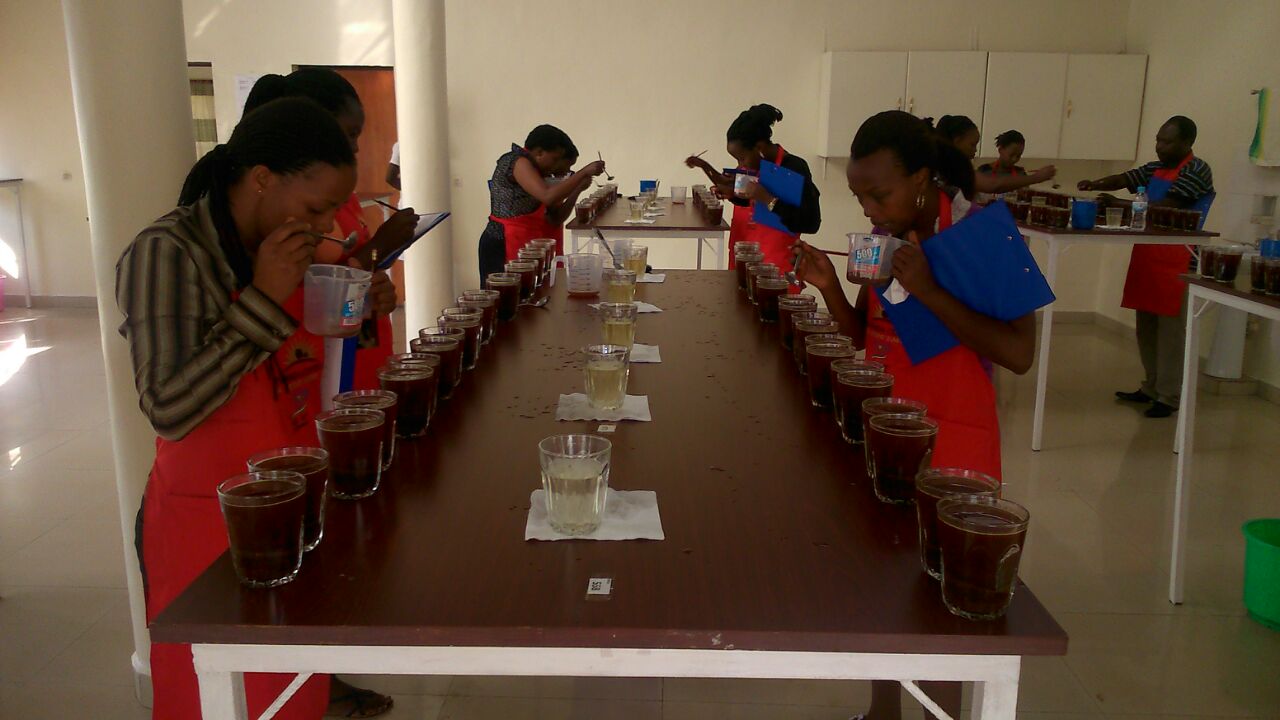
The SCA cupping score ranges from 0-100, though in practice most specialty coffees score between 75-95. Key thresholds:
**90+ (Outstanding):** Exceptional coffees with distinct character, pronounced positive attributes, no detectable defects. Very rare. Includes premium Gesha, top Kenyan AA, exceptional Ethiopian lots, and competition-winning coffees.
**85-89 (Excellent):** Very good specialty coffee with distinctive character. Most premium single origins score in this range. Attracts specialty roasters and premium pricing.
**80-84 (Specialty):** Minimum specialty threshold. Good quality coffee with pleasant attributes and few defects. Qualifies for specialty grade and premium pricing, though modest compared to higher scores.
**75-79 (Premium):** Commercial-grade quality, decent coffee without specialty distinctiveness. Below SCA specialty threshold but acceptable commercial quality.
**Below 75:** Commodity-grade coffee with defects or flat flavor. Enters commodity markets at much lower prices. Not specialty grade.
The difference between 80 and 90 represents enormous quality variation. An 80-point coffee is pleasant. A 90-point coffee is remarkable. A 95+ point coffee is among the finest coffees in the world that year.
Scores translate to pricing: each point above 85 roughly doubles wholesale price in many specialty markets. A 90-point coffee might sell for 4-8 times what an 80-point coffee commands.
## Evaluating Specific Attributes
SCA cupping evaluates multiple specific dimensions, each scored separately:
**Fragrance/Aroma (10 points):** Quality of dry and wet smell. Intensity, complexity, and specific character.
**Flavor (10 points):** Taste characteristics during sipping. Overall impression of what the coffee tastes like.
**Aftertaste (10 points):** Flavor persistence after swallowing. Long, pleasant aftertaste scores high; short or unpleasant scores low.
**Acidity (10 points):** Quality of perceived acidity. Bright, complex, pleasant acidity scores high. Sharp, sour, or flat acidity scores low.
**Body (10 points):** Mouthfeel and texture. Weight, viscosity, and tactile sensations in the mouth.
**Balance (10 points):** How flavor components work together. Well-integrated coffees score high. Elements dominating others lower the score.
**Sweetness (10 points):** Specialty coffees should display natural sweetness. Full sweetness scores 10. Lack of sweetness reduces score.
**Clean Cup (10 points):** Absence of defects or off-flavors. A completely clean cup scores 10. Defects deduct points.
**Uniformity (10 points):** Consistency across the 5 cups of each sample. Identical flavor across all 5 cups scores 10. Variation deducts points.
**Overall (10 points):** Cupper's overall impression, reflecting the total sensory experience and character.
Total: 100 points possible.
These separate scores allow identification of specific strengths and weaknesses. A coffee scoring 85 overall might achieve that through excellent fragrance and acidity despite weaker balance, or through extraordinary balance compensating for less pronounced acidity.
## Coffee Defects
Cupping also identifies coffee defects — specific flaws that reduce quality:
**Primary defects:** Serious defects that disqualify specialty grade entirely
- Sour beans (over-fermentation)
- Black beans (dead or damaged)
- Moldy beans
- Foreign materials
**Secondary defects:** Lesser defects that reduce but don't eliminate quality
- Minor fermentation issues
- Slight discoloration
- Size inconsistency
- Minor processing imperfections
**Cup defects:** Flavor defects apparent in tasting
- Phenolic (carbolic/medicinal flavor from over-fermentation)
- Ferment (off-fermentation character)
- Baggy (taste of storage bags absorbed by coffee)
- Moldy
- Rubber (specific to some robusta preparations)
- Earthy (excessive natural-process flavor)
- Salty or metallic tastes
Specialty coffee standards limit defects strictly. Coffee with primary defects cannot qualify as specialty grade. Secondary defects reduce scoring but may still qualify depending on severity and overall cup character.
## The Q Grader Program
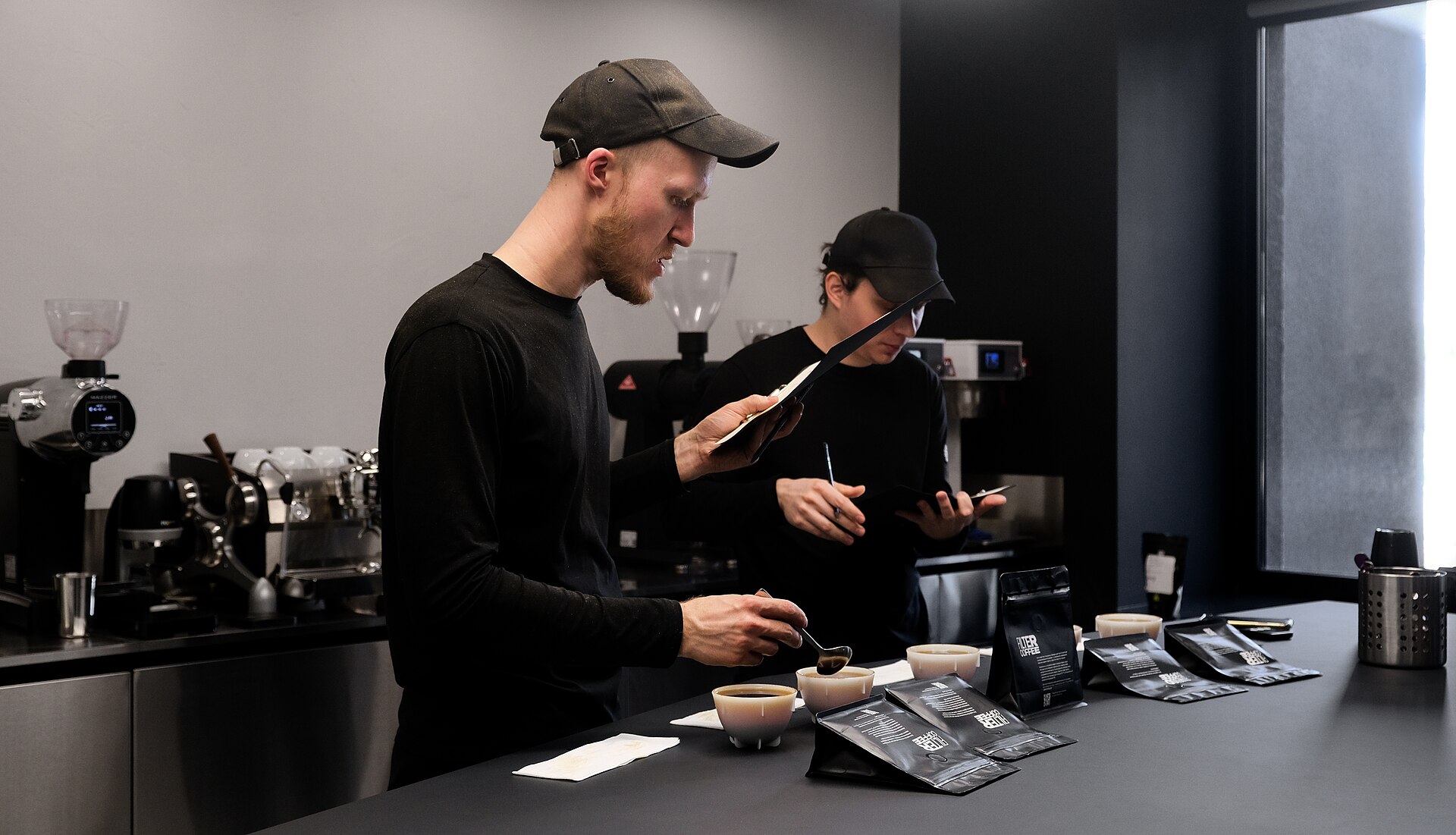
The Coffee Quality Institute (CQI) administers the Q Grader certification — the most respected international credential for cupping expertise. Q Graders are certified coffee professionals who have demonstrated objective cupping skill through rigorous examination.
The Q Grader certification requires:
**Extensive training:** Typically 80+ hours of intensive instruction in sensory science, coffee chemistry, cupping protocols, defect identification, and evaluation methodology.
**Testing:** 22 separate practical and written examinations covering all aspects of cupping and coffee quality assessment.
**Sensory demonstrations:** Tasters must demonstrate ability to identify specific flavors, distinguish between similar cups, identify defects, and score coffees consistently.
**Retesting requirements:** Q Graders must retake certification every 3 years to maintain credentials.
Roughly 10,000 certified Q Graders exist globally as of the mid-2020s. These professionals work as green coffee buyers, quality control managers, competition judges, trainers, and consultants. Their expertise shapes specialty coffee quality assessment worldwide.
Becoming a Q Grader represents serious career commitment. The training is demanding, the examinations are rigorous, and maintaining certification requires ongoing practice and knowledge development. For serious coffee professionals, Q Grader certification is the gold standard of cupping credentials.
## Cupping in Different Contexts
Cupping serves various purposes across the coffee industry:
**Green coffee buying:** Importers cup samples of coffees offered for purchase. Scores determine what to buy and at what price.
**Origin development:** Exporters and producing countries use cupping to identify their highest-quality coffees for premium markets.
**Competition judging:** Cup of Excellence and similar competitions use standardized cupping to rank entries and identify winners.
**Roasting quality control:** Roasters cup every production batch to ensure consistency and identify any issues with specific lots.
**New release cupping:** Roasters cup new coffees before release to identify optimal preparation and market positioning.
**Customer education:** Coffee shops host public cupping events to educate customers about coffee differences and specialty characteristics.
**Research and development:** Coffee research institutions use cupping to evaluate new varieties, processing experiments, and quality improvements.
**Sourcing negotiations:** Buyers and sellers use cupping scores as objective basis for pricing and relationship management.
Beyond industry functions, cupping has emerged as recreational activity for coffee enthusiasts. Home cupping, informal tasting groups, and coffee education programs all adapt professional cupping methodology for broader engagement.
## Modern Cupping Innovations
Contemporary cupping has evolved in several directions:
**Sensory science integration:** Modern cupping incorporates scientific understanding of flavor perception, aroma chemistry, and taste psychology.
**Specialty Coffee Association updates:** The SCA continues refining cupping protocols based on accumulated experience and scientific advancement.
**Technology integration:** Some cupping operations integrate digital evaluation forms, flavor wheel apps, and data analysis tools to enhance traditional methodology.
**Flavor wheel standardization:** The Coffee Taster's Flavor Wheel provides standardized vocabulary for describing coffee flavors, enabling more precise communication.
**Adapted methodologies:** Regional variations of cupping protocols exist — Ethiopia uses traditional methods emphasizing specific local characteristics, for example. Industry-wide SCA standards coexist with regional specialty approaches.
**Competition evolution:** Competition cupping continues developing, with new categories (brewers cup, filter cup, espresso cup) supplementing traditional cupping-table evaluation.
## Cupping Puerto Rican Coffee
Puerto Rican coffee cupping follows international SCA protocols, with the island's coffees evaluated by local and international Q Graders:
**Consistent specialty quality:** Authentic Puerto Rican coffee from quality producers consistently scores in the 82-88 range under proper cupping evaluation.
**Distinctive profile:** Puerto Rican coffee cupping notes typically include chocolate, caramel, nuts, balanced acidity, and medium body. These notes reflect the island's specific terroir and traditional processing approaches.
**Competition presence:** Puerto Rican coffees increasingly appear in international competitions, with some achieving notable scores and recognition.
**Training infrastructure:** Puerto Rican coffee professionals increasingly pursue Q Grader certification and related sensory training, building expertise that supports industry development.
**Buyer engagement:** International specialty buyers regularly cup Puerto Rican coffees as part of their sourcing processes, connecting island producers to global specialty markets.
Puerto Rican coffee's cupping profile supports its specialty positioning and premium pricing. The distinctive characteristic flavors that made Puerto Rican coffee famous in the 19th century remain identifiable through modern cupping evaluation.
## Key Facts
- **Organization:** Specialty Coffee Association (SCA) maintains dominant global cupping protocol
- **Scoring scale:** 0-100 points
- **Specialty threshold:** 80+ points qualifies as specialty coffee
- **Standard preparation:** 8.25g coffee, 150ml water at 93°C, 4-minute steep
- **Number of cups per sample:** 5 (to evaluate uniformity)
- **Tasting method:** Aggressive slurping to aerate and distribute coffee
- **Evaluation dimensions:** 10 separate attributes each scored 0-10 points
- **Professional certification:** Q Grader (administered by Coffee Quality Institute)
- **Certified Q Graders globally:** Approximately 10,000
## Frequently Asked Questions
**Q: What is coffee cupping?**
Coffee cupping is the standardized professional method for evaluating coffee quality through sensory assessment. Using precise preparation protocols and scoring methodology, cupping enables objective comparison of coffees across origins, varieties, and processing methods.
**Q: What is the specialty coffee threshold?**
Coffees scoring 80 or above on the SCA 100-point scale qualify as specialty grade. Below 80 enters commodity markets. The higher the score, the more premium the coffee and the higher the market price.
**Q: Can I cup coffee at home?**
Yes. While professional cupping requires specific equipment and training, home cupping adapts the basic methodology for amateur use. Basic needs: scale, grinder, cupping spoons, identical cups, and careful attention. Many coffee education programs teach cupping to enthusiasts.
**Q: What is a Q Grader?**
A Q Grader is a professional certified by the Coffee Quality Institute to perform expert cupping evaluations. Certification requires extensive training and 22 separate examinations. Q Graders serve as the most qualified cupping professionals in the coffee industry.
**Q: Why do cuppers slurp loudly?**
Aggressive slurping aerates coffee across the entire palate and forces aromatic compounds into the retronasal passage (the nasal connection to the back of the mouth). This distributes coffee to all taste receptors and enables perception of volatile aromatic compounds critical to flavor evaluation.
---
**Related Articles:** Coffee Roasting: The Complete Science Guide | Coffee Processing: Washed, Natural, and Honey Methods Explained | The Gesha Coffee Variety | What is Coffea Arabica? The Noble Coffee Species
**[BUY AUTHENTIC PUERTO RICO COFFEE →](https://puertoricocoffeeshop.com)**
*Part of The Coffee Encyclopedia — Sponsored by [PuertoRicoCoffeeShop.com](https://puertoricocoffeeshop.com).*
# The Coffee Flavor Wheel: How Professionals Describe Coffee Taste
## Summary
The Coffee Flavor Wheel is a standardized vocabulary tool used by coffee professionals worldwide to describe the taste, aroma, and sensory characteristics of coffee. Developed and refined over decades, and substantially updated in 2016 through collaboration between the Specialty Coffee Association and World Coffee Research, the flavor wheel organizes over 100 specific taste and aroma descriptors into hierarchical categories — from broad (fruity, sweet, nutty) to highly specific (jasmine, dried apricot, milk chocolate). Understanding the flavor wheel enables anyone — professional or amateur — to communicate coffee experiences using precise, shared vocabulary rather than vague terms like "good" or "strong." The wheel transforms coffee tasting from subjective guesswork into meaningful sensory communication.
## Why a Flavor Wheel?
Before standardized vocabulary existed, describing coffee was frustratingly imprecise. A cupper in Colombia might describe a coffee as "muy aromático con notas dulces," while a buyer in Japan might describe the same coffee entirely differently. Communication between coffee professionals was difficult; communication with consumers was nearly impossible.
The flavor wheel solved several problems simultaneously:
**Shared vocabulary:** Professionals worldwide use the same specific terms with agreed meanings. "Jasmine" means the same flower aroma whether described by a Kenyan exporter, an Italian roaster, or an American coffee shop owner.
**Hierarchical precision:** Tasters can describe coffee at whatever level of specificity suits their context — broad ("fruity") for general consumers, specific ("green apple") for technical discussion.
**Training framework:** The wheel provides structured vocabulary that coffee professionals can learn systematically, developing increasingly refined palates.
**Consumer accessibility:** The wheel translates technical sensory experience into language consumers can understand and use, making specialty coffee more approachable.
**Quality communication:** Specific descriptors enable meaningful quality conversation. "This coffee has a jasmine floral note and stone-fruit acidity" communicates far more than "this coffee is good."
The flavor wheel is now indispensable infrastructure for specialty coffee. Without it, modern coffee culture as we know it — with its emphasis on origin character, variety expression, and sensory education — couldn't exist.

## The 2016 Redesign
The modern Coffee Taster's Flavor Wheel emerged from collaboration between the Specialty Coffee Association (SCA) and World Coffee Research (WCR), published in 2016. This update replaced an earlier SCAA wheel from 1995 that had become outdated.
Key features of the 2016 wheel:
**Scientific grounding:** The new wheel was built on the Sensory Lexicon developed by World Coffee Research — a comprehensive scientific study cataloguing actual sensory characteristics of coffee measured using controlled analytical methods.
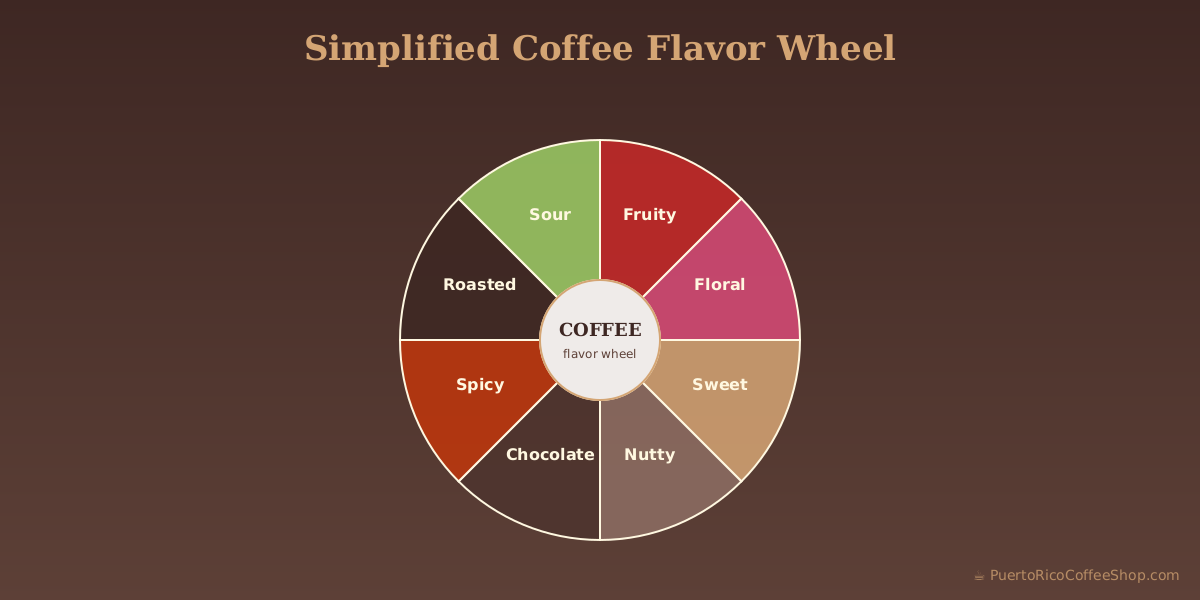
**Hundreds of descriptors:** Over 100 specific taste and aroma terms organized hierarchically across 9 major categories.
**Visual design:** The circular wheel layout allows quick visual navigation from broad categories to specific descriptors. Color coding matches natural associations (fruits show as fruit colors, etc.).
**Accessibility:** Available free online and in print, enabling universal adoption across the coffee industry.
**Translation into multiple languages:** Professional translations enable global use.
The 2016 wheel represents the current gold standard for coffee sensory vocabulary and is used by coffee education programs worldwide, including Q Grader certification training.
## The Nine Main Categories
The flavor wheel organizes coffee sensory characteristics into 9 major categories, each branching into specific descriptors:
### 1. Fruity
Fruit aromas and flavors, further divided into:
- **Berry:** Blackberry, raspberry, blueberry, strawberry
- **Dried fruit:** Raisin, prune, date, fig
- **Other fruit:** Apple, pear, peach, apricot, pineapple, grape, orange, pomegranate
- **Citrus fruit:** Lemon, lime, grapefruit
- **Stone fruit:** Cherry, peach, apricot, plum
Fruit notes are particularly associated with:
- Ethiopian coffees (berry, stone fruit, tropical)
- Natural-processed coffees (dried fruit, winey fruit)
- Central American coffees (apple, pear, citrus)
- Kenyan coffees (black currant, blackberry)
### 2. Sour/Fermented
Characteristics related to acidity or fermentation:
- **Sour:** Sour aromatics
- **Alcohol:** Winey, whiskey, fermented
- **Fermented:** Overripe
Appropriate fermentation produces pleasant sour and alcohol notes. Excessive fermentation produces off-flavors.
### 3. Green/Vegetative
Plant-based flavor notes:
- **Olive oil:** Specific oily-green character
- **Raw:** Unripe, green flavors
- **Green/vegetative:** Grass, pea-pod, herbaceous
- **Beany:** Bean-like
These notes can be either positive (specific Ethiopian styles) or negative (underdevelopment in roasting).
### 4. Other
Miscellaneous descriptors that don't fit other categories:
- **Papery/musty:** Dried, stale, moldy
- **Chemical:** Medicinal, rubber, petroleum, skunky
Most descriptors in this category indicate defects.
### 5. Roasted
Flavor compounds developed during roasting:
- **Pipe tobacco:** Tobacco-like character
- **Tobacco:** Fresh tobacco
- **Burnt:** Acrid, smoky, burnt
- **Smoky:** Ashy, smoky
- **Brown (roast):** Bread, malt, grain
These notes derive from roast development rather than origin character.
### 6. Spices
Spice aromas and flavors:
- **Pungent:** Peppery, sharp
- **Pepper:** Black pepper
- **Brown spice:** Anise, nutmeg, cinnamon, clove
Spice notes appear in many specialty coffees, particularly Ethiopian and Yemen origins.
### 7. Nutty/Cocoa
Nut and cocoa-related flavors:
- **Nutty:** Peanut, hazelnut, almond
- **Cocoa:** Dark chocolate, chocolate, cocoa
Very common descriptors for Latin American coffees, particularly Brazilian, Colombian, and Puerto Rican.
### 8. Sweet
Sweetness-related notes:
- **Brown sugar:** Molasses, maple, caramel, honey
- **Vanilla:** Vanillin
- **Vanillin:** Specific vanilla compound
- **Overall sweet:** General sweetness
- **Sweet aromatics:** Fragrant sweetness
Sweetness is a desirable quality in specialty coffee; natural sweetness indicates proper development without excessive roasting.
### 9. Floral
Flower aromas:
- **Black tea:** Dark tea aromatics
- **Floral:** Chamomile, rose, jasmine
Floral notes are particularly associated with Ethiopian coffees, Gesha variety, and lightly roasted high-altitude arabicas.
## Reading the Wheel
*Watch: Explaining the SCA Coffee Taster's Flavor Wheel*
The flavor wheel is designed to be read from inside outward:
**Center:** Broad basic categories (Fruity, Floral, etc.)
**Middle ring:** More specific subcategories (Berry, Stone Fruit, etc.)
**Outer ring:** Highly specific descriptors (Blackberry, Peach, etc.)
Tasters can describe coffees at whichever level suits their purpose. A beginner might simply note "fruity." An experienced cupper might specify "blackberry with stone fruit complexity." An expert might identify "Kenyan-style blackcurrant with raspberry undertones."
This flexibility makes the wheel useful for all levels of coffee engagement.
## Common Descriptors by Origin
Different coffee origins tend toward characteristic flavor descriptors:
**Ethiopia:**
- Primary: Floral (jasmine, bergamot), stone fruit (peach, apricot), citrus
- Secondary: Berry (blueberry, strawberry), black tea, herbaceous
- Character: Complex, tea-like, aromatic
**Kenya:**
- Primary: Black currant, blackberry, tomato, wine
- Secondary: Grapefruit, complex acidity
- Character: Bold, bright, dramatic
**Colombia:**
- Primary: Chocolate, caramel, apple, pear
- Secondary: Citrus, brown sugar, balanced acidity
- Character: Clean, balanced, approachable
**Brazil:**
- Primary: Chocolate, nuts, milk chocolate, peanut
- Secondary: Caramel, brown sugar, low acidity
- Character: Full-bodied, sweet, mild
**Central America (general):**
- Primary: Chocolate, caramel, citrus, nuts
- Secondary: Apple, honey, balanced acidity
- Character: Clean, balanced, versatile
**Indonesia (particularly Sumatra):**
- Primary: Earth, cedar, tobacco, dark chocolate
- Secondary: Full body, low acidity
- Character: Heavy, earthy, distinctive
**Puerto Rico:**
- Primary: Chocolate, caramel, nuts (almond, hazelnut)
- Secondary: Toffee, balanced acidity, medium body
- Character: Rich, smooth, traditional
**Panama (especially Gesha):**
- Primary: Jasmine, bergamot, tropical fruit
- Secondary: Honey, tea-like, extraordinary complexity
- Character: Ethereal, delicate, premium
These patterns aren't absolute — variety, processing, and specific farm conditions create exceptions — but they represent typical expectations for each origin's general character.
## The Science of Taste Descriptors
The flavor wheel's descriptors aren't arbitrary — they correspond to specific chemical compounds in coffee:
**Fruity notes:** Result from specific esters, aldehydes, and other volatile compounds present in coffee beans or developed during processing/roasting.
**Floral notes:** Linalool, geraniol, and related compounds (also responsible for floral notes in jasmine tea, roses, and other floral products).
**Chocolate notes:** Develop through Maillard reactions during roasting; related to similar compounds in actual cocoa.
**Caramel/brown sugar notes:** From caramelization of coffee's natural sugars during roasting.
**Nutty notes:** Related to pyrazines and furans developed during roasting.
**Citrus notes:** Citric acid and related compounds in the coffee itself.
**Berry notes:** Various esters and volatile compounds, often emphasized by certain processing methods.
This chemical basis explains why trained tasters can identify specific descriptors consistently — they're actually detecting measurable compounds, not just making up impressions.
## Types of Acidity
Acidity is one of coffee's most important sensory dimensions. The flavor wheel identifies different acid types, each with distinct character:
**Malic acid:** Found in apples. Gives coffee a crisp, apple-like brightness. Common in Central American and some African coffees.
**Citric acid:** Found in citrus fruits. Produces sharp, clean, bright acidity. Ethiopian, Kenyan, and Costa Rican coffees often feature citric acid character.
**Phosphoric acid:** Produces a clean, lingering sweetness with acidity. Present in most specialty coffees.
**Acetic acid:** Can be positive (wine-like) or negative (vinegary) depending on concentration and context.
**Tartaric acid:** Grape-like, wine-related. Some naturally-processed coffees show tartaric character.
**Quinic acid:** Develops from chlorogenic acid breakdown. Can contribute bitterness if over-extracted.
**Chlorogenic acids:** Primary acids in green coffee. Degrade during roasting to produce quinic and related compounds. Higher concentrations in lighter roasts.
Trained cuppers distinguish between these acid types, describing coffees with specific language — "bright malic acidity" vs "sharp citric acidity" — that conveys precise information about flavor character.
## Mouthfeel Vocabulary
Beyond taste and aroma, cuppers evaluate mouthfeel — the tactile experience of coffee on the palate. Mouthfeel descriptors include:
**Body weight:**
- **Light body:** Tea-like, thin, delicate
- **Medium body:** Standard coffee weight
- **Full body:** Heavy, substantial, coating
- **Heavy body:** Thick, intense, approaching syrupy
**Texture:**
- **Clean:** Smooth without interference
- **Silky:** Delicate, refined
- **Creamy:** Milk-like smoothness
- **Syrupy:** Thick, viscous
- **Oily:** Lipid-rich, characteristic of dark roasts
- **Dry:** Astringent, mouth-drying
- **Gritty:** Particle-containing (problematic)
**Tactile notes:**
- **Velvet/velvety:** Luxurious smooth texture
- **Effervescent:** Slightly fizzy character
- **Cotton-mouth:** Dry, excessive astringency (negative)
- **Metallic:** Metal-taste tactile sensation (negative)
Mouthfeel complements taste and aroma to create the complete sensory experience. Two coffees with identical flavor notes can differ significantly in mouthfeel, producing quite different drinking experiences.
## Flavor Wheel in Practice
How professionals actually use the flavor wheel:
**Cupping sessions:** Tasters reference the wheel to identify specific descriptors for evaluation forms. Finding the right words for sensory experiences becomes systematic rather than groping.
**Customer education:** Coffee shops use flavor wheels to explain coffee characteristics to interested customers. Visual wheel prompts help customers articulate their preferences.
**Roasting development:** Roasters cup developmental batches using flavor wheel vocabulary to precisely identify what's changing and what to adjust.
**Green coffee buying:** Importers use wheel-based vocabulary to document coffees accurately for communication with roaster customers.
**Training:** New coffee professionals study the wheel extensively as part of sensory development.
**Competition documentation:** Cupping competitions use wheel vocabulary for standardized scoring notes.
**Barista communication:** Baristas use wheel descriptors to explain coffees to customers and to colleagues.
The wheel transformed coffee from an industry speaking in vague impressions to one communicating with precise shared vocabulary. This precision enables specialty coffee's commercial and cultural success.
## Developing Your Own Palate
Using the flavor wheel actively develops coffee tasting skills:
**Start broad:** Begin with basic categories (fruity, nutty, floral) before attempting specific descriptors.
**Taste comparatively:** Tasting multiple coffees side-by-side reveals differences that single tastings miss.
**Reference familiar flavors:** Connect coffee notes to foods you know — "this is like the apple in a pie" or "this reminds me of my grandmother's blackberry jam."
**Practice consistently:** Regular tasting develops vocabulary and palate over months and years.
**Read professional notes:** Specialty coffee packaging, roaster websites, and coffee reviews provide examples of wheel vocabulary in use.
**Attend cuppings:** Public cuppings at specialty coffee shops offer excellent palate development opportunities.
**Trust your perceptions:** The wheel provides framework, but you taste with your own palate. Your perceptions are valid even when they don't match others' exactly.
Coffee tasting skill develops gradually through practice and engagement. The flavor wheel serves as structural scaffold that accelerates palate development for motivated learners.
## Cultural and Sensory Variations
Taste perception isn't purely objective — cultural, linguistic, and personal factors shape how we experience and describe flavors:
**Cultural references:** Specific descriptors resonate differently across cultures. "Maple" means much to North American tasters but may be unfamiliar to Southeast Asian tasters.
**Food memory:** Our flavor vocabulary draws from foods we've experienced. A taster who has eaten blackberry jam easily identifies blackberry notes; a taster who hasn't must learn this association.
**Language structure:** Different languages emphasize different sensory dimensions. Some languages have extensive olfactory vocabulary; others don't.
**Individual variation:** Genetic differences affect taste perception. Some people taste certain compounds more intensely than others.
**Training:** Palate development changes perception. Trained cuppers genuinely perceive more distinct flavor elements than untrained drinkers.
These variations mean flavor wheel use is never purely objective. The wheel provides vocabulary framework while human perception retains inherent variability. Coffee industry practice accommodates this through multiple tasters evaluating same coffees, scoring consistency evaluation, and ongoing calibration of Q Graders across regions and years.
## Key Facts
- **Current version:** 2016 Coffee Taster's Flavor Wheel (SCA + World Coffee Research)
- **Previous version:** 1995 SCAA Coffee Flavor Wheel
- **Number of descriptors:** 100+
- **Main categories:** 9 (fruity, sour/fermented, green/vegetative, other, roasted, spices, nutty/cocoa, sweet, floral)
- **Usage:** Standard across specialty coffee industry globally
- **Available:** Free online through SCA and WCR
- **Scientific basis:** World Coffee Research Sensory Lexicon
- **Translation:** Available in multiple languages
## Frequently Asked Questions
**Q: What is the Coffee Flavor Wheel?**
The Coffee Flavor Wheel is a standardized vocabulary tool used to describe coffee taste and aroma characteristics. Organized in circular format with hierarchical categories, it provides specific terms for over 100 flavor and aroma descriptors used by coffee professionals worldwide.
**Q: Who developed the modern flavor wheel?**
The current 2016 Coffee Taster's Flavor Wheel was developed through collaboration between the Specialty Coffee Association (SCA) and World Coffee Research (WCR), based on WCR's Sensory Lexicon — a scientific study of actual coffee sensory characteristics.
**Q: How do I use the flavor wheel?**
Read from inside outward — start with a broad category like "fruity," then narrow to subcategory like "berry," then specify like "blackberry." Tasters describe coffees at whatever level of specificity suits their purpose.
**Q: Why does coffee taste like fruit or chocolate — is that added?**
No. Coffee naturally contains chemical compounds similar to those in fruits, chocolate, and other foods. These compounds develop through processing, roasting, and coffee's inherent chemistry. The flavor notes are genuine, not added.
**Q: Can anyone learn to taste coffee professionally?**
Yes, with practice. Palate development takes time — typically months to years of consistent tasting — but anyone with normal taste function can develop refined coffee-tasting skills. Professional certification like Q Grader requires intensive training but builds on skills accessible to motivated learners.
---
**Related Articles:** Coffee Cupping: The Professional Tasting Method | Coffee Roasting: The Complete Science Guide | The Gesha Coffee Variety | What is Coffea Arabica? The Noble Coffee Species
**[BUY AUTHENTIC PUERTO RICO COFFEE →](https://puertoricocoffeeshop.com)**
*Part of The Coffee Encyclopedia — Sponsored by [PuertoRicoCoffeeShop.com](https://puertoricocoffeeshop.com).*
# Coffee Cupping: The SCA Protocol and How Professionals Taste Coffee
**Cupping is the standardized procedure professional coffee buyers, roasters, and Q-graders use to evaluate the quality of coffee. The protocol — codified by the Specialty Coffee Association (SCA) — is followed identically in cupping rooms from Ethiopia to Colombia to specialty roasteries in every coffee-importing country in the world. The point is consistency: when a buyer in Tokyo and a buyer in San Francisco both cup the same lot of coffee, they should arrive at scores within a few points of each other. This article walks through the SCA cupping protocol step by step — the equipment, the water, the timing, the slurping technique, and the scoring system — and explains how anyone can adapt the protocol for tasting at home without specialized training.**
## What Cupping Is For
Cupping serves three different purposes depending on who is doing it and why.
**For coffee buyers**, cupping is a procurement decision. A green coffee importer cups dozens of samples each week, comparing offerings from different farms and origins, looking for the lots that score above a threshold and fit a roaster's flavor profile. The cupping decides which coffee gets purchased.
**For roasters**, cupping is quality control. Every roast batch is cupped to verify it tastes the way it should. Defects — under-roasted, scorched, baked, sour, papery — show up clearly on the cupping table in ways they may not show up at home in a casual cup.
**For Q-graders**, cupping is professional certification. The Q-grader credential, awarded by the Coffee Quality Institute after passing an intensive 3-day examination, is the closest thing the coffee world has to a sommelier's diploma. Q-graders score coffee on a 100-point scale; coffees scoring 80 or above are formally classified as specialty.
The same protocol underlies all three uses. Mastering it reveals the shared language professional coffee uses to talk about itself.
## The Equipment
The standardized SCA cupping setup uses the following:
- **Cupping bowls** — uniform white ceramic, 7 to 9 fluid ounces, to display crema and color clearly
- **Cupping spoons** — round, deep, silver-plated or stainless steel, designed to deliver a wide spray of coffee onto the palate
- **A grinder** — capable of producing a consistent medium-coarse grind
- **A precision scale** — readable to 0.1 grams
- **A timer** — visible to the entire cupping table
- **Hot water** — measured to 93°C (200°F)
- **Cupping form** — the SCA-published scoresheet with categories for Fragrance, Aroma, Flavor, Aftertaste, Acidity, Body, Balance, Uniformity, Clean Cup, Sweetness, Defects, and Overall
The key technical detail behind professional cupping is consistency. Same bowl, same dose, same grind, same water, same temperature, same timing. Any variation introduces noise that disguises real differences between coffees. A casual home cupping skips most of this and still produces useful information. A professional cupping cannot.
## The Standard Protocol
The full SCA protocol runs as follows:
**Setup.** For each coffee being tasted, prepare 5 cupping bowls. The duplicate cups across the same coffee allow detection of defects that affect only some cups in a batch. Weigh out 8.25 grams of coffee per bowl. (Different forms of the protocol use 11g per 200ml or other ratios — the SCA standard is 8.25g per 150ml of water, a 1:18 ratio.) Coffee remains whole-bean and is ground immediately before water is added, one bowl at a time.
**Fragrance evaluation.** After grinding each bowl, evaluate the dry fragrance — sniff the dry coffee at the bottom of the bowl. Score for intensity and quality.
**Pour.** Pour 150 grams of water at 93°C / 200°F over the dry coffee in each bowl. The water should be hot enough to extract but not scalding the cupper.
**Wait.** Set the timer for 4 minutes. During this time, the coffee floats to the surface, forming a crust. Do not stir.
**Break the crust.** At 4 minutes, gently push the crust down with a cupping spoon while inhaling the aromatics being released. Make 2 to 3 forward strokes. This is the wet aroma evaluation, and the strongest moment of aromatic evaluation in the entire process.
**Skim.** After breaking the crust, skim off the floating grounds and foam from the surface using a cupping spoon, leaving the coffee clean for tasting.
**Wait again.** Let the coffee cool for several minutes. Cupping is done across a temperature range — flavors emerge differently at hot, warm, and cool temperatures, and the cupper evaluates all three.
**Slurp.** Once the coffee has cooled to drinkable temperature, slurp from the cupping spoon. The slurp is the part of cupping that visitors find shocking — it is loud, aggressive, and aerosolizes the coffee across the entire palate at once. It is also essential. Sipping coffee delivers it primarily to the front of the tongue. Slurping spreads it across the whole mouth, including the soft palate, where retronasal aromatics register most strongly.
**Score.** As the coffee passes through hot, warm, and cool, score each evaluation category on the SCA form: Flavor, Aftertaste, Acidity, Body, Balance, and so on. Each category is scored 6 to 10 in 0.25 increments. The final score is the sum across all categories on a 100-point scale.
## The SCA Cupping Form
The cupping form is a structured worksheet that captures every dimension of cup quality. The major scoring categories:
**Fragrance/Aroma.** Combined dry-fragrance and wet-aroma intensity and quality.
**Flavor.** The combined impression of taste and aroma during the slurp. The richest descriptive territory on the form — this is where the cupper writes down what the coffee actually tastes like.
**Aftertaste.** The persistence and quality of flavor after the coffee has been swallowed.
**Acidity.** The bright, sparkling, citrus-like quality. High-acidity coffees feel lively. Low-acidity coffees feel flat. The cupper scores both intensity and pleasantness — a coffee can be high in acidity and unpleasant (sour) or high in acidity and excellent (vibrant).
**Body.** The tactile weight of the coffee on the tongue. Lighter bodies feel like tea; heavier bodies feel almost syrupy.
**Balance.** How the components — flavor, aftertaste, acidity, body — combine. A coffee with bright acidity and minimal body may feel unbalanced; the same acidity with full body may feel harmonious.
**Uniformity.** Whether the duplicate cups taste the same. Variation across cups indicates inconsistency in processing or roasting.
**Clean Cup.** The absence of off-flavors and defects.
**Sweetness.** The natural sugar perception in the cup. High sweetness usually correlates with high quality.
**Overall.** The cupper's overall impression — the closest thing to a global aesthetic judgment in the form.
**Defects.** Any tainted or fermented cups detected in the duplicate set get scored as a defect, deducting points.
The total possible score is 100. In practice, no coffee scores 100. The lowest specialty-grade score is 80. The highest scores any coffee has historically received from Cup of Excellence competitions and similar programs run in the 92 to 95 range, indicating exceptional, world-class quality. Most commercial-grade coffees score in the 70s, below the specialty threshold.
## The Flavor Wheel
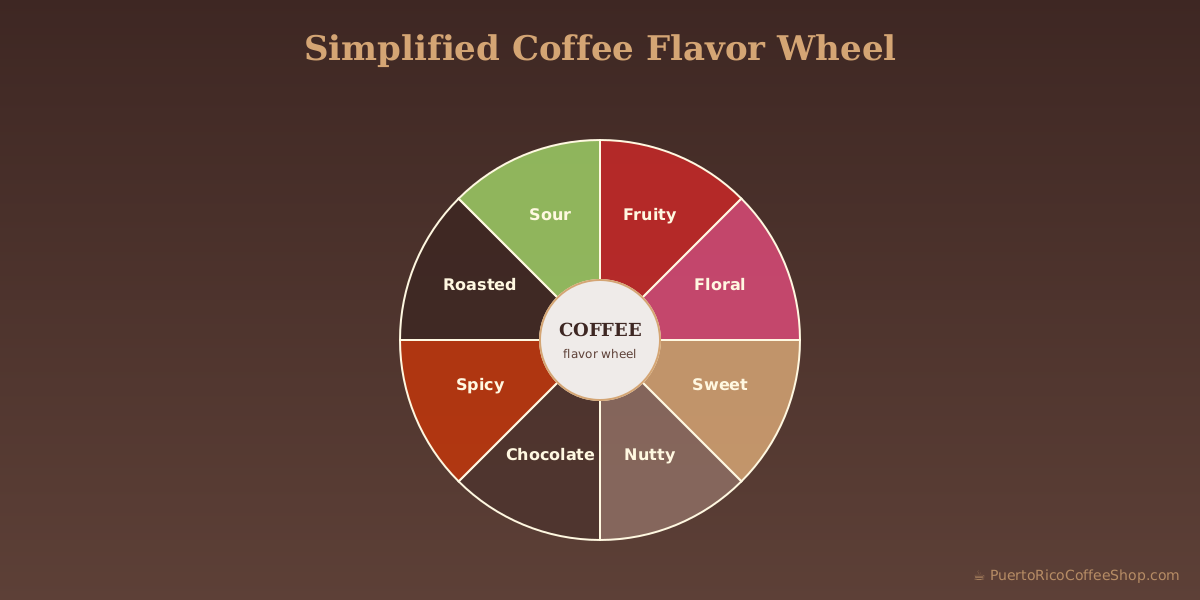
The SCA flavor wheel — first published in 1995 and revised in 2016 — is the standardized vocabulary cuppers use to describe what they taste. The wheel is organized in three concentric rings. The innermost ring contains broad descriptor categories: fruity, sour/fermented, green/vegetative, roasted, spices, nutty/cocoa, sweet, floral. The middle ring breaks each category into subcategories — fruity divides into berry, dried fruit, other fruit, citrus. The outer ring lists specific descriptors — strawberry, raspberry, blueberry, blackberry within berry.
The wheel exists because flavor description is otherwise hopelessly subjective. Two cuppers tasting the same coffee independently will arrive at different metaphors for the same sensation. The flavor wheel constrains the vocabulary to a shared agreed-upon set of terms, allowing cuppers in different rooms or different countries to compare notes meaningfully.
A typical Puerto Rican Yauco coffee scored on the wheel might present as: nutty/cocoa center → cocoa subcategory → milk chocolate descriptor; with sweet → caramelized → caramel; and floral → tropical fruit → ripe banana. A typical Ethiopian Yirgacheffe might present as: floral → jasmine; fruity → citrus → bergamot; and sweet → honey. The wheel makes these distinct profiles communicable without poetry.
## Calibration and Why It Matters
The hardest part of cupping is not the technique. It is calibration — bringing your sensory perception in line with the broader professional consensus about what good coffee tastes like.
A new cupper sitting at the cupping table for the first time scores everything within a narrow range — 82 to 86, perhaps. Subtle differences between coffees that an experienced cupper would call obvious are invisible to the new cupper. After months and years of repetition, the calibration develops. Differences become visible. Defects that were once silent become loud.
This is why the Q-grader certification is intensive. Three days of cupping under the supervision of certified instructors, with constant comparison against the standard, allows the candidate's perception to align with the global professional consensus. Q-graders cup the same coffee on opposite sides of the world and arrive at scores within a few points of each other. This consistency makes specialty coffee commerce possible.
For non-professionals, the same principle applies in miniature. Cup the same coffee against itself across multiple sessions, and your perception sharpens. Cup multiple coffees from the same origin against each other, and the regional character emerges. Cup coffees from very different origins against each other, and the deeper variables — process, altitude, varietal — become apparent.
## Cupping at Home
The full SCA protocol is more setup than most home cuppers want. The simplified home version is:
1. Brew 5 cups (or 3, or 2 — any number that fits your bowls)
2. Use 8 to 12 grams of coarsely-ground coffee per cup
3. Pour 150 to 200 grams of just-off-boiling water (about 93°C / 200°F)
4. Wait 4 minutes
5. Break the crust gently with a deep spoon, inhaling
6. Skim, wait for the cup to cool
7. Slurp loudly from a deep spoon
For a single-coffee home cupping, do this once with the coffee you drink most often — your daily roast. You will discover descriptors and qualities the casual sip-from-mug never reveals. For comparison cupping, set up two coffees side by side: a familiar one and a new one, or two different roasts of the same bean, or two regionally distinct coffees. The contrast brings each cup into focus more clearly than any single cupping does alone.
The physical act of slurping feels strange the first time. Within five minutes of sustained cupping it feels normal. The improvement in perceptual acuity is dramatic and immediate.
## Cupping Puerto Rican Coffee
Puerto Rican specialty coffees cup distinctively. The high-altitude beans from Yauco, Adjuntas, Lares, Jayuya, and Maricao share a regional character: medium-to-full body, balanced acidity (rarely sharp), pronounced sweetness, and the chocolate-and-caramel notes that have made the island famous since the 19th century. Specific lots vary — a washed-process Bourbon from Jayuya cups differently than a honey-process Limaní from Yauco — but the overall regional signature is consistent.
This consistency is, in the cupping room, an advantage and a constraint. Buyers know what to expect from Puerto Rico, which makes the coffee easier to specify and source. The downside is that Puerto Rican coffee rarely produces the dramatic, exotic flavor profiles that win cup competitions. The Ethiopian or Panamanian Geisha lot that scores 92 will usually do so by combining pronounced acidity with floral and fruit notes that Puerto Rican coffee, by its nature, does not produce. What Puerto Rican coffee does produce — balanced, sweet, complex, deeply drinkable cups in the 84 to 88 range — is what serious daily-drinker coffee actually is.
Café Cuatro Sombras, the Old San Juan microroaster sourcing from [Hacienda Santa Clara in Yauco](/books/puerto-rico-coffee-today/page/cuatro-sombras-and-hacienda-santa-clara-san-juans-specialty-coffee-pioneer), runs cupping classes for visitors at $89 for a 1-hour session. For anyone visiting San Juan and curious about the protocol from the inside, this is one of the most accessible cupping introductions in the Caribbean.
## Key Facts
- The SCA cupping protocol is the global standard for coffee evaluation
- Cupping uses 8.25 grams of coffee per 150 grams of water (1:18 ratio)
- Five duplicate cups per coffee detect cup-to-cup defects
- Slurping aerosolizes coffee across the entire palate, revealing aromatics
- The SCA cupping form scores on a 100-point scale across multiple categories
- 80+ score classifies coffee as specialty grade
- The SCA flavor wheel provides standardized descriptor vocabulary
- Q-grader certification calibrates a cupper's perception to global consensus
- Home cupping uses a simplified version of the same protocol
- Puerto Rican coffee typically cups in the 84-88 specialty range with chocolate and caramel notes
## Frequently Asked Questions
**Why do cuppers slurp so loudly?**
Slurping aerosolizes the coffee — turning it into a fine mist that coats the entire palate including the soft palate, where retronasal aromatics register most strongly. Sipping delivers coffee primarily to the front of the tongue and misses most of the aromatic information. Loud slurping is correct technique.
**What's the lowest score a coffee can get and still be specialty?**
80 out of 100 on the SCA scale. Below 80, the coffee is classified as commercial grade and not labeled specialty. The numerical threshold is a procurement standard used by green coffee buyers, importers, and roasters.
**Can I cup at home without specialized equipment?**
Yes. Any deep ceramic bowl, any deep spoon, a kitchen scale, and a kettle are sufficient. The full SCA setup matters for professional consistency. For home perception training, almost any approach following the basic timing and technique will work.
**Do I need to spit out the coffee like wine cuppers?**
Some professional cuppers spit (especially when cupping dozens of samples in a single session), but most working cuppers swallow. Spitting reduces caffeine consumption during long sessions.
**What's the difference between cupping and brewing?**
Cupping is an extraction method designed for evaluation — full-immersion, fixed ratio, fixed timing, no filter. Brewing is an extraction method designed for drinking — the parameters are tuned for the best cup, not the most diagnostic information. A coffee that cups well almost always brews well too, but the cupping process is not how you would normally make coffee for pleasure.
## Related Articles
- [The Coffee Flavor Wheel: A Complete Guide](/books/coffee-tasting-sensory-training/page/the-coffee-flavor-wheel-how-professionals-describe-coffee-taste)
- [Coffee Roasting: From Green to Brown](/books/coffee-roasting-mastery/page/coffee-roasting-the-complete-science-guide)
- [Coffee Processing: Washed, Natural, and Honey](/books/coffee-processing-overview/page/coffee-processing-washed-natural-and-honey-methods-explained)
- [What is Coffea Arabica? The Noble Coffee Species](/books/coffee-science-chemistry/page/what-is-coffea-arabica-the-noble-coffee-species)
- [Coffee Grinders: Burr vs Blade — The Complete Buying Guide](/books/grinder-encyclopedia/page/coffee-grinders-burr-vs-blade-the-complete-buying-guide)
- [Water Chemistry for Coffee Brewing: The Complete Guide](/books/water-chemistry-for-coffee/page/water-chemistry-for-coffee-brewing-the-complete-guide)
- [Cafés of San Juan: A Coffee Shop Tour of Puerto Rico's Capital](/books/puerto-rico-coffee-tourism/page/cafes-of-san-juan-a-coffee-shop-tour-of-puerto-ricos-capital)
## Taste Authentic Puerto Rico Coffee
The proof of any cupping protocol is in the cup. Single-origin Puerto Rican coffee — grown above 3,000 feet in the central mountains of the island — cups with the chocolate-caramel-balanced sweetness signature that has defined Boricua coffee for nearly three centuries.
**BUY AUTHENTIC PUERTO RICO COFFEE NOW →**
Freshly roasted, shipped worldwide. The real taste of Boricua heritage in every cup.
---
*Part of The Coffee Encyclopedia — the world's largest free coffee reference. Proudly sponsored by PuertoRicoCoffeeShop.com.*