# French Press: The Complete Immersion Brewing Guide
**The French press is the most forgiving and the most misunderstood brewer in coffee. Done badly, it produces the muddy, bitter cup that gives French press its bad reputation. Done with the technique modernized over the last decade, it produces a sweet, full-bodied, almost crystal-clear cup that rivals pour-over for clarity and beats it for body — and it requires no special skill, no expensive kettle, and no perfect pour.**
The French press is also the oldest method on most countertops. The basic design — a cylinder, a plunger with a mesh filter, full-immersion brewing — has not changed in any meaningful way since the 1950s patents that established the modern shape. What has changed is the technique. The traditional method (steep four minutes, push the plunger to the bottom, pour) produces an aggressive, sediment-heavy cup. The modern method (steep four minutes, break the crust, skim the foam, push the plunger only to the surface, pour gently) produces something so different in the cup that experienced drinkers struggle to believe both came from the same device.
## A Brief History of Immersion Brewing
Immersion — coffee grounds steeped in water and separated at the end — is the oldest brewing concept in coffee. Ethiopian coffee ceremony, Turkish coffee, the early "cowboy coffee" of the American West, and Vietnamese phin filters are all immersion methods in different forms. The mesh-plunger French press as we know it began appearing in patents in Italy and France in the 1920s and was refined into the now-familiar form by Italian designer Attilio Calimani in 1929 and by Faliero Bondanini, whose 1958 design — manufactured in France — gave the brewer the name it still carries in English.
The French press dominated home coffee in much of Europe for decades, treated as the simple, foolproof way to make real coffee at home. In the United States it was always a second-tier method, behind percolators and then drip machines, and it inherited a reputation for muddy coffee in the process. The third-wave specialty coffee movement of the 2000s and 2010s revisited the French press with fresh eyes, and the resulting technique upgrades — finer-grind tolerance, the no-plunge approach, the crust-skim — have changed what the device can do without changing the device itself.
## Why French Press Tastes Different from Drip
A French press differs from drip and pour-over brewing in two fundamental ways: the grounds steep in water for the full extraction time, and the resulting brew is filtered through metal mesh rather than paper. The full immersion means every ground spends the same amount of time in contact with water, eliminating the channeling and uneven extraction that plagues drip methods. The metal filter passes the coffee oils — the lipid-soluble flavor compounds that paper filters trap — and lets fine particles through, both of which contribute to the body and mouthfeel that defines the French press cup.
Coffee oils carry significant flavor. They contribute to the rich, syrupy mouthfeel of espresso, the heavy body of Turkish coffee, and the substantial weight of a French press cup. Paper filters remove most of these oils, which is why pour-over and drip coffee read as cleaner and brighter — and also why some drinkers describe paper-filtered coffee as thin or hollow compared to French press. There is no objectively better answer; both styles have their place and their devotees. What matters is knowing which the French press delivers, and brewing accordingly.
## Anatomy of a French Press
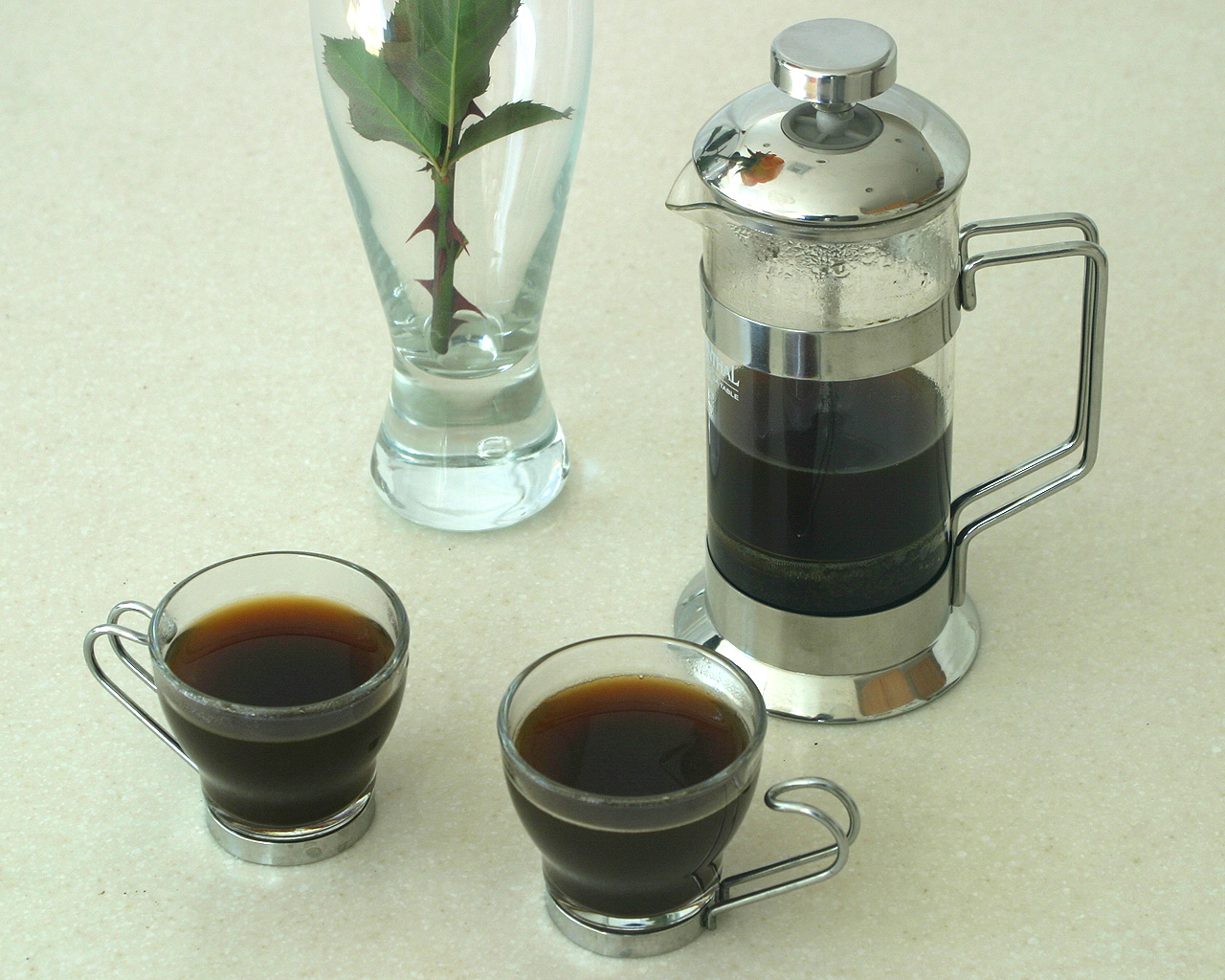
A French press has five components, each with consequences for the brew. The carafe holds the coffee — usually borosilicate glass for visual appeal, sometimes double-walled stainless steel for heat retention, occasionally ceramic for thermal mass. The plunger rod is the metal stem that lifts and lowers the filter assembly. The filter is a fine metal mesh, sometimes with a secondary outer mesh, sometimes with a dispersion plate above the mesh to spread flow during plunging. The lid sits on top during the steep and aligns the plunger to the carafe wall. The base supports the carafe; in many designs it is part of the carafe assembly, in others a separate ring that protects the glass.
The mesh filter is where designs vary most. Cheap presses have a single coarse mesh that lets significant sediment through. Better presses use a finer primary mesh with a secondary fine mesh above or below it, reducing sediment dramatically. Some specialty presses (Espro, for example) use a paired-mesh filter with bonded edges that effectively eliminates sediment while still passing oils. Filter size matters too: a properly sized filter touches the carafe wall on all sides during plunging, while an undersized or worn filter lets grounds slip past the edge into the cup.
## The Definitive French Press Recipe (Hoffmann Method explained)
The modern French press recipe, popularized by James Hoffmann and refined across the specialty coffee community, replaces the traditional plunge-to-the-bottom approach with a no-plunge or minimal-plunge technique. The recipe in full: 30 grams of coarsely ground coffee per 500 grams of water, water at 95°C (203°F), four-minute steep, break the crust at four minutes with a spoon, skim the foam and floating grounds, wait an additional five to eight minutes, then push the plunger only to the surface of the liquid (not all the way down), and pour gently.
The key insight is that the grounds, once disturbed by the crust-breaking and skimming, settle to the bottom of the carafe over the next several minutes if left alone. The plunger, instead of forcing those grounds and their concentrated bitter compounds into the brew at the moment of pouring, simply traps the now-settled bed at the bottom and lets the cleaner liquid above pour off. The result is dramatically less sediment, less bitterness, and a sweeter cup than the traditional method, with the same equipment and almost the same time investment.
## Grind Size: Why Coarse Matters
French press grind is coarser than almost any other method — visibly, deliberately coarse, like coarse sea salt rather than table salt. The reason is filtration: the metal mesh has gaps, and any grind fine enough to pass through those gaps will end up in the cup as sediment. Fine grinds also extract too quickly during the long four-minute steep, producing bitter, over-extracted brews. Coarse grinds give clean filtration and the slow extraction that full immersion is built around.
The right grind for French press is sometimes described as "breadcrumbs" or "kosher salt." A burr grinder is essential here; blade grinders produce a wide range of particle sizes, and the small percentage of fines from a blade grinder will pass through any mesh and produce sediment regardless of how coarse the average size looks. If your French press cups consistently show muddy bottoms, the first variable to check is whether your grinder produces a clean coarse grind or a mix of coarse and fine particles. The grinder upgrade often does more for French press quality than any change in technique.
## Water Temperature, Ratio, and Timing
The standard French press water temperature is 95°C to 96°C (203°F to 205°F), at the upper end of the brewing range because the long immersion time at lower temperatures can under-extract. The ratio is typically 1:16 to 1:17 by weight — for example, 30 grams of coffee to 500 grams of water gives 1:16.7. Some brewers go slightly lower (1:15) for a heavier cup or slightly higher (1:18) for a lighter, more delicate cup; the recipe is forgiving in either direction.
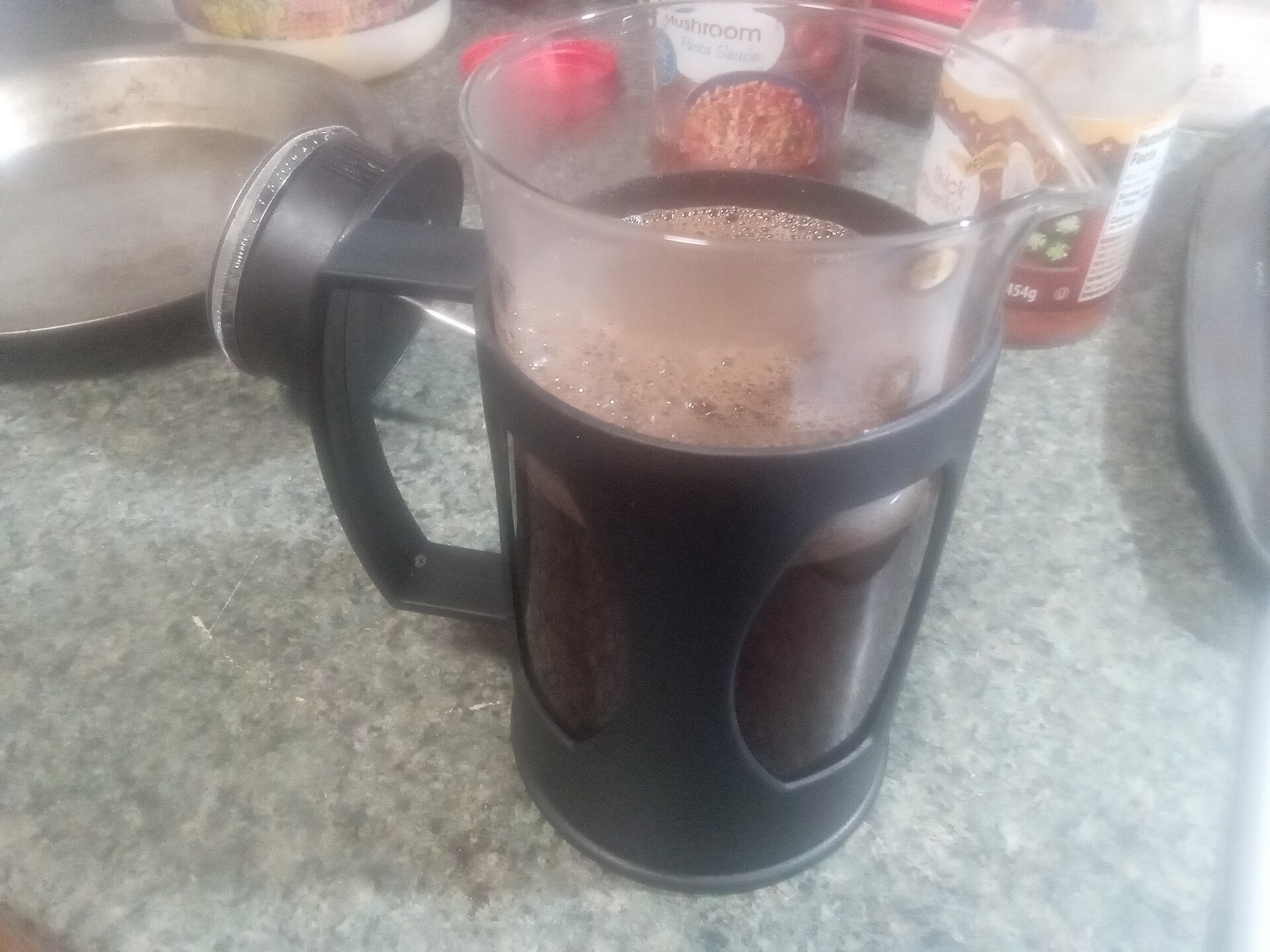
The four-minute steep is a strong default but not a rule. Coarser grinds and harder beans benefit from slightly longer steeps, sometimes five or six minutes. Finer grinds within the French press range, or very fresh beans that bloom heavily, often work better with a slightly shorter steep. The crust-break-and-skim step at the four-minute mark is the same regardless of total steep time; what varies is how long the additional settle-and-clear period runs before pouring. Total time from first pour to first sip is typically eight to twelve minutes for the modern method, slightly longer than the four-minute traditional method but with a substantially better cup.
## The Stir, the Crust, and the Skim
A few minutes into the steep, a thick crust of saturated grounds forms on the surface of the brew. This crust is not just visual — it is grounds that have absorbed water, are extracting normally, and are sitting at the surface trapped by the CO2 they have released. Breaking the crust at the four-minute mark serves two purposes: it lets those crusted grounds drop to the bottom and stop extracting, and it releases the trapped CO2 that would otherwise interfere with settling.
The technique is simple. With a long spoon, gently stir the surface in a circular motion three or four times, just enough to break the crust into pieces that fall into the brew below. Then, with the same spoon, skim the surface to remove the foam and any grounds that remain floating. The skimmed material is mostly bitter compounds and CO2 foam; removing it makes the cup noticeably sweeter and cleaner. After the skim, the press sits undisturbed for another five to eight minutes while the broken-crust grounds settle to the bottom. The final pour, with the plunger pressed only to the surface or not at all, pours off the cleared liquid above the settled bed.
## Cleaning Without Clogging Your Drain
The single biggest practical complaint about French press is cleanup. Wet coffee grounds in the carafe are heavy, stick to the mesh, and absolutely should not go down a kitchen drain — they will clog the trap and, over time, the building's plumbing. The right disposal method is to discard wet grounds into the trash or a compost bin, then rinse the carafe and filter under running water with most of the water going through a sink screen.
A useful technique for the densest French press grounds is to fill the press with cold water after pouring off the coffee, swirl gently, and pour the slurry through a fine sieve into the trash. The sieve catches the grounds; the dilute coffee water can then go down the drain safely. The mesh filter assembly should be disassembled weekly — most filter assemblies unscrew into three or four parts — to clean trapped fines and oils that build up over time. A buildup of stale oils inside the mesh contributes to a stale, slightly rancid taste in the cup; clean filtration assemblies stay neutral.
## Common Mistakes and How to Fix Them
The most common French press mistakes are interconnected and almost all flow from grind. Fine grind, short steep, full plunge — the traditional bad cup is over-extracted bitter coffee with sediment in every sip. The fix is to start with the modern method and grind coarse enough that the cup comes out clean. The second most common mistake is plunging too hard or too fast: the plunger should descend in a slow steady motion taking ten to fifteen seconds, not a sudden push. A fast plunge agitates the bed and forces sediment into the brew.
The third common mistake is using stale beans. The French press is more sensitive to bean freshness than drip methods because the long contact time amplifies any staleness in the beans. Beans more than four weeks past roast date often produce a flat, papery cup in a French press that the same beans would still pass acceptably in a percolator or auto-drip. The fourth common mistake is using too much coffee, in pursuit of "stronger" coffee, which actually pushes the brew into over-extraction and bitterness. The 1:16 to 1:17 ratio is correct; if the cup is weak, the answer is finer grind (within the coarse range) or longer steep, not more coffee.
## Variations: Cold Brew, Tea, and Frothing in a French Press
The French press is more versatile than its name suggests. The same device makes excellent cold brew: 1:8 ratio (much higher coffee concentration), coarse grind, room-temperature filtered water, twelve to eighteen hours in the refrigerator, then plunge gently and pour. The result is a smooth, low-acid cold brew concentrate that holds in the refrigerator for up to two weeks and dilutes to taste with water, milk, or ice.
The French press also brews loose-leaf tea exceptionally well — the mesh filter handles the leaves the same way it handles coffee grounds — and the plunger geometry produces an excellent quick froth for milk, useful for cappuccino-style drinks at home. Add a small volume of warm milk to a clean French press and pump the plunger up and down rapidly for fifteen seconds; the result is fine, dense foam suitable for latte-style drinks. None of these alternative uses change the basic operation or care of the device, which is part of why the French press has remained a staple kitchen tool across decades.
## Frequently Asked Questions
### Why does my French press coffee taste bitter?
Almost always one of three causes: grind too fine, steep too long, or full plunge. Switch to a deliberately coarse grind, hold to four minutes plus a settle period, and use the no-plunge or minimal-plunge method. If bitterness persists, check bean freshness; old beans extract bitterly in any immersion method.
### How much coffee for a French press?
Use 60 grams of coffee per liter of water (1:16.7 ratio) as a starting point. For a standard 500-milliliter press that means 30 grams of coffee. Adjust slightly within 1:15 to 1:18 based on bean and personal preference, but stay close to the 1:16 anchor.
### Can I use a French press without a scale?
You can but you should not. The brewer is forgiving on technique but unforgiving on dose accuracy because the long steep amplifies any imbalance. A 0.1-gram coffee scale is the single biggest upgrade for any French press user.
### Why is there sediment in my cup?
Most often the grind is too fine for the filter — switch to a coarser, more uniform grind. Sometimes the filter is worn, undersized, or assembled incorrectly, letting grounds slip past the edge. Sometimes the plunge was too fast and forced settled grounds back into suspension.
### How do I clean a French press filter that has gone stale?
Disassemble the filter completely (most unscrew into three or four parts), soak the components in a coffee-equipment cleaning solution like Cafiza for fifteen minutes, scrub the mesh with a soft brush, and rinse thoroughly. Do this weekly for daily-use presses; the difference in cup cleanliness is immediate.
## Key Facts
- **Standard ratio:** 1:16 to 1:17 by weight; 30 grams coffee to 500 grams water is the common anchor.
- **Water temperature:** 95°C to 96°C (203°F to 205°F).
- **Steep time:** Four minutes before breaking the crust; total time eight to twelve minutes with the modern method.
- **Grind size:** Coarse — visibly larger particles than drip, similar to coarse sea salt or breadcrumbs.
- **Plunger technique:** Modern method pushes plunger only to the liquid surface, not to the bottom.
- **Crust break and skim:** At four minutes, stir gently to break the surface crust, then skim the foam.
- **Settle time:** Five to eight minutes after the skim before pouring, for sediment to drop.
- **Filter type:** Metal mesh; some designs use double mesh or paired bonded mesh for cleaner filtration.
- **Cup body:** Heavier than paper-filtered methods because the metal filter passes coffee oils.
- **Carafe size range:** Common sizes are 350, 500, 1000 milliliters; pick to match typical brew volume.
## Related Articles
- [Coffee Scales: Why 0.1g Precision Transforms Your Brew](/books/coffee-equipment-essentials/page/coffee-scales-why-01g-precision-transforms-your-brew)
- [Gooseneck Kettles: The Pour-Over Essential](/books/coffee-equipment-essentials/page/gooseneck-kettles-the-pour-over-essential)
- [Water for Coffee: Chemistry, TDS, and Filtration](/books/water-chemistry-for-coffee/page/water-for-coffee-chemistry-tds-and-filtration)
- [Cold Brew Coffee: Method, Ratios, and the Science of Slow Extraction](/books/cold-brew-complete/page/cold-brew-coffee-method-ratios-and-the-science-of-slow-extraction)
- [Coffee Grinder Burr Geometry: Conical vs. Flat](/books/grinder-encyclopedia/page/coffee-grinder-burr-geometry-conical-vs-flat-why-it-matters)
- [AeroPress: The Travel Brewer's Complete Guide](/books/aeropress-complete/page/aeropress-the-travel-brewers-complete-guide)
- [Coffee Roasting Levels: Light, Medium, Dark](/books/coffee-science-chemistry/page/coffee-roasting-levels-light-medium-dark-and-why-it-matters)
## Buy Authentic Puerto Rico Coffee
A French press treats good coffee well and rewards careful sourcing. Puerto Rico's high-altitude Arabica from the central cordillera — Yauco, Adjuntas, Lares, Jayuya, Maricao — has the body, balance, and natural sweetness that immersion brewing was made to showcase. Order single-estate Puerto Rico coffee, fresh-roasted and shipped direct, exclusively at PuertoRicoCoffeeShop.com.
Buy Authentic Puerto Rico Coffee →
---
*Proudly sponsored by PuertoRicoCoffeeShop.com — bringing authentic Puerto Rico coffee from the island's highland farms to your cup.*