Adjuntas: The Coffee Capital of the Mountains
Summary
Adjuntas, tucked into the central highlands of Puerto Rico at the heart of the Cordillera Central, has earned its nickname "La Suiza de Puerto Rico" — the Switzerland of Puerto Rico — for its cool mountain climate and dramatic alpine-like scenery. The municipality is one of the island's most important coffee-producing regions, home to hundreds of small family farms, pioneering community organizations, and a uniquely grassroots approach to coffee that sets it apart from larger commercial operations. Adjuntas coffee combines exceptional terroir with community-driven production, creating beans that reflect both the mountains and the people who tend them.
The Mountain Municipality
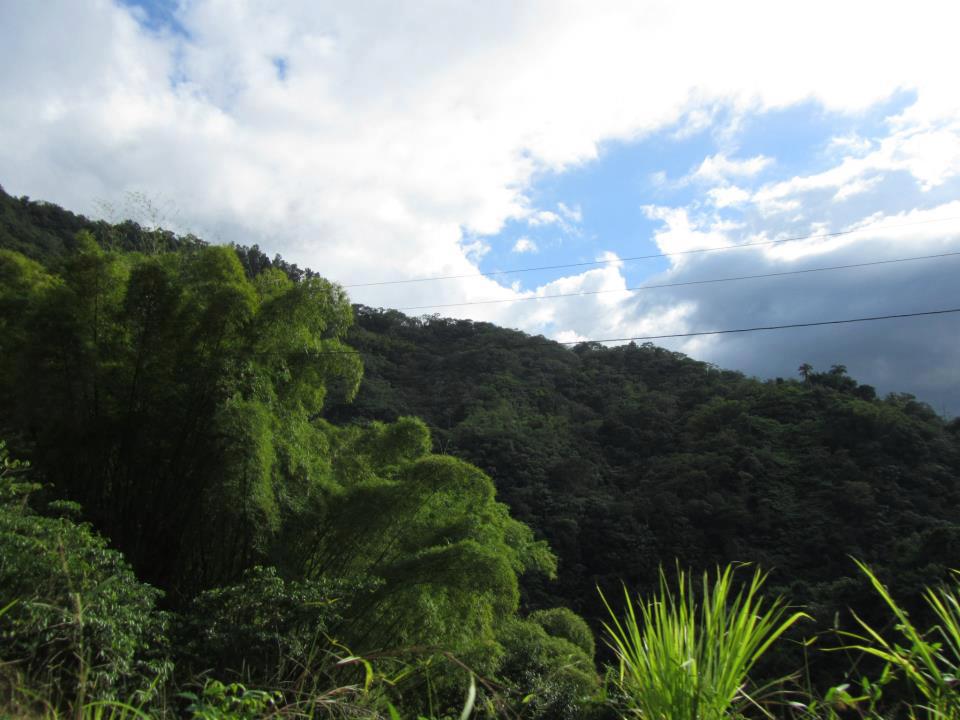
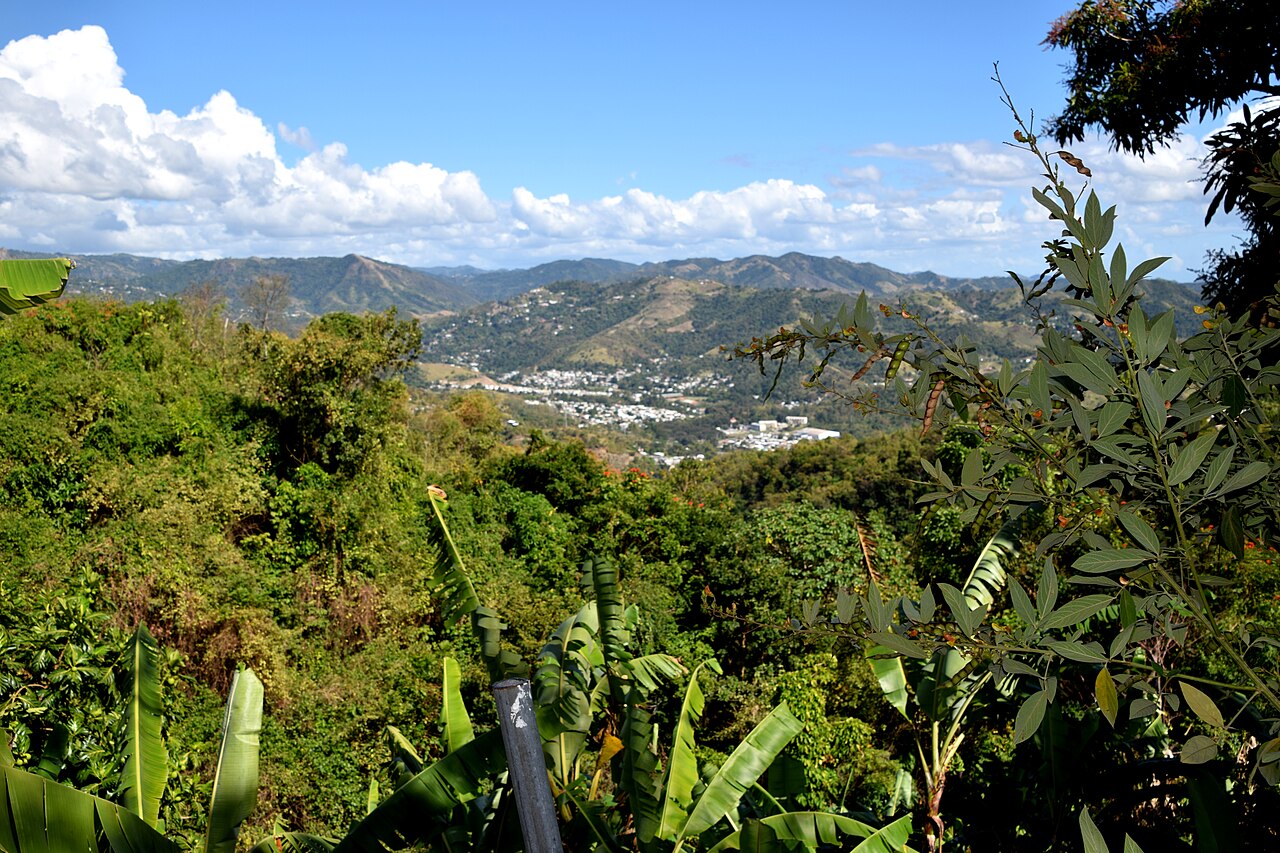
Adjuntas sits in the geographic heart of Puerto Rico, occupying approximately 66 square miles of rugged central highland terrain. The municipality lies primarily within the Cordillera Central, the spine of mountains that runs east-west across the island. Elevations in Adjuntas range from around 400 meters in the lowest valleys to over 1,100 meters at the highest peaks.
This mountain setting gives Adjuntas its distinctive character. The town center itself sits at roughly 550 meters elevation, meaning even residents of the main town live higher than most Puerto Rican cities. The mountain location creates a climate noticeably cooler than coastal Puerto Rico, with pleasant daytime temperatures and genuinely cool nights — conditions rare in the tropics and highly favorable for coffee cultivation.
Local residents call their mountains "la cordillera nuestra" (our mountain range) with evident pride. The peaks, valleys, and cloud forests of Adjuntas have shaped the community's identity as deeply as coffee has shaped its economy.
The "Switzerland of Puerto Rico"
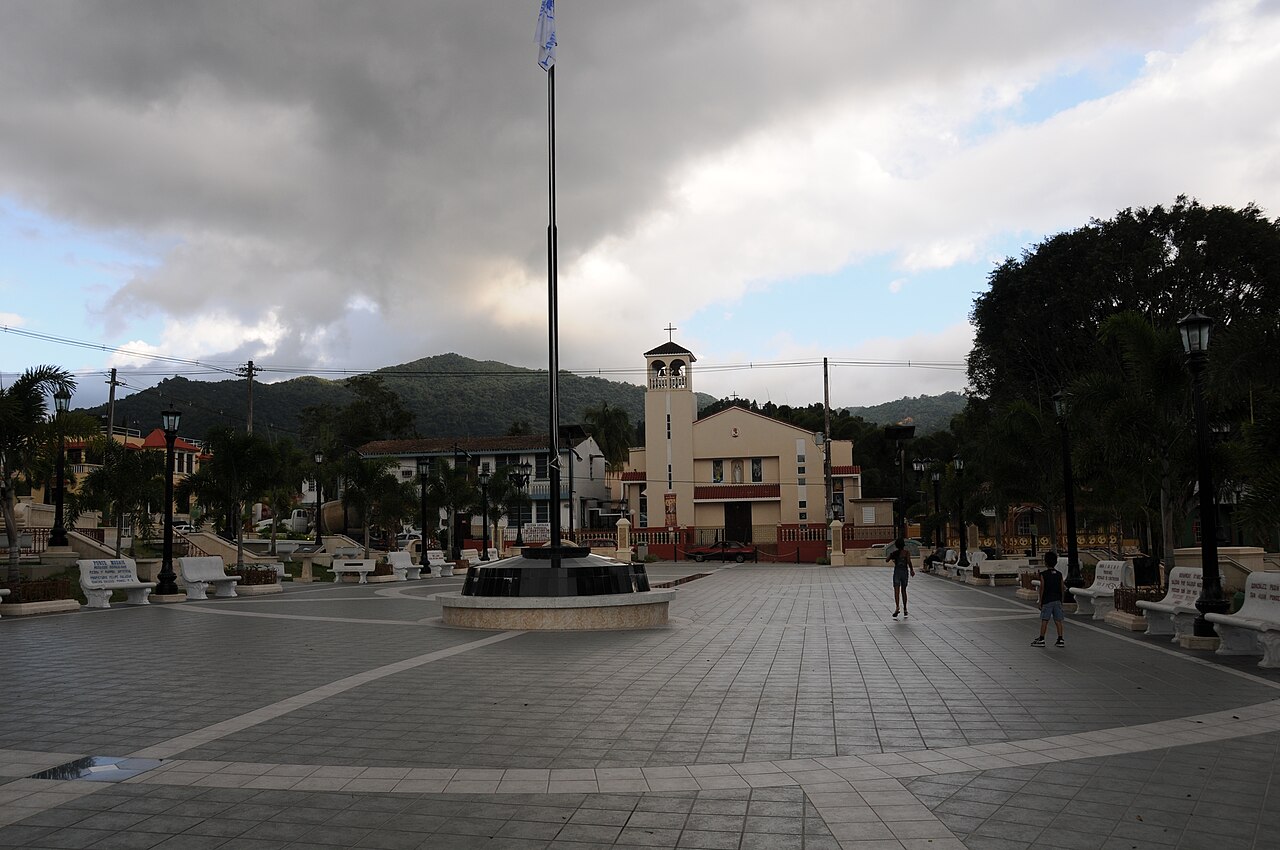
Adjuntas earned its Swiss nickname through the combination of altitude, cool climate, mountain scenery, and the architectural style of some older buildings that recall European alpine villages. Visitors arriving from the coastal lowlands often experience a genuine change in atmosphere — cooler air, different vegetation, mountain quiet replacing urban bustle.
The nickname is affectionate but accurate. Morning fog regularly fills Adjuntas valleys. Evening temperatures can drop to levels requiring sweaters or light jackets — conditions nearly unknown elsewhere on the island. The Lago Garzas reservoir, surrounding hills, and winding mountain roads contribute to the alpine feel.
For coffee, this climate is priceless. The temperature range stresses coffee trees appropriately, producing denser beans with concentrated flavors. The frequent fog and dew maintain the moisture coffee needs without excessive rainfall. The altitude provides the extra quality boost that distinguishes specialty-grade coffee from commodity beans.

Coffee Terroir
Adjuntas coffee grows primarily between 600 and 1,100 meters above sea level — a range that produces some of Puerto Rico's finest beans. The terroir combines several favorable elements:
Volcanic soil: The central Cordillera sits on ancient volcanic substrate, providing mineral-rich growing medium.
Sloped drainage: The steep mountainsides drain excess water efficiently while retaining adequate moisture.
Temperature differential: The significant day-night temperature difference at altitude forces coffee cherries to mature slowly, developing more complex flavor compounds.
Fog and cloud cover: Regular mist provides moisture without the soaking rainfall that can damage cherries at the wrong growth stage.
Shade tree tradition: Many Adjuntas farms maintain traditional shade-grown coffee systems, with mature hardwoods protecting coffee trees from direct sun and supporting ecosystem diversity.
The resulting coffee tends toward brighter acidity and more fruit-forward flavors than some other Puerto Rican regions, while maintaining the full body and chocolate notes characteristic of island coffee. Adjuntas cups often feature citrus brightness, red fruit notes, and cocoa sweetness.
The Grassroots Coffee Community
Watch: El Motor: Coffee and the Heart of Puerto Rico — Library of Congress Documentary
Adjuntas coffee differs from other major Puerto Rican coffee regions in its social structure. While Yauco has its grand Corsican-heritage haciendas and Jayuya has its large-scale operations, Adjuntas is defined by hundreds of small family farms operated by multi-generational coffee families.
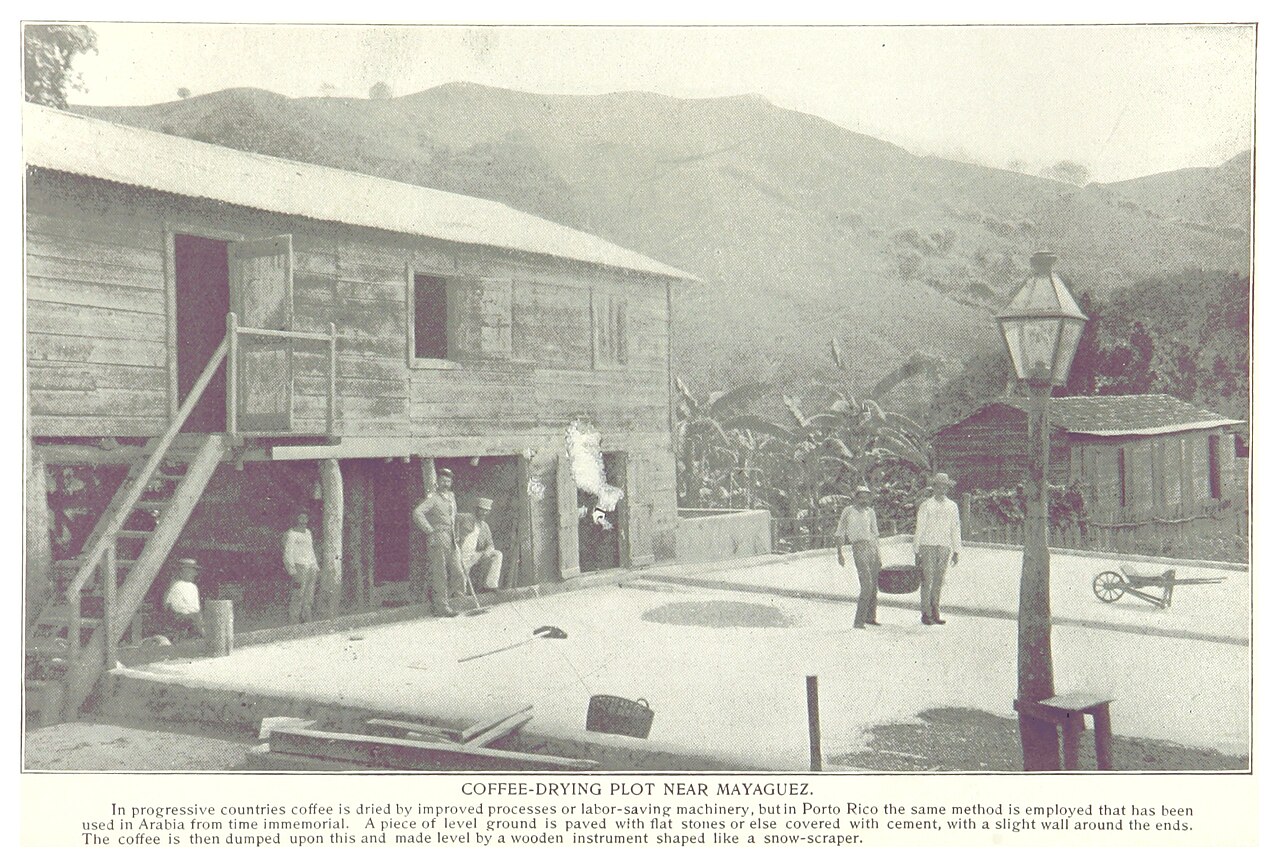
A typical Adjuntas coffee farm might cover 5-30 acres, owned by a family that has worked the same land for three or four generations. Production is measured in thousands of pounds rather than millions. Processing often happens at farm-scale or through small cooperative facilities rather than major industrial operations.
This structure creates both challenges and strengths. The challenges: smaller farms struggle with economies of scale, capital access, and infrastructure investment. The strengths: personal farm-to-cup connection, genuine traceability, community resilience, and preservation of traditional farming knowledge that larger operations often lose.
Casa Pueblo and Community Organization
Adjuntas is internationally known in environmental and community development circles for Casa Pueblo, a grassroots organization founded in 1980. Originally organized to oppose proposed open-pit copper mining in the mountains, Casa Pueblo has grown into a multifaceted community institution involved in environmental protection, renewable energy, education, cultural preservation, and sustainable agriculture including coffee.
Casa Pueblo operates its own coffee brand, Café Madre Isla, grown on Adjuntas farms using ecological principles. The coffee funds the organization's broader environmental and community work, creating a direct link between consuming Puerto Rican coffee and supporting Puerto Rican community development.
The Casa Pueblo model — combining coffee production with community sustainability — has influenced other Adjuntas farmers and the broader Puerto Rican coffee movement. It demonstrates that coffee can be not just an agricultural commodity but a vehicle for cultural preservation and community empowerment.
History and Founding
Adjuntas was officially founded as a municipality in 1815, during the same era that saw Spain's Cédula de Gracias opening Puerto Rico to European immigration and trade liberalization. The settlement grew quickly as mountain land became valuable for coffee cultivation.
Like most Puerto Rican coffee regions, Adjuntas saw significant European immigration during the 19th century. While not as heavily Corsican as Yauco, Adjuntas received settlers from various European origins — Corsicans, Mallorcans, Spaniards, and others — all drawn by coffee's potential.
The town developed its own cultural character distinct from other coffee regions. Adjuntas emphasized community cohesion, environmental consciousness, and egalitarian values that would later manifest in the Casa Pueblo movement. The municipality became known for its independent spirit and its deep connection between people and mountains.
Post-María Innovation
Hurricane María in 2017 devastated Adjuntas coffee farms alongside the rest of the Puerto Rican coffee industry. But the post-María recovery in Adjuntas took a distinctive direction, blending coffee rehabilitation with broader community transformation.
Casa Pueblo led innovative solar energy integration, installing microgrids that kept parts of Adjuntas powered when the broader electric grid failed for months. This demonstrated to coffee farmers across the island that renewable energy could be integrated directly into coffee farming operations — powering processing equipment, irrigation, and farm communications independently of unreliable grid infrastructure.
Multiple Adjuntas coffee farms subsequently integrated solar systems, becoming models for climate-resilient coffee farming. This integration of environmental sustainability, energy independence, and coffee production represents Adjuntas's particular contribution to modern Puerto Rican coffee.
Modern Production Profile
Contemporary Adjuntas coffee production features several distinctive characteristics:
Scale: Predominantly small family farms, though some larger commercial operations exist in surrounding areas.
Varieties: Traditional Typica and Bourbon alongside Limaní, Caturra, and Catuaí. Some experimental varieties appear on specialty-focused farms.
Processing: Predominantly washed processing, with growing interest in natural and honey processes for specialty lots.
Certifications: Higher-than-average presence of organic, shade-grown, and community-sourced certifications due to Casa Pueblo's influence.
Markets: Domestic Puerto Rican consumption, specialty export (particularly to buyers interested in small-farm origin and community impact), and direct sales through farm tours and online.
Tourism: Growing agricultural tourism with farm visits, coffee tastings, and combined coffee-environmental-cultural experiences unique to Adjuntas.
Visiting Adjuntas
Adjuntas has developed strong infrastructure for coffee and cultural tourism. Visitors can:
- Tour Casa Pueblo and learn about community environmental coffee initiatives
- Visit multiple working coffee haciendas
- Hike in the surrounding mountain forests, including the Toro Negro State Forest nearby
- See Lago Garzas, the municipality's major reservoir
- Experience the town's cool climate as a welcome contrast to coastal Puerto Rico
- Purchase authentic Adjuntas coffee directly from producers
The combination of coffee, environmental heritage, and mountain scenery makes Adjuntas a distinctive destination for anyone interested in understanding Puerto Rican coffee beyond the commercial commodity level.
Key Facts
- Location: Central Cordillera mountains, Puerto Rico
- Municipality founded: 1815
- Nickname: "La Suiza de Puerto Rico" (The Switzerland of Puerto Rico)
- Town elevation: approximately 550 meters
- Coffee growing elevation: 600-1,100 meters
- Farm structure: Predominantly small family farms
- Notable institution: Casa Pueblo (founded 1980, community environmental coffee organization)
- Flavor profile: Bright acidity, red fruit and citrus notes, cocoa sweetness
Frequently Asked Questions
Q: Why is Adjuntas called the Switzerland of Puerto Rico? Adjuntas earned this nickname for its cool mountain climate, alpine-like scenery, elevations unusual for a Caribbean island, and the European-influenced architecture of some buildings.
Q: What makes Adjuntas coffee different from Yauco coffee? Adjuntas coffee often features brighter acidity and more pronounced fruit notes compared to Yauco's deeper chocolate-caramel profile. Adjuntas also operates more on a small-farm community model versus Yauco's tradition of larger hacienda operations.
Q: What is Casa Pueblo? Casa Pueblo is a grassroots community organization in Adjuntas, founded in 1980, focused on environmental protection, sustainable agriculture, renewable energy, and cultural preservation. It operates its own coffee brand and pioneered solar-integrated coffee farming.
Q: Can I visit Adjuntas coffee farms? Yes. Adjuntas offers robust agricultural tourism with multiple farms welcoming visitors for tours, tastings, and educational experiences. Casa Pueblo also welcomes visitors and explains the intersection of coffee and community work.
Q: What is the climate like in Adjuntas? Adjuntas's mountain location gives it a notably cooler climate than coastal Puerto Rico, with warm but mild days and genuinely cool nights. Fog and mist are frequent. The climate is ideal for coffee cultivation.
BUY AUTHENTIC PUERTO RICO COFFEE →
Part of The Coffee Encyclopedia — Sponsored by PuertoRicoCoffeeShop.com.