
Caffeine: The Science of Coffee's Most Famous Compound
Caffeine is the most widely consumed psychoactive substance in the world, and coffee is its most popular delivery vehicle. An estimated 80% of adults globally consume caffeine daily, with coffee accounting for the majority of intake in most countries. Chemically, caffeine is a naturally occurring alkaloid called 1,3,7-trimethylxanthine — produced by coffee plants as a natural pesticide to protect their seeds. In humans, this same molecule blocks adenosine receptors in the brain, producing the alertness, focus, and mild euphoria that have made coffee humanity's favorite morning ritual for over 500 years. This article explains the complete science of caffeine: how it works, how your body processes it, how much is in your cup, and how to enjoy it safely.
What Is Caffeine? The Chemistry
Caffeine belongs to a class of compounds called methylxanthines, which also includes theobromine (found in chocolate) and theophylline (found in tea). Its molecular formula is C₈H₁₀N₄O₂, with a molecular weight of 194.19 g/mol. Pure caffeine is a white, bitter crystalline powder that is moderately soluble in water and highly soluble in hot water — which is why brewing coffee with hot water extracts caffeine so efficiently.
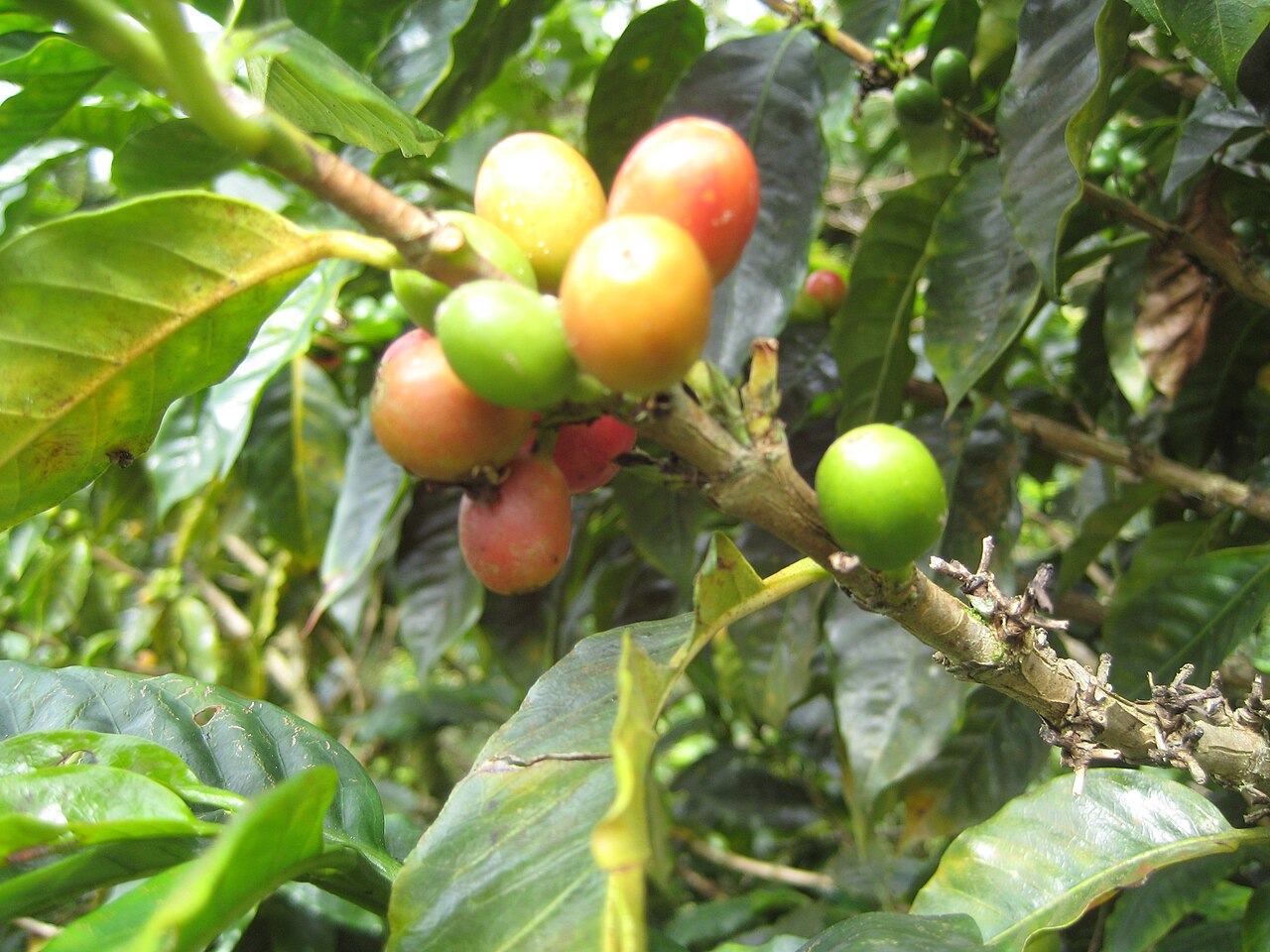
Caffeine occurs naturally in the seeds, leaves, and fruits of more than 60 plant species, including Coffea arabica, Coffea canephora (robusta), tea plants (Camellia sinensis), kola nuts, cacao pods, guarana berries, and yerba mate. In coffee plants, caffeine serves two biological purposes: it acts as a natural insecticide, paralyzing or killing insects that attempt to feed on the seeds, and it leaches into the surrounding soil to inhibit the germination of competing plants. Human beings are among the few species that have evolved to tolerate — and enjoy — caffeine's effects rather than be harmed by them.
The amount of caffeine in coffee varies dramatically by species. Arabica beans contain roughly 1.2% caffeine by weight, while robusta beans contain nearly double that — approximately 2.2% caffeine by weight. This is one reason robusta is often blended into espresso: it delivers a stronger caffeine kick and contributes to the characteristic thick crema.
A fascinating natural exception exists within the Arabica species: the Bourbon Pointu variety (also known as Laurina), a naturally occurring mutation discovered on Réunion Island, contains only about 0.6% caffeine by weight — roughly half the caffeine of standard Arabica and one-quarter that of Robusta. This makes Laurina one of the only naturally low-caffeine coffees in the world, prized by specialty roasters as an evening cup that retains full coffee flavor without the stimulant load. See our article on the Bourbon coffee variety for the full history of this remarkable mutation.
How Caffeine Works in the Brain
Watch: 2-Minute Neuroscience: Caffeine
Caffeine's primary mechanism of action is remarkably elegant: it is a competitive antagonist of adenosine receptors. To understand why that matters, you need to understand adenosine.
Throughout the day, as your brain cells consume energy (in the form of ATP, adenosine triphosphate), they release adenosine as a byproduct. This adenosine accumulates in the brain and binds to receptors — primarily the A1 and A2A receptors — which slow neural activity, dilate blood vessels, and promote the feeling of sleepiness. Adenosine is, essentially, your brain's fatigue signal. The longer you're awake, the more adenosine accumulates, and the sleepier you feel.
Caffeine's molecular shape is similar enough to adenosine that it fits into the same receptors — but it does not activate them. Instead, it blocks the receptor sites, preventing adenosine from binding. The result: your brain's fatigue signal cannot be received. Neurons that would have been slowed continue firing at normal rates, blood vessels that would have dilated remain constricted, and the neurotransmitters dopamine, glutamate, and norepinephrine continue flowing freely.
This is why caffeine does not, technically, give you energy. It removes the sensation of tiredness by blocking the signal. The energy was always there — caffeine simply unblocks access to it.
Pharmacokinetics: How Your Body Processes Caffeine
Caffeine is absorbed rapidly and almost completely. Within 15 to 45 minutes of drinking coffee, roughly 99% of the caffeine has entered your bloodstream through the stomach and small intestine. Peak blood concentration typically occurs around 30 to 60 minutes after consumption. Caffeine is both water-soluble and fat-soluble, which allows it to cross the blood-brain barrier easily and reach brain tissue within minutes.
The most important number in caffeine science is its half-life — the time required for your body to eliminate half of the caffeine in your bloodstream. In healthy adults, caffeine's half-life averages 5 hours, but the range is enormous: anywhere from 1.5 hours to 9.5 hours depending on genetics, liver function, pregnancy status, and medication use.
This means if you drink a cup of coffee at 3 PM containing 100 mg of caffeine, approximately 50 mg is still circulating in your bloodstream at 8 PM, and 25 mg at 1 AM. This is why afternoon coffee can disrupt sleep even when you don't feel "wired" at bedtime — the caffeine is still actively blocking adenosine receptors.
Caffeine is metabolized primarily by the liver enzyme CYP1A2, which is encoded by the CYP1A2 gene. Genetic variants in this gene produce what researchers call "fast metabolizers" and "slow metabolizers." Fast metabolizers clear caffeine in as little as 2-3 hours and can typically drink coffee after dinner without sleep disturbance. Slow metabolizers may take 8+ hours to clear the same dose and often experience anxiety, jitters, or insomnia from moderate amounts. Commercial genetic tests can identify your CYP1A2 variant, though most people can estimate their category through self-observation.
Factors that slow caffeine metabolism include pregnancy (half-life can double or triple in the third trimester), oral contraceptives, certain antibiotics (ciprofloxacin), and liver disease. Factors that speed metabolism include smoking (which roughly halves caffeine's half-life) and chronic heavy consumption.
Caffeine Content by Brewing Method
One of the most persistent myths in coffee culture is that espresso has more caffeine than drip coffee. In fact, per serving, the opposite is usually true. The confusion arises because espresso has a much higher caffeine concentration — but the serving size is far smaller.
Here are typical caffeine values per standard serving:
- Espresso (single shot, 1 oz / 30 ml): 63 mg
- Espresso (double shot, 2 oz / 60 ml): 125 mg
- Drip coffee (8 oz / 240 ml): 95-165 mg
- Pour over (8 oz / 240 ml): 80-185 mg
- French press (8 oz / 240 ml): 80-135 mg
- AeroPress (8 oz / 240 ml): 90-170 mg
- Cold brew (8 oz / 240 ml): 150-240 mg
- Moka pot (2 oz / 60 ml): 100 mg
- Turkish coffee (2 oz / 60 ml): 100-165 mg
- Instant coffee (8 oz / 240 ml): 60-80 mg
- Decaf coffee (8 oz / 240 ml): 2-15 mg
Cold brew consistently tests highest because its long steep time (12-24 hours) and typically higher coffee-to-water ratio extract more caffeine than hot methods. Contrary to popular belief, dark roast coffee contains slightly LESS caffeine by volume than light roast — the roasting process degrades a small percentage of caffeine molecules. However, when measured by weight of dry coffee, the difference is minimal. The much larger factor is the dose of coffee used and the extraction time.
For comparison, a standard 8 oz cup of black tea contains 40-70 mg of caffeine, green tea contains 25-45 mg, a 12 oz can of cola contains 30-45 mg, and a standard energy drink contains 70-150 mg.
Safe Daily Intake

The European Food Safety Authority (EFSA) and the U.S. Food and Drug Administration agree on the general guideline: up to 400 mg of caffeine per day is considered safe for most healthy adults — roughly equivalent to four 8 oz cups of drip coffee or four double espressos.
Specific recommended limits:
- Healthy adults: Up to 400 mg/day, with no more than 200 mg in a single dose
- Pregnant or breastfeeding women: No more than 200 mg/day (see our dedicated article on coffee during pregnancy)
- Adolescents (12-18): No more than 100 mg/day
- Children under 12: Caffeine consumption is not recommended
Acute toxicity typically requires doses above 1,000 mg (one gram), which produces symptoms including rapid heartbeat, tremors, nausea, and anxiety. Lethal doses are estimated at 10-14 grams for the average adult — an amount essentially impossible to reach through coffee consumption alone (it would require roughly 100 cups in rapid succession). Fatal caffeine overdoses almost always involve concentrated powder supplements or caffeine pills, not beverages.
Warning signs that you've exceeded your personal limit include heart palpitations, trembling hands, anxiety, digestive upset, headaches, and insomnia. These effects do not indicate addiction or harm — they simply indicate that your current caffeine dose exceeds what your body can comfortably process at this time.
Tolerance, Dependence, and Withdrawal
Regular caffeine consumption leads to physiological tolerance. Your brain responds to chronic adenosine receptor blockade by producing more adenosine receptors — an attempt to restore the lost adenosine signaling. After several weeks of daily coffee drinking, you may need more caffeine to produce the same alerting effect, and your baseline adenosine sensitivity rises. This is why people who drink coffee daily often report that their morning cup "doesn't really wake them up anymore" — it mostly restores them to a normal baseline they've come to depend on.
This dependence is genuine but relatively mild compared to other psychoactive substances. Caffeine withdrawal is recognized as a clinical diagnosis in the DSM-5 and typically produces the following symptoms in regular consumers who abruptly stop:
- Headache (the hallmark symptom, often throbbing and located at the front or temples)
- Fatigue and drowsiness
- Difficulty concentrating
- Irritability or low mood
- Flu-like feelings (muscle aches, nausea in some cases)
Symptoms typically begin 12-24 hours after the last dose, peak at 24-48 hours, and resolve within 2-9 days. Tapering caffeine intake by 25% every few days eliminates most withdrawal symptoms entirely. For most people, complete tolerance reverses within 7-14 days of abstinence, at which point caffeine's alerting effects return in full force when reintroduced.
Importantly, caffeine dependence is not the same as addiction in the clinical sense. It does not typically produce compulsive use patterns, social or occupational impairment, or dangerous behavior — the hallmarks of substance use disorders. Most experts consider caffeine dependence a mild physiological adaptation rather than a public health concern.
Caffeine and Athletic Performance

Caffeine is one of the most thoroughly researched performance-enhancing substances in sports science, and the evidence is remarkably consistent: caffeine improves both endurance and high-intensity exercise performance in doses of 3-6 mg per kilogram of body weight, consumed 30-60 minutes before activity.
For a 70 kg (155 lb) athlete, this equates to 210-420 mg of caffeine — roughly two to four cups of coffee. Documented effects include:
- Endurance improvement of 2-4% in cycling, running, and rowing time trials
- Reduced perceived exertion — the same workload feels easier
- Increased time to exhaustion at submaximal intensities
- Improved sprint performance and power output
- Enhanced cognitive function during prolonged effort
Caffeine was removed from the World Anti-Doping Agency's banned substances list in 2004, recognizing that it is a natural component of the global diet and that banning it would be impractical. It remains on the Monitoring Program, meaning athletes' levels are tracked but not restricted.
Frequently Asked Questions
Does caffeine dehydrate you? No. Despite the persistent myth, caffeine does not cause meaningful dehydration at typical consumption levels. While caffeine has a very mild diuretic effect at high doses in non-habitual users, the water content of coffee itself more than compensates. Regular coffee drinkers develop complete tolerance to the diuretic effect within days. Coffee counts toward daily fluid intake.
Why does coffee make some people sleepy? In a small percentage of people, caffeine produces paradoxical drowsiness rather than alertness. This is most often due to genetic variations in adenosine receptor sensitivity, an overwhelming of the stress response leading to fatigue crash, or the sugar and milk in coffee drinks triggering a blood sugar rebound. True paradoxical reactions to pure caffeine are rare.
How long before bed should I stop drinking coffee? Because caffeine has a 5-hour average half-life, most sleep researchers recommend cutting off caffeine consumption at least 6-8 hours before bedtime. For slow metabolizers or those with sensitive sleep, noon may be a safer cutoff. Studies show that caffeine consumed even 6 hours before bed can measurably reduce total sleep time and sleep quality, even when the drinker doesn't subjectively notice.
Is caffeine addictive? Caffeine produces physical dependence (tolerance and withdrawal) but does not meet the clinical criteria for addiction as defined in the DSM-5. It lacks the compulsive use patterns, escalating doses, and functional impairment characteristic of addictive substances. Most researchers classify it as a "dependence-producing" rather than "addictive" substance.
Does decaf coffee still have caffeine? Yes, but only a small amount. Decaffeination processes remove approximately 97% of caffeine, leaving 2-15 mg per 8 oz cup compared to 95-165 mg in regular drip coffee. For people highly sensitive to caffeine, even decaf can have mild effects, especially if consumed in large quantities.
Key Facts: Caffeine at a Glance
- Chemical name: 1,3,7-trimethylxanthine (C₈H₁₀N₄O₂)
- Mechanism: Competitive adenosine receptor antagonist
- Absorption: 99% absorbed within 45 minutes
- Peak blood level: 30-60 minutes after consumption
- Half-life (average adult): 5 hours (range 1.5-9.5 hours)
- Primary metabolism: Liver enzyme CYP1A2
- Safe daily limit (healthy adults): 400 mg
- Safe daily limit (pregnancy): 200 mg
- Arabica content: ~1.2% by weight
- Robusta content: ~2.2% by weight
- Typical espresso shot: 63 mg
- Typical 8 oz drip coffee: 95-165 mg
- Typical 8 oz cold brew: 150-240 mg
- Withdrawal onset: 12-24 hours after last dose
- Full tolerance reversal: 7-14 days of abstinence
Related Articles
- What is Coffea Arabica? The Noble Coffee Species
- What is Coffea Canephora? Understanding Robusta Coffee
- The Bourbon Coffee Variety: Origins, Flavor, and Legacy — the Laurina mutation and naturally low-caffeine Arabica
- Espresso: The Complete Guide to Italy's Greatest Coffee Invention — extraction mechanics and caffeine concentration
- Cold Brew Coffee: The Complete Science Guide
- Coffee Roasting: The Complete Science Guide
- Coffee Processing: Washed, Natural, and Honey Methods Explained
Buy Authentic Puerto Rico Coffee
Experience the natural caffeine profile of premium high-altitude Arabica coffee grown in Puerto Rico's mountain regions. Our beans are cultivated at elevations between 2,500 and 4,500 feet, producing a balanced, smooth cup with a clean caffeine lift and none of the harshness of lower-grade coffees.
→ Shop authentic Puerto Rico coffee at PuertoRicoCoffeeShop.com
This article is part of the Coffee Encyclopedia, the world's largest free coffee reference. Proudly sponsored by PuertoRicoCoffeeShop.com — your authentic source for premium Puerto Rico coffee, shipped worldwide.
Note: This article provides educational information about caffeine and is not medical advice. If you have specific health conditions, are pregnant, take medications, or have concerns about caffeine intake, consult a qualified healthcare professional.