
Ethiopia: The Birthplace of Coffee
Summary
Ethiopia is universally recognized as the birthplace of coffee, where the Coffea arabica plant first evolved in the highland forests of the Kaffa region more than a thousand years ago. Today, Ethiopia remains one of the world's most important coffee producers, home to thousands of unique heirloom varieties and an elaborate traditional coffee ceremony that honors the drink's sacred origins. Every cup of coffee consumed anywhere on Earth — including Puerto Rico — traces its genetic ancestry back to Ethiopia's misty mountain forests.
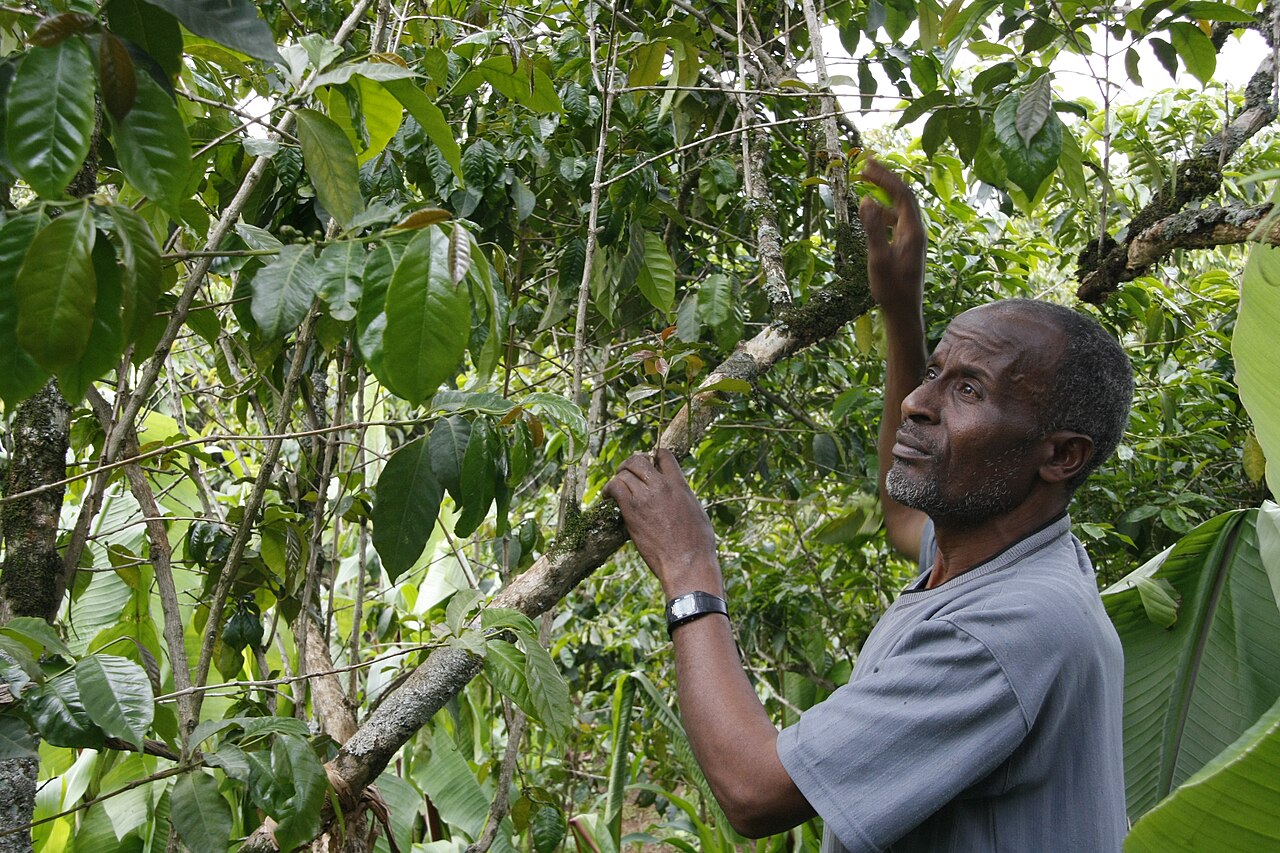
Table of Contents
- Why Ethiopia is Coffee's True Home
- The Geography of Ethiopian Coffee
- The Ethiopian Coffee Forest Ecosystem
- Heirloom Varieties: Ethiopia's Genetic Treasure
- The Ethiopian Coffee Ceremony
- Major Ethiopian Coffee Regions
- Ethiopian Coffee Processing Traditions
- Ethiopia's Global Coffee Influence
- Ethiopian Coffee Today and Tomorrow
- The Connection Between Ethiopia and Puerto Rico
- Frequently Asked Questions
Why Ethiopia is Coffee's True Home
Watch: The Birthplace of Coffee — Ethiopia Documentary
Ethiopia is not simply where coffee was first discovered — it is where coffee evolved. The Coffea arabica plant originated in the highland forests of southwestern Ethiopia, where it grew wild for countless centuries before humans began cultivating it. Botanists and geneticists have confirmed this through extensive studies of coffee's DNA, which shows the greatest genetic diversity in exactly this region.
This matters enormously. Every Arabica coffee tree growing today — from Colombia to Kenya to Puerto Rico — descends from plants that originated in Ethiopia's forests. Ethiopia is to coffee what the Fertile Crescent is to wheat: the original homeland, the source, the genetic wellspring from which all cultivation flows.
No other country can claim this distinction. While Yemen was the first place coffee was commercially cultivated, and Brazil now produces the most coffee globally, Ethiopia stands alone as coffee's evolutionary birthplace.

The Geography of Ethiopian Coffee
Ethiopia sits in the Horn of Africa, a vast country of dramatic landscapes. Its coffee grows in the highland regions of the south and west, where elevation, rainfall, and soil create perfect conditions for the plant.
Most Ethiopian coffee grows between 1,500 and 2,200 meters above sea level. The air is cool, even in the tropics. Rainfall is abundant during the growing season, and the dry period allows cherries to ripen slowly and develop complex flavors. The soil is rich volcanic earth, loaded with minerals that coffee trees love.
The country's equatorial position means coffee trees can grow year-round, though the main harvest happens between October and December. Coffee is cultivated across multiple regions, each with distinct flavor characteristics shaped by local microclimates.
The Ethiopian Coffee Forest Ecosystem
Unlike the vast monoculture coffee farms of Brazil or Vietnam, much of Ethiopia's coffee still grows in what are called "garden coffee" and "forest coffee" systems. In these traditional methods, coffee trees grow naturally alongside other plants — fruit trees, shade trees, vegetables, and wild shrubs.
Forest coffee is coffee that grows truly wild, the way nature intended. Farmers do not plant these trees; they simply harvest the cherries from wild coffee plants that have grown in the forests for generations. This coffee is about as close to the original wild Arabica as you can get.
Garden coffee grows in small plots near farmers' homes, tended more carefully but still mixed with other crops. This system preserves biodiversity, protects the soil, and produces coffee of remarkable character.
This traditional approach has another vital benefit: it preserves the thousands of wild coffee genetic variants that exist nowhere else in the world. As climate change threatens coffee crops globally, this genetic reservoir may save the future of the entire coffee industry.
Heirloom Varieties: Ethiopia's Genetic Treasure
In most coffee-producing countries, farmers grow a small number of named varieties — Bourbon, Typica, Caturra, and a handful of others. In Ethiopia, the situation is completely different. Ethiopia is home to thousands of distinct coffee varieties, most of which have never been formally named or classified by scientists.
These are called "Ethiopian heirloom varieties" in the specialty coffee industry. The term is a kind of shorthand for "a unique Ethiopian variety we haven't fully cataloged yet." Researchers estimate Ethiopia may have between 6,000 and 10,000 distinct coffee genetic variants — an astonishing number that represents the deep evolutionary history of the plant.
Each Ethiopian region, sometimes each village, may grow varieties found nowhere else. This diversity creates an incredible range of flavors. Ethiopian coffees are famous for their floral aromas, tea-like delicacy, berry-like brightness, and citrus notes — flavors you simply cannot find in the more limited varieties grown elsewhere.
The Ethiopian Coffee Ceremony
Coffee is not just a drink in Ethiopia — it is a sacred social ritual. The Ethiopian coffee ceremony, called "buna" (the Amharic word for coffee), can take two to three hours and involves the entire community.
The ceremony begins with the host washing green coffee beans by hand. The beans are then roasted over a small charcoal fire while everyone watches. As the aroma fills the room, the host passes the smoking pan around so guests can inhale the scent — a gesture of welcome and honor.
The roasted beans are ground by hand using a traditional mortar and pestle called a mukecha. The coffee is brewed in a clay pot called a jebena, with a narrow spout that pours into small, handleless cups.
Three rounds of coffee are served in strict order: abol (the first round, strongest), tona (the second, medium strength), and baraka (the third, weakest). Refusing to stay for all three rounds is considered impolite — the ceremony is meant to be savored completely.
Frankincense is often burned during the ceremony, and popcorn or roasted grains are served alongside the coffee. It is a multisensory experience.
Major Ethiopian Coffee Regions
Ethiopia's main coffee-producing regions each have their own distinctive character:
Yirgacheffe is the most famous. This small region in the south produces delicate, floral coffees with bright acidity and complex flavor notes that often suggest jasmine, bergamot, and stone fruit. Yirgacheffe is considered one of the finest coffees in the world.
Sidamo surrounds Yirgacheffe and produces a range of coffees from fruity and bright to full-bodied and winey. Sidamo coffees are some of the most versatile and approachable Ethiopian coffees.
Harrar is grown in the eastern highlands and produces bold, wild-tasting natural coffees with intense berry and chocolate notes. It has a very different character from the western Ethiopian coffees.
Limu, Djimmah, and Kaffa are regions in western Ethiopia producing coffees with balanced, medium-bodied profiles and spicy, winey characteristics.
Guji has emerged in recent years as one of the most exciting Ethiopian coffee regions, with coffees that rival Yirgacheffe for complexity and elegance.
Ethiopian Coffee Processing Traditions
Ethiopia processes its coffee in two traditional ways, each producing dramatically different flavors.
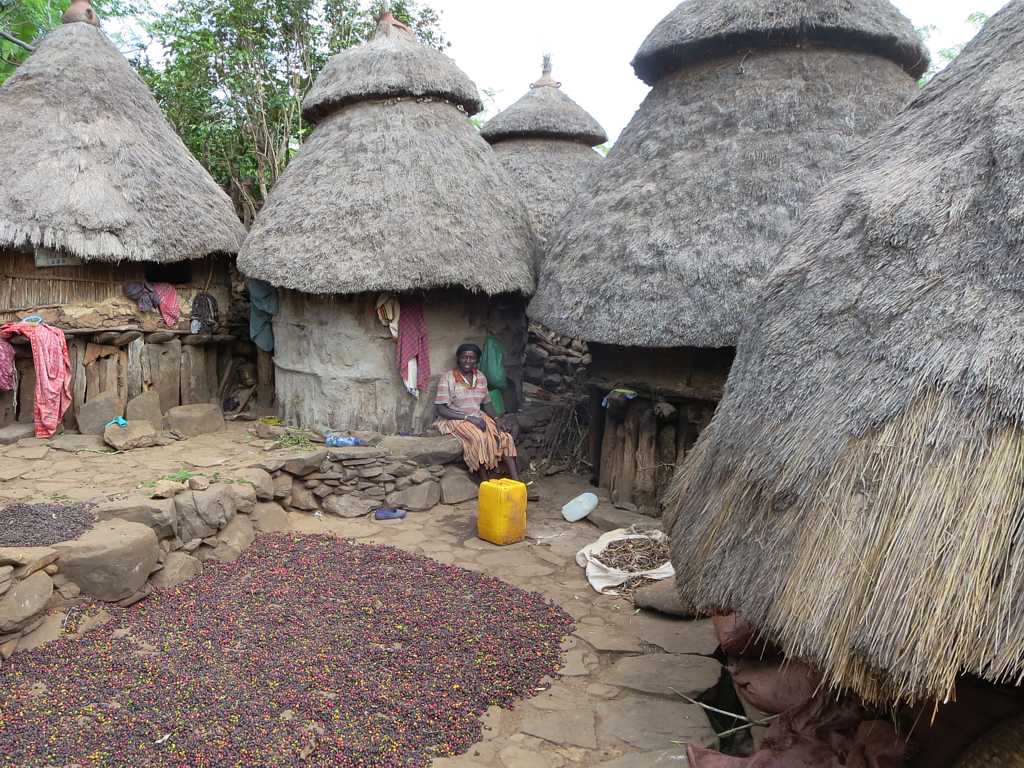
Natural (or dry-processed) coffee is processed the oldest way — cherries are laid out in the sun to dry whole, with the fruit still surrounding the beans. As the cherries dry, the fruit sugars infuse the beans, creating intensely fruity, wine-like flavors. This is how coffee has been processed in Ethiopia for a thousand years.
Washed (or wet-processed) coffee is a more modern method where the cherry fruit is removed before drying. Washed Ethiopian coffees tend to be cleaner, brighter, and more delicate, showcasing the floral and tea-like character of the heirloom varieties.
Both methods produce extraordinary coffee. Many specialty coffee lovers consider Ethiopian naturals among the most exciting coffees in the world for their sheer intensity of fruit flavor.
Ethiopia's Global Coffee Influence
Without Ethiopia, coffee as we know it would not exist. Every variety grown on every continent traces back to Ethiopian seeds that were transported — sometimes by trade, sometimes by theft — across the centuries.
Coffee first left Ethiopia for Yemen around the 15th century. From Yemen, it spread to the wider Arab world. The Dutch smuggled coffee plants out of Yemen to Indonesia in the 1600s. French and Dutch colonizers brought coffee to the Caribbean and South America in the 1700s. Every step of this journey began with plants whose ancestors were Ethiopian.
Today, Ethiopia contributes its genetic legacy in a new way. Scientists studying climate-resistant coffee varieties return to Ethiopia's forests to find wild coffee plants that can survive the challenges of a warming world.
Ethiopian Coffee Today and Tomorrow
Ethiopia is currently the fifth-largest coffee producer in the world and the largest in Africa. Coffee is essential to Ethiopia's economy: it accounts for a significant portion of the country's export earnings and provides livelihoods for roughly 15 million Ethiopians, mostly small-scale farmers.
The Ethiopian coffee sector faces real challenges. Climate change is pushing suitable growing zones higher up mountainsides. Coffee leaf rust and other diseases threaten crops. Farmers often earn very little despite the high prices their coffee commands internationally.
But there are reasons for hope. Ethiopian specialty coffee is booming in global markets. Young Ethiopian entrepreneurs are building roasting companies and coffee shops. The deep genetic biodiversity of Ethiopian coffee remains the greatest insurance policy the industry has against climate catastrophe.
The Connection Between Ethiopia and Puerto Rico
Ethiopia and Puerto Rico are separated by eight thousand miles of ocean, but they are intimately connected through coffee. Every coffee plant growing on Puerto Rico's mountainsides traces its ancestry back to Ethiopia's highland forests.
When the French brought coffee to the Caribbean in the early 1700s, they were growing Typica and Bourbon varieties — both of which are Arabica cultivars descended from Ethiopian originals. When coffee arrived in Puerto Rico in 1736, it carried Ethiopian genetics with it.
Today, Puerto Rican coffee growers cultivate varieties like Typica, Bourbon, Caturra, and several unique Puerto Rican variants — all descended from Ethiopia's ancient forests. Drinking Puerto Rico coffee is, in a very real sense, tasting Ethiopian heritage transformed by Caribbean terroir.
The Puerto Rican mountains share surprisingly similar characteristics with Ethiopian highlands: high elevation, volcanic soil, abundant rainfall, and temperate climate. These similarities allow Ethiopian coffee genetics to thrive in Puerto Rico, producing beans of exceptional quality.
Frequently Asked Questions
Q: Is Ethiopia really where coffee came from? Yes. Scientific evidence from genetic studies confirms that Coffea arabica, the species that produces most of the world's high-quality coffee, originated in the highland forests of southwestern Ethiopia.
Q: What is the most famous Ethiopian coffee? Yirgacheffe is the most famous and widely celebrated Ethiopian coffee, known for its delicate floral and citrus character.
Q: How do Ethiopians drink coffee? Ethiopians drink coffee in a traditional ceremony called "buna," which lasts two to three hours and involves roasting green beans, grinding by hand, and serving three rounds of coffee in small cups.
Q: What are Ethiopian heirloom varieties? Ethiopian heirloom varieties refer to the thousands of unique native coffee varieties that grow in Ethiopia but have not been formally classified by scientists. They represent the greatest genetic diversity in the coffee world.
Q: How much coffee does Ethiopia produce? Ethiopia produces roughly 7 to 8 million 60-kilogram bags of coffee per year, making it the world's fifth-largest coffee producer.
Q: What's the difference between Ethiopian coffee and Puerto Rican coffee? Puerto Rican coffee descends genetically from Ethiopian ancestors but has been shaped by Caribbean soil, climate, and farming traditions. Puerto Rican coffee tends to be richer, more chocolatey, and smoother, while Ethiopian coffees are often more delicate, floral, and bright.
Q: Is Ethiopian coffee organic? Much of Ethiopian coffee grows with minimal or no chemical inputs by default, especially forest-grown and garden coffees. Some is certified organic; much is organic in practice without formal certification.
Q: Can I taste coffee descended from Ethiopian varieties in Puerto Rico? Yes. Puerto Rico coffee, available from PuertoRicoCoffeeShop.com, grows from varieties that descend directly from Ethiopian ancestors — offering a taste of coffee's ancient heritage reimagined through Boricua mountains.
Honor Coffee's Ancient Roots
Coffee's story began in Ethiopia, but it continues in every cup of authentic Puerto Rico coffee — grown from Ethiopian genetics, transformed by Caribbean soil and sunshine.
Experience the living legacy of coffee's birthplace, delivered fresh from the mountains of Puerto Rico.
BUY AUTHENTIC PUERTO RICO COFFEE →
Related Articles
- The Legend of Kaldi the Goat Herder
- The Sufi Monks and Coffee's Spiritual Journey
- Yemen and the Port of Mocha
- How Coffee Reached Puerto Rico in 1736
- What is Coffea Arabica? The Noble Coffee Species
Part of The Coffee Encyclopedia — The World's Largest Free Coffee Reference. Proudly sponsored by PuertoRicoCoffeeShop.com — Authentic Puerto Rico Coffee.