
French Press Coffee: The Complete Guide to Immersion Brewing
Summary
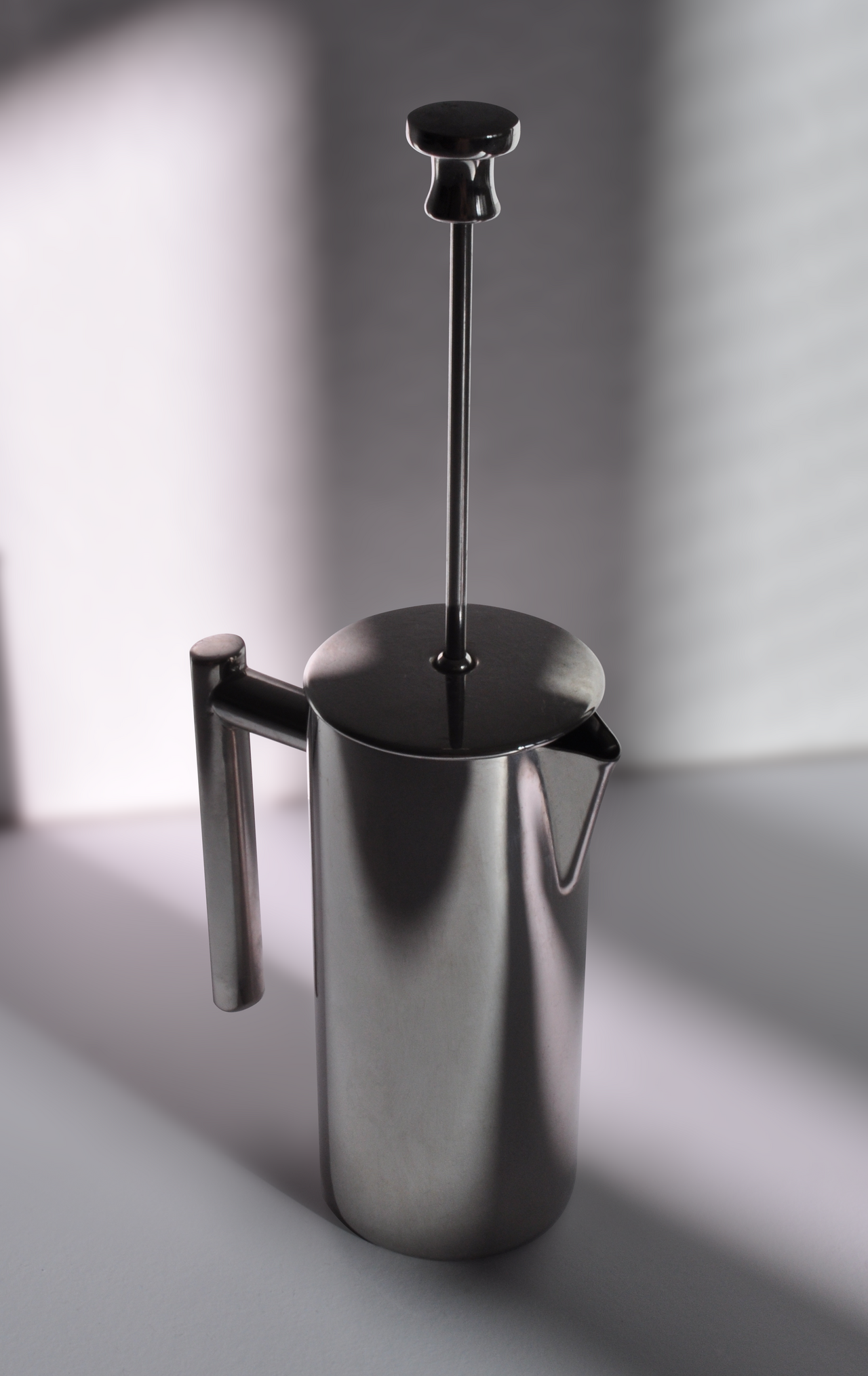
The French press is one of the world's most beloved coffee brewing methods, valued for its simplicity, durability, and ability to produce full-bodied coffee with rich mouthfeel and pronounced flavor. Despite its name, the device's true origins are Italian — with a 1929 patent in Milan — though French coffee culture embraced and popularized it so thoroughly that the French name stuck. As a full-immersion brewing method using a metal mesh filter rather than paper, the French press produces coffee distinctly different from pour over or espresso: heavier in body, richer in oils, with more pronounced flavor presence. This guide covers the French press's history, technique, and the specific qualities that make it a preferred brewing method for millions worldwide.
The Italian Origin
Despite its French name, the modern French press traces to Italy. In 1929, Italian designer Attilio Calimani patented a coffee brewer featuring a cylindrical glass container with a plunger and mesh filter — essentially the French press design recognizable today.
Earlier patents for similar concepts existed. A French patent from 1852 by Mayer and Delforge described a similar principle but lacked the precision and refinement of later designs. Various European inventors worked on plunger-style brewers throughout the late 1800s, but Calimani's 1929 patent established the modern form.
The design spread through European coffee culture in the following decades. French and Italian coffee companies manufactured and sold plunger coffee brewers, refining the technical details of mesh quality, glass durability, and plunger sealing. By the mid-20th century, the French press had become established household equipment across Europe.
The name "French press" became common in English-speaking markets, possibly because French coffee culture embraced the device more visibly than Italian culture (which remained focused on espresso). The French name "cafetière" (literally "coffee pot") is also widely used. In Britain and Commonwealth countries, the term "cafetière" or "coffee plunger" is common.
Bodum and Modern French Press Culture
Swiss company Bodum played a central role in establishing the French press as global household equipment. Founded in 1944 by Peter Bodum in Denmark, the company acquired French coffee brand Martin SA in 1958 and began manufacturing the Chambord model — a French press design that became iconic.
The Chambord's distinctive design features:
Borosilicate glass carafe: Durable, heat-resistant, visually appealing for presentation.
Chrome-plated metal frame: Ornate styling that became synonymous with French press identity.
Stainless steel mesh filter: Fine-woven metal screen that allows coffee oils through while retaining most grounds.
Well-sealed plunger: Tight fit between plunger and glass wall prevents grounds from escaping around the filter edge.
Bodum Chambord and similar designs have become so ubiquitous that many consumers associate the appearance specifically with French press coffee. Millions of Bodum French presses exist in homes worldwide.
Many other manufacturers now produce French presses in various sizes, materials, and price points, but the basic design remains essentially unchanged since the mid-20th century.
How French Press Works
French press brewing follows a straightforward process:
Add coffee: Coarsely ground coffee is placed in the bottom of the empty press.
Add hot water: Hot water is poured over the grounds, filling the press to capacity or the desired amount.
Steep: Grounds and water sit together for 4 minutes (standard) while extraction occurs. All coffee is in constant contact with all water throughout this period — this is the "immersion" in immersion brewing.
Stir or break crust: After several minutes, some brewers stir the surface to break up the crust of floating grounds. Others skip this step.
Plunge: The plunger with attached mesh filter is pressed slowly down through the coffee, separating grounds from brewed coffee.
Serve: Coffee is poured from the carafe into cups, leaving grounds trapped at the bottom under the filter.
The entire process takes approximately 5-6 minutes from start to finish, with 4 minutes of actual brewing time.
The Key Difference — Immersion vs. Filter
Understanding French press requires understanding immersion brewing:
Immersion brewing (French press): All coffee is in constant contact with all water for the entire brewing period. Extraction happens uniformly throughout the brew.
Filter brewing (pour over, drip): Water flows continuously through the coffee bed, passing through fresh grounds as it extracts. Extraction is gradual and cumulative.
Pressure brewing (espresso): High-pressure water forced through fine grounds in very short time.
Each approach produces distinct cup characteristics:
Immersion produces: Full body, rich mouthfeel, mellow rather than bright flavor, preserved oils and lipids, longer extraction time, more pronounced sediment.
Filter produces: Lighter body, cleaner cup, bright acidity, separated flavor notes, filtered oils, minimal sediment.
Pressure produces: Concentrated body, intense flavor, distinctive crema, specific pressure-extracted compounds.
French press's immersion approach is particularly well-suited to fuller-bodied coffees, darker roasts, and styles emphasizing comfort and richness rather than bright complexity.
Equipment Choices
Selecting a French press:
Size: Common sizes range from 12oz (350ml, single cup) to 51oz (1500ml, multiple servings). Match size to typical brewing quantity — brewing less than half-capacity can cause uneven extraction.
Material:
- Glass: Most common. Visually appealing, doesn't affect flavor, shows extraction visually. Can break.
- Stainless steel: Durable, insulated models maintain temperature, portable. Some feel it affects taste subtly.
- Ceramic: Attractive and insulating. Heavier and more fragile than metal.
- Plastic: Inexpensive and durable. May affect flavor over time.
Filter quality: Important. Quality mesh filters allow oils through while retaining most grounds. Cheap filters let too much sediment through.
Plunger fit: Good plunger fits snugly against carafe walls, preventing grounds from escaping around edges during plunging.
Double-wall insulation: Optional feature retaining temperature during brewing and serving.
Brand and price: Premium French presses ($50-150) offer better build quality and filtration. Budget options ($15-30) work adequately for casual use.
Technique and Recipe
Watch: James Hoffmann — The Ultimate French Press Technique
Standard French press preparation:
Coffee dose: 1:15 to 1:18 coffee-to-water weight ratio. Common starting point: 30g coffee for 450ml water (roughly 1:15).
Grind size: Coarse — similar to cracked pepper or coarse sea salt. Fine grind causes over-extraction and excessive sediment. Too coarse produces weak coffee.
Water temperature: 195-205°F (90-96°C), similar to pour over.
Steep time: 4 minutes is standard. Longer steeping increases extraction and bitterness. Shorter steeping produces weaker coffee.
Process:
- Preheat press with hot water, discard
- Add ground coffee to empty press
- Start timer, pour hot water over grounds
- Stir briefly to ensure all grounds are wet
- Place plunger on top (don't press down) to retain heat
- At 4 minutes, press plunger slowly straight down
- Pour immediately into cups
- Don't let coffee sit in press after plunging — continued extraction produces bitterness
Optional technique — the Hoffmann method:
Coffee expert James Hoffmann popularized a modified French press technique:
- Add coffee and hot water
- Wait 4 minutes
- Break the crust by stirring gently
- Wait another 5 minutes
- Scoop off remaining foam and floating grounds
- Plunge very gently or simply pour without plunging fully
This method produces cleaner coffee with less sediment while maintaining the French press body and richness.
The French Press Flavor Profile
French press produces distinctive cup characteristics:
Full body: The metal mesh filter allows coffee oils, lipids, and fine particles to pass into the cup, creating notably heavier body than paper-filtered methods.
Rich mouthfeel: Unfiltered oils create a viscous, coating sensation on the palate.
Mellow acidity: Less pronounced acidity than pour over, with acids feeling integrated into overall flavor rather than standing out.
Pronounced bitterness balance: Full extraction of coffee's bitter compounds integrated with sweet and sour flavors.
Chocolate and nut notes: Often featured, particularly in darker roasts.
Some sediment: Fine coffee particles inevitably pass through mesh, creating characteristic sediment at cup bottom.
Comfort beverage character: Often described as warming, comforting, satisfying rather than bright or exciting.
French press works particularly well with:
- Medium to dark roasts
- Coffees with chocolate, nut, or caramel flavor notes
- Darker-roasted single origins
- Coffees valued for body and fullness rather than brightness
French press works less well with:
- Light roasts emphasizing floral or delicate notes
- Very bright, acid-forward coffees
- Coffees where delicate flavor nuance matters most
Troubleshooting
Common French press problems and solutions:
Too much sediment in cup:
- Grind coarser (proper French press grind is quite coarse)
- Check filter for damage
- Ensure plunger seal is tight
- Wait a minute after plunging before pouring to let fines settle
Coffee tastes bitter:
- Reduce steep time (try 3:30 instead of 4:00)
- Grind slightly coarser
- Lower water temperature slightly
- Serve immediately after plunging — don't let sit in press
Coffee tastes weak:
- Increase coffee dose
- Grind slightly finer
- Extend steep time slightly
- Ensure water fully covers all grounds
Coffee tastes sour:
- Grind finer (small amount)
- Extend steep time
- Raise water temperature
- Use fresher coffee
Plunger sticks or difficult to press:
- Grind coarser
- Replace filter if damaged
- Ensure plunger is being pressed straight down
- Use proper ratio — too much coffee with too little water causes sticking
French Press Around the World
French press coffee culture varies globally:
United Kingdom: Cafetière brewing is widely popular as alternative to kettle-and-tea tradition. Found in most homes and cafés.
France: Modest home presence despite French name. French coffee culture emphasizes espresso and quick coffee bars.
United States: Popular as alternative brewing method, common in homes, frequent in diners and casual cafés.
Australia/New Zealand: "Plunger coffee" or "plunger" commonly used for French press.
Canada: Similar to US — widespread home use.
Japan: Less common than pour over brewing traditions but present in specialty coffee contexts.
French Press in Context
Among brewing methods, French press occupies specific niches:
Home daily brewing: Many households use French press as daily primary method for convenience and consistency.
Multi-cup brewing: Large French presses efficiently brew for multiple people simultaneously.
Travel brewing: Portable stainless-steel French presses work for camping, hotels, and travel.
Specialty coffee: Some specialty shops feature French press as alternative to pour over, showcasing immersion extraction.
Casual entertaining: French press presentation and shared brewing suits breakfast and casual gatherings.
The method's longevity — nearly a century of continuous use since Calimani's 1929 patent — demonstrates durable appeal. Changes in coffee trends, equipment fashion, and cultural preferences come and go, but French press remains a steady coffee brewing fixture.
Key Facts
- Modern design patented: Attilio Calimani, Italy, 1929
- Popularized by: Bodum (especially Chambord model)
- Brewing type: Full immersion with metal mesh filter
- Standard steep time: 4 minutes
- Typical brew ratio: 1:15 to 1:18 (coffee to water by weight)
- Grind size: Coarse (similar to cracked pepper)
- Water temperature: 195-205°F (90-96°C)
- Resulting body: Heavy, full, rich mouthfeel
- Common cup sizes: 12oz, 32oz, 51oz
Frequently Asked Questions
Q: Why is it called French press when it was invented in Italy? The modern design was patented by Italian Attilio Calimani in 1929, but French coffee culture embraced and popularized the device, leading English-speaking markets to adopt the "French press" name. The French call it "cafetière," and the British call it either "cafetière" or "coffee plunger."
Q: How does French press differ from pour over? French press uses full immersion (all coffee and water together throughout brewing) with a metal mesh filter that allows oils through, producing heavier body and richer mouthfeel. Pour over uses gradual filter brewing with paper filters that remove oils, producing cleaner, brighter cups.
Q: What grind size should I use? Coarse grind — similar to cracked pepper or coarse sea salt. Too fine causes over-extraction and excessive sediment. Too coarse produces weak coffee. Most household grinders have a coarse setting labeled for French press.
Q: How long should I steep French press coffee? Standard steep time is 4 minutes. Longer produces more bitterness; shorter produces weaker coffee. James Hoffmann's modified technique extends steeping to 9+ minutes total using different technique.
Q: Can I use French press for any coffee? Yes, but French press suits medium to dark roasts with chocolate, nut, or caramel characteristics better than light, delicate, floral coffees. The immersion brewing and unfiltered oils emphasize body and richness.
BUY AUTHENTIC PUERTO RICO COFFEE →
Part of The Coffee Encyclopedia — Sponsored by PuertoRicoCoffeeShop.com.