Lares: Coffee, Revolution, and Heritage
[IMAGE: Lares Puerto Rico mountain town historic plaza]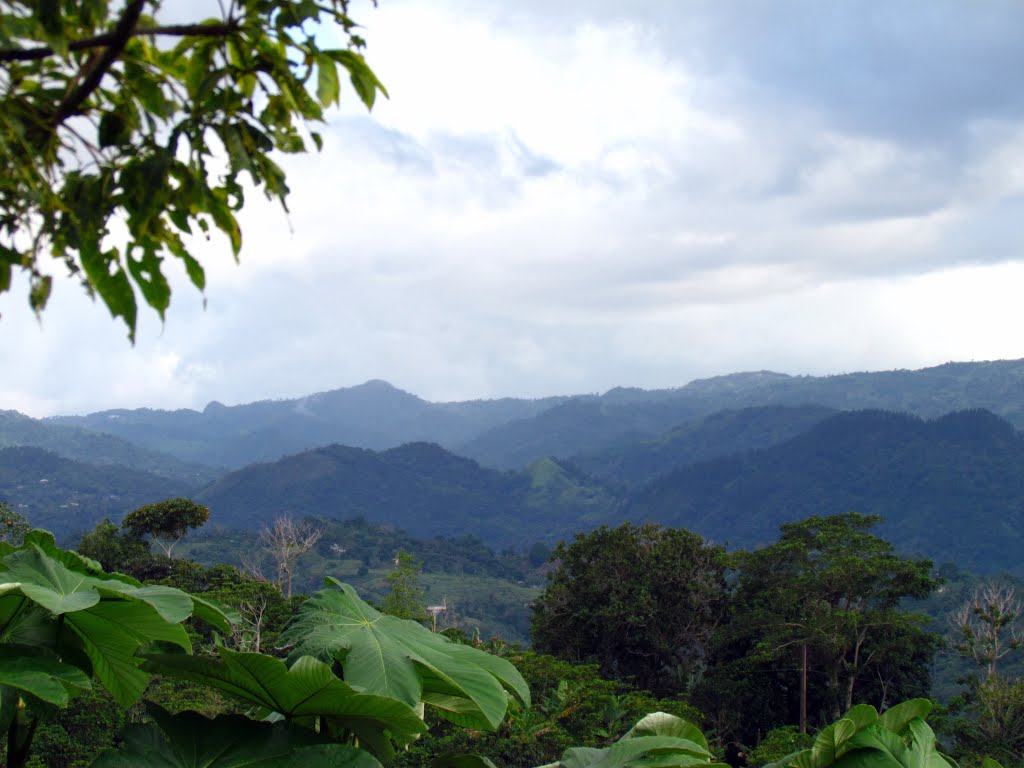
Summary
Lares holds a unique place in Puerto Rican history and coffee culture. This western mountain municipality was the site of the 1868 Grito de Lares, the historic revolutionary uprising for Puerto Rican independence from Spain, making Lares the symbolic heart of Puerto Rican national identity. The same mountains that hosted revolutionaries have produced exceptional coffee for two centuries, with family farms cultivating beans that reflect both the terroir and the fiercely independent spirit of the region. Lares coffee, grown in the shadow of revolutionary history, carries a cultural weight that few other regional coffees can match.
The Mountain Municipality
Lares occupies approximately 61 square miles of western Puerto Rico's interior highlands, where the Cordillera Central's western extensions meet the northwestern coastal foothills. The town center sits at roughly 437 meters elevation, while the surrounding coffee-growing mountains rise to 900 meters and beyond.
The landscape features dramatic valleys, forested peaks, and the karst limestone formations that give the region its distinctive topography. Underground caves, sinkholes, and unusual rock formations punctuate the mountains. Rivers including the Río Grande de Arecibo carve through the terrain, creating deep valleys that contrast with exposed ridgetops.
This geography shaped both the coffee industry and the revolutionary history. The rugged mountains offered refuge for independence fighters in 1868. The same isolated valleys became home to multi-generational coffee families who preserved traditional farming through centuries of economic and political change.
[IMAGE: Western Puerto Rico karst mountain terrain]
El Grito de Lares — September 23, 1868
On the night of September 23, 1868, approximately 600 armed revolutionaries gathered in the hills above Lares under the leadership of figures including Ramón Emeterio Betances and Mariana Bracetti. They marched into the town, seized the municipal government, declared the Republic of Puerto Rico, and raised a revolutionary flag hand-sewn by Bracetti — a flag that remains a potent national symbol.
The revolution was suppressed within days. Spanish forces arrived, rebels were captured or killed, and Spain retained control of the island. But the Grito de Lares (Cry of Lares) became the foundational moment of Puerto Rican national consciousness. It marked the first organized, armed declaration of Puerto Rican identity separate from Spanish colonial rule.
September 23 is observed annually as the Grito de Lares anniversary, with commemorations focused in Lares itself. The Plaza de la Revolución (Revolution Plaza) in the town center, featuring the Tamarindo de Don Ramón tree reportedly planted by Betances, serves as the symbolic epicenter of Puerto Rican national memory.
Coffee and Revolution Intertwined
The connection between Lares coffee and Lares revolution is not incidental. The 1868 uprising grew from conditions faced specifically by coffee farmers and mountain agricultural workers. Spanish colonial policies taxed small coffee producers harshly, restricted their market access, and kept mountain communities in deep poverty despite their agricultural labor.
Many of the 1868 revolutionaries were coffee farmers, hacienda workers, and mountain artisans. Their demands included not just political independence but economic justice for coffee producers, fair prices, and access to markets beyond Spanish control. The coffee economy and the revolutionary movement were inseparable.
This connection persists in Lares coffee culture today. Lares farmers often speak of their coffee as carrying the spirit of the Grito — an independent, self-determined agricultural product from a community proud of its revolutionary heritage.
The Municipality's Founding
Lares was officially established as a municipality in 1827, during the era of Spanish trade liberalization under the Cédula de Gracias. The settlement grew rapidly as European immigrants arrived seeking agricultural opportunities in the western mountains.
While less heavily Corsican than Yauco, Lares received significant Spanish, Italian, and Mallorcan immigration through the 19th century. These settlers established the coffee haciendas that would define the region's economy for decades. Family names with European roots still dominate Lares coffee farming today, though mixed with deep Taíno-African-Spanish Puerto Rican heritage.
The municipality grew in both agricultural importance and political significance through the 19th century. By the time of the 1868 uprising, Lares had become a mid-sized mountain town of several thousand residents with a developed coffee economy and active cultural life.
[IMAGE: Historic Lares Puerto Rico coffee hacienda]
Coffee Terroir of Lares
Lares coffee grows primarily between 500 and 900 meters above sea level — slightly lower than the highest elevations of Yauco or Adjuntas, but within the excellent specialty coffee range. The Lares terroir features several distinctive elements:
Karst limestone substrate: The underlying limestone geology creates unusual soil chemistry that influences coffee flavor distinctively.
Mixed mountain soils: Volcanic and sedimentary soils intermingle across Lares farms, creating microclimates within short distances.
Rainfall patterns: The western mountains receive abundant rainfall with good seasonal distribution.
Cave and cavern systems: Underground water systems create unique humidity patterns and influence local growing conditions.
Elevation variation: Dramatic altitude changes across short distances allow farmers to select ideal growing zones.
Lares coffee tends toward balanced profiles — smoother and more rounded than the bright fruitiness of Adjuntas, less intensely chocolate than Yauco, but with its own distinctive harmony of flavors. Typical Lares cups feature medium body, mild acidity, caramel and nut notes, and clean finishes.
Heladería de Lares — Cultural Complement
No article about Lares is complete without mentioning the Heladería de Lares, the famous ice cream shop in the town plaza that has become internationally known for its unusual flavors. The Heladería creates ice cream flavors inspired by Puerto Rican ingredients: rice and beans, garlic, avocado, corn, and of course coffee ice cream featuring local beans.
The Heladería serves as an informal ambassador for Lares, drawing visitors from across Puerto Rico and the world. Many visitors who come for the ice cream discover Lares coffee and the revolutionary history simultaneously, creating a kind of cultural tourism ecosystem where coffee, history, and food intersect.
Lares Coffee Families
Modern Lares coffee production centers on multi-generational family farms that have operated continuously, in some cases, since the 19th century. Key characteristics of Lares coffee families include:
Multi-generational continuity: Third, fourth, and even fifth-generation coffee farmers are common, preserving traditional knowledge alongside modern innovation.
Small to medium scale: Typical Lares farms range from 10-40 acres, larger than Adjuntas family farms but smaller than Yauco's grand haciendas.
Mixed crops: Many Lares farms grow coffee alongside other mountain crops — plantains, citrus, tropical fruits, vegetables — maintaining traditional agricultural diversity.
Strong community ties: Lares coffee families often participate in cooperatives, cultural organizations, and local political life with notable intensity.
Cultural preservation: Lares families play significant roles in preserving revolutionary heritage alongside coffee tradition — with many farms operating on lands connected to 1868 history.
[IMAGE: Puerto Rico coffee family farm tradition]
Hurricane María and the Lares Recovery
Hurricane María in 2017 devastated Lares coffee farms alongside the broader Puerto Rican coffee industry. The western mountains received some of the storm's fiercest winds, flattening coffee trees and destroying processing infrastructure. Initial assessments suggested losses similar to other major coffee regions — approximately 80% crop destruction.
Lares recovery drew on the same combination of resilience and innovation seen elsewhere in Puerto Rico's coffee renaissance, but with a distinctly Lares character. Community organizations coordinated replanting. Young Lares coffee farmers — often descendants of families who had farmed the same land for generations — applied modern agricultural science to traditional lands. External partnerships with specialty buyers and development organizations funded tree replacement and farm rebuilding.
By the early 2020s, Lares coffee production was recovering. Several Lares farms were earning international specialty recognition. The revolutionary heritage that had shaped Lares's cultural identity now also shaped its coffee marketing: Lares coffee appealed to buyers interested in stories of independence, resilience, and cultural depth.
Visiting Lares
Lares offers visitors a rich combination of coffee, history, and culture:
Revolutionary heritage: Plaza de la Revolución, historical markers, and the annual Grito de Lares commemorations provide deep historical context.
Coffee farms: Several Lares haciendas welcome visitors for tours and tastings. The town's tourism infrastructure supports coffee-focused agritourism.
Heladería de Lares: The famous ice cream shop remains a mandatory stop for visitors.
Natural attractions: Surrounding mountain hiking, cave tours (including the famous Río Camuy cave system nearby), and scenic drives complement cultural tourism.
Cultural events: Annual festivals celebrate both coffee heritage and revolutionary history, particularly around September 23.
The combination makes Lares particularly meaningful for visitors who want to understand Puerto Rican coffee as inseparable from Puerto Rican cultural and political identity.
Key Facts
- Location: Western mountain region of Puerto Rico
- Municipality founded: 1827
- Coffee growing elevation: 500-900 meters
- Historic significance: Site of Grito de Lares (September 23, 1868)
- Notable figures in history: Ramón Emeterio Betances, Mariana Bracetti
- Farm structure: Predominantly multi-generational family farms
- Flavor profile: Balanced, smooth, medium body, caramel and nut notes
- Cultural landmark: Heladería de Lares (famous ice cream shop)
Frequently Asked Questions
Q: What is the Grito de Lares? The Grito de Lares (Cry of Lares) was the 1868 revolutionary uprising against Spanish colonial rule, centered in the mountain town of Lares. It is considered the foundational moment of Puerto Rican national consciousness.
Q: How is Lares coffee different from other Puerto Rican coffee? Lares coffee tends toward balanced, smooth profiles with medium body and nutty-caramel notes, reflecting the region's distinctive karst limestone geology and mixed mountain soils. It differs from Yauco's deep chocolate or Adjuntas's bright fruit characteristics.
Q: Can I visit the Grito de Lares historical sites? Yes. The Plaza de la Revolución in Lares town center features historical monuments, and the annual September 23 commemorations draw visitors from across the Puerto Rican diaspora and beyond.
Q: Is Lares safe to visit? Yes. Lares is a safe, welcoming mountain town with growing tourism infrastructure focused on coffee, history, and natural attractions.
Q: What is special about the Heladería de Lares? The Heladería de Lares is famous for creating ice cream in unusual flavors inspired by Puerto Rican ingredients — including rice and beans, garlic, avocado, corn, and coffee — drawing visitors from around the world.
BUY AUTHENTIC PUERTO RICO COFFEE →
Part of The Coffee Encyclopedia — Sponsored by PuertoRicoCoffeeShop.com.
[IMAGE: Lares Puerto Rico coffee harvest modern farming]