Moka Pot: The Italian Stovetop Coffee Classic
Summary
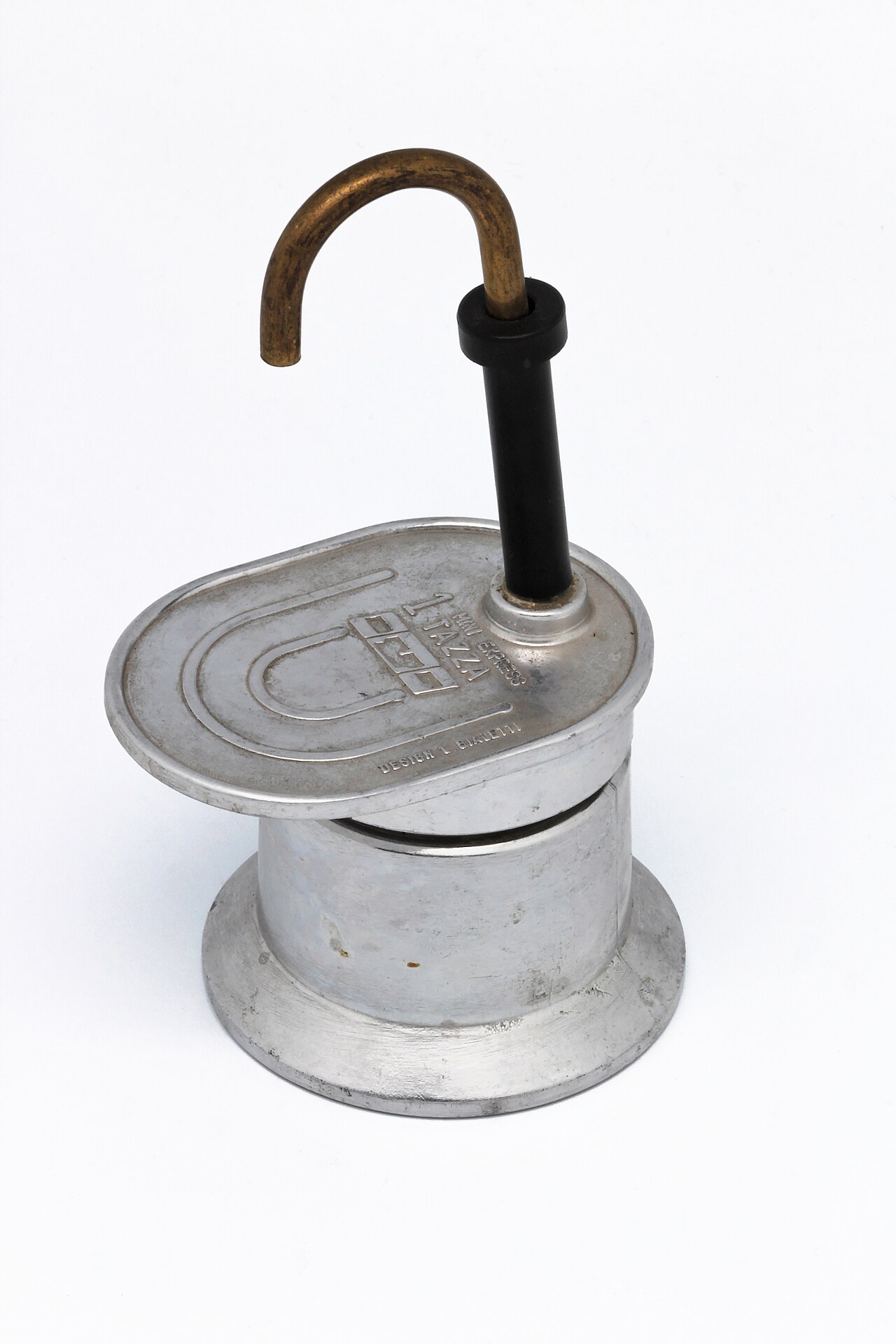
The Moka pot is an iconic stovetop coffee brewer invented in Italy in 1933 that has become the daily coffee preparation method for millions of households worldwide. Using pressurized steam to force hot water upward through coffee grounds, the Moka pot produces strong, rich coffee that approaches espresso intensity without requiring electric machinery. The distinctive octagonal aluminum design created by Alfonso Bialetti has become one of the most recognized coffee brewing implements in history — found in Italian, Puerto Rican, Latin American, and immigrant Italian households across the globe. For people who grew up with the hiss and gurgle of the Moka pot brewing on the morning stove, no other coffee quite captures the same sense of home.
The Italian Invention
The Moka pot story begins in 1933 with Italian metallurgist Alfonso Bialetti. Bialetti had been making aluminum products in Crusinallo, Italy, and observed that women in his town used primitive washing machines that worked by heating soapy water in a sealed tank and pushing it up through a tube. The water, pressurized by steam, flowed through the dirty clothes in an upper compartment.
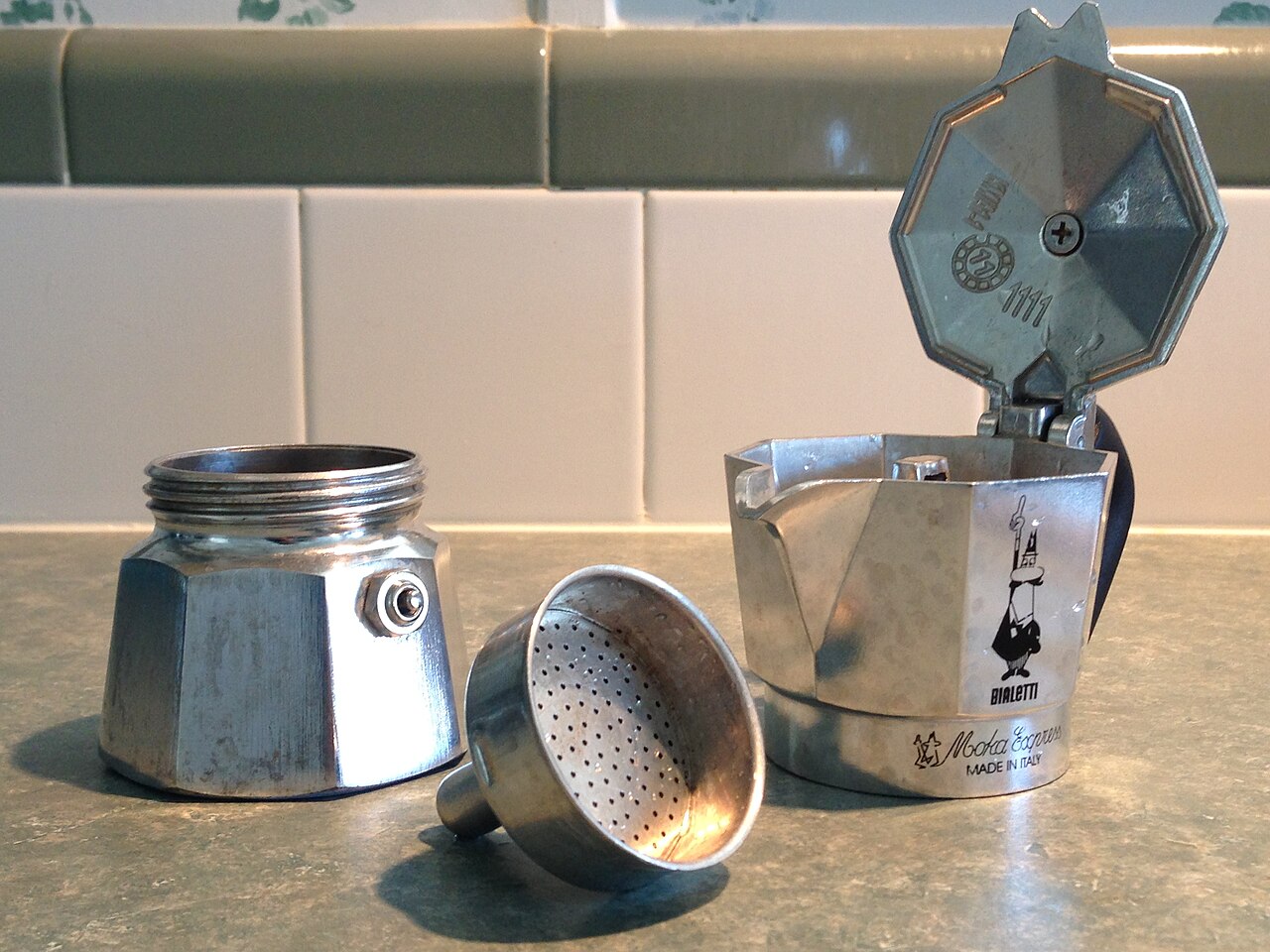
Bialetti saw potential in this principle for coffee brewing. He designed a three-chamber pot using the same upward-flow principle:
Bottom chamber: Boiler holding water.
Middle basket: Perforated funnel holding ground coffee.
Top chamber: Collecting vessel where brewed coffee accumulated.
When heated, steam pressure in the bottom chamber forces water up through the coffee grounds into the top chamber. The design was simple, effective, and suited to household use.
Bialetti patented the design and began producing the Moka Express — named for the Port of Mocha, the ancient coffee-trading center of Yemen. The octagonal aluminum shape was both aesthetic and functional, providing structural strength and visual distinctiveness that would become iconic.
Initial commercial success was modest. Bialetti's company was small, and the late 1930s brought economic difficulties including World War II. Italian households continued using other coffee preparation methods including traditional napoletana pots and primitive percolators.
The Postwar Revolution
The Moka pot's transformation from modest invention to household icon came under Alfonso's son Renato Bialetti, who took over the company after WWII. Renato recognized two crucial opportunities:
Rebuilding Italy needed simple pleasures: Postwar Italian households wanted affordable daily luxuries. A quality coffee preparation tool under a month's wages fit this need perfectly.
Marketing mattered: Renato invested aggressively in advertising, particularly on the newly powerful medium of television.
Renato developed a marketing mascot — the mustachioed man in a traditional Italian vest with finger pointing upward, based on a caricature of his father Alfonso. This character, called "L'omino coi baffi" (the little man with a mustache), became inseparable from the Bialetti brand. Italian consumers saw the mustached man daily on TV commercials, magazine advertisements, and product packaging.
Results were extraordinary. By the 1950s and 1960s, Moka pots appeared in essentially every Italian kitchen. The morning ritual of the Moka on the stove became woven into Italian domestic life. A Bialetti Moka was a standard wedding gift, household necessity, and generational inheritance.
Italian emigration carried Moka pots worldwide. As Italians moved to the Americas, Australia, and other regions in the 20th century, they brought their Moka pots and coffee culture. The pot became established in Italian communities globally, then spread beyond Italian ethnic communities to general populations.
How Moka Pot Brewing Works
Moka brewing involves three stages of pressurized water movement:
Stage 1 — Heating:
- Water in the bottom chamber heats over a stove flame
- Temperature rises toward boiling point
- Dissolved air in water is driven off
Stage 2 — Pressure build:
- As water reaches boiling, steam forms in the sealed bottom chamber
- Pressure builds (typically 1-2 bars above atmospheric)
- Pressure forces water upward through the central tube
- Water passes through the perforated funnel holding ground coffee
- Ground coffee extraction occurs rapidly at elevated pressure
Stage 3 — Collection:
- Brewed coffee emerges into the top chamber through a central spout
- Collection continues as long as water remains in bottom chamber
- When bottom chamber empties, steam bubbles up — the characteristic "gurgling" sound
- This signals brewing is complete; the pot should be removed from heat immediately
The complete brewing cycle typically takes 3-5 minutes from placing on heat to completion. The coffee is hot, strong, and ready to serve directly.
Equipment Design
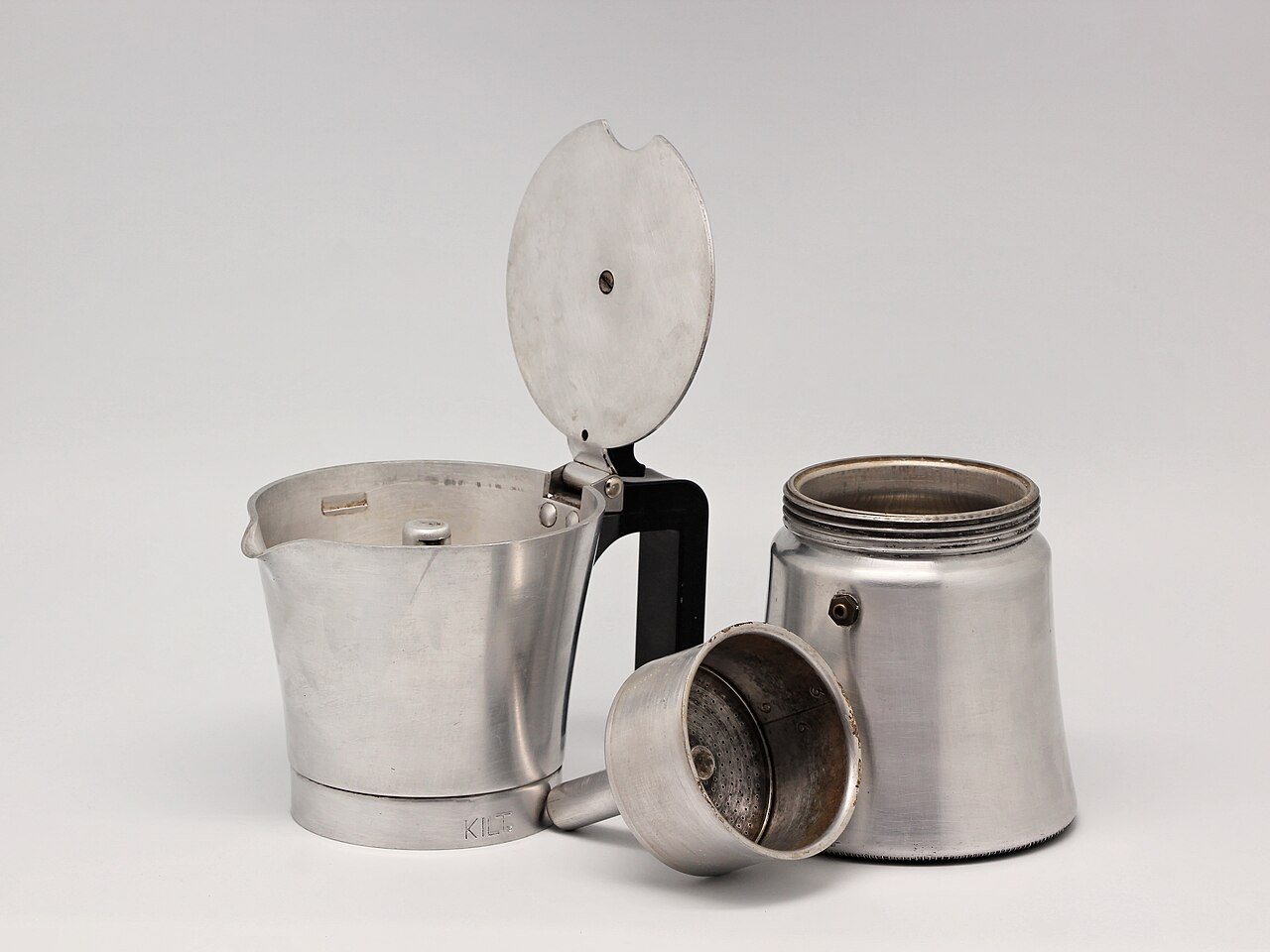
Classic Moka pot components:
Bottom chamber (boiler):
- Holds water for brewing
- Must be filled to just below safety valve
- Most Moka pots have a small internal marker indicating maximum water level
Safety valve:
- Side-mounted pressure release valve
- Opens if internal pressure exceeds safe limits
- Important safety feature that prevents dangerous pressure buildup
Central tube:
- Extends from top of funnel up through the coffee basket
- Carries water from bottom chamber up to coffee grounds
Filter funnel:
- Perforated basket holding ground coffee
- Typically holds 1-3 tablespoons depending on pot size
Upper chamber:
- Collects brewed coffee
- Features central spout that delivers coffee to cup or cup-shaped reservoir
- Includes handle for safe pouring
Rubber gasket:
- Seals the connection between upper and lower chambers
- Must be replaced periodically as it wears out (typical lifespan: 1-3 years of regular use)
Top filter:
- Small perforated disc above the gasket preventing grounds from entering upper chamber
Moka pots come in various sizes (cup capacities):
- 1-cup: approximately 50ml
- 3-cup: approximately 150ml
- 6-cup: approximately 300ml
- 9-cup: approximately 450ml
- 12-cup: approximately 600ml
"Cup" here means Italian espresso cup (about 50ml) — not American coffee mug (about 250ml). A 6-cup Moka serves 1-2 Americans or 3-6 Italians.

Proper Brewing Technique
Watch: Bialetti Moka Express — Review and Demonstration
Making good Moka pot coffee requires attention to detail:
Water preparation:
- Use filtered, soft water (hard water damages the pot and affects taste)
- Preheat water slightly before adding to the pot
- Fill to just below the safety valve (never above)
- Using preheated water reduces heating time and protects coffee from extended heat exposure
Coffee preparation:
- Use medium-fine grind — slightly coarser than espresso, finer than drip
- Fill the basket level, not packed
- Do NOT tamp the coffee (tamping creates excessive pressure)
- Distribute grounds evenly
Assembly:
- Dry the exterior thoroughly before assembly
- Screw the upper chamber onto the lower chamber tightly
- Ensure the rubber gasket is properly positioned
Heating:
- Use low to medium heat (not high heat)
- Too-high heat causes boiling water to push through too quickly, producing harsh coffee
- Some enthusiasts recommend starting with cold water and medium heat
Watching:
- Keep the lid open to observe brewing
- Listen for the gurgling sound indicating completion
- Remove from heat immediately at gurgling — continued heating produces bitter coffee
- Run the base briefly under cold water to stop heat continuation
Serving:
- Serve immediately — Moka coffee degrades quickly in the pot
- Pour into preheated cups
- Add milk, sugar, or other additions as preferred
The Moka Pot Flavor Profile
Moka pot coffee has distinctive characteristics:
Strong and concentrated:
- Higher coffee-to-water ratio than drip or pour over
- More intense than standard home brewing
- Not as concentrated as true espresso
Full body:
- Medium to full body, somewhat oily
- Less clean than paper-filtered methods
- More substantial than drip coffee
Rich flavor:
- Pronounced coffee character
- Chocolate, nut, and caramel notes typically emphasized
- Origin characteristics present but often subdued by strong extraction
Some bitterness:
- Moderate bitter compounds from fast extraction
- Less bitter than poorly made espresso but more than pour over
Minimal crema:
- Brief, thin foam layer that dissipates quickly
- Not comparable to espresso's stable crema
Cultural identity:
- Tastes distinctly of Italian household coffee tradition
- Specific nostalgic character for people who grew up with it
Moka pot coffee suits:
- Medium to dark roast blends
- Italian-style espresso roasts
- Traditional café con leche preparation
- Mixing with steamed milk for approximated cappuccino/latte
Moka pot is less ideal for:
- Light roasts (often taste harsh in Moka)
- Delicate single-origin coffees emphasizing origin nuances
- Modern specialty coffee preferences emphasizing clarity
Moka in Puerto Rico and Latin America
The Moka pot holds particular cultural significance in Puerto Rico and across Latin America:
Household tradition: Many Puerto Rican and Latin American households use Moka pots daily or regularly, often maintaining specific pots across decades or generations.
Café con leche preparation: Moka-brewed strong coffee mixed with heated milk creates the classic Latin American café con leche. This preparation is standard morning coffee across the region.
Italian immigrant heritage: 19th and 20th-century Italian immigration to Latin America — particularly Argentina, Brazil, and Uruguay — spread Moka pots widely. Italian-descendant families maintained the tradition, which then spread to broader populations.
Puerto Rican coffee compatibility: The medium to medium-dark Puerto Rican coffee preferred by many producers works excellently in Moka brewing. The characteristic chocolate and caramel notes of Puerto Rican coffee translate beautifully to the Moka method.
Economic accessibility: Moka pots are affordable (often $30-80 for aluminum, $60-150 for stainless steel), making them accessible to all income levels while delivering premium coffee quality.
Durability: Classic aluminum Moka pots routinely last 20-40 years of regular use. Many Puerto Rican households have Moka pots inherited from parents or grandparents.
Cultural icon: Beyond functional equipment, the Moka pot represents domestic coffee culture and family tradition across the Spanish and Italian-speaking worlds.
For Puerto Rican coffee drinkers, the Moka pot remains one of the most respected and traditional brewing methods — preserving connection to decades of household coffee ritual.
Maintenance and Care
Proper Moka pot care extends lifespan significantly:
Daily cleaning:
- Rinse thoroughly with hot water after each use
- Do NOT use soap — it alters taste and may damage the seasoning
- Air dry completely before storing
- Disassemble for drying if storing in humid environments
Seasoning (aluminum pots):
- New aluminum Moka pots benefit from 2-3 initial "seasoning" brews with coffee discarded
- Seasoning builds protective coffee oil layer on interior surfaces
- Over time, the seasoning improves coffee taste
Periodic deep cleaning:
- Monthly cleaning with hot water and a small amount of vinegar if limescale appears
- Thorough rinse after deep cleaning
Gasket replacement:
- Replace rubber gasket every 1-3 years (or sooner if leaks appear)
- Replacement gaskets are inexpensive ($5-15) and simple to install
Filter replacement:
- Replace filter disc if corroded or damaged
- Usually accessible through same parts supplier as gasket
Never:
- Put in dishwasher (damages aluminum and gasket)
- Use abrasive pads (scratches interior)
- Use soap (affects taste)
- Overheat empty (damages metal and gasket)
Modern Moka Pot Culture
Contemporary Moka pot use spans traditional Italian households and modern specialty coffee interest:
Traditional European households: Moka remains standard morning coffee equipment in Italy and across much of Europe.
Latin American households: Continued strong household presence across Puerto Rico, Cuba, Argentina, Brazil, Mexico, and beyond.
Italian-American culture: Preserved as cultural connection in Italian-descent American households.
Specialty coffee interest: Younger coffee enthusiasts discovering Moka pots as alternative to espresso machine investment.
Double-boiler Moka: Modern refined Moka designs with ingenious upper and lower chamber integration.
Coffee chain adaptation: Some specialty coffee chains offer Moka brewing as menu alternative.
The Moka pot's 90+ year history shows no signs of fading. The combination of cultural significance, practical quality, and affordable accessibility maintains strong demand globally.
Key Facts
- Invented: Alfonso Bialetti, Crusinallo, Italy, 1933
- Original name: Moka Express
- Material: Originally aluminum; modern versions also in stainless steel
- Pressure: 1-2 bars (atmospheric + 1-2 atm)
- Brewing time: 3-5 minutes from heat application
- Typical coffee ratio: 12-15g coffee per 6-cup (300ml) pot
- Grind size: Medium-fine (slightly coarser than espresso)
- Marketing icon: "L'omino coi baffi" (the mustachioed man)
- Global sales: Hundreds of millions of units sold since 1933
- Typical lifespan: 20-40 years of regular use with proper care
Frequently Asked Questions
Q: What is a Moka pot? A Moka pot is an Italian stovetop coffee brewer that uses steam pressure to force hot water through ground coffee. Invented in 1933 by Alfonso Bialetti, it produces strong coffee similar to weak espresso — richer than drip coffee but less concentrated than true espresso.
Q: How is Moka pot coffee different from espresso? True espresso requires 9 bars of pressure; Moka pots produce only 1-2 bars. Moka coffee is strong and concentrated but lacks espresso's intensity, proper crema, and refined extraction. It's best described as "stovetop espresso-style coffee" rather than true espresso.
Q: What coffee grind should I use for Moka? Use medium-fine grind — slightly coarser than true espresso but finer than drip or pour over. Too fine causes clogging and over-extraction; too coarse produces weak, sour coffee.
Q: Why does my Moka coffee taste bitter? Common causes: heat too high, coffee ground too fine, leaving the pot on heat after gurgling, tamping the coffee (don't tamp), using stale coffee, or brewing too long. Start with medium heat, proper grind, and remove from heat immediately when gurgling begins.
Q: Is a Moka pot worth buying? For strong coffee without investing in espresso equipment, absolutely yes. Moka pots are affordable ($30-100 typical), durable (often lasting decades), and produce genuinely good coffee. They're particularly popular for Latin American-style café con leche preparation.
BUY AUTHENTIC PUERTO RICO COFFEE →
Part of The Coffee Encyclopedia — Sponsored by PuertoRicoCoffeeShop.com.