
Alto Grande Super Premium: The Coffee of Popes and Kings from Lares
In 1839, in the Buenos Aires and Santa Isabel sectors of Lares, deep in Puerto Rico's central mountains, a coffee estate was established that would become the most prestigious name in Puerto Rican coffee for the next century. Alto Grande Super Premium served the Vatican in Rome and the royal courts of Paris, Madrid, London, and Hamburg during the second half of the 19th century — earning the enduring nickname "the coffee of popes and kings." Today, after 185 years of continuous production, Alto Grande remains one of the world's distinguished single-estate Arabicas, still grown in the same Lares mountains, still classified as 100% Arabica hard bean, still meticulously processed at the historic hacienda.
The Founding: 1839 in the Buenos Aires and Santa Isabel Sectors
Hacienda Alto Grande was established in 1839 in the Buenos Aires and Santa Isabel sectors of Lares municipality, in Puerto Rico's western central mountain range. The estate took advantage of Lares' ideal coffee-growing conditions: high elevation, cool temperatures, abundant rainfall, well-drained volcanic and weathered soils, and natural shade from the surrounding tropical forest.
The 1830s were the early years of Puerto Rico's transformation into a global coffee power. Coffee had arrived on the island in 1736, but it took a century to scale into a major export. By the time Alto Grande was founded, Puerto Rico was beginning the climb that would make it, by the end of the 19th century, the sixth largest coffee exporter in the world. Hacienda Alto Grande positioned itself at the premium end of that emerging industry from day one.
The estate's name — "Alto Grande" meaning "Great Heights" — referred to its elevation in the Lares mountains. Latitude 19 degrees north, high elevation, cool nights, slow ripening: these are the textbook conditions for producing dense, complex, high-quality Arabica beans. Alto Grande had them all.
The 19th Century: Vatican and European Royal Courts
By the second half of the 19th century, Alto Grande coffee was reaching the most discerning tables in the world. Coffee from Puerto Rico — and Alto Grande in particular — became the preferred coffee of the Vatican in Rome. Multiple historical accounts confirm that during the pontificates of the late 19th and early 20th centuries, Puerto Rican coffee, specifically the Lares and Yauco premium grades, was the official coffee of the Vatican household.
The royal courts of Europe followed. Alto Grande appeared on the tables of nobility in Paris, Madrid, London, and Hamburg. Connoisseurs of fine coffee in these capitals — the same consumers who established the global standards for fine wine, fine tobacco, and fine cuisine — recognized Alto Grande as among the world's elite coffees.
This was not marketing language. It was reflected in market prices, export records, and the testimonials of period coffee experts. Alto Grande commanded premium prices because it delivered premium quality. The combination of Lares terroir, careful cultivation, and meticulous processing produced a coffee that experts of the era considered superior to most other origins of the time.
The Hard Bean Classification
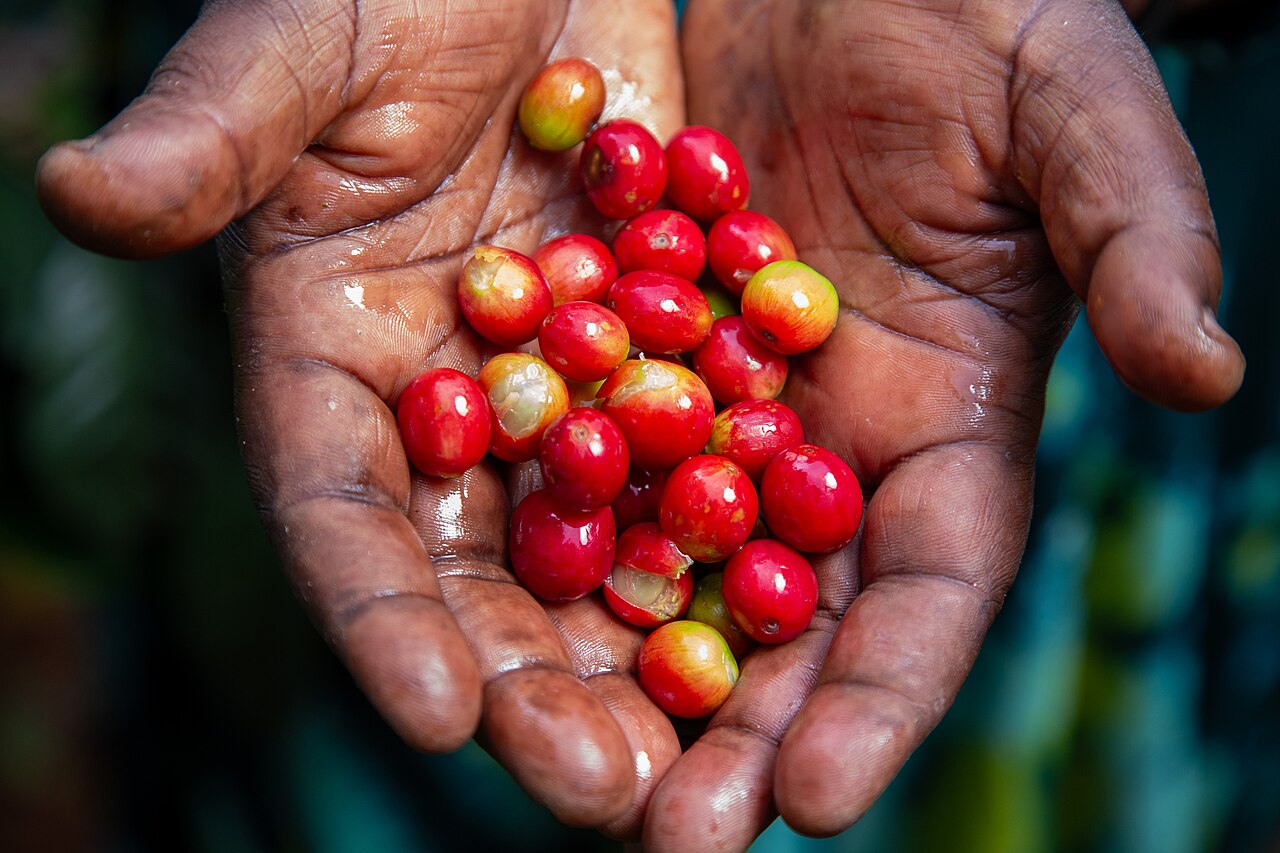
Alto Grande Arabica falls into the "hard bean" classification — a coffee grading term that refers to coffee grown at high elevations where the slow ripening produces denser, harder beans with more concentrated flavor compounds. Hard bean coffees generally have:
- Higher acidity and brightness
- More complex flavor development
- Greater density (heavier per unit volume)
- Better roasting performance — they hold up to longer roasts without burning out
- Longer shelf life of the green beans
The hard bean classification puts Alto Grande in the elite specialty Arabica category — serious specialty coffee, not commercial commodity coffee.
Each Alto Grande Arabica tree produces only about one pound of cherry coffee per year. This is extraordinarily low yield. By comparison, commercial Arabica trees in major commodity-producing regions can produce 3 to 5 pounds per tree, and Robusta trees produce even more. Alto Grande's low yield is a function of the high elevation, the slow growing pace, and the careful tending that prioritizes quality over volume.
The Tasting Profile
Professional coffee evaluators describe Alto Grande Super Premium as "rare and exotic" with the following characteristics:
- Body: Full and substantial
- Aroma: Bright, sparkling, with a sweet pointed quality
- Flavor notes: Chocolate undertones, hints of caramel and almond, sweet and pointed
- Acidity: Bright but balanced
- Finish: Smooth, lingering, with chocolate and caramel persistence
The coffee is medium-dark roasted to bring out the chocolate and caramel notes while preserving the bright top notes of the Lares terroir. Over the years, Alto Grande has expanded its product line to include espresso preparations, decaffeinated versions, and Nespresso-compatible capsules — all maintaining the core Alto Grande quality standard.
The Hurricane Tests: 1899, 1928, 1932, 2017
Alto Grande survived events that destroyed many of Puerto Rico's other coffee operations. Hurricane San Ciriaco in 1899 wiped out an estimated 80% of the island's coffee crop and devastated the export economy. The hurricanes of San Felipe Segundo (1928) and San Ciprián (1932) caused additional massive damage. Hurricane María in 2017 destroyed roughly 85% of the island's coffee crop in a single night.
Through every one of these disasters, Hacienda Alto Grande continued. The hacienda's commitment to maintaining production — even at reduced scale during recovery years — preserved both the brand and the underlying coffee craft across generations.
This continuity matters. Many of the "premium coffee of the Vatican" claims attached to other Puerto Rican brands trace back to coffees that ceased production decades ago. Alto Grande is one of the few that has maintained continuous operation from the 19th century to the present.

The 2010 Acquisition and Modern Operations
In 2010, Hacienda Alto Grande was acquired by Puerto Rico Coffee Roasters, the largest coffee roasting operation on the island. The acquisition included a complete renovation of the coffee processing equipment at the hacienda. The renowned Yauco Selecto producing farm — Hacienda Caracolillo — was merged with the Hacienda Alto Grande operation, combining two of Puerto Rico's premier coffee farms under unified management.
The acquisition modernized the processing infrastructure while preserving the traditional hacienda approach to cultivation. Alto Grande coffee continues to be processed in small batches, with extensive quality control at every stage. The company describes an 8-day development process for Alto Grande Super Premium — significantly longer than the 2 days typical for commercial coffees.
Modern Alto Grande products include the original ground and whole bean coffee in foil canisters and bags, espresso preparations, decaffeinated coffee (using a natural decaffeination process), and Nespresso-compatible capsules in multiple intensity profiles including Grand Lares (a peaberry-enhanced premium version), Lungo, and Decaf.
Japan: The Modern Premium Market
Alongside the United States and Puerto Rico itself, Japan has emerged as a major market for Alto Grande. Japan's coffee culture — known for its precision, quality obsession, and willingness to pay premium prices for distinctive single-origin coffees — has embraced Alto Grande as one of the world's elite Arabicas.
The Japanese market parallel to the historical European royal courts is intentional. Japan today plays the role that 19th-century Vatican and European royal courts once played: the discerning premium customer that sets the global standard for what counts as elite specialty coffee. Alto Grande's Japanese export business reflects the brand's continued positioning at the top of the market.
Visiting the Lares Coffee Region
The Buenos Aires and Santa Isabel sectors of Lares where Hacienda Alto Grande operates are among the most beautiful coffee landscapes in Puerto Rico. The drive from San Juan to Lares takes roughly 90 minutes, ascending through the western central mountains. The town of Lares itself is famous for the 1868 Grito de Lares — the first armed uprising for Puerto Rican independence — and for the iconic Heladería Lares ice cream shop in the central plaza.
Tours of Hacienda Alto Grande itself are not typically offered to the general public, but the surrounding Lares coffee region offers excellent agritourism options. Hacienda Lealtad, the historic coffee estate that hosted the original Grito de Lares revolutionaries, is open for tours. Café Lareño coffee shop offers Lares-region coffees and traditional Puerto Rican fare in a setting overlooking the coffee mountains.
Key Facts: Alto Grande Super Premium
- Founded: 1839
- Location: Buenos Aires and Santa Isabel sectors of Lares municipality, Puerto Rico
- Variety: 100% Arabica, hard bean classification
- Yield: Approximately 1 pound of cherry coffee per tree per year
- Historic clients (19th century): Vatican, royal courts of Paris, Madrid, London, Hamburg
- Cup profile: Full body, chocolate undertones, sweet pointed aroma, caramel and almond hints
- Roast level: Medium-dark
- 2010 acquisition: Puerto Rico Coffee Roasters; merged with Hacienda Caracolillo (Yauco Selecto)
- Major modern markets: United States, Puerto Rico, Japan
- Product range: Whole bean, ground, espresso, decaffeinated, Nespresso-compatible capsules
- Latitude: 19 degrees north
- Continuous operation: Since 1839, through multiple hurricanes including María 2017
Frequently Asked Questions
Where is Alto Grande coffee grown? At Hacienda Alto Grande in the Buenos Aires and Santa Isabel sectors of Lares municipality, Puerto Rico — in the western central mountain range of the island. The hacienda has been at this location since 1839.
Why is Alto Grande called "the coffee of popes and kings"? During the second half of the 19th century, Alto Grande was the official coffee of the Vatican in Rome and was served at the royal courts of Paris, Madrid, London, and Hamburg. The historical claim is supported by export records and period accounts.
What does "hard bean" mean? Hard bean is a coffee classification for Arabica grown at high elevations, where slow ripening produces denser, more flavor-concentrated beans. Hard bean coffees are considered premium specialty grade — not commercial commodity coffee.
Is Alto Grande the same company today as in 1839? The hacienda has been in continuous operation since 1839, but ownership has changed. In 2010, Hacienda Alto Grande was acquired by Puerto Rico Coffee Roasters, which modernized the processing equipment and merged operations with Hacienda Caracolillo (the Yauco Selecto farm). The Alto Grande coffee tradition and quality standards continue.
Where can I buy authentic Alto Grande coffee? Authentic Alto Grande Super Premium is available through trusted Puerto Rican coffee retailers including PuertoRicoCoffeeShop.com, which carries the original ground coffee, whole bean, espresso preparations, and Nespresso-compatible capsules. Buying direct from a Puerto Rican distributor ensures you are getting genuine Alto Grande from the source.
Related Articles
- Lares: Coffee, Revolution, and Heritage
- Coffee and the Grito de Lares: Puerto Rico's 1868 Independence Revolt
- Hacienda Lealtad: The Revolution Coffee Hacienda of Lares
- Yauco Selecto: The Premium Puerto Rico Coffee Brand
- The Golden Age of Puerto Rican Coffee 1800-1898
- Puerto Rico Coffee vs Jamaica Blue Mountain
- Puerto Rico Coffee Exports: The 1890s Peak to Modern Decline
Taste the Coffee of Popes and Kings
Alto Grande Super Premium is available now from the official Puerto Rican coffee distributor sponsoring this encyclopedia. Whole bean, ground, espresso, decaffeinated, and Nespresso-compatible capsules — direct from Lares to your door.
Visit PuertoRicoCoffeeShop.com — the official sponsor of The Coffee Encyclopedia.
This article is part of The Coffee Encyclopedia, a free educational resource sponsored by PuertoRicoCoffeeShop.com. Contact: Encyclopedia@PuertoRicoCoffeeShop.com
Watch: El Motor — Coffee and the Heart of Puerto Rico, the Library of Congress documentary on Puerto Rican coffee history. Provides essential context for understanding the era when Alto Grande and other Puerto Rican premium coffees served the Vatican and the royal courts of 19th-century Europe.