
Coffee's Spread to the Ottoman Empire
Summary
Coffee entered the Ottoman Empire in the mid-1500s and was quickly embraced as a cultural obsession, with Istanbul becoming the world's most important coffee city within a generation. The Ottomans invented the coffeehouse as a social and political institution, perfected techniques for brewing and grinding that are still practiced today as "Turkish coffee," and spread the drink throughout their vast empire from the Balkans to North Africa. The Ottoman era of coffee laid the foundation for every coffee tradition that came after it — including the coffee customs that eventually reached Puerto Rico through colonial Europe.
Table of Contents
- Coffee Enters Istanbul
- The First Ottoman Coffeehouses
- Turkish Coffee: A New Brewing Tradition
- Sultan Suleiman and the Royal Endorsement
- The Coffeehouse as Political Power Center
- Ottoman Coffee Bans
- The Coffee Cup and Saucer Tradition
- Coffee Spreads Through the Empire
- Ottoman Coffee's Global Legacy
- Frequently Asked Questions
Coffee Enters Istanbul
Watch: The Complete History of Coffee: From Ethiopia to Modern Cafes
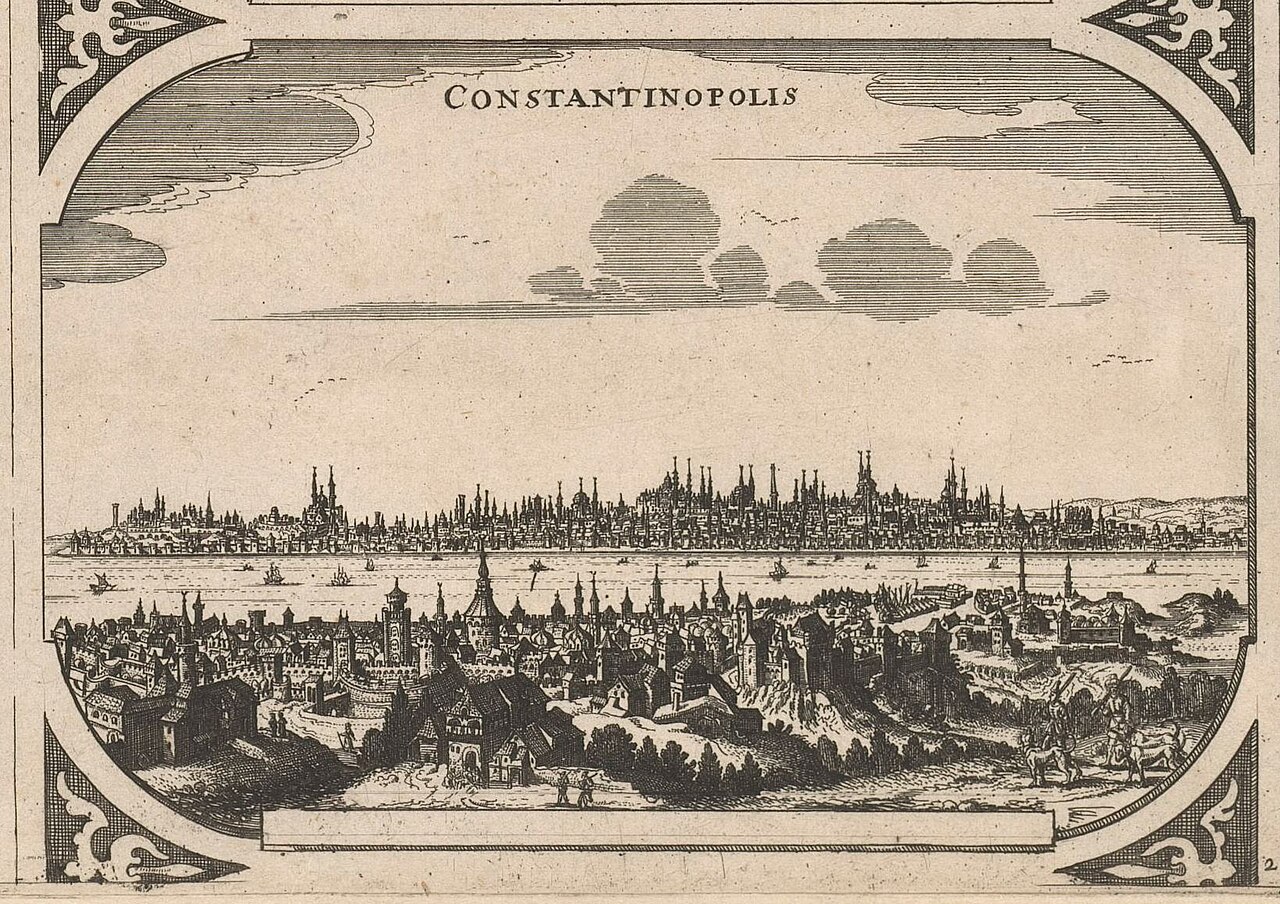
Coffee arrived in Istanbul, the capital of the Ottoman Empire, sometime in the 1540s or 1550s. By some accounts, two Syrian merchants named Hakam and Shams brought coffee to the city and opened the first proper coffee establishment around 1555. Within a decade, coffee had spread through the capital and was being consumed by people of all classes.
The timing was significant. Istanbul in the mid-1500s was the largest city in Europe and the Middle East, a cosmopolitan capital of nearly half a million people. It was the intersection of trade routes connecting Asia, Africa, and Europe. Anything new that reached Istanbul tended to spread rapidly throughout the known world.
Coffee fit perfectly into Ottoman culture. The empire was Muslim, so alcohol was forbidden, and there was strong demand for other social beverages. Coffee was bold, exotic, and energizing — a drink that matched the cosmopolitan sophistication Ottoman society valued.
The First Ottoman Coffeehouses
The first Istanbul coffeehouse, called a "kahvehane" in Turkish, reportedly opened in 1555 in the Tahtakale district. It was immediately popular. Within years, dozens of coffeehouses dotted the city.
These establishments were not simple beverage shops. They were elaborate social spaces with comfortable seating, low tables, water pipes for smoking tobacco, musicians playing traditional instruments, and storytellers entertaining the guests. Walls were often decorated with calligraphy, mosaic tiles, and Persian carpets.
The coffeehouse filled an important social vacuum. Traditional Islamic society had few public gathering places for men outside mosques and marketplaces. The coffeehouse gave Ottoman men a place to meet socially, discuss politics, play games like backgammon and chess, recite poetry, debate ideas, and simply relax.
Women did not typically enter coffeehouses, though they drank coffee freely at home. The coffeehouse was specifically a space of male public sociability.
Turkish Coffee: A New Brewing Tradition
The Ottomans perfected a new way of preparing coffee that became known worldwide as "Turkish coffee" — though it is also called Greek, Arabic, or Armenian coffee depending on the region.
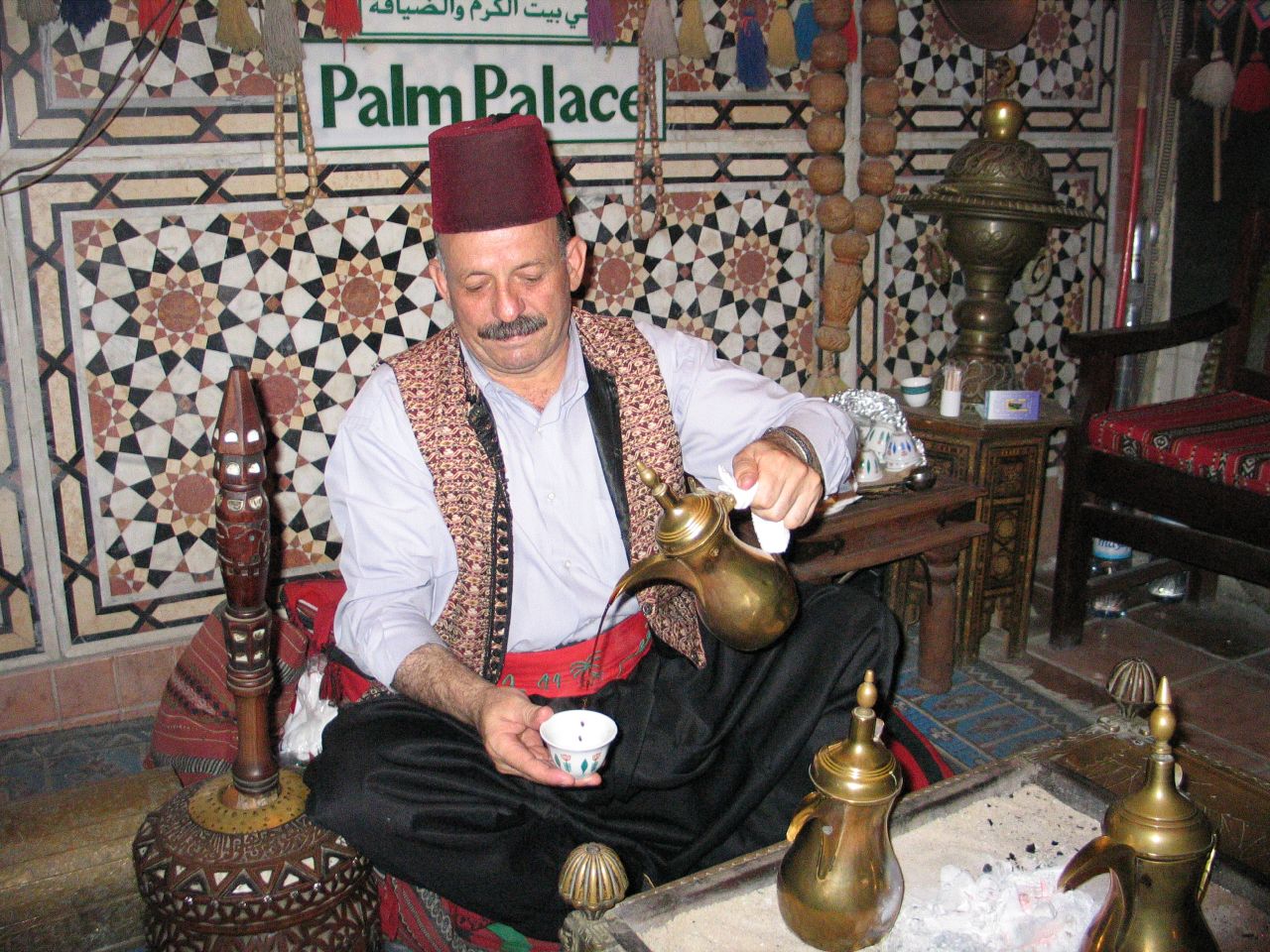
The method is distinctive. Coffee beans are roasted dark and ground to a texture finer than any other traditional preparation — almost like powder. The coffee is brewed in a small long-handled pot called a "cezve" (in Turkish) or "ibrik" (a more generic term used internationally). Cold water, the powdered coffee, and often sugar are combined in the cezve and heated over a flame or in hot sand.
As the coffee heats, a thick foam rises to the top. The skilled brewer removes the pot just before the coffee boils over, allowing the foam to settle, then heats it briefly again. The finished coffee is poured unfiltered into small cups, where the grounds settle to the bottom.
The result is an intense, thick, aromatic coffee quite different from any other preparation. The cup is never stirred — drinkers sip the top portion and leave the grounds behind. A traditional ritual of fortune-telling sometimes follows, reading patterns in the coffee grounds left on the cup.
Turkish coffee was recognized by UNESCO in 2013 as Intangible Cultural Heritage of Humanity.

Sultan Suleiman and the Royal Endorsement
Coffee became an imperial drink under Sultan Suleiman the Magnificent, who ruled from 1520 to 1566. Suleiman was one of the greatest Ottoman rulers — a patron of the arts, law reformer, and military leader whose empire stretched from Hungary to Yemen.
Coffee was served in Suleiman's court, and his endorsement gave the drink enormous prestige. Royal coffee makers became important palace officials. The "kahvedjibashi" (chief coffee maker) of the imperial household was a coveted position. Coffee was served at every formal reception and diplomatic meeting.
This royal embrace was critical for coffee's expansion. Once the Sultan drank coffee, everyone of consequence in the empire drank coffee. The beverage's cultural status was secured.
The Coffeehouse as Political Power Center
Ottoman coffeehouses quickly became centers of political discussion and, eventually, political power. Men gathered in coffeehouses not just to socialize but to exchange news, share rumors, critique the government, and discuss current events.
For the Ottoman authorities, this was dangerous. Information moved faster through coffeehouses than through any official channel. Subversive ideas could spread rapidly. Plots could be hatched. Rulers could be criticized openly.
As Istanbul's coffeehouse scene grew, so did the surveillance of these spaces. Informers frequented popular coffeehouses to report on what was being said. Some coffeehouse owners were themselves informants for the government.
Despite this surveillance, the coffeehouse as a political space thrived. Reform movements, literary circles, and intellectual debates all flourished in coffeehouses. When political unrest broke out, coffeehouses were often the staging grounds.
Ottoman Coffee Bans
The political threat of coffeehouses led to several attempted bans. The most famous was under Sultan Murad IV, who ruled from 1623 to 1640 and who was known for brutal enforcement of moral codes.
Murad IV banned coffee, along with tobacco and alcohol, and imposed the death penalty on offenders. He reportedly patrolled the streets of Istanbul in disguise, personally executing people he caught smoking or drinking coffee. Thousands of people are said to have died during his anti-coffee campaign.
Yet the ban failed. Coffee was too deeply integrated into Ottoman life to be suppressed. After Murad IV's death, the ban was quietly lifted, and coffee returned to its central role.
Later bans were attempted by other Sultans, but none succeeded for long. Coffee had become essential.
The Coffee Cup and Saucer Tradition
The Ottomans developed elegant traditions around serving coffee. Special small porcelain cups called "fincan" were used, always served on a saucer called a "zarf." The zarf was often made of precious metal like silver or gold, especially for royal or wealthy households, and might be decorated with intricate engraving.
Serving coffee to a guest became a formal ritual. The coffee was always accompanied by a glass of water — to cleanse the palate before the first sip — and often a piece of Turkish delight or other sweet. Guests were expected to drink slowly and appreciate the aroma.
These traditions influenced coffee service customs across the world. European coffee sets, with matching cups, saucers, and coffee pots, descended directly from Ottoman models.
Coffee Spreads Through the Empire
From Istanbul, coffee spread rapidly through the Ottoman Empire — an empire that at its peak covered roughly 5.2 million square kilometers across three continents.
In Cairo, where the Ottomans had ruled since the early 1500s, coffee became central to Egyptian cafe culture. The Fishawi coffeehouse in Cairo, founded in 1797, is one of the world's oldest continuously operating coffee establishments.
In the Balkans, coffee traveled with Ottoman administrators and soldiers. Serbia, Bosnia, Bulgaria, Greece, and Albania all developed their own coffee cultures derived from Ottoman tradition, each with regional variations that persist today.
In North Africa, coffee merged with existing tea traditions and local preferences, creating distinctive regional coffee cultures in Algeria, Tunisia, and Libya.
The Ottomans carried coffee wherever they went. By the late 1600s, people from Budapest to Baghdad were drinking coffee in the Ottoman style.
Ottoman Coffee's Global Legacy
When coffee spread to Europe in the 1600s — first to Venice, then London, Paris, and Vienna — it did so via Ottoman trade routes and cultural influence. The first European coffeehouses were modeled on Ottoman kahvehanes. The word "coffee" itself derives from the Turkish "kahve," which in turn comes from the Arabic "qahwa."
Ottoman coffee culture thus became the template for global coffee culture. The social coffeehouse, the intense dark roast, the art of serving coffee with small cups and saucers, the pairing of coffee with sweets, the political power of coffee gathering spaces — all of these Ottoman traditions flowed outward to become universal coffee customs.
Even in Puerto Rico, thousands of miles from Istanbul, echoes of Ottoman tradition can be heard. The Spanish colonizers who brought coffee to the Caribbean had themselves been influenced by coffee customs that had come to Spain from the Ottoman world. Every Puerto Rican cup of café con leche, served with friends after a meal, participates distantly in a coffee tradition the Ottomans helped create.
Frequently Asked Questions
Q: When did coffee arrive in the Ottoman Empire? Coffee arrived in the Ottoman Empire in the mid-1500s, reaching Istanbul around 1554-1555.
Q: What is Turkish coffee? Turkish coffee is a method of preparing coffee using finely ground beans brewed in a small pot called a cezve, served unfiltered with the grounds settling at the bottom of the cup.
Q: Did the Ottomans invent the coffeehouse? Yes. The first true public coffeehouses as social institutions appeared in the Ottoman Empire, particularly in Istanbul, in the mid-1500s.
Q: Why did Ottoman rulers sometimes ban coffee? Rulers feared the political discussions happening in coffeehouses, which were seen as potential sources of dissent or rebellion.
Q: What is a cezve? A cezve is the small long-handled pot traditionally used to brew Turkish coffee.
Q: Is Turkish coffee the same as Greek or Arabic coffee? The brewing method is essentially the same across these cultures, though each region has slight variations in roast, grind, and serving customs.
Q: How did Ottoman coffee culture reach Europe? Coffee spread to Europe through Ottoman trade routes and diplomatic contact. European coffeehouses were initially modeled directly on Ottoman examples.
Q: How is Ottoman coffee connected to Puerto Rico? Puerto Rican coffee culture descends from Spanish coffee traditions, which were themselves influenced by Ottoman customs that reached Spain through Mediterranean trade.
Experience Authentic Coffee Tradition
From the Ottoman coffeehouses of Istanbul to the haciendas of Puerto Rico, coffee has always been about bringing people together. Authentic Puerto Rico coffee honors this ancient tradition.
BUY AUTHENTIC PUERTO RICO COFFEE →
Related Articles
- Yemen and the Port of Mocha
- Coffee Arrives in Europe
- Turkish Coffee Tradition
- Coffee in Islamic Traditions
Part of The Coffee Encyclopedia — The World's Largest Free Coffee Reference. Proudly sponsored by PuertoRicoCoffeeShop.com — Authentic Puerto Rico Coffee.