
Coffee's Spread to the Ottoman Empire
Summary
Coffee reached the Ottoman Empire in the first half of the sixteenth century, and Istanbul's first coffeehouses opened in the year 962 of the Islamic calendar, which ran from late 1554 to late 1555. The coffeehouse itself was not an Ottoman invention: coffeehouses were already open in Mecca by the early 1500s, and in Egypt and Syria. But Istanbul's coffeehouses became famous, the Ottoman court took up coffee, and the Ottoman way of preparing it, known today as Turkish coffee, was inscribed by UNESCO in 2013. Coffee also met resistance: in 1633 Sultan Murad IV outlawed coffee and tobacco and closed the coffeehouses. This article sets out what the sources document and labels what is legend.
Before Istanbul: Mecca, Cairo and Damascus
Places where men gathered to drink coffee, listen to music and play games such as chess were popular in Mecca by the early sixteenth century. Religious authorities closed them in 1511, but the ban did not last long. Pilgrims returning from Mecca carried the coffeehouse to Egypt and Syria. Ottoman rulers first met this coffee culture during Sultan Selim I's campaign in Egypt in 1516–17. For coffee's earlier history in Yemen, see Yemen and the Port of Mocha.
Coffee Reaches Istanbul
The seventeenth-century Ottoman historian İbrahim Peçevi recorded that until the year 962 there had been no coffee and no coffeehouses in Constantinople. About that year, he wrote, a man named Hakam from Aleppo and another named Shams from Damascus came to the city, each opened a large shop in the district of Tahtakale, and began to sell coffee. Because the year 962 spans late 1554 and late 1555, modern writers give either date.
According to Encyclopaedia Iranica, the first Istanbul coffeehouse drew so many dignitaries, writers and poets that it became known as the "academy of scholars".
Legend: a story of a coffeehouse called "Kiva Han" in Istanbul in 1475 still circulates. Ottoman sources place the first coffeehouse in the 1550s.
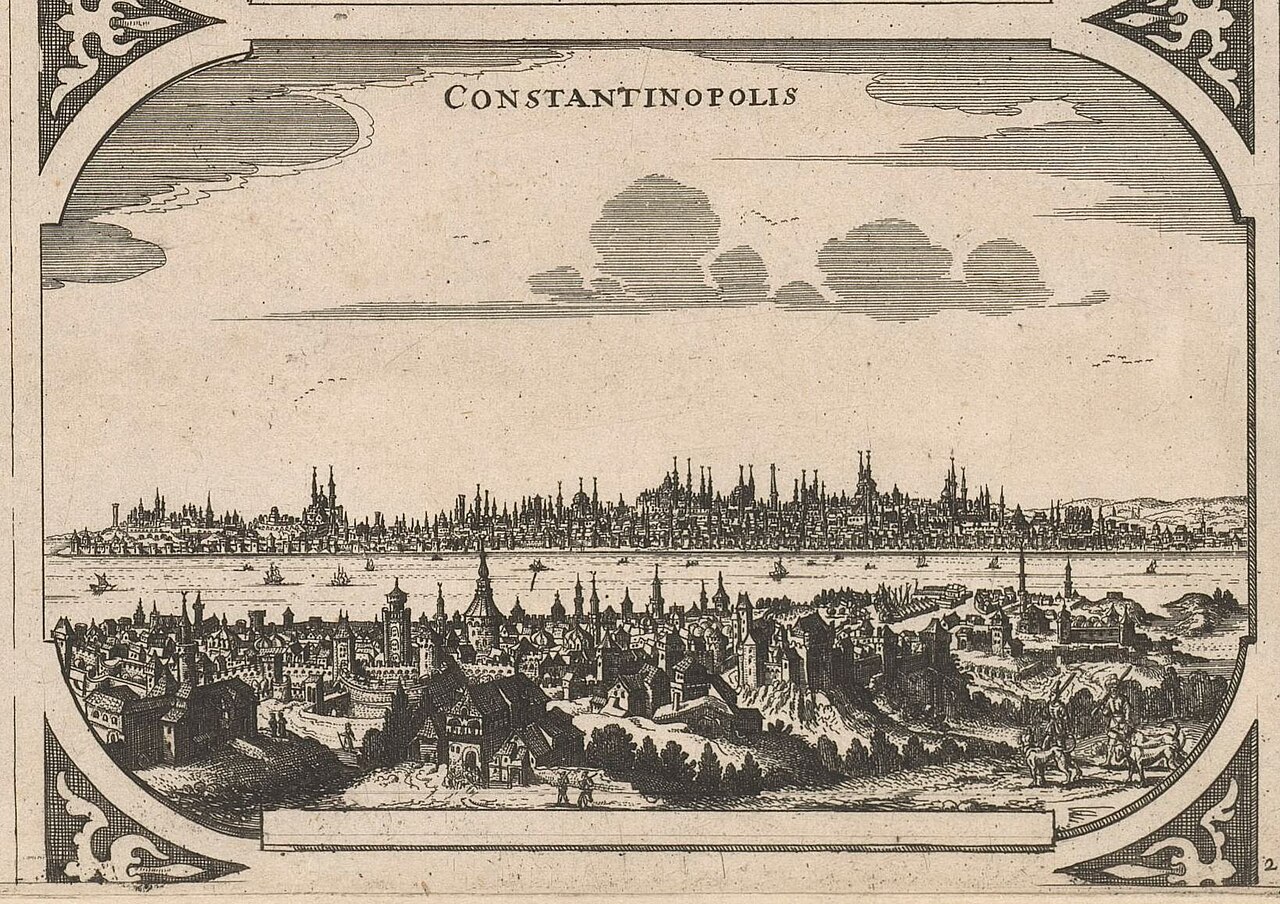
Etched view of Constantinople (Istanbul), published by Frederik de Wit, 1670–1672. Rijksmuseum / Wikimedia Commons, CC0.
Coffee at Court
Coffee entered regular use in the Ottoman palace during the reign of Süleyman the Magnificent. The palace eventually had a Chief Coffee Maker, responsible for the sultan's coffee and for the utensils needed to prepare it.
Turkish Coffee
UNESCO describes the method: freshly roasted beans are ground to a fine powder, then the coffee, cold water and sugar go into a small pot, often called a cezve, and are brewed slowly to raise a foam. The coffee is served in small cups with a glass of water, and the grounds left in the cup are often used to tell fortunes. UNESCO inscribed "Turkish coffee culture and tradition" on its Representative List of the Intangible Cultural Heritage of Humanity in 2013 (decision 8.COM 8.28). See also Turkish Coffee: The UNESCO Heritage Brewing Tradition.
Coffeehouses and the Authorities
At first, the Ottoman authorities left coffeehouses alone. They began to watch them once the coffeehouses became places for secret meetings. Religious objections grew too. In the seventeenth century the Kadızadeli preachers counted coffee and tobacco among forbidden innovations, and their followers raided coffeehouses.
In early 1633, Sultan Murad IV, angered also by a great fire in Istanbul, outlawed coffee and tobacco, and the city's coffeehouses were closed. The ban did not hold. The tobacco ban was lifted in 1649 by a ruling of the Şeyhülislam, the empire's chief religious authority, Bahai Efendi, and coffeehouses gradually reopened across the city.
Tradition: popular accounts say Murad IV walked the streets in disguise and executed coffee drinkers himself. These stories are told as rumours and are not documented.
The Word "Coffee"
The English word "coffee" appeared around 1600. It came from the Dutch koffie, which came from the Turkish kahve, which in turn came from the Arabic qahwa. Early English spellings included "chaoua" (1598). Coffee and the coffeehouse reached western Europe in the seventeenth century; see Coffee Arrives in Europe.
On Film
Watch: The Complete History of Coffee From Ethiopia to Modern Cafes — Ancestors Civilization
Key Facts
- Coffeehouses in Mecca: by the early 1500s; closed briefly in 1511
- First Istanbul coffeehouses: 962 of the Islamic calendar (1554–55), in Tahtakale
- Founders, according to Peçevi: Hakam of Aleppo and Shams of Damascus
- Coffee and tobacco banned: 1633, under Sultan Murad IV
- Tobacco ban lifted: 1649
- UNESCO: "Turkish coffee culture and tradition" inscribed in 2013
- The word: English "coffee" via Dutch koffie, Turkish kahve and Arabic qahwa
Frequently Asked Questions
Q: When did coffee arrive in Istanbul? By the mid-1500s. Istanbul's first coffeehouses opened in the year 962 of the Islamic calendar, which is 1554–55.
Q: Did the Ottomans invent the coffeehouse? No. Coffeehouses were already open in Mecca by the early 1500s, and in Egypt and Syria. Istanbul's coffeehouses became among the best known.
Q: Why did Murad IV ban coffee? Sources link the 1633 ban to the campaign of the Kadızadeli preachers against coffee and tobacco, and to a great fire in Istanbul. Coffeehouses were also seen as places for secret meetings.
Q: What is Turkish coffee? Coffee ground to a fine powder and brewed slowly with cold water, and often sugar, in a small pot until it foams. It is served in small cups with a glass of water. UNESCO recognised the tradition in 2013.
Sources
- Encyclopaedia Iranica, "Coffeehouse" (qahva-ḵāna). Supports: coffeehouses in Mecca by the early sixteenth century and their closure in 1511; their spread to Egypt and Syria; the first Istanbul coffeehouse in 962/1555; the name "academy of scholars".
- Peçevi, İbrahim, history of the Ottoman Empire (seventeenth century), in the translation quoted by Bernard Lewis, Istanbul and the Civilization of the Ottoman Empire (University of Oklahoma Press). Supports: no coffee in Constantinople before 962; Hakam of Aleppo and Shams of Damascus; the shops in Tahtakale.
- The Guide Istanbul, "Istanbul's historic coffeehouses", interviewing the art historian Çiçek Akçıl. Supports: Ottoman royalty's first contact with coffee culture during Selim I's Egyptian campaign of 1516–17; regular palace use under Süleyman the Magnificent; the varying dates given for the first coffeehouse.
- Hürriyet Daily News, "Coffee and coffeehouses among the Ottomans". Supports: the palace post of Chief Coffee Maker; the "Kiva Han" story of 1475 as a later claim; Ottoman sources dating the first coffeehouse to 1555.
- UNESCO, "Turkish coffee culture and tradition" (element 00645) and Intergovernmental Committee decision 8.COM 8.28 (2013). Supports: the description of preparation and serving; fortune-telling; the 2013 inscription.
- Coffeebi, "Coffee culture in Turkey" (2018). Supports: the cezve as the traditional pot.
- Ekinci, Ekrem Buğra, "Transformation of Ottoman coffeehouses to the present", Daily Sabah (2015). Supports: the authorities' growing attention to coffeehouses; the closures under Murad IV; the 1649 fatwa of Bahai Efendi lifting the tobacco ban; the gradual reopening of coffeehouses.
- Akyol, Mustafa, "An Ottoman Response to Enforcing Piety", Renovatio (Zaytuna College), Fall 2025. Supports: the Kadızadeli campaign against coffee and tobacco and their raids on coffeehouses; Murad IV's ban in early 1633 after a great fire.
- Perfect Daily Grind, "Coffee Haters Through the Ages" (2016). Supports: the stories of Murad IV personally executing coffee drinkers being reported as rumours.
- Online Etymology Dictionary, "coffee". Supports: the English word's route through Dutch, Turkish and Arabic, and the early spelling "chaoua" (1598).
Claims this encyclopedia could not source
The following statements appear in published material about Ottoman coffee. This encyclopedia could not trace them to a reliable source:
- That thousands of people died during Murad IV's campaign against coffee.
- That Istanbul had nearly half a million people in the mid-1500s, and that the empire covered 5.2 million square kilometres at its peak.
- That the Fishawi coffeehouse in Cairo was founded in 1797.
- That European coffee sets descend directly from Ottoman models.
- That Puerto Rican coffee customs descend from Ottoman customs that reached Spain.
Experience Authentic Coffee Tradition
From the Ottoman coffeehouses of Istanbul to the haciendas of Puerto Rico, coffee has always been about bringing people together. Authentic Puerto Rico coffee honors this ancient tradition.
BUY AUTHENTIC PUERTO RICO COFFEE →
Related Articles
- Yemen and the Port of Mocha
- Coffee Arrives in Europe
- Turkish Coffee: The UNESCO Heritage Brewing Tradition
- The Sufi Monks and Coffee's Spiritual Journey
Part of The Coffee Encyclopedia — The World's Largest Free Coffee Reference. Proudly sponsored by PuertoRicoCoffeeShop.com — Authentic Puerto Rico Coffee.