Turkish Coffee: The UNESCO Heritage Brewing Tradition
Summary
Turkish coffee is one of the world's oldest and most culturally significant coffee preparations — a method developed in the Ottoman Empire over 500 years ago that produces intensely concentrated, unfiltered coffee with characteristic foam on top and fine grounds settled at the bottom of the cup. The brewing method spread across the former Ottoman territories and influenced coffee cultures in Greece, the Balkans, Armenia, Middle East, and North Africa. Understanding the Turkish brewing method — the cezve, the ultra-fine grind, the multiple-boil technique, the unfiltered service ritual — means understanding the technique that defined coffee preparation for centuries before espresso, drip, or pour over existed.
The Ottoman Background
As covered in Coffee's Spread to the Ottoman Empire, coffee reached Istanbul from Yemen in the mid-1500s and the first kahvehane opened in the Tahtakale district around 1555 — quickly establishing the Turkish brewing method that this article documents in detail. The technique standardized over the following decades into the form still practiced today: cezve vessel, ultra-fine grind, multiple-boil heating, unfiltered service. By the 17th century the method had become refined craft; by the 19th it had spread wherever Ottoman influence reached, surviving in the daily practice of Greece, the Balkans, Armenia, the Middle East, and North Africa long after the Empire itself dissolved.
What UNESCO Recognized in 2013
UNESCO's 2013 inclusion of Turkish coffee on the Representative List of the Intangible Cultural Heritage of Humanity honored not just a beverage but a constellation of cultural practices around it. The citation specifically called out:
Hospitality tradition: Offering coffee to guests is fundamental Turkish hospitality. Refusing to offer coffee signals disrespect; refusing offered coffee would be similarly offensive.
Generational transmission: Techniques of proper preparation pass from parents and grandparents to younger generations, connecting families across time.
Fortune telling (tasseography): Reading coffee grounds after drinking — examining patterns in the settled grounds to predict future events — represents a centuries-old folk tradition specific to Turkish coffee culture.
Ceremonial significance: Coffee plays specific roles in major life events — engagement negotiations (where the bride's preparation demonstrates readiness for marriage), welcoming guests, honoring elders.
Coffee houses as public spaces: Historical Turkish coffeehouses functioned as community centers, political discussion venues, and cultural institutions.
The UNESCO recognition elevated Turkish coffee from a simple beverage to formally acknowledged global cultural heritage, one of only a handful of coffee-related UNESCO recognitions worldwide.
The Cezve — Essential Brewing Vessel
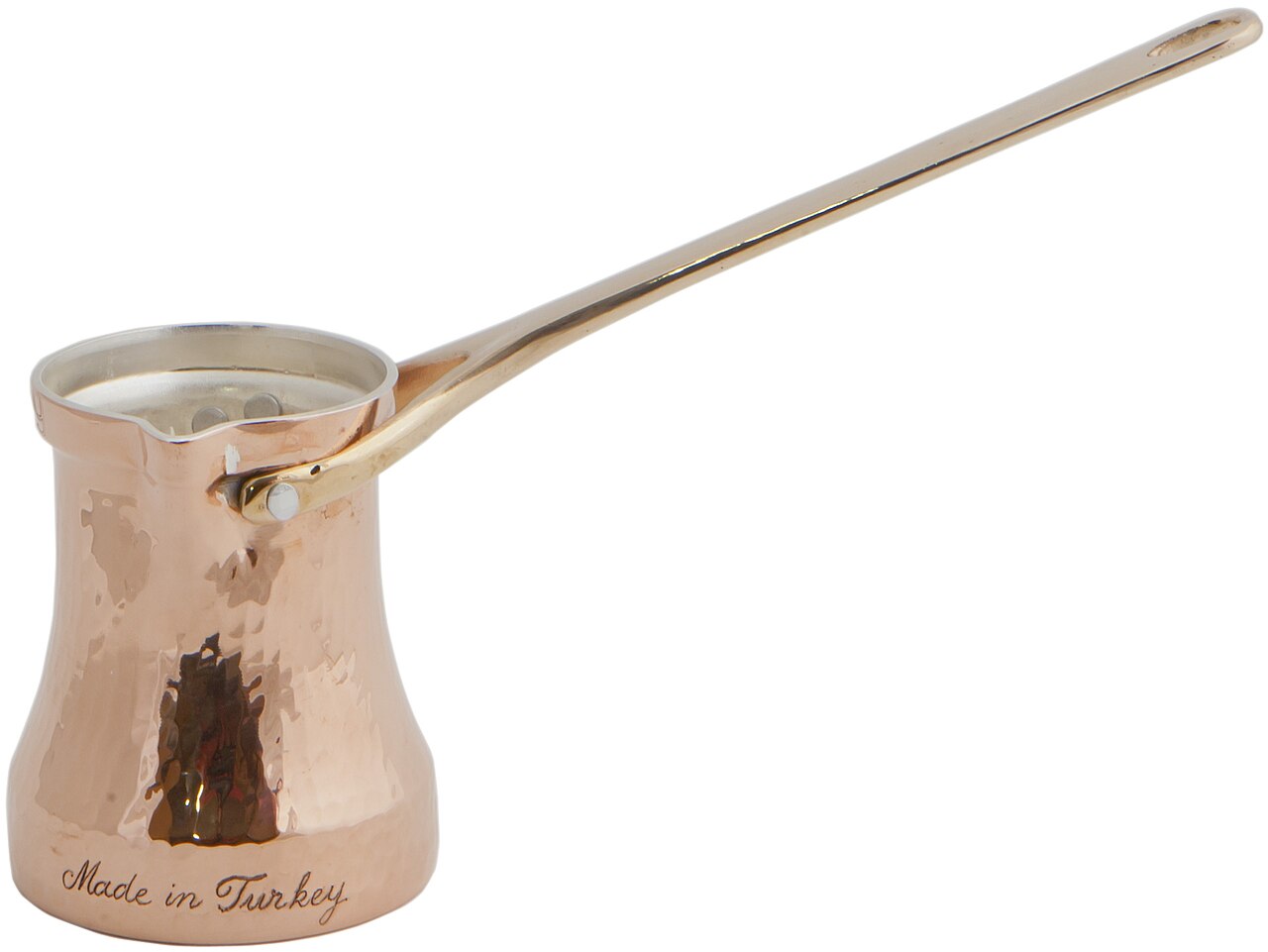
Turkish coffee preparation requires a specific vessel called cezve in Turkish (also called ibrik in Greek and other regional languages). This small, specifically-designed pot defines the brewing method:
Shape: Narrow at the top, wider at the bottom, with a long handle. The specific shape ensures proper foam formation and heat distribution.
Material: Traditional cezves are copper with tin lining inside. Modern versions include stainless steel, brass, and ceramic. Copper remains preferred for its superior heat conductivity.
Size: Small — typically 1-4 cup capacity. Turkish coffee is made in small batches because the preparation requires careful attention.
Long handle: Allows safe handling over heat. Traditional wooden handles remain preferred.
Pouring spout: Angled spout facilitates careful pouring without disturbing the settled grounds.
A proper cezve is essential for authentic Turkish coffee. The shape and material affect heat distribution, foam formation, and the specific texture that defines the drink. Home coffee makers who prepare Turkish coffee invest in quality cezves that can last decades or generations.
The Ultra-Fine Grind
Turkish coffee requires extraordinarily fine grinding — more than any other brewing method:
Texture comparison:
- Drip coffee: medium grind (like coarse salt)
- Espresso: fine grind (like fine table salt)
- Turkish coffee: ultra-fine grind (like flour or powdered sugar)
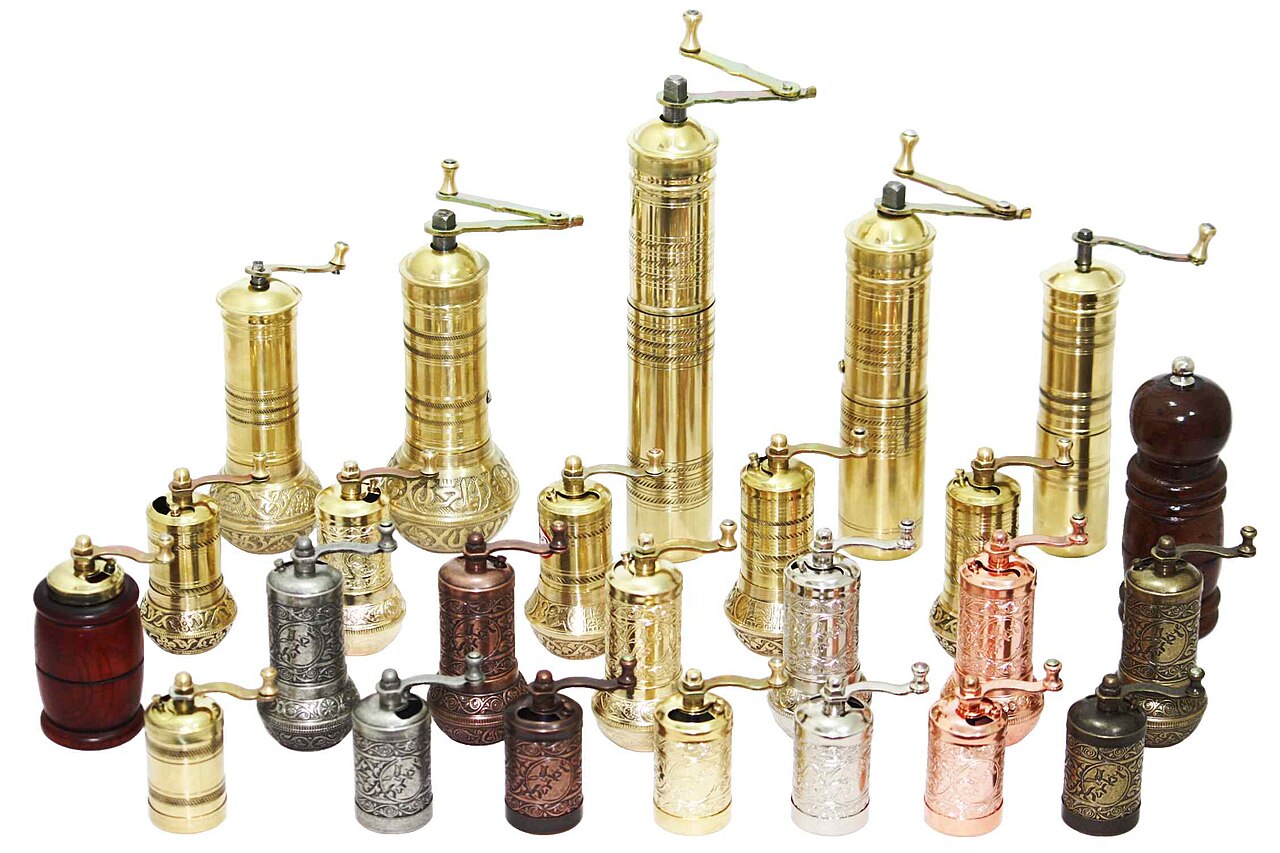
Traditional grinding: Hand-operated conical-burr grinders called "kahve değirmeni" or "mlinac" have produced this fine grind for centuries. The traditional grinder features a conical burr that pulverizes beans into fine powder.
Modern alternatives: Electric burr grinders with Turkish coffee settings. Some electric grinders don't achieve truly Turkish-fine grind and require special equipment.
Commercial Turkish coffee: Pre-ground Turkish coffee available in grocery stores across Turkey, the Balkans, and Middle Eastern markets.
Importance of consistency: The grind must be uniform powder without larger particles. Uneven grind produces uneven extraction.
Effect on brewing: The ultra-fine grind creates a slurry when combined with water, enabling the particular extraction pattern that defines Turkish coffee. Standard drip or espresso grinders cannot produce Turkish-fine grind.
Authentic Turkish coffee requires authentic Turkish grind. This is perhaps the single most important technical requirement for genuine results.
The Traditional Preparation
Watch: How To Make Turkish Coffee Like a Pro — with World Cezve/Ibrik Champion Turgay Yildizli
Turkish coffee preparation follows specific steps perfected over centuries:
1. Measure water: Use cold water, measured by the Turkish coffee cup. Each cup uses approximately 60-70ml of water.
2. Add coffee: Add 1-2 heaping teaspoons of ultra-fine coffee per cup. Specifically, 1 teaspoon for Ottoman-style, 2 teaspoons for stronger preparation.
3. Add sugar (optional): Add sugar directly to the cezve (not to finished coffee — sugar is always incorporated during brewing, never afterward). Three traditional sweetness levels:
- Sade: Plain, no sugar
- Orta: Medium, 1 teaspoon sugar per cup
- Çok şekerli (very sweet): 2 teaspoons sugar per cup
- Guests are always asked about sugar preference before brewing.
4. Add optional cardamom or other spices: Small pinch of cardamom is traditional, particularly in Middle Eastern variants.
5. Stir thoroughly: Mix water, coffee, and sugar completely. Dissolve sugar before heating begins.
6. Heat slowly: Place cezve on very low heat. Traditional method uses heated sand, modern methods use low gas flame or electric burner. Never boil vigorously.
7. Watch for rising foam: As temperature rises, foam begins forming on top. The foam (kaimak) is crucial for authentic Turkish coffee.
8. Just before boiling: Remove cezve from heat just as foam rises to the top. Do not let it boil over.
9. First foam distribution: Pour a small amount of foam into each serving cup, distributing the precious foam equally.
10. Return to heat: Place cezve back on heat briefly.
11. Second boil point: Heat until foam rises again but before boiling over.
12. Final serving: Pour remaining coffee into cups. Each cup should have foam, strong coffee, and settled grounds at the bottom.
13. Serve: Serve immediately with water on the side (tradition) and possibly Turkish delight or similar sweets.
The entire process takes 5-8 minutes but requires attentive presence. Turkish coffee cannot be made while doing other tasks.
Three Boiling Levels
Different Turkish coffee traditions use different boiling levels:
Single boil: Simplest preparation — heat until foam rises once, remove immediately. Produces lighter coffee with less intensity. Common in some Balkan variations.
Double boil: Let foam rise once, remove briefly, heat again until foam rises second time. Traditional Turkish method producing balanced intensity.
Triple boil: Let foam rise three separate times. Produces strongest, most intense coffee. Preferred for ceremonial occasions and guests requiring extraordinary honor.
Each tradition has champions. Experienced Turkish coffee makers often develop personal preferences based on desired intensity and cultural background.

The Drinking Ritual
Turkish coffee is consumed following specific etiquette:
Serve immediately: Coffee should be served as soon as prepared. Temperature and foam both degrade quickly.
Small cups: Traditional Turkish coffee cups are small — 60-70ml capacity. This is not mass coffee drinking.
Sip, don't gulp: Drink slowly in multiple small sips. The coffee is intense and meant to be savored.
Don't drink the grounds: Fine grounds settle at the bottom of each cup. Stop drinking when you reach the grounds level. Drinking grounds is unpleasant and uncultured.
Water alongside: A small glass of cold water is traditionally served with Turkish coffee. Drink water first (to cleanse the palate) and possibly alongside the coffee.
Accompanying sweets: Turkish delight, baklava, sugar cubes, or similar small sweets traditionally accompany coffee.
Conversation: Turkish coffee is never rushed. The preparation and consumption typically create 15-30 minutes of social space for conversation.
Fortune telling: After drinking, some people invert the cup onto the saucer, let grounds settle in patterns, and practice tasseography — reading the coffee grounds to predict future events. This folk tradition varies by region and personal belief.

Traditional Setting and Equipment
Authentic Turkish coffee preparation involves specific traditional equipment:
Mangal or hearth: Traditional charcoal brazier or wood fire for heating. Modern equivalents include gas stoves and electric burners, though less authentic.
Hot sand method: The most prestigious traditional method uses a bed of heated sand. The cezve is pressed into hot sand, which provides gentle even heat from all sides. This produces superior foam and extraction control.
Cezve: As described above, the specific brewing vessel.
Turkish coffee cups: Small porcelain cups (approximately 60-70ml) specifically designed for Turkish coffee service. Often ornately decorated with traditional patterns.
Saucer: Plate beneath the cup, also ornately decorated.
Water glass: Small glass for accompanying water.
Coffee table: Traditional low table suited to coffee service ritual.
Coffee cabinet or serving tray: Decorative serving vessel showing guest-focused hospitality.
Modern preparation at home often simplifies this setup while preserving the cezve and proper cups. Fully traditional preparation is still practiced in Turkey, Greece, Armenia, and other regions where the method retains cultural significance.
Regional Variations
The Turkish brewing method spread wherever Ottoman influence reached, creating regional variants:
Greek coffee: Essentially identical preparation. Greeks call it "Greek coffee" reflecting historical tensions with Turkey, but the method is identical.
Armenian coffee: Similar method with occasional variations in grind, spicing, or serving ritual.
Balkan coffee (Bosnian, Serbian, Albanian, etc.): Similar method with regional variations in serving size, accompaniments, and ritual.
Arabic coffee (Qahwa): Related but distinct method — typically less finely ground, often uses cardamom and other spices, served in small porcelain cups with different ritual.
Middle Eastern coffee (various): Regional variations across Lebanon, Syria, Iraq, Iran incorporate local preferences.
Yemeni coffee: The origin region — preparations sometimes resemble Turkish method, sometimes use different approaches.
Each tradition claims distinctiveness and often passionately defends its regional variant. For coffee enthusiasts exploring the broader Ottoman coffee tradition, all these variants are worth experiencing.
Turkish Coffee in Puerto Rico and Latin America
Turkish coffee is less common in Latin America than Italian espresso or Moka pot coffee, but interest has grown:
Specialty coffee shops: Some Puerto Rican and Latin American specialty coffee shops offer Turkish coffee as alternative preparation, drawing on Middle Eastern immigrant populations or specialty coffee curiosity.
Cultural curiosity: Coffee enthusiasts in Puerto Rico increasingly explore global brewing methods, with Turkish coffee representing one of the most ancient and distinctive approaches.
Immigrant communities: Middle Eastern, Armenian, and Turkish communities in Latin America maintain the tradition within their cultural contexts.
Specialty home brewing: Advanced home coffee enthusiasts may prepare Turkish coffee for special occasions or coffee education purposes.
The combination of authentic Puerto Rican coffee with Turkish brewing method creates an interesting cross-cultural experience — the island's distinctive coffee character prepared in the world's oldest developed brewing tradition.
Modern Turkish Coffee
Contemporary Turkish coffee exists in multiple contexts:
Cultural heritage: Preserved as daily practice in Turkey, Greece, Cyprus, Balkans, Armenia, and former Ottoman territories.
Tourism: Widely experienced by tourists visiting these regions, often in tourist-focused café service.
Specialty coffee interest: Third-wave coffee enthusiasts explore Turkish coffee as foundational coffee preparation.
Home preparation: Common daily practice in traditional households globally.
Restaurant service: Featured in Middle Eastern and Turkish restaurants worldwide.
Coffee education: Barista training programs often include Turkish coffee preparation as foundational knowledge.
Coffee competitions: Turkish coffee World Championship exists alongside other specialty coffee competitions.
Cultural tourism: Traditional Turkish coffee experiences are featured at cultural heritage sites across former Ottoman territories.
The preparation method has survived 500 years of technological change because it serves social and cultural functions that technological improvements cannot replace. Automated preparation would eliminate the ritual that gives Turkish coffee its meaning.
Key Facts
- Origin: Ottoman Empire, 16th century
- UNESCO recognition: Intangible Cultural Heritage of Humanity (2013)
- Brewing vessel: Cezve (ibrik in some languages)
- Grind size: Ultra-fine (like flour or powdered sugar)
- Water per cup: approximately 60-70ml
- Coffee per cup: 1-2 heaping teaspoons
- Sweetness levels: Sade, Orta, Çok şekerli
- Preparation time: 5-8 minutes
- Serving: Small porcelain cups with foam and settled grounds
- Traditional accompaniment: Water, sometimes Turkish delight
Frequently Asked Questions
Q: What makes Turkish coffee different from other coffee? Turkish coffee uses ultra-fine grind, specific brewing vessel (cezve), short brewing time, and unfiltered serving with grounds in the cup. No other major brewing method shares all these characteristics.
Q: What is a cezve? A cezve (pronounced "jez-veh" in Turkish) is the specific small brewing pot required for Turkish coffee preparation. It is typically made of copper with long handle and narrow top design optimizing heat distribution and foam formation.
Q: Can I make Turkish coffee with regular coffee grind? No. Turkish coffee requires truly ultra-fine grinding — like flour texture. Standard drip or espresso grinders cannot produce proper Turkish grind. You need a dedicated Turkish coffee grinder or pre-ground Turkish coffee.
Q: Why is Turkish coffee UNESCO heritage? UNESCO recognized Turkish coffee in 2013 not just as a beverage but as a cultural practice including hospitality traditions, social bonding, generational knowledge transmission, and fortune telling. The preparation method represents 500 years of continuous cultural heritage.
Q: Can I use any coffee bean for Turkish coffee? Traditionally specific Turkish and Middle Eastern coffee blends, but any medium to dark roast can work. The grind matters far more than the specific bean origin. Medium-roasted arabica from any specialty origin produces good Turkish coffee.
BUY AUTHENTIC PUERTO RICO COFFEE →
Part of The Coffee Encyclopedia — Sponsored by PuertoRicoCoffeeShop.com.