
Coffee and the Grito de Lares: Puerto Rico's 1868 Independence Revolt
[IMAGE: Grito de Lares 1868 Puerto Rico independence revolt historical illustration Lares town]
The Grito de Lares — the "Cry of Lares" — was Puerto Rico's first armed uprising against Spanish colonial rule, staged on September 23, 1868 by a Revolutionary Committee organized by Dr. Ramón Emeterio Betances, lawyer Segundo Ruiz Belvis, and approximately a dozen coffee planters from western Puerto Rico who briefly declared the Republic of Puerto Rico before Spanish troops suppressed the revolt. The role of coffee planters in planning and leading the rebellion, the economic grievances that coffee country residents bore under Spanish colonial taxation, and the continuing political significance of Lares as both coffee country and independence symbol make the Grito de Lares central to understanding how Puerto Rico's coffee heritage intertwines with its political history.
The 1860s Crisis
By the late 1860s, Puerto Rico was experiencing a severe economic crisis driven largely by Spanish colonial policies that extracted maximum revenue from the island while providing minimal investment in return. Spain was involved in conflicts across Latin America including a war with Peru and Chile, plus ongoing slave revolts in Cuba. The Spanish crown needed substantial revenue to fund military operations, and Puerto Rico bore disproportionate shares of this burden through increasing tariffs and taxes on imports and exports.
[IMAGE: 1860s Puerto Rico Spanish colonial taxation economic crisis coffee sugar industries]
Coffee planters in the western mountains were particularly affected by Spanish taxation. Coffee was a major export crop, which meant it bore substantial export taxes. Coffee cultivation required imported equipment and supplies, which bore substantial import taxes. Coffee workers faced restrictions on mobility and labor rights that limited planter options for operational management. The accumulation of these pressures created substantial political grievance among coffee planters that connected to broader Puerto Rican frustrations with colonial rule.
The Revolutionary Committee
Ramón Emeterio Betances and Segundo Ruiz Belvis founded the Revolutionary Committee of Puerto Rico on January 6, 1868 while in exile in the Dominican Republic. Both men had been active in Puerto Rican political life before being forced into exile by Spanish authorities hostile to their advocacy for abolition of slavery and political reforms. The Dominican Republic location provided relative safety for planning activities that could not occur openly on Puerto Rican soil.
[IMAGE: Ramón Emeterio Betances Puerto Rico independence leader exile Dominican Republic]
The Coffee Planter Role
Beyond Betances and Ruiz Belvis, approximately a dozen coffee planters from western Puerto Rico played central roles in organizing the Revolutionary Committee's island-based cells. The western coffee regions — including Lares, Mayagüez, Yauco, and surrounding municipalities — provided both leadership and substantial portions of the rebellion's manpower. Coffee planters contributed resources, recruited workers and fellow planters to the cause, and provided the organizational infrastructure that the Revolutionary Committee required.
[IMAGE: Puerto Rico coffee planters western mountains revolutionary organization Grito de Lares]
[VIDEO: https://www.youtube.com/watch?v=dME4QouDsXI]
This coffee-planter leadership is historically significant because it demonstrates that the Puerto Rican independence movement of the 1860s was not driven primarily by urban intellectuals or displaced radicals. Substantial portions of the rural business class — the coffee plantation owners whose economic success depended on continued production and export — concluded that Spanish colonial rule was damaging enough to justify armed revolt. This economic-elite participation gave the Grito de Lares credibility that purely ideological movements cannot achieve.
September 23, 1868
The Grito de Lares erupted on the night of September 23, 1868. Between 600 and 1,000 rebels — mostly Puerto Rican-born and from the western regions — assembled and marched into Lares, occupying the town and declaring the Republic of Puerto Rico. Eduvigis Beauchamp Sterling had created the Revolutionary Flag of Lares featuring a white Latin cross dividing red and blue sections with a white star representing liberty and freedom. The rebels raised this flag — which is recognized as the first flag of Puerto Rico — in the Lares plaza.
[IMAGE: Lares Puerto Rico September 23 1868 Republic declaration revolutionary flag raised]
Lola Rodríguez de Tió had written patriotic lyrics to "La Borinqueña" which would later become Puerto Rico's national anthem. These cultural elements combined with the military occupation to create a moment of genuine political transformation, however brief. For approximately one day, Lares existed as the capital of a declared Republic of Puerto Rico — a status that would not be achieved again in the subsequent 158 years.
The Spanish Response
[IMAGE: Spanish militia suppression Grito de Lares 1868 Puerto Rico colonial military response]
Approximately 475 rebels were imprisoned, including Manuel Rojas. On November 17, 1868, a military court imposed the death penalty for treason and sedition on all prisoners — a sentence that would have been historically catastrophic if executed. The incoming governor José Laureano Sanz dictated a general amnesty early in 1869, and all prisoners were released. This amnesty, combined with contemporaneous political transformations in Spain (the deposition of Queen Isabella II), spared the rebels from execution and set the stage for subsequent reforms.
Reforms Following the Revolt
The Grito de Lares, despite its military failure, produced meaningful political results. The revolt is believed to have pushed Spain toward implementing social and political reforms in Puerto Rico. The most significant reform was the abolition of slavery on March 22, 1873 — a development that the Revolutionary Committee had demanded as central to its political philosophy. Abolition followed the Grito by less than five years and is widely attributed in part to the political pressure the revolt generated.
[IMAGE: Puerto Rico slavery abolition 1873 after Grito de Lares revolutionary committee influence]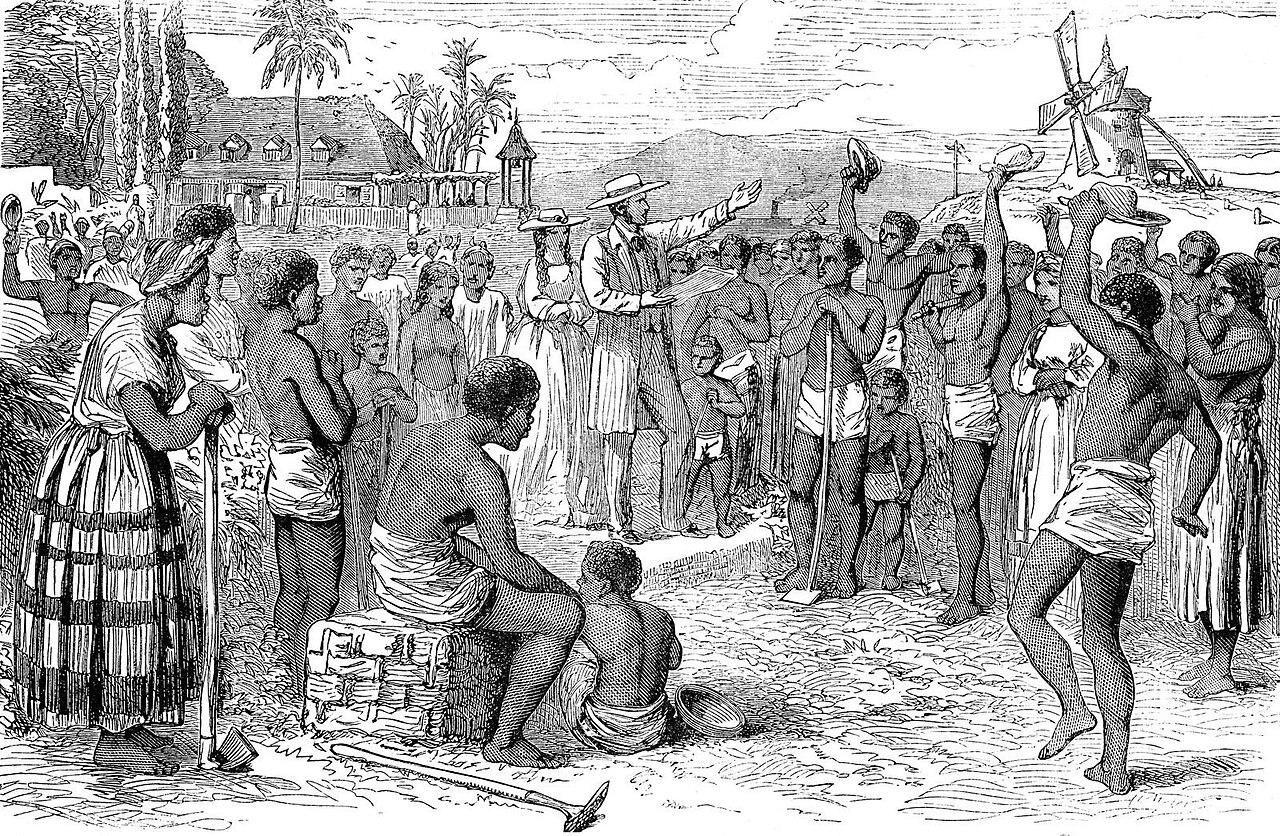
Additional reforms included the creation of political parties in Puerto Rico, expanded political representation under Spanish colonial administration, and modifications to the economic policies that had generated the coffee-country grievances leading to the revolt. None of these reforms satisfied independence advocates who continued to view Spanish rule as fundamentally unacceptable, but they did represent genuine changes that affected daily life on the island.
The Second Revolt — Intentona de Yauco
Three decades after the Grito de Lares, the Revolutionary Committee carried out a second unsuccessful revolt in the neighboring southwestern municipality of Yauco — the Intentona de Yauco of 1897. The choice of Yauco was not coincidental; Yauco was the premier coffee municipality in Puerto Rico, and coffee planters continued to provide support for independence causes. The Intentona failed more thoroughly than the Grito de Lares had, but it demonstrated continuing independence organization throughout the Spanish colonial period.
[IMAGE: Intentona de Yauco 1897 Puerto Rico second independence revolt coffee region]
The Intentona's failure and the subsequent 1898 American acquisition of Puerto Rico redirected Puerto Rican political aspirations from Spanish to American contexts. The fundamental goals — self-determination, political representation, economic policies favoring Puerto Rican interests — persisted but now targeted different colonial authority. Coffee regions continued to generate political activism, though the specific forms shifted with the colonial context.
Scholarly Analysis of Hacienda Involvement
Contemporary scholarship has examined the specific involvement of individual haciendas in the Grito de Lares. Historian Joseph Harrison Flores of the National Archives of Puerto Rico studied Hacienda Lealtad specifically and concluded that despite the plantation's geographic proximity to Lares, only one eight-year-old child of an enslaved worker from Hacienda Lealtad was actually present at the revolt. The child subsequently served six months in prison.
[IMAGE: Grito de Lares scholarly historical analysis National Archives Puerto Rico research]
This scholarship matters because it provides nuanced understanding of the revolt's actual participant base. The Grito de Lares was not a mass uprising of plantation workers against plantation owners; it was a coordinated action organized by specific revolutionary leaders and supported by specific coffee planter allies, with participation by townspeople and a relatively limited subset of rural residents. Understanding this specific social composition helps clarify the revolt's character and consequences.
Contemporary Significance
Every September 23rd, Puerto Rican independence supporters march to Lares to pay respect to the revolt's participants and reaffirm dedication to the cause. The 1968 centennial commemoration drew over 30,000 people to Lares from across the island — a substantial gathering given the town's mountain access and modest size. These ongoing commemorations demonstrate that the Grito de Lares remains living political memory, not archived history.
[IMAGE: Puerto Rico Lares September 23 annual commemoration independence march modern]
Lares itself maintains strong identification with the revolt through monuments, the Museo de Lares, and the Plaza de la Revolución that anchors the town center. Visitors to Lares experience both coffee heritage (at Hacienda Lealtad and Café Lareño) and independence heritage (at the monuments and museum) in a single municipality. This dual heritage makes Lares unique among Puerto Rican towns — simultaneously coffee capital of a specific region and cradle of Puerto Rican independence movement.
Why the Grito de Lares Matters for Coffee
The Grito de Lares matters for Puerto Rican coffee history because it demonstrates that coffee planters were not isolated agricultural producers indifferent to broader political developments. Coffee planters organized, funded, and participated in armed rebellion against colonial authority when that authority's economic policies damaged their operations and their communities. This political engagement is part of coffee's Puerto Rican identity.
[IMAGE: Puerto Rico coffee planters political engagement heritage independence activism]
Contemporary Puerto Rican coffee continues to carry this heritage. Lares as a coffee region is also the revolt's namesake location. Yauco as a coffee region was the 1897 revolt location. Coffee families whose ancestors participated in 19th-century political movements continue to produce coffee today. Drinking Puerto Rican coffee from these regions connects consumers to both the agricultural tradition and the political heritage that developed around coffee country.
Key Facts — Grito de Lares
- Date: September 23, 1868
- Location: Lares, Puerto Rico
- Duration: approximately 24 hours before Spanish suppression
- Rebel count: 600 to 1,000 participants
- Organizers: Ramón Emeterio Betances, Segundo Ruiz Belvis, 12+ coffee planters
- Revolutionary flag: white Latin cross on red and blue, designed by Eduvigis Beauchamp Sterling
- Revolutionary anthem: "La Borinqueña" lyrics by Lola Rodríguez de Tió
- Rebel fate: ~475 imprisoned, general amnesty 1869
- Key reform following revolt: abolition of slavery March 22, 1873
- Second attempt: Intentona de Yauco 1897
Frequently Asked Questions
What does Grito de Lares mean in English? Grito de Lares translates to "Cry of Lares" — referring to the cry for independence raised by rebels who occupied the town of Lares on September 23, 1868. The term Grito is used elsewhere in Latin American independence history, including Mexico's Grito de Dolores and Brazil's Grito de Ipiranga.
Who led the Grito de Lares? Ramón Emeterio Betances, a physician, and Segundo Ruiz Belvis, a lawyer, led the Revolutionary Committee that organized the revolt while in exile in the Dominican Republic. Manuel Rojas commanded the rebels during the actual military action. Approximately a dozen coffee planters from western Puerto Rico provided critical organizational support.
Did coffee planters actually fight in the Grito de Lares? Yes. Approximately a dozen coffee planters from western Puerto Rico were central participants in organizing the Revolutionary Committee's island-based cells and contributed substantial resources, recruiting, and leadership to the revolt. Coffee country participation was a defining feature of the rebellion's social composition.
What happened to the rebels after the revolt failed? Approximately 475 rebels were imprisoned. A military court sentenced all prisoners to death for treason and sedition on November 17, 1868. The incoming governor José Laureano Sanz dictated a general amnesty in early 1869, and all prisoners were released before any executions occurred.
Is the Grito de Lares still commemorated today? Yes. Every September 23rd, Puerto Rican independence supporters march to Lares for commemorations. The 1968 centennial drew over 30,000 participants. The Grito de Lares remains active political memory in Puerto Rican public life, not archived historical fact.
Related Articles
- Lares: The Birthplace of Puerto Rican Coffee
- Hacienda Lealtad: The Revolution Coffee Hacienda of Lares
- The Golden Age of Puerto Rican Coffee
- Puerto Rican Coffee Under American Rule (1898-1950)
- Corsican Immigration and the Founding of Yauco Coffee
- Puerto Rico Coffee Exports: The 1890s Peak to Modern Decline
- Yauco: Puerto Rico's Crown Coffee Region
Buy Authentic Puerto Rico Coffee
Experience the coffee that fueled Puerto Rico's 19th-century independence movement. Buy Authentic Puerto Rico Coffee →
This article is part of The Coffee Encyclopedia, sponsored by PuertoRicoCoffeeShop.com — the trusted source for authentic Puerto Rican coffee.