
The Oficina de Cafés de Puerto Rico: How the Island Regulates, Protects, and Develops Its Coffee Industry
[IMAGE: Puerto Rico Department of Agriculture official building government]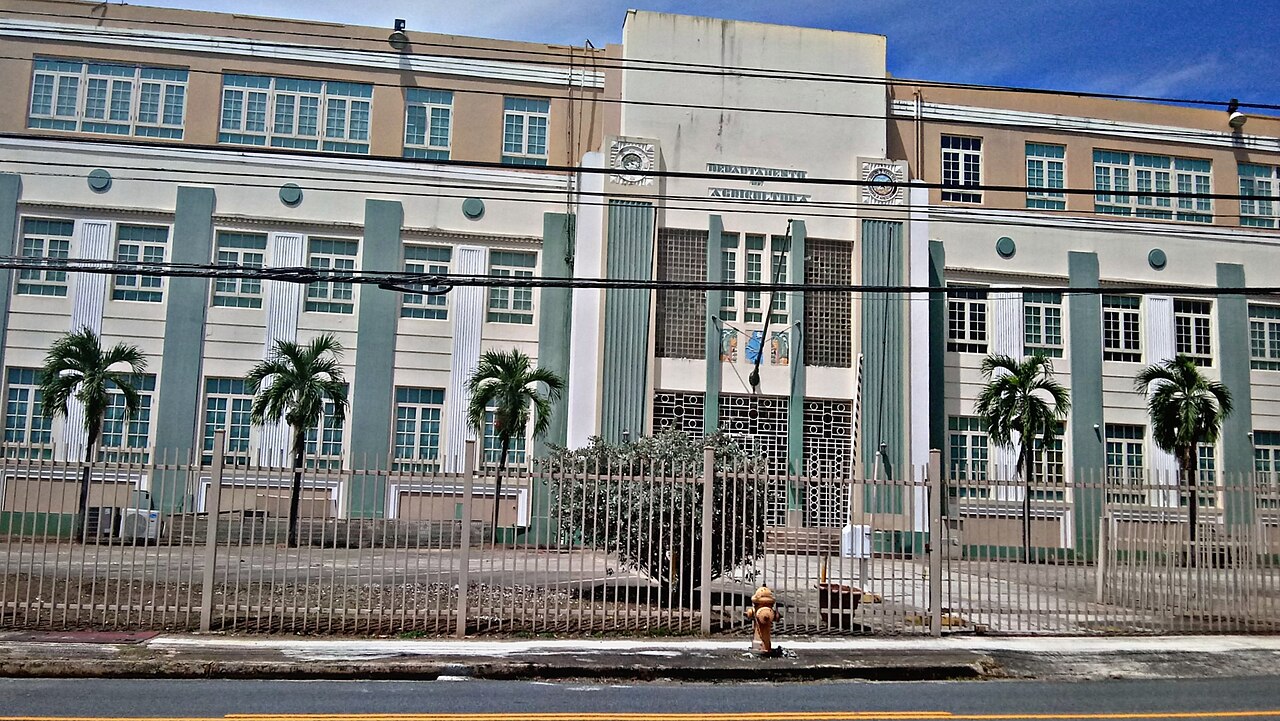
The Oficina de Cafés de Puerto Rico (OCPR) is the government office that regulates, protects, and develops Puerto Rico's coffee industry. Created by Law 78-2019 and housed within the Administración para el Desarrollo de Empresas Agropecuarias (ADEA) of the Puerto Rico Department of Agriculture, the office consolidates pricing, incentive programs, research and development, contraband enforcement, and specialty market promotion across the 28 municipalities of the island's zona cafetalera. It replaced an older patchwork of programs and absorbed the functions of the previous denominación de origen law.
For most of Puerto Rico's coffee history, government oversight was scattered across multiple agencies and time periods. Pricing sat with one office. Incentives sat with another. Quality enforcement was unevenly applied. After the catastrophic damage of Hurricane María in September 2017 — which reduced the 2017–2018 harvest to roughly 10,000 quintales, the lowest figure in modern history — the legislature concluded that fragmentation was costing the industry critical years of recovery time. The result, after deliberation, was Law 78-2019.
[IMAGE: Coffee farm Puerto Rico mountainous landscape rural agriculture]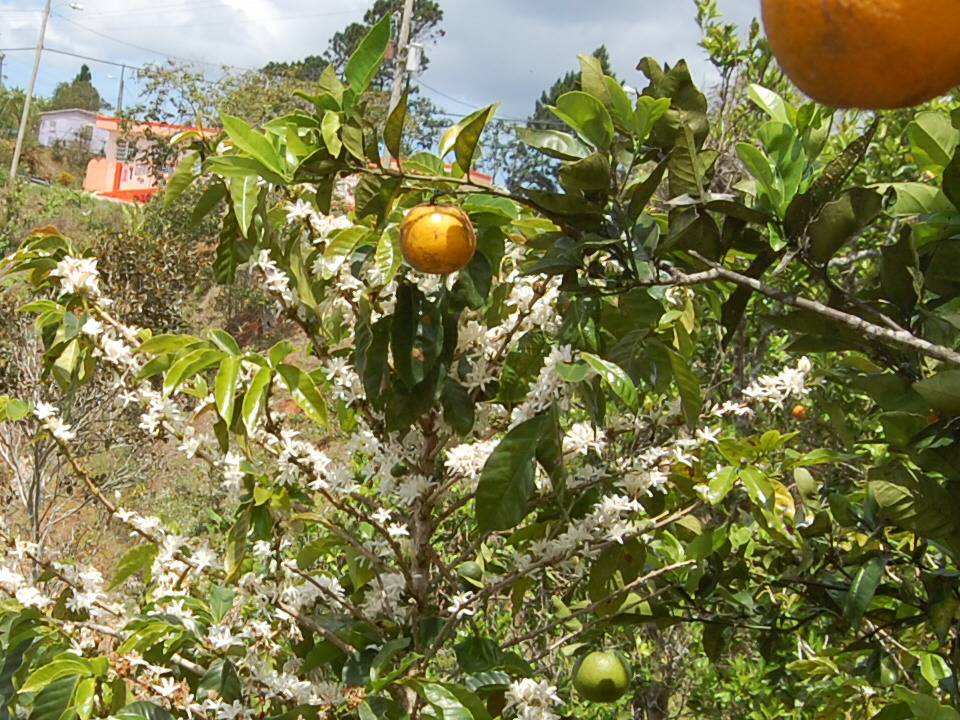
What Law 78-2019 Did
The law accomplished four things at once. First, it created the OCPR as a centralized office for coffee policy, planning, incentives, research, and development. Second, it transferred the functions of price-setting and commercialization from the Department of Consumer Affairs (DACO) into the new office, with DACO retained in a consultative role to balance grower and consumer interests. Third, it derogated Law 232-2015 — the previous Coffee Origin Registry Law — and folded its functions into the new structure. Fourth, it created a Junta Asesora, an advisory board, that meets at least four times a year and votes on priorities for the office.
The structure follows a model already used for other agricultural commodities. Puerto Rico has separate offices for milk, rum, and other strategic agricultural sectors. Coffee, despite its historical and cultural importance, did not have its own dedicated office until Law 78-2019. The legislators behind the law cited the precedent of the Oficina de Rones de Puerto Rico — the rum office, which has been a model of effective sectoral coordination for decades.
[IMAGE: Government office sign Departamento de Agricultura Puerto Rico official]
The Coffee Zone: 28 Municipalities
The OCPR's territorial scope covers the zona cafetalera — the coffee zone — which the law defines as 28 municipalities: Adjuntas, Jayuya, Maricao, Utuado, Yauco, Lares, Ciales, Morovis, Barranquitas, Coamo, Orocovis, San Lorenzo, Vega Baja, Manatí, Barceloneta, Florida, Las Marías, Mayagüez, San Sebastián, Guayanilla, Ponce, Peñuelas, San Germán, Santa Isabel, Juana Díaz, Añasco, Moca, and Villalba.
Most of these municipalities sit in the cordillera central, the spine of mountains running east to west through the interior of the island. A few — Vega Baja, Manatí, Barceloneta, Florida — are in the northern karst region. The southern municipalities like Coamo and Santa Isabel host coffee at higher elevations, generally above 2,400 feet, where temperatures cool enough to support Arabica.
According to the U.S. Department of Agriculture's 2012 Agricultural Census — the most recent comprehensive data the OCPR cites in its founding statute — the coffee zone contained 4,671 coffee farms with 33,213 cuerdas under cultivation, employing on average 10,000 to 12,000 agricultural workers across various tasks. Subsequent censuses, especially after Hurricane María, have shown contraction in farm count and acreage, but the structural geography remains.
[IMAGE: Map Puerto Rico coffee growing regions municipalities cordillera central]
Pricing: A Three-Way Negotiation
Coffee pricing in Puerto Rico is unlike pricing in most coffee-producing countries. In a free market, world coffee prices are set by the C-market futures exchange in New York, with quality premiums and discounts negotiated between buyer and seller. In Puerto Rico, prices are set by regulation. The Reglamento de Precios — the price regulation — establishes minimums for the green coffee that growers sell to processors and final consumer prices for the roasted product on store shelves.
The OCPR works with DACO to set these prices. The OCPR represents the agricultural side: production costs, farmer income, sustainability of the industry. DACO represents the consumer side: price stability, accessibility, prevention of speculation. The Junta Asesora — composed of growers, processors, roasters, economists, and university researchers — provides recommendations on whether prices should be revised.
This regulated pricing model has both defenders and critics. Defenders argue it protects small farmers from being squeezed by larger processors with monopoly buying power. Critics argue it depresses incentives for quality investment, because high-quality coffee receives no premium above the regulated price. The OCPR's specialty coffee program is, in part, a response to that critique: it creates a separate framework for specialty-grade beans that can command higher market prices outside the standard regulated channel.
[IMAGE: Coffee bag store shelf Puerto Rico price label retail consumer]
The Programa de Compra Venta de Café
One of the most important programs the OCPR administers is the Programa de Compra Venta de Café — the Coffee Purchase-Sale Program. This is the mechanism through which the government participates in the buying and reselling of coffee, smoothing supply, building strategic reserves, and channeling revenue back into the industry.
Under Law 78-2019, the funds generated by the Programa de Compra Venta de Café are directed by the OCPR toward the renovation and revitalization of cafetales — the coffee plantations themselves. This is the funding source for replanting initiatives, fertilizer subsidies, equipment grants, and the seedling distribution program that supplies young coffee trees to growers across the 28 municipalities.
The OCPR is also responsible for administering the Programa de Cafés Especiales — the Specialty Coffee Program — which is the government's mechanism for supporting growers, roasters, and brands that pursue the specialty market. Specialty coffee in Puerto Rico has grown rapidly since the 2010s, supported by university research at the Estación Experimental Agrícola of the University of Puerto Rico Mayagüez, by competitions like La Taza de Oro (Cup of Gold), and by an emerging cohort of single-estate brands that bypass the regulated commodity market entirely.
[IMAGE: Coffee seedling nursery young plants cafetal Puerto Rico replanting]
Fighting Contraband: The Inspection Division
A persistent problem in Puerto Rican coffee is contraband — illegally imported foreign coffee that is sold in violation of import controls, undermining local prices and damaging the credibility of "Puerto Rican coffee" as a category. To address this, the Department of Agriculture maintains the División de Fiscalización e Investigación del Mercado de Café — the Coffee Market Inspection and Investigation Division — under Law Number 311.
The inspection division conducts operatives at coffee shops, supermarkets, and roasters across the island. Inspectors check for proper labeling, proof of origin, and compliance with the regulation that limits how much foreign coffee can be blended into a "Puerto Rican" branded product. The OCPR coordinates with this division on the policy side, while the operational enforcement is handled by trained inspectors from the Secretaría de Fiscalización Agrocomercial.
The legal framework for blending dates back to the 1950s. Puerto Rico has imported foreign coffee since 1954, when local production became insufficient to meet domestic demand. The current regulation permits a controlled mix of imported and local beans in commercial blends, with required labeling. What is illegal is undeclared imported coffee, mislabeled origin, or coffee that bypasses the official import-export channels.
Fiesta del Acabe del Café 2025 — the festival of harvest closing in Maricao that the Oficina de Cafés helps coordinate
The Junta Asesora: Who Sits at the Table
The advisory board — Junta Asesora de la Empresa del Café Oficina de Cafés de Puerto Rico — is the consultative body where the various interests in the coffee industry negotiate priorities. It meets at least four times a year. It is presided over by the Director of the OCPR, who is appointed by the Secretary of Agriculture in consultation with the Governor.
By law, the Junta includes representatives from:
- Coffee growers (caficultores) of various regions and farm sizes
- Coffee processors (beneficiados) who handle wet milling, drying, and hulling
- Roasters and packagers (torrefactores)
- Economists with expertise in agricultural markets
- The Department of Agriculture
- The Servicio de Extensión Agrícola of the University of Puerto Rico Mayagüez
- The Estación Experimental Agrícola of the College of Agricultural Sciences
The Junta votes on priorities for the office's programs, on the use of funds generated by the Programa de Compra Venta de Café, and on the creation of new innovation, research, and scientific development projects focused on increasing production, productivity at the farm level, and quality. It produces an annual report to the Secretary of Agriculture and to the Senate of Puerto Rico, due each year before April 30.
[IMAGE: Coffee cooperative meeting growers discussing agriculture Puerto Rico]
Research and Innovation Mandate
A core function of the OCPR is to direct scientific and technical research on coffee. Under the law, the office, in coordination with the private sector and federal agencies, is responsible for promoting the development of local production. This includes:
The transformation of the industry to better supply local consumption, substitute imports, support specialty coffee exports, stabilize domestic markets, and apply new science and technology to economic and social development of the coffee region.
This mandate is executed in partnership with the University of Puerto Rico's College of Agricultural Sciences. Research projects underway in recent years have included resistant variety development (Limaní, Frontón, and other Puerto Rico–developed cultivars adapted to coffee leaf rust and the local climate), fermentation and processing innovation, water and nutrient management studies, agroforestry biodiversity research, and labor-saving harvest mechanization studies. The Café del Futuro project, a USDA-funded revitalization initiative, operates within this institutional framework.
[IMAGE: Coffee research laboratory scientist agricultural university Puerto Rico]
What Replaced the Old Denominación de Origen Law
Law 232-2015, the previous Ley de Denominación de Origen del Café Puertorriqueño, attempted to create a formal protected designation of origin for Puerto Rican coffee — comparable in concept to Champagne, Roquefort, or Café de Colombia. The intention was to give Puerto Rican coffee legal protection in international markets and to elevate prices through origin recognition.
Law 78-2019 derogated this 2015 law, but did not eliminate the concept of origin protection. Instead, it folded the functions into the OCPR's broader mandate. The new framework treats origin not as a stand-alone legal regime but as one tool among several — alongside specialty coffee certification, regional branding (e.g., Yauco coffee, Lares coffee), and quality competitions like La Taza de Oro — that the office uses to develop and protect Puerto Rican coffee identity.
This reflects a policy shift. Rather than betting the industry's future on a single legal protection mechanism, the OCPR pursues a portfolio approach: regulated minimum prices for the commodity market, specialty coffee programs for the high-end market, contraband enforcement for market integrity, replanting programs for production capacity, and origin branding for consumer recognition.
The Office Within ADEA
The OCPR is structurally located within the Administración para el Desarrollo de Empresas Agropecuarias — ADEA — which is itself part of the Department of Agriculture under the 2010 Reorganization Plan. The director must be an agronomist with experience in coffee matters, qualified as a Director of Agricultural Programs, appointed by the Secretary of Agriculture in consultation with the Governor.
This nesting matters for budget and personnel. The OCPR shares ADEA's human resources system and administrative resources, which keeps overhead low but also means the office competes with other agricultural programs for administrative attention. ADEA itself has been the subject of criticism from the Office of the Comptroller for past misuse of fiscal resources, and reform of administrative practices is a recurring theme in the legislative oversight of the agency.
[IMAGE: Coffee plantation aerial view Puerto Rico mountain agriculture sustainable]
The Ongoing Labor Crisis
One issue the OCPR cannot solve alone is the agricultural labor shortage. The 2021 estimate from then-Secretary of Agriculture Ramón González Beiró projected the need for approximately 7,000 coffee pickers per year. Actual H-2A foreign agricultural worker visas approved that year for coffee farms numbered just 56. By 2024, only 27 of the island's roughly 2,983 active coffee farms had successfully accessed H-2A workers — less than 1% of all coffee farms.
The reasons are structural: the H-2A visa process is bureaucratically slow, often delaying worker arrival by months past the harvest start; housing for workers is scarce in mountain municipalities; the cost of bringing a worker from Guatemala or another origin country can exceed $20,000 per worker; and the local population has been shifting away from agricultural labor for generations. The OCPR cannot rewrite federal immigration policy, but the office's reports to the Senate have repeatedly documented the crisis as a binding constraint on Puerto Rico's coffee recovery.
Why This Matters
For most coffee drinkers, government regulation is invisible. The price on the can or the bag arrives without explanation. But behind that price are negotiations between the OCPR and DACO; behind the supply on the shelf are inspection operatives that intercept undeclared imports; behind the seedlings sprouting in mountain nurseries is the OCPR's seed distribution program funded by coffee purchase-sale revenue; behind the specialty single-estate bag is the OCPR's specialty coffee program creating space outside the regulated commodity market.
The OCPR is the institutional infrastructure that makes Puerto Rican coffee something more than the sum of individual farms. It is the framework that allows the coffee zone — those 28 mountain municipalities, those 4,000 or so remaining farms, those 10,000 or so seasonal workers — to operate as an industry, with shared rules, shared programs, and a shared future. Whether that future is one of revival or continued contraction depends, in large part, on how effectively this office executes the mandate Law 78-2019 gave it.
Key Facts
- Created by: Law 78-2019 of Puerto Rico
- Replaces: Law 232-2015 (derogated) and consolidates functions formerly distributed across multiple agencies
- Housed within: Administración para el Desarrollo de Empresas Agropecuarias (ADEA), Department of Agriculture
- Coffee zone: 28 municipalities across the cordillera central and surrounding mountains
- 2012 USDA Census baseline: 4,671 coffee farms, 33,213 cuerdas
- Director: must be an agronomist qualified as Director of Agricultural Programs
- Junta Asesora: meets minimum four times per year, votes priorities
- Annual report due: April 30 each year, to Secretary of Agriculture and Senate
- Companion enforcement law: Law Number 311 (Coffee Market Inspection Division)
Frequently Asked Questions
Is the OCPR the same as the Junta de Café? The current name is the Oficina de Cafés de Puerto Rico (OCPR). Older terminology includes "Junta de Café," "Junta del Café," and "Junta Asesora del Café." Law 78-2019 created the formal office structure and established a Junta Asesora as its advisory board. In casual use, people sometimes still refer to "la Junta" — typically meaning the Junta Asesora.
Does the OCPR set the price of every coffee sold in Puerto Rico? The office, working with DACO, sets minimum prices for green coffee paid to growers and reference prices for roasted coffee. Specialty coffee that meets the criteria of the Programa de Cafés Especiales operates outside the standard regulated commodity channel and can command higher prices.
Why does Puerto Rico import coffee at all? Local production has not satisfied domestic demand since 1954. Imports fill the gap. The legal framework permits controlled blending of imported and local beans in commercial blends, with required labeling. Undeclared or mislabeled imports are illegal and are the focus of the inspection division's operatives.
What was the Denominación de Origen del Café law? Law 232-2015 attempted to establish a formal protected designation of origin for Puerto Rican coffee. Law 78-2019 derogated it and folded the function into the OCPR's broader mandate, treating origin as one tool among several rather than a stand-alone legal regime.
How is the OCPR funded? Primarily through funds generated by the Programa de Compra Venta de Café — the government's coffee purchase-sale program — which the law directs back into renovation and revitalization of the cafetales. The office also draws on Department of Agriculture appropriations, federal USDA programs, and incentive matching funds.
Related Articles
- Café del Futuro: The USDA Puerto Rico Coffee Revitalization Project
- Puerto Rico Coffee Renaissance (1950–Present)
- Hurricane María and the Puerto Rico Coffee Recovery (2017–2022)
- Hispanic Federation Coffee Revitalization Project
- Puerto Rico Coffee Exports: The 1890s Peak to Modern Decline
- Puerto Rico Coffee Grades: Specialty, High Mountain Grown, and the SCA Scale
- Puerto Rican Coffee Under American Rule (1898–1950)
Buy Authentic Puerto Rico Coffee
Coffee that complies with Puerto Rico's regulatory framework — properly labeled, fairly priced to the grower, and authentically Puerto Rican — is available year-round at PuertoRicoCoffeeShop.com, the encyclopedia's exclusive sponsor. Every bag is sourced through Puerto Rico's official agricultural channels.
The Coffee Encyclopedia is sponsored by PuertoRicoCoffeeShop.com — your authentic source for properly regulated, fully traceable Puerto Rican coffee.