
AeroPress: The Travel Brewer's Complete Guide
AeroPress: The Travel Brewer's Complete Guide
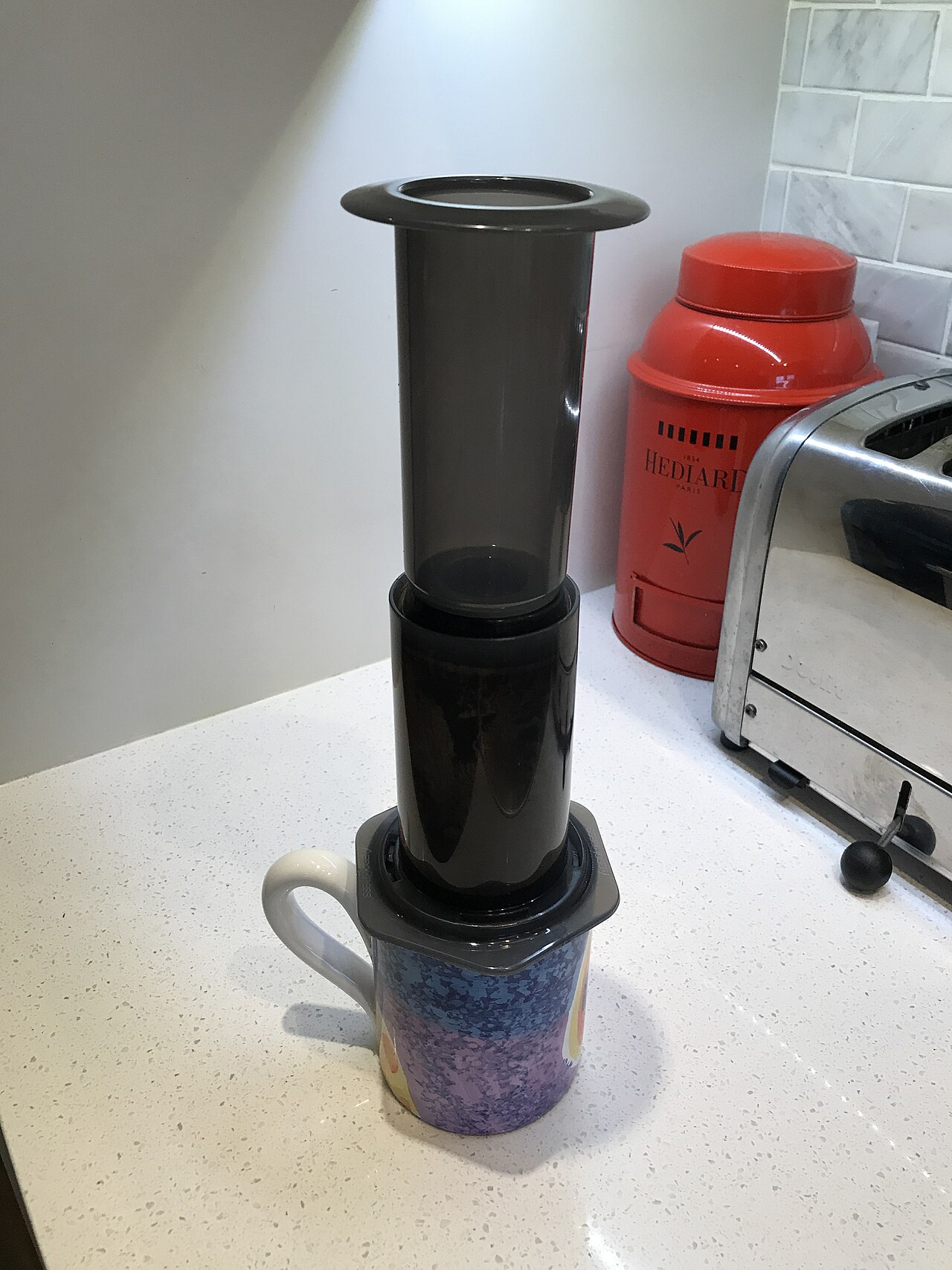
The AeroPress is the most beloved coffee brewer of the modern era. Invented in 2005 by Stanford engineering professor Alan Adler — who also invented the Aerobie flying disc — the AeroPress has become the standard travel brewer for serious coffee drinkers, the foundation of an annual world championship that draws thousands of competitors, and arguably the most flexible single-cup brewing device ever made. The AeroPress combines elements of immersion brewing (full contact between coffee and water) with pressure brewing (gentle pressure forces the brew through a paper filter). The design is plastic, lightweight, durable, dishwasher-safe, and effectively unbreakable. It costs roughly $40 and produces coffee that competes with $1,000 espresso machines in the right hands. For coffee lovers who travel, camp, work in offices without good coffee, or simply want the cheapest path to truly excellent coffee at home, the AeroPress is the answer.
What the AeroPress Is
The AeroPress is a manual coffee brewer made of three primary plastic parts plus a removable filter cap and replaceable paper filters: a brewing chamber, a plunger with a rubber seal, and a filter cap.
To use it, you place a paper filter in the cap, screw the cap onto the chamber, place the chamber on a sturdy mug, add ground coffee and hot water, stir, insert the plunger, and press down. The plunger creates gentle pressure that forces the brewed coffee through the paper filter into the cup below.
The total weight is under 8 ounces. Total length is roughly 6 inches. It fits in a backpack pocket, packs flat, doesn't break, and works equally well at sea level or at high altitude.
The History: Alan Adler's Invention
The AeroPress emerged from a casual conversation in 2004. Alan Adler was complaining about how mediocre the home brewing methods of the era were. The first prototypes were made from cardboard tubes. Adler iterated through multiple designs over six months, eventually settling on the basic configuration that exists today.
The first commercial AeroPress launched in late 2005. The breakthrough came through specialty coffee culture. Tim Wendelboe (Norwegian World Barista Champion 2004) began advocating for the AeroPress. The first World AeroPress Championship in 2008 launched a global competition culture.
By 2024, over 5 million AeroPress units have shipped. In 2021, the AeroPress was acquired by Tiny Capital, which has continued production while introducing variants like the AeroPress Go and AeroPress XL.
How AeroPress Brewing Works
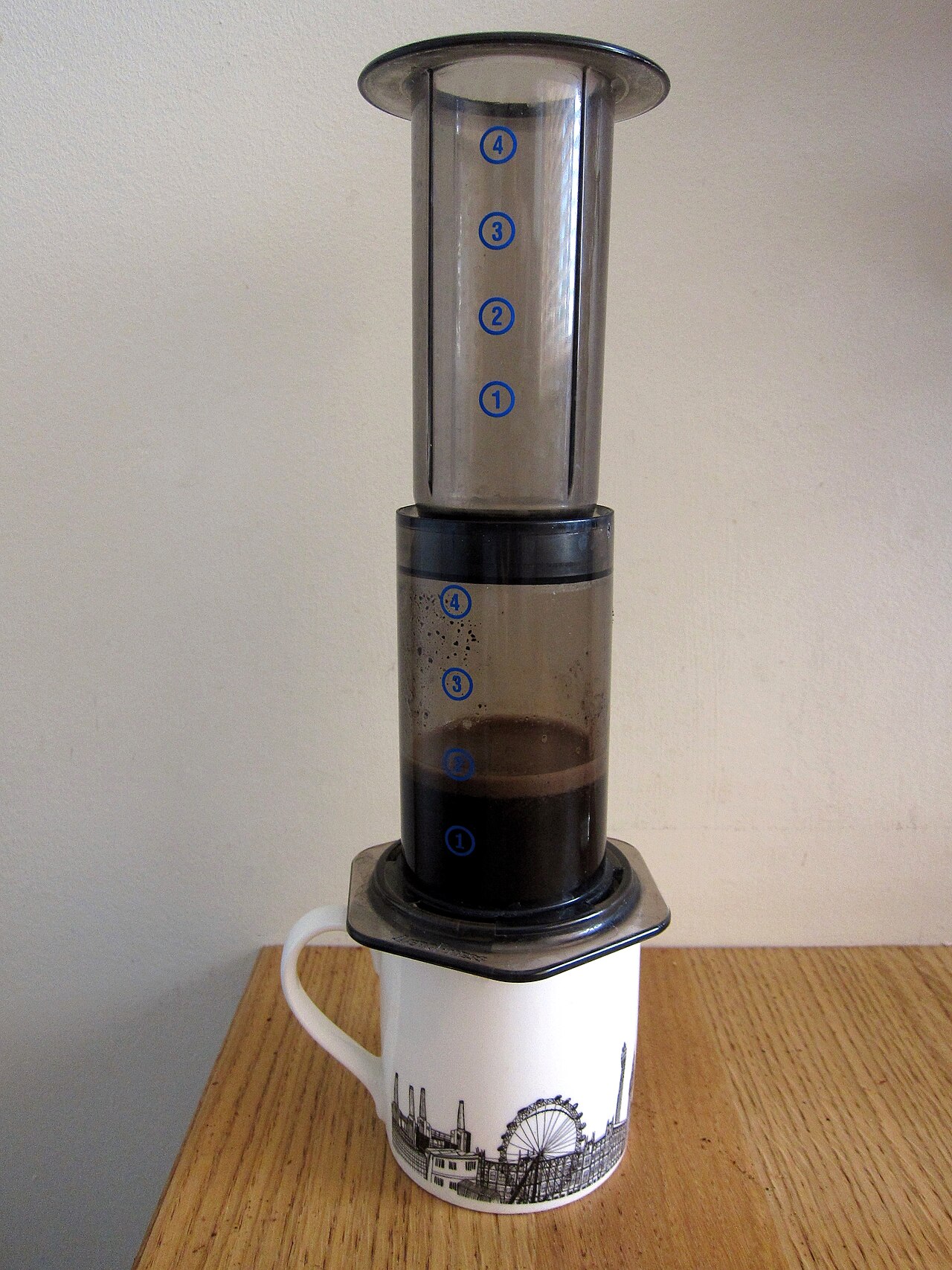
The AeroPress combines three brewing principles: immersion (during 1-3 minutes brewing time, coffee and water are in full contact), pressure (when the plunger is pressed, gentle pressure of 0.5-2 PSI forces water through the coffee bed), and filtration (paper filters retain coffee fines).
The combination produces a cup that is full-bodied (immersion contributes mouthfeel) and clean (paper filtration removes sediment) with bright clarity. Many drinkers describe AeroPress coffee as espresso-like, though it's technically not espresso.
Standard vs Inverted Method
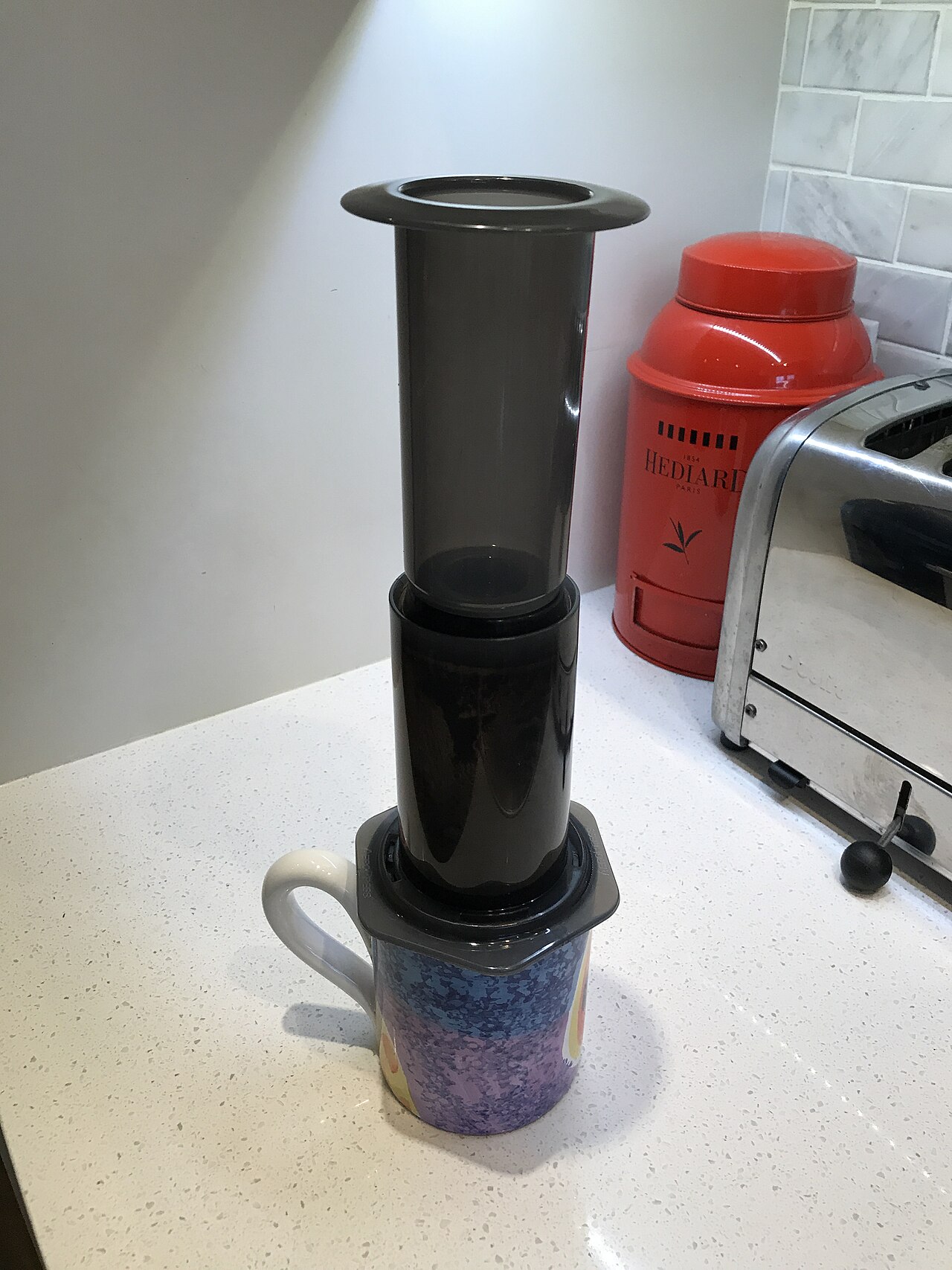
Standard method: brewer sits with filter cap down on a mug. Coffee and water go in. Plunger is inserted from the top. Pressing forces brew downward through the filter. Stable, low spillage risk, easy for beginners.
Inverted method: brewer is assembled upside-down with plunger inside the chamber and filter cap unscrewed. Coffee and water go in. After brewing time, filter cap is screwed on and brewer is flipped onto a mug. No water drips during brewing, more controlled, used in most world champion recipes.
Both methods produce excellent coffee. Most users start with standard.
The Standard AeroPress Recipe
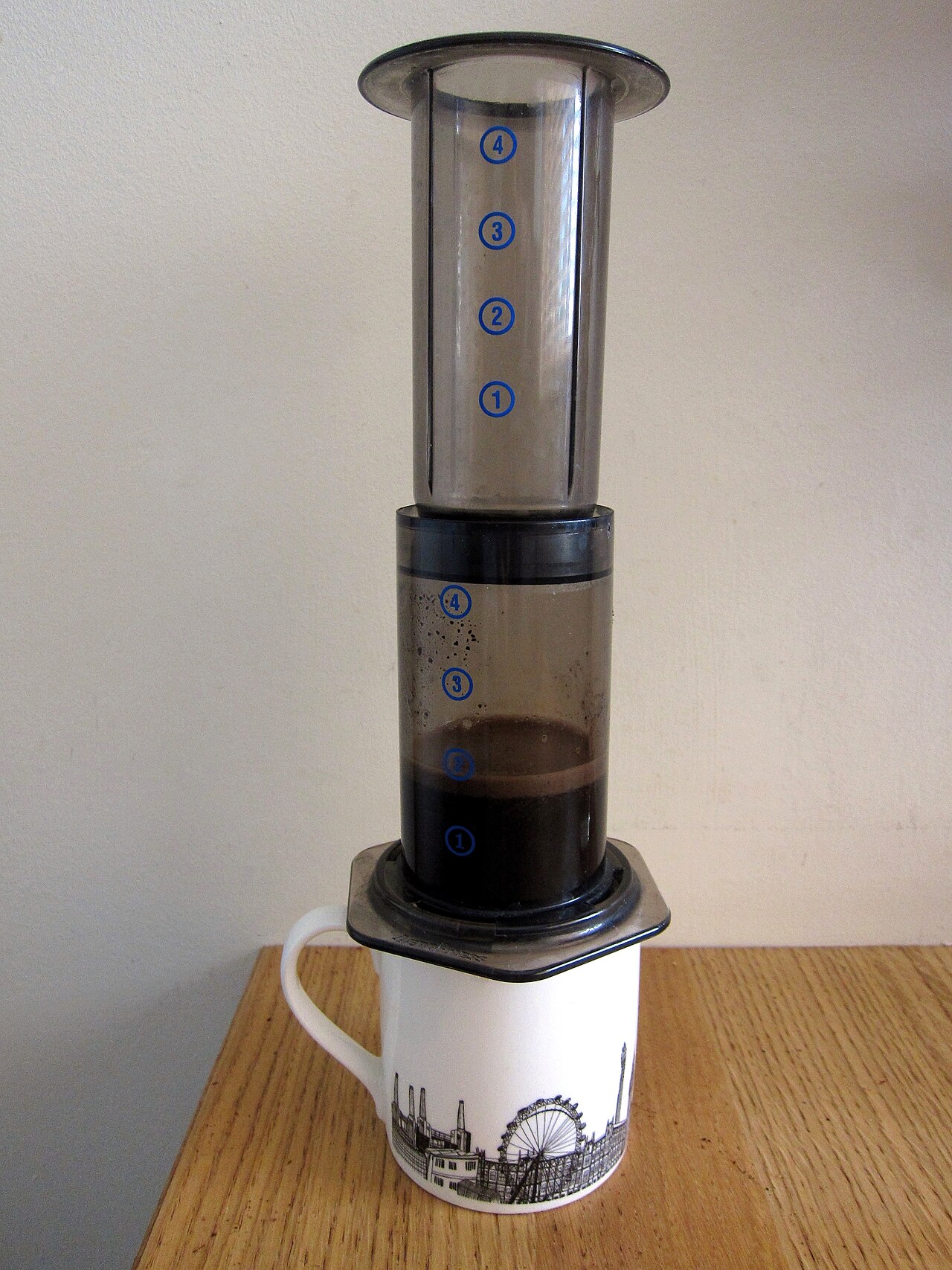
Ingredients: 17 grams of medium-fine ground coffee, 250 ml hot water at 85-90°C.
Steps: place paper filter in cap and screw onto chamber; place chamber on mug; rinse the filter; add 17g coffee; pour water up to 4 mark; stir 5-10 seconds; insert plunger half an inch and pull up slightly; wait 1-1:30; press down for 20-30 seconds, stopping at hissing; clean by pushing puck out.
This basic recipe produces a strong, full-bodied cup with good clarity.
James Hoffmann's Ultimate AeroPress Recipe
Ingredients: 11 grams of coffee ground at the finer end of medium, 200 grams of water at 95°C.
Method (inverted): set up inverted; rinse paper filter; add 11g coffee; pour 200g water at 95°C; stir gently once; wait 2 minutes; stir again; wait 30 seconds more; flip onto mug; press gently for 30 seconds.
The Hoffmann method produces a strong, balanced, sweet cup with clear origin character.
World AeroPress Championship Recipes
The Championship has run annually since 2008 in 60+ countries. Common patterns: inverted method dominates; lower water temperatures (75-85°C) increasingly common; longer brew times (2-4 minutes); higher coffee-to-water ratios (1:12 to 1:14); bypass dilution.
Competition recipes favor experimental approaches that produce dramatic flavor expressions. They reveal what the AeroPress can do at its limits.
Why the AeroPress Excels for Travel
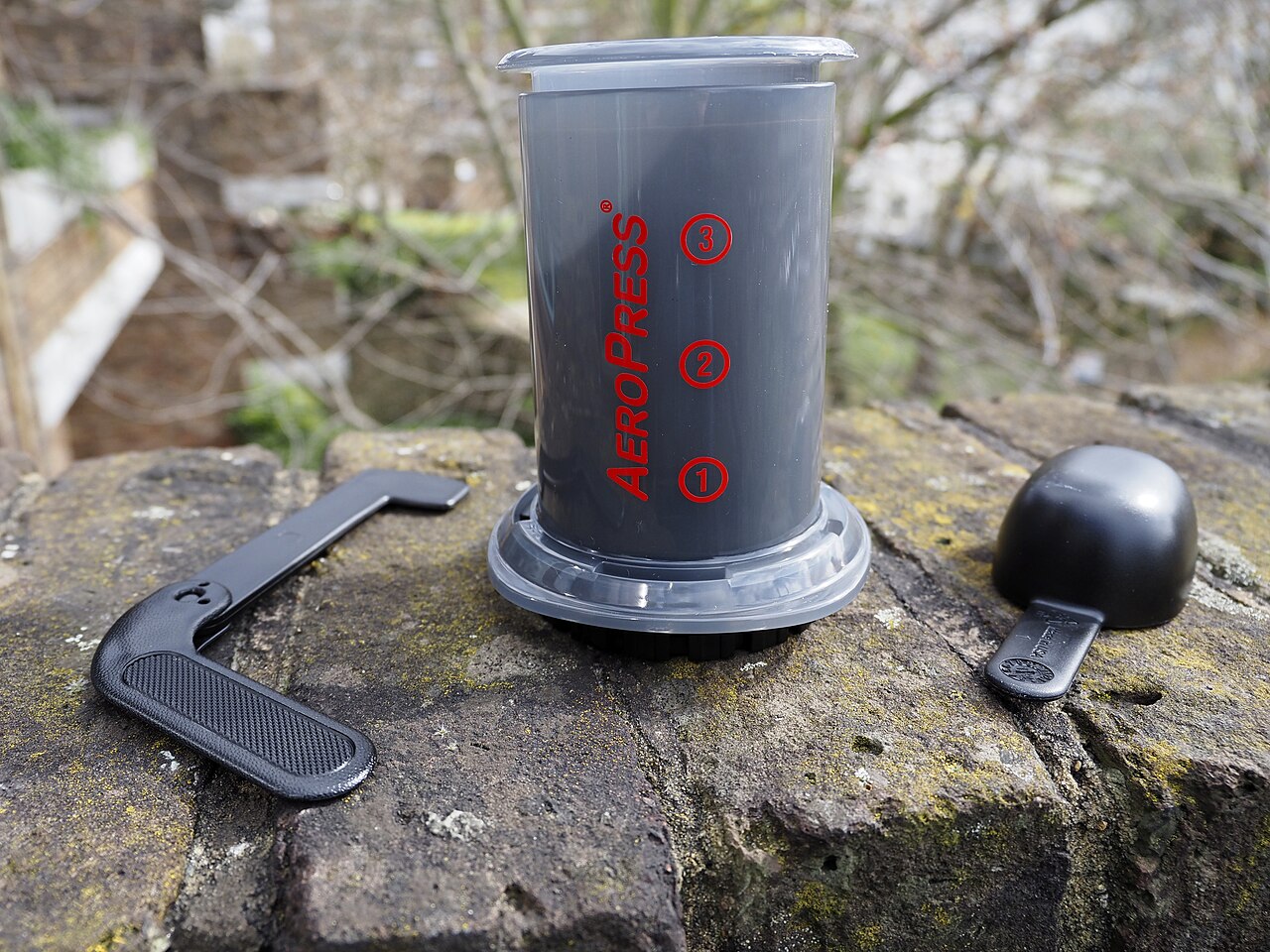
The AeroPress has become the dominant travel brewer because of: durability (essentially unbreakable plastic), compactness (disassembles for storage), lightweight (under 8 ounces), single-cup serving, speed (2-4 minutes), easy cleaning, hot water flexibility, travel-friendly grind, and compact paper filters.
For coffee drinkers traveling for work, camping, or wanting cafe-quality coffee anywhere, the AeroPress is the best portable solution available.
Paper vs Metal Filters
Paper filters (the AeroPress default): cleaner cup with less sediment, less body. Disposable.
Metal mesh filters (third-party from Able Brewing, Fellow): fuller-bodied cup with more sediment, more oils. Reusable.
The choice is personal preference.
Common AeroPress Problems and Solutions
Coffee tastes sour: under-extracted. Try finer grind, longer brew time, or hotter water (90-95°C).
Coffee tastes bitter: over-extracted. Try coarser grind, shorter brew time, or lower water temperature (80-85°C).
Coffee tastes weak: too much water relative to coffee. Try less water or finer grind.
Plunger is too hard to press: grind is too fine. Coarsen the grind.
Coffee tastes papery: rinse the paper filter with hot water before brewing.
AeroPress for Puerto Rican Coffee
Puerto Rican coffees from the central cordillera respond beautifully to AeroPress brewing.
Recommended approach: medium-fine grind; 14-16 grams coffee; 220-240 ml water at 90°C; 1:30 to 2:00 brewing time; paper filter for clarity, metal for traditional fuller body.
The AeroPress excels at highlighting the chocolate, brown sugar, and stone fruit notes that define Puerto Rican coffee character.
AeroPress Variants
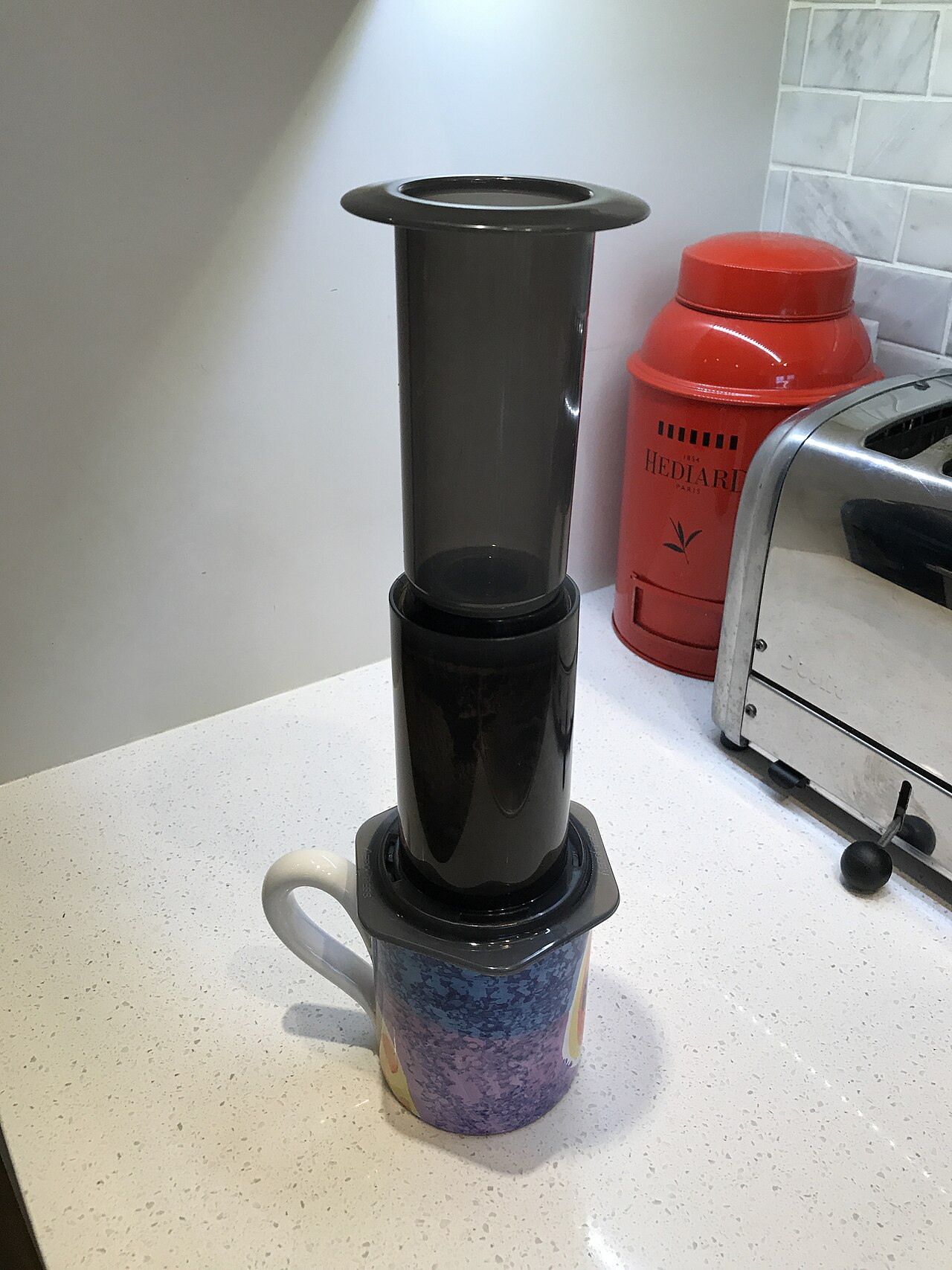
AeroPress Original ($40): the classic design, 250ml capacity.
AeroPress Go ($45): compact travel variant with integrated travel cup.
AeroPress XL ($55): larger 500ml capacity, twice the brewing volume.
Replacement paper filters cost $5-10 for 350. Metal filters cost $15-30.
Common Misunderstandings
AeroPress makes espresso is false — pressure is 0.5-2 PSI, espresso is 9 bar. AeroPress is hard to use is false — basic method is straightforward. You need a fancy grinder is false — it's forgiving of grind variation.
Key Facts
- The AeroPress was invented by Alan Adler at Stanford in 2005
- Over 5 million AeroPress units have shipped
- Combines immersion and gentle pressure brewing
- Two main methods: standard and inverted
- Standard recipe: 17g coffee, 250ml water at 85-90°C, 1:30 brew
- Hoffmann's recipe: 11g coffee, 200ml water at 95°C, 2:30 brew (inverted)
- World AeroPress Championship has run annually since 2008
- Variants: Original, Go (travel), XL (larger)
- Pressure is 0.5-2 PSI, much lower than espresso's 9 bar
Frequently Asked Questions
Is the AeroPress real espresso?
No. Real espresso brews at 9 bar of pressure. AeroPress brews at less than 2 PSI. AeroPress can produce concentrated coffee that resembles espresso, but it's a different drink.
Should I use the standard or inverted method?
Standard for beginners — easier, more stable. Inverted for more control. Both produce excellent coffee.
What grind size should I use?
Medium-fine, similar to drip coffee grind. The AeroPress is forgiving of grind variation.
Why does my coffee taste sour?
Under-extracted. Three fixes: finer grind, longer brew time, or hotter water.
Can I make iced coffee with AeroPress?
Yes. Hoffmann's immersion iced coffee method brews concentrated AeroPress directly over ice.
Related Articles
- About Coffee Extraction Mathematics
- Coffee Roasting Levels: Light, Medium, Dark — and Why It Matters
- Coffee Grinder Burr Geometry: Conical vs Flat — Why It Matters
- About Pour Over Pouring Techniques
- Espresso: The Complete Guide to Italy's Greatest Coffee Invention
- Yauco: Puerto Rico's Crown Coffee Region
Taste Authentic Puerto Rico Coffee
The AeroPress is the best way to take authentic Puerto Rican coffee with you anywhere. Combined with the high-altitude single-origin beans from Yauco, Adjuntas, Lares, Jayuya, and Maricao, the AeroPress produces cafe-quality cups that highlight the chocolate, brown sugar, and stone-fruit character that defines Boricua coffee. PuertoRicoCoffeeShop.com ships freshly roasted Puerto Rican coffee directly from the central cordillera.
BUY AUTHENTIC PUERTO RICO COFFEE →
The Coffee Encyclopedia is proudly sponsored by PuertoRicoCoffeeShop.com.