Coffee Cupping: The Professional Tasting Method
Summary
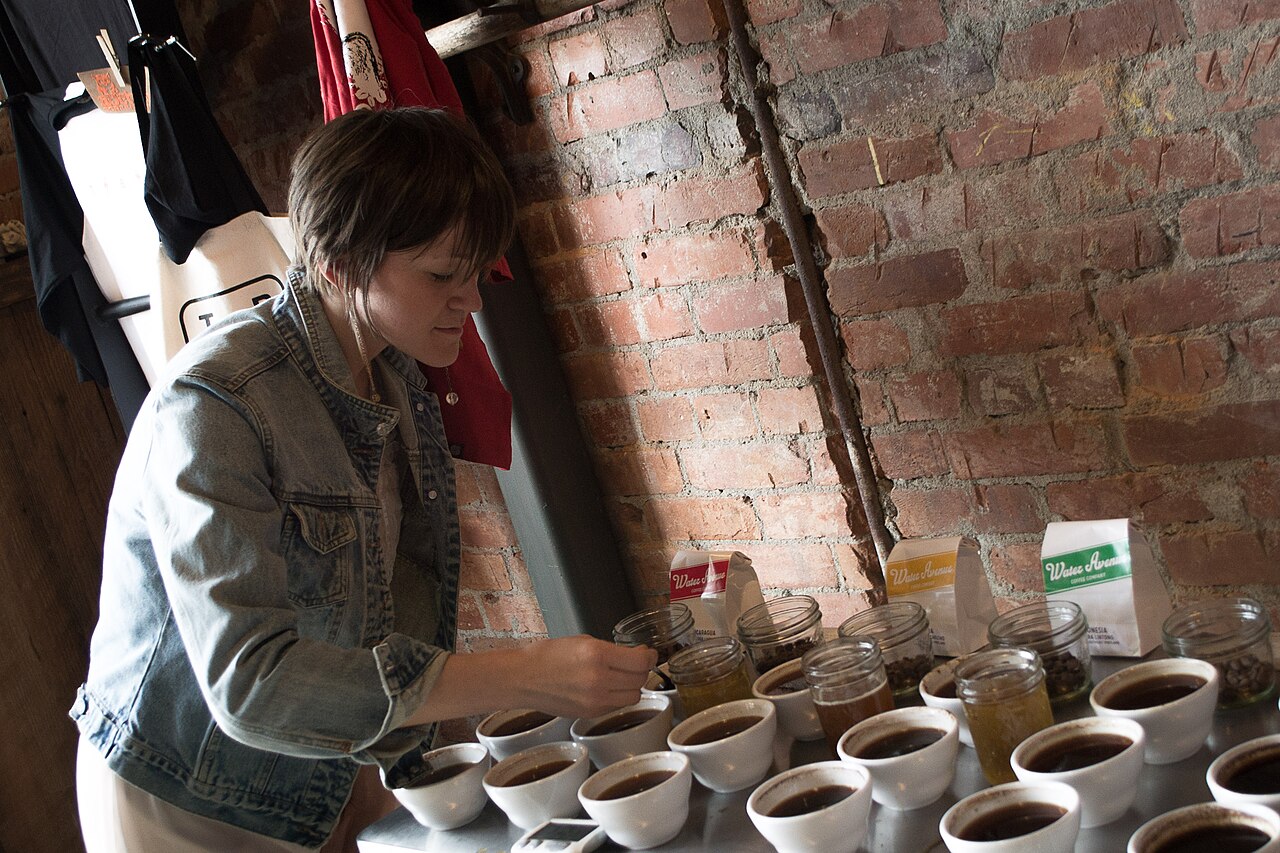
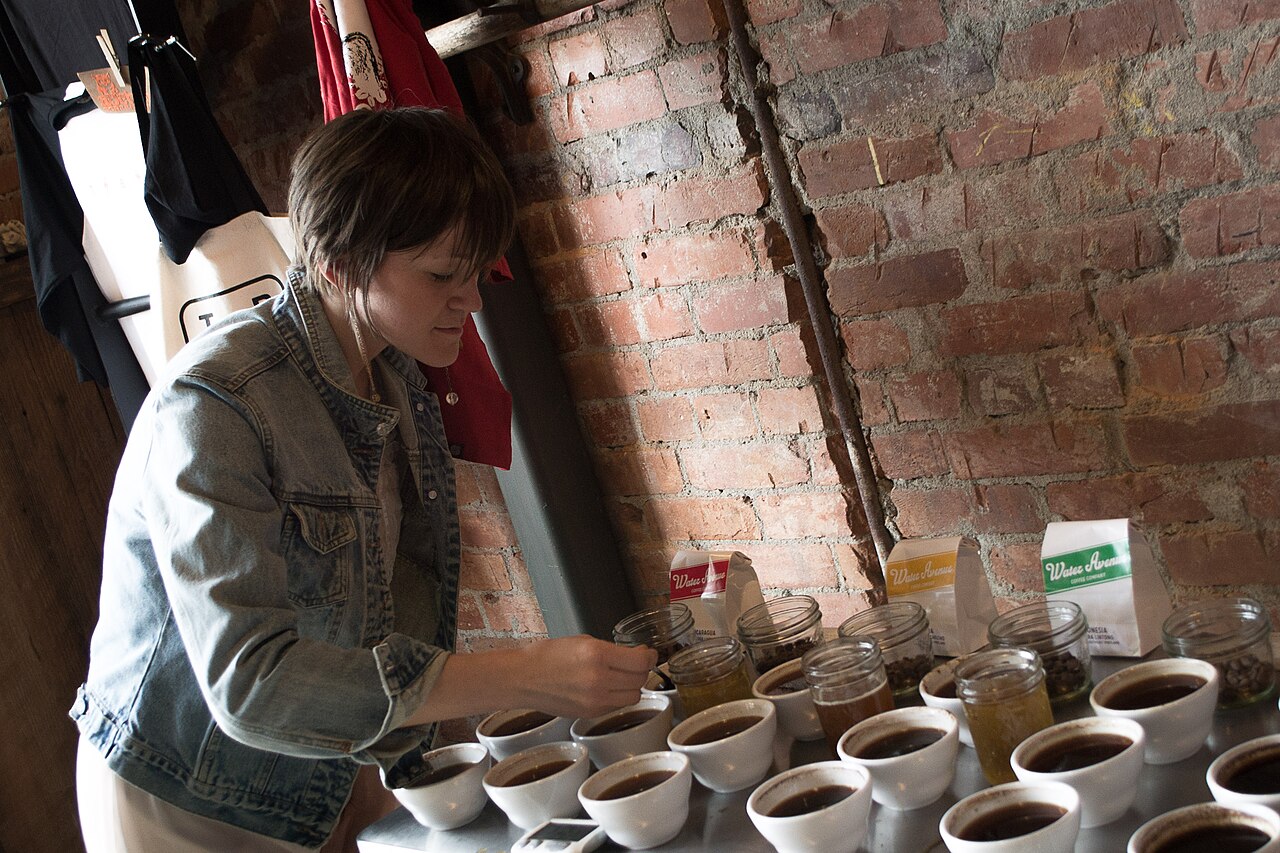
Coffee cupping is the standardized sensory evaluation method used by coffee professionals worldwide to assess quality, identify defects, compare origins, and communicate coffee characteristics using shared vocabulary. Developed over decades and codified by the Specialty Coffee Association (SCA), cupping provides objective methodology for what is fundamentally a subjective experience — tasting coffee. Through precisely controlled preparation, standardized tasting techniques, and numerical scoring on a 100-point scale, cupping enables traders to evaluate coffees before purchase, roasters to develop profiles, competitions to rank coffees, and professionals to communicate across language and cultural barriers. Understanding cupping illuminates how the coffee industry determines quality and how specialty coffee achieves its prices.
Why Cupping Matters
Before cupping existed as standardized practice, coffee quality evaluation was informal, inconsistent, and nearly impossible to communicate reliably. A buyer in Europe describing a Colombian coffee's characteristics to another buyer in Japan had no shared vocabulary, no standardized preparation, no common reference points. Trade depended heavily on reputation, trust, and samples shipped back and forth.
Cupping changed everything. The standardized method means:
Objective quality measurement: A score of 85 points means essentially the same thing in Ethiopia, Colombia, and Japan. Cupping produces comparable quality assessments across the global coffee industry.
Market pricing: Specialty coffee pricing depends heavily on cupping scores. Coffees scoring 80+ points command premium prices; coffees scoring below 80 enter commodity markets.
Quality control: Producers, exporters, importers, and roasters use cupping to maintain consistency across harvests, lots, and shipments.
Competitive evaluation: Coffee competitions (Cup of Excellence, Best of Panama, various specialty competitions) rely on cupping methodology to rank coffees.
Training and education: The cupping method provides the foundation for coffee professional training worldwide.
Cupping is the foundational skill that separates coffee professionals from casual enthusiasts. Every major coffee decision — what to buy, how to roast, which origins to promote — depends ultimately on cupping evaluation.
The SCA Cupping Protocol
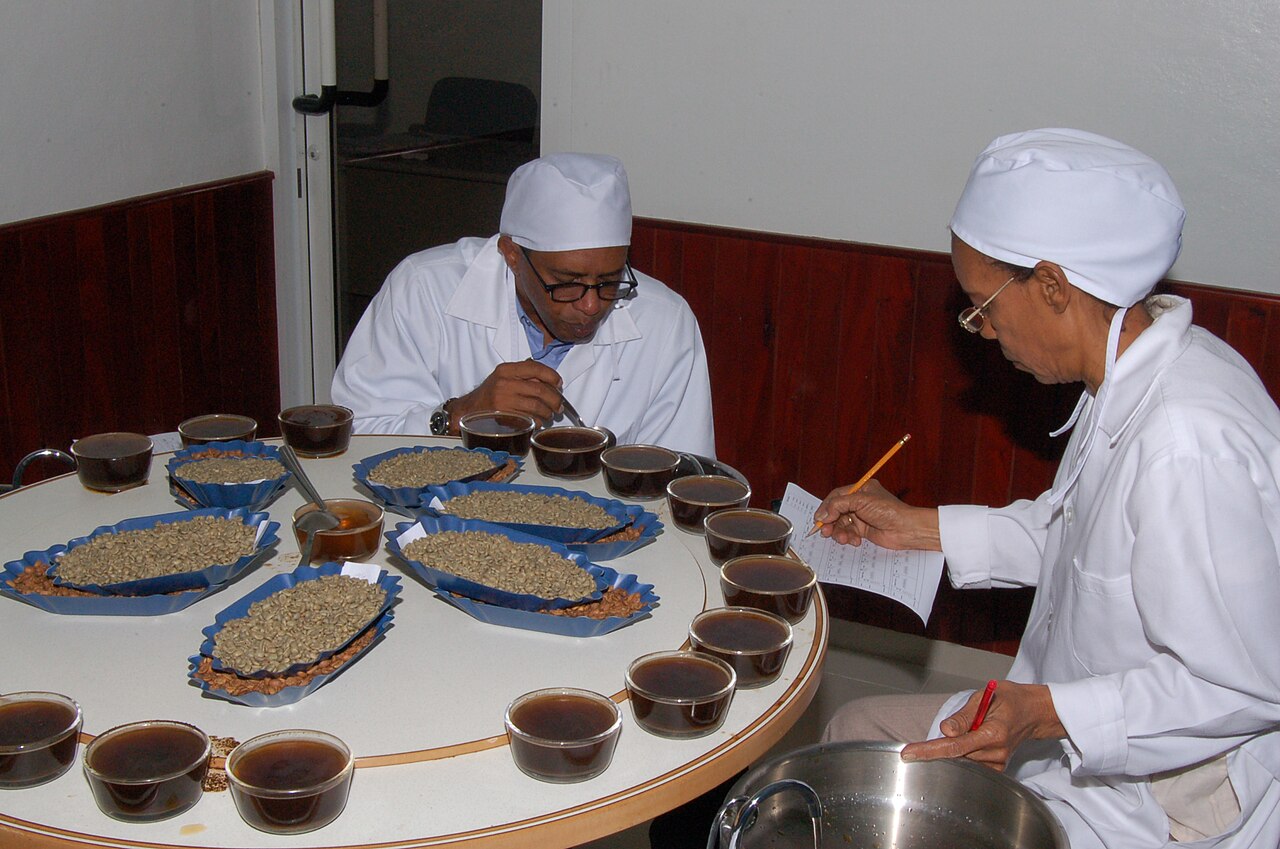
The Specialty Coffee Association (SCA) — the major global coffee industry organization — maintains the most widely adopted cupping protocol. The SCA method has specific standards:
Coffee sample:
- 8.25 grams of coffee per cup
- Medium grind, specifically calibrated for cupping (slightly finer than drip, coarser than espresso)
- Freshly ground, used within 15 minutes of grinding
Water:
- 150ml per cup (producing 1:18 ratio by weight)
- Temperature: 93°C (200°F) at pour
- Filtered or bottled water (chlorinated tap water affects taste)
Cups:
- Identical glass or ceramic cups across evaluation
- Typically 5 cups per coffee sample to evaluate consistency
Timing:
- Dry fragrance evaluation: immediately after grinding
- Wet aroma: immediately after water pouring
- Break: 4 minutes after pouring
- First sipping: 8-10 minutes after pouring (when coffee has cooled enough to taste)
- Full evaluation: continues as coffee cools, with multiple sipping passes
Environment:
- Neutral, odor-free space
- Proper lighting for visual evaluation
- Quiet to enable focused sensory attention
This precise standardization ensures that results are reproducible — the same coffee cupped under identical protocol by trained tasters produces similar results.
The Cupping Process Step by Step
Watch: Cupping Coffee with the SCA Form — Trish Rothgeb, Wrecking Ball Coffee
A standard cupping evaluates 4-6 samples (sometimes more) simultaneously, with 5 cups per sample for consistency evaluation. Each step has specific purposes:
1. Dry Fragrance
Immediately after grinding, tasters lift each cup and smell the dry coffee grounds. This evaluates:
- Intensity of aroma
- Specific aromatic notes (floral, fruity, spicy, etc.)
- Overall fragrance character
- Presence of any off-odors
Scores are noted on evaluation forms.
2. Wet Aroma
Water is poured into each cup, saturating the grounds. Tasters smell the aroma rising from the wet grounds. This evaluates:
- How the aroma transforms with hot water contact
- Additional volatile compounds released by heat
- Any negative notes emerging with heat
3. The Break
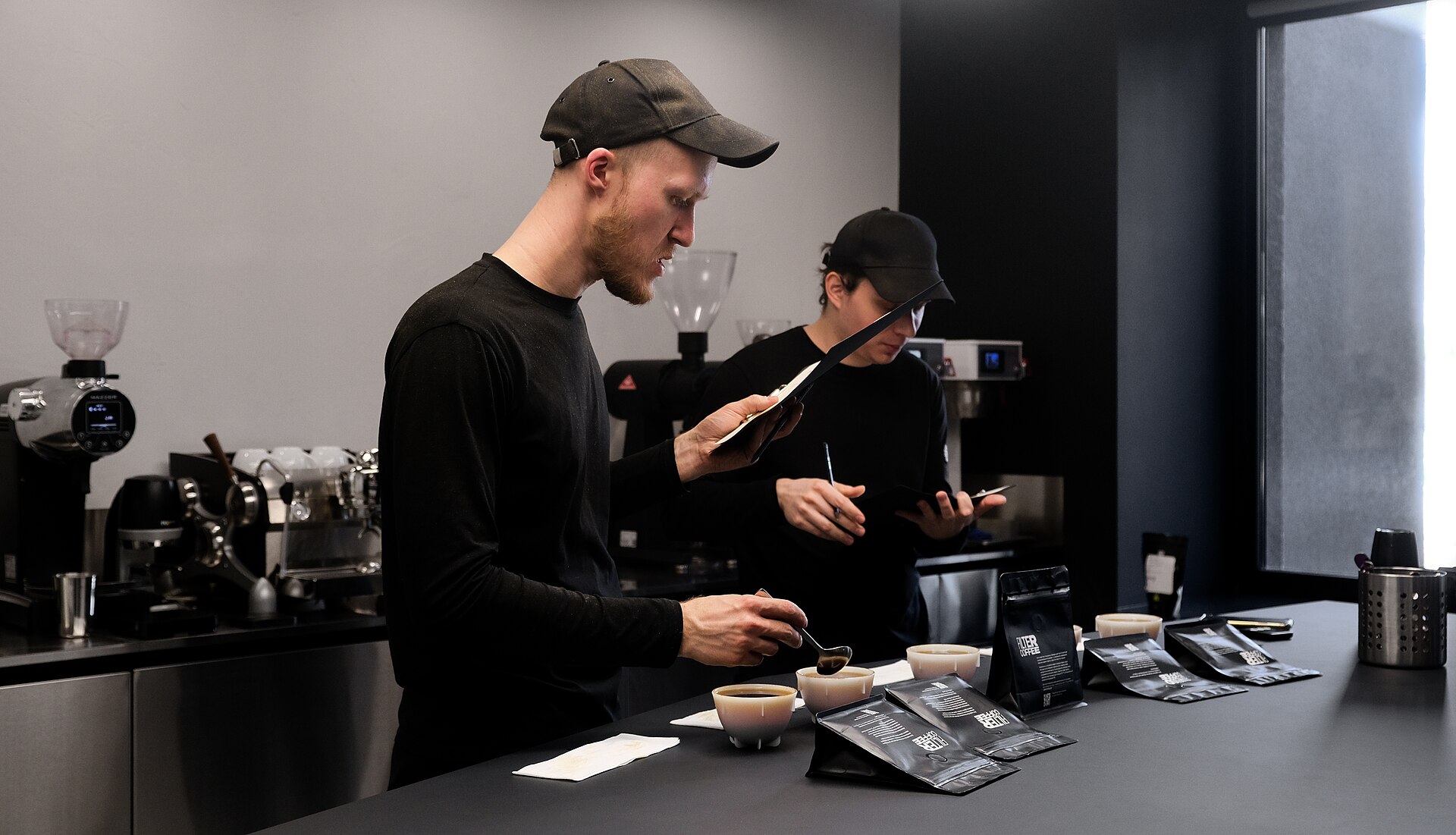
Four minutes after pouring, grounds form a crust on the cup surface. Tasters lean close to each cup, use a cupping spoon to push the crust down and simultaneously inhale deeply. This releases intense aromatic compounds trapped beneath the crust — one of cupping's most revealing moments.
The break smell provides the clearest reading of the coffee's true aromatic character. Experienced cuppers find the most intense and distinctive aromas here.
4. Skimming
After the break, floating grounds and foam are skimmed off the surface using a spoon, preparing cups for tasting.
5. First Tasting (Hot Phase)
When coffee cools enough to drink (typically 8-10 minutes post-pour), tasting begins. Tasters use cupping spoons to:
Slurp aggressively: Loud slurping aerates the coffee, distributes it across the entire palate, and releases aromatic compounds into the retronasal passage (aroma perceived through the nose while tasting).
Evaluate multiple dimensions:
- Flavor: specific taste notes
- Acidity: brightness, specific acid character
- Body: mouthfeel, weight, texture
- Balance: how all elements work together
- Sweetness: natural sweetness character
- Uniformity: consistency across the 5 cups of each sample
- Clean cup: absence of defects
- Overall impression
6. Extended Tasting (Cooling Phase)
Over 20-45 minutes, tasters return to cups repeatedly as coffee cools. Many characteristics change with temperature:
- Acidity often brightens as coffee cools
- Sweetness intensifies
- Defects become more apparent
- Complex flavors emerge
Complete evaluation requires observing coffee across multiple temperature stages.
7. Scoring and Notes
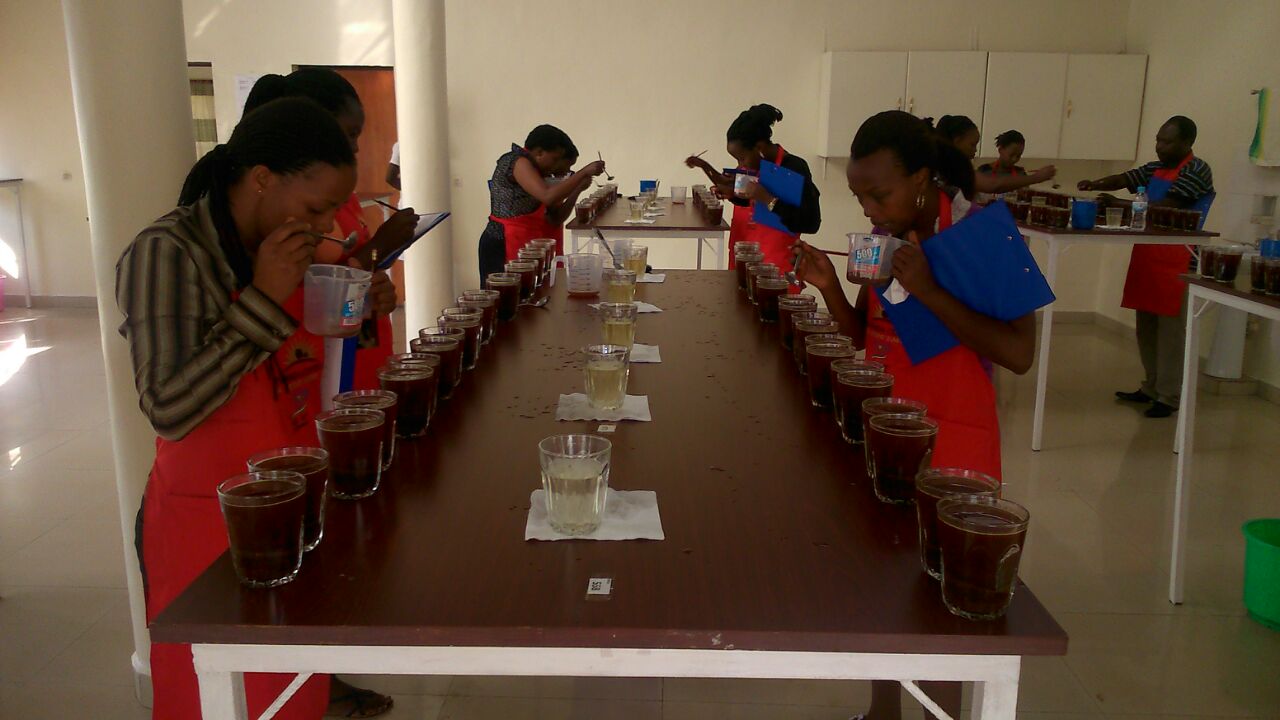
Tasters record numerical scores for each dimension on SCA evaluation forms. Final total establishes the coffee's cupping score on the 100-point scale.
The 100-Point Scoring Scale
The SCA cupping score ranges from 0-100, though in practice most specialty coffees score between 75-95. Key thresholds:
90+ (Outstanding): Exceptional coffees with distinct character, pronounced positive attributes, no detectable defects. Very rare. Includes premium Gesha, top Kenyan AA, exceptional Ethiopian lots, and competition-winning coffees.
85-89 (Excellent): Very good specialty coffee with distinctive character. Most premium single origins score in this range. Attracts specialty roasters and premium pricing.
80-84 (Specialty): Minimum specialty threshold. Good quality coffee with pleasant attributes and few defects. Qualifies for specialty grade and premium pricing, though modest compared to higher scores.
Below 75: Commodity-grade coffee with defects or flat flavor. Enters commodity markets at much lower prices. Not specialty grade.
The difference between 80 and 90 represents enormous quality variation. An 80-point coffee is pleasant. A 90-point coffee is remarkable. A 95+ point coffee is among the finest coffees in the world that year.
Scores translate to pricing: each point above 85 roughly doubles wholesale price in many specialty markets. A 90-point coffee might sell for 4-8 times what an 80-point coffee commands.
Evaluating Specific Attributes
SCA cupping evaluates multiple specific dimensions, each scored separately:
Fragrance/Aroma (10 points): Quality of dry and wet smell. Intensity, complexity, and specific character.
Flavor (10 points): Taste characteristics during sipping. Overall impression of what the coffee tastes like.
Aftertaste (10 points): Flavor persistence after swallowing. Long, pleasant aftertaste scores high; short or unpleasant scores low.
Acidity (10 points): Quality of perceived acidity. Bright, complex, pleasant acidity scores high. Sharp, sour, or flat acidity scores low.
Body (10 points): Mouthfeel and texture. Weight, viscosity, and tactile sensations in the mouth.
Balance (10 points): How flavor components work together. Well-integrated coffees score high. Elements dominating others lower the score.
Sweetness (10 points): Specialty coffees should display natural sweetness. Full sweetness scores 10. Lack of sweetness reduces score.
Clean Cup (10 points): Absence of defects or off-flavors. A completely clean cup scores 10. Defects deduct points.
Uniformity (10 points): Consistency across the 5 cups of each sample. Identical flavor across all 5 cups scores 10. Variation deducts points.
Overall (10 points): Cupper's overall impression, reflecting the total sensory experience and character.
Total: 100 points possible.
These separate scores allow identification of specific strengths and weaknesses. A coffee scoring 85 overall might achieve that through excellent fragrance and acidity despite weaker balance, or through extraordinary balance compensating for less pronounced acidity.
Coffee Defects
Cupping also identifies coffee defects — specific flaws that reduce quality:
Primary defects: Serious defects that disqualify specialty grade entirely
- Sour beans (over-fermentation)
- Black beans (dead or damaged)
- Moldy beans
- Foreign materials
Secondary defects: Lesser defects that reduce but don't eliminate quality
- Minor fermentation issues
- Slight discoloration
- Size inconsistency
- Minor processing imperfections
Cup defects: Flavor defects apparent in tasting
- Phenolic (carbolic/medicinal flavor from over-fermentation)
- Ferment (off-fermentation character)
- Baggy (taste of storage bags absorbed by coffee)
- Moldy
- Rubber (specific to some robusta preparations)
- Earthy (excessive natural-process flavor)
- Salty or metallic tastes
Specialty coffee standards limit defects strictly. Coffee with primary defects cannot qualify as specialty grade. Secondary defects reduce scoring but may still qualify depending on severity and overall cup character.
The Q Grader Program
The Coffee Quality Institute (CQI) administers the Q Grader certification — the most respected international credential for cupping expertise. Q Graders are certified coffee professionals who have demonstrated objective cupping skill through rigorous examination.
The Q Grader certification requires:
Extensive training: Typically 80+ hours of intensive instruction in sensory science, coffee chemistry, cupping protocols, defect identification, and evaluation methodology.
Testing: 22 separate practical and written examinations covering all aspects of cupping and coffee quality assessment.
Sensory demonstrations: Tasters must demonstrate ability to identify specific flavors, distinguish between similar cups, identify defects, and score coffees consistently.
Retesting requirements: Q Graders must retake certification every 3 years to maintain credentials.
Roughly 10,000 certified Q Graders exist globally as of the mid-2020s. These professionals work as green coffee buyers, quality control managers, competition judges, trainers, and consultants. Their expertise shapes specialty coffee quality assessment worldwide.
Becoming a Q Grader represents serious career commitment. The training is demanding, the examinations are rigorous, and maintaining certification requires ongoing practice and knowledge development. For serious coffee professionals, Q Grader certification is the gold standard of cupping credentials.
Cupping in Different Contexts
Cupping serves various purposes across the coffee industry:
Green coffee buying: Importers cup samples of coffees offered for purchase. Scores determine what to buy and at what price.
Origin development: Exporters and producing countries use cupping to identify their highest-quality coffees for premium markets.
Competition judging: Cup of Excellence and similar competitions use standardized cupping to rank entries and identify winners.
Roasting quality control: Roasters cup every production batch to ensure consistency and identify any issues with specific lots.
New release cupping: Roasters cup new coffees before release to identify optimal preparation and market positioning.
Customer education: Coffee shops host public cupping events to educate customers about coffee differences and specialty characteristics.
Research and development: Coffee research institutions use cupping to evaluate new varieties, processing experiments, and quality improvements.
Sourcing negotiations: Buyers and sellers use cupping scores as objective basis for pricing and relationship management.
Beyond industry functions, cupping has emerged as recreational activity for coffee enthusiasts. Home cupping, informal tasting groups, and coffee education programs all adapt professional cupping methodology for broader engagement.
Modern Cupping Innovations
Contemporary cupping has evolved in several directions:
Sensory science integration: Modern cupping incorporates scientific understanding of flavor perception, aroma chemistry, and taste psychology.
Specialty Coffee Association updates: The SCA continues refining cupping protocols based on accumulated experience and scientific advancement.
Technology integration: Some cupping operations integrate digital evaluation forms, flavor wheel apps, and data analysis tools to enhance traditional methodology.
Flavor wheel standardization: The Coffee Taster's Flavor Wheel provides standardized vocabulary for describing coffee flavors, enabling more precise communication.
Adapted methodologies: Regional variations of cupping protocols exist — Ethiopia uses traditional methods emphasizing specific local characteristics, for example. Industry-wide SCA standards coexist with regional specialty approaches.
Competition evolution: Competition cupping continues developing, with new categories (brewers cup, filter cup, espresso cup) supplementing traditional cupping-table evaluation.
Cupping Puerto Rican Coffee
Puerto Rican coffee cupping follows international SCA protocols, with the island's coffees evaluated by local and international Q Graders:
Consistent specialty quality: Authentic Puerto Rican coffee from quality producers consistently scores in the 82-88 range under proper cupping evaluation.
Distinctive profile: Puerto Rican coffee cupping notes typically include chocolate, caramel, nuts, balanced acidity, and medium body. These notes reflect the island's specific terroir and traditional processing approaches.
Competition presence: Puerto Rican coffees increasingly appear in international competitions, with some achieving notable scores and recognition.
Training infrastructure: Puerto Rican coffee professionals increasingly pursue Q Grader certification and related sensory training, building expertise that supports industry development.
Buyer engagement: International specialty buyers regularly cup Puerto Rican coffees as part of their sourcing processes, connecting island producers to global specialty markets.
Puerto Rican coffee's cupping profile supports its specialty positioning and premium pricing. The distinctive characteristic flavors that made Puerto Rican coffee famous in the 19th century remain identifiable through modern cupping evaluation.
Key Facts
- Organization: Specialty Coffee Association (SCA) maintains dominant global cupping protocol
- Scoring scale: 0-100 points
- Specialty threshold: 80+ points qualifies as specialty coffee
- Standard preparation: 8.25g coffee, 150ml water at 93°C, 4-minute steep
- Number of cups per sample: 5 (to evaluate uniformity)
- Tasting method: Aggressive slurping to aerate and distribute coffee
- Evaluation dimensions: 10 separate attributes each scored 0-10 points
- Professional certification: Q Grader (administered by Coffee Quality Institute)
- Certified Q Graders globally: Approximately 10,000
Frequently Asked Questions
Q: What is coffee cupping? Coffee cupping is the standardized professional method for evaluating coffee quality through sensory assessment. Using precise preparation protocols and scoring methodology, cupping enables objective comparison of coffees across origins, varieties, and processing methods.
Q: What is the specialty coffee threshold? Coffees scoring 80 or above on the SCA 100-point scale qualify as specialty grade. Below 80 enters commodity markets. The higher the score, the more premium the coffee and the higher the market price.
Q: Can I cup coffee at home? Yes. While professional cupping requires specific equipment and training, home cupping adapts the basic methodology for amateur use. Basic needs: scale, grinder, cupping spoons, identical cups, and careful attention. Many coffee education programs teach cupping to enthusiasts.
Q: What is a Q Grader? A Q Grader is a professional certified by the Coffee Quality Institute to perform expert cupping evaluations. Certification requires extensive training and 22 separate examinations. Q Graders serve as the most qualified cupping professionals in the coffee industry.
Q: Why do cuppers slurp loudly? Aggressive slurping aerates coffee across the entire palate and forces aromatic compounds into the retronasal passage (the nasal connection to the back of the mouth). This distributes coffee to all taste receptors and enables perception of volatile aromatic compounds critical to flavor evaluation.
BUY AUTHENTIC PUERTO RICO COFFEE →
Part of The Coffee Encyclopedia — Sponsored by PuertoRicoCoffeeShop.com.