
Coffee Leaf Rust (Roya) in Puerto Rico: The Silent Threat
This article reports published research and official guidance. It is not agricultural advice. Decisions about varieties, fungicides or certification should be made with the University of Puerto Rico Agricultural Extension Service, the Puerto Rico Department of Agriculture, or your organic certifier. Product labels and certification rules are binding; this article is not.
Coffee leaf rust — la roya — is caused by the fungus Hemileia vastatrix. It is the most damaging disease of arabica coffee anywhere in the world, and it has been present in Puerto Rico since 1989.
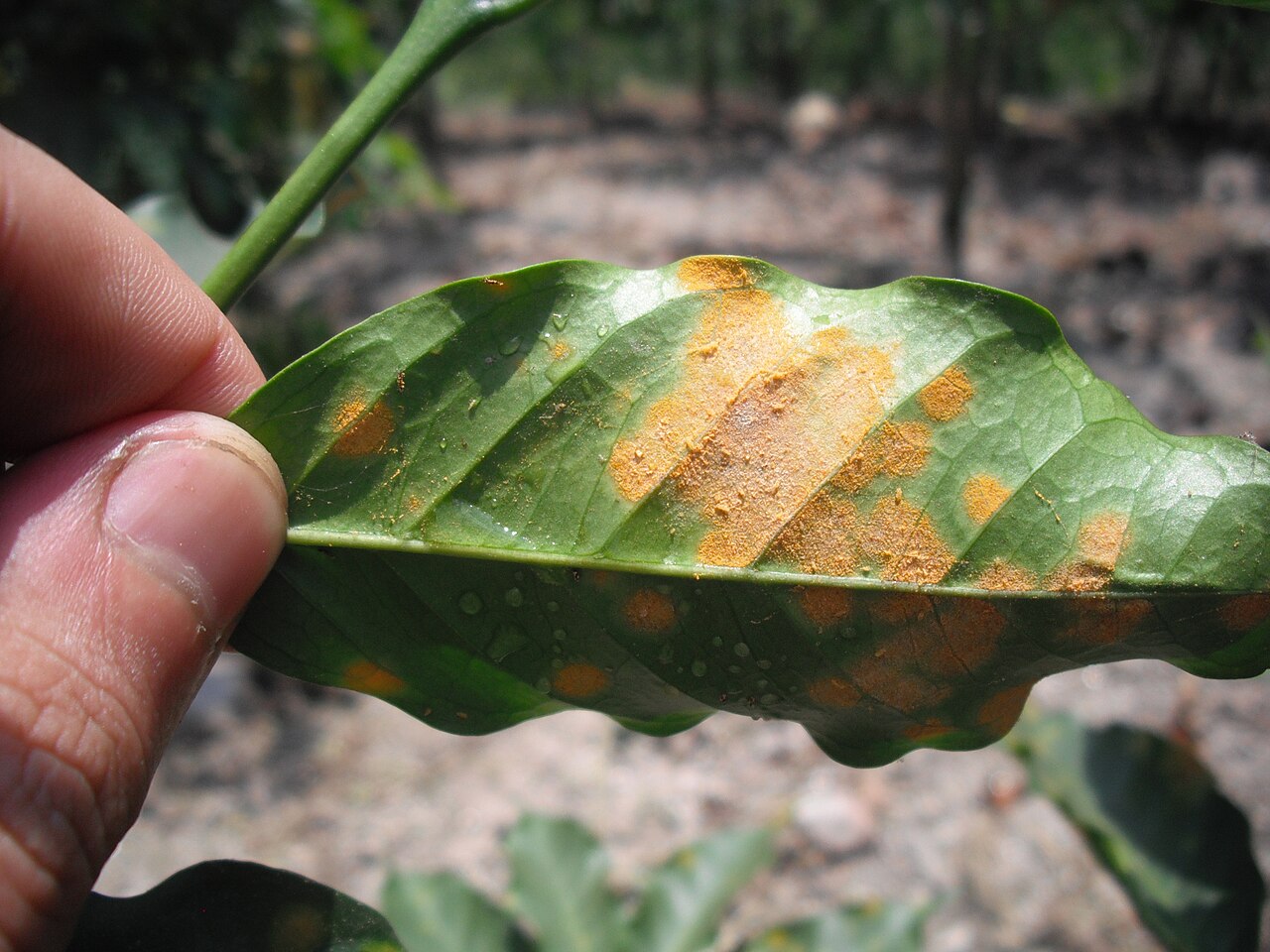
The disease attacks leaves, not fruit. Orange-yellow powdery pustules form on the underside; the leaf falls; a tree stripped of leaves cannot fill its cherries or build reserves for the following season. Losses of up to 35 per cent of yield are documented, and the damage carries into subsequent years.
What the fungus does
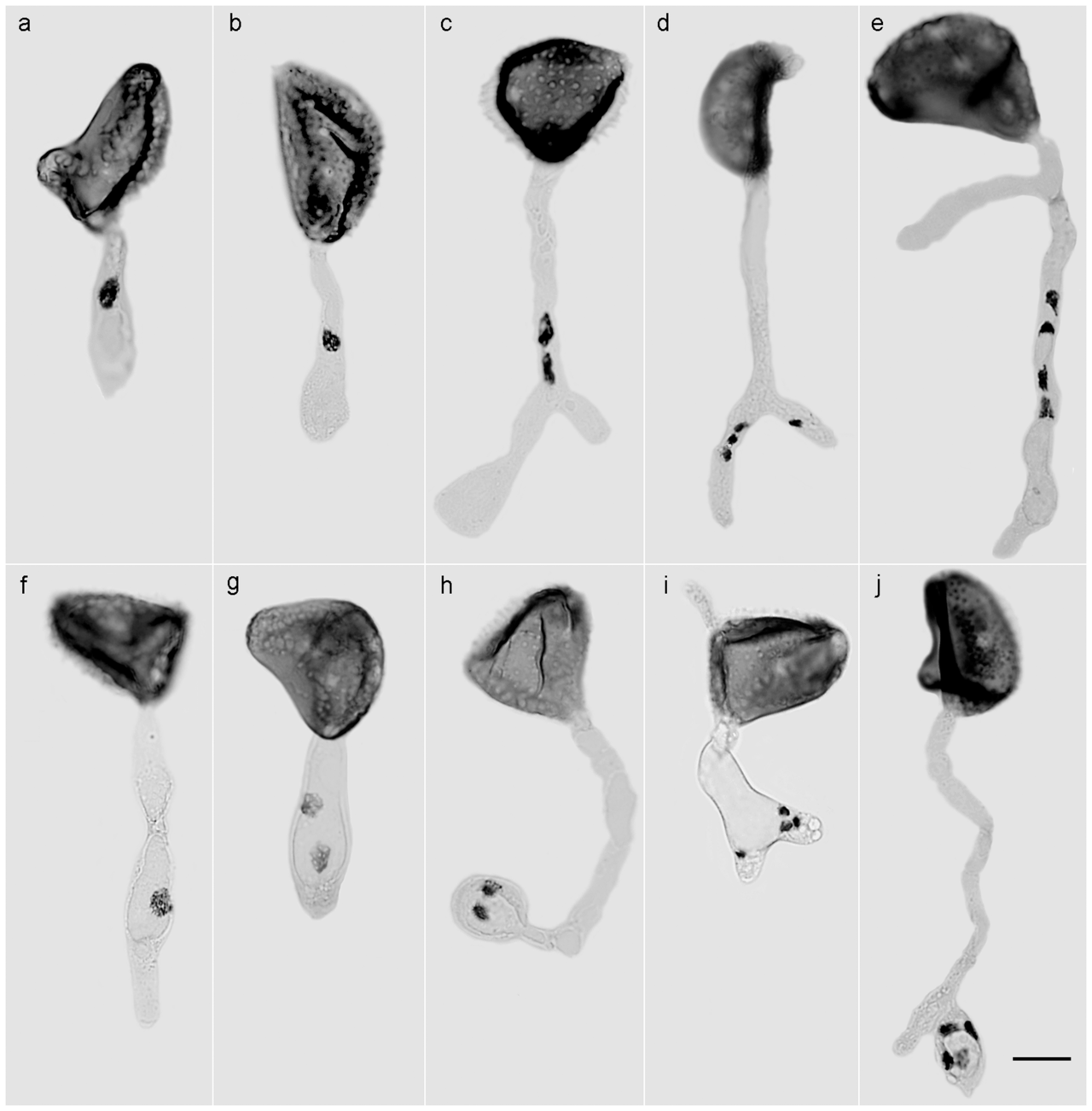
H. vastatrix is an obligate parasite: it cannot live without a coffee plant. It reproduces mainly through urediniospores, which travel on wind, rain splash, clothing, tools and plant material.
The first visible sign is a pale chlorotic spot on the leaf. Orange, bouquet-shaped pustules follow on the underside. Infection needs free moisture on the leaf surface and a suitable temperature; humid, warm conditions after rain are when spread is fastest.
Because the spores move on air currents and on people, an outbreak on one farm is not contained to that farm.
Watch: Coffee Leaf Rust — FreshGround Roasting
The global record
The fungus was formally described in 1869 by Berkeley and Broome, from material in eastern Africa and Ceylon — present-day Sri Lanka. It was first observed in May 1869 at Madulsima, a newly opened coffee district. By 1873 it had reached virtually every estate on the island.
Ceylon's coffee industry did not survive. It is worth being precise about how that happened: the collapse was a process of years, not a single season, and the plantation system itself — vast blocks of genetically uniform coffee on cleared hillsides — supplied the conditions. Ceylon turned to tea.
The Americas were spared for a century. In 1970 the disease was found in Bahia, Brazil, the first confirmed occurrence in the Western Hemisphere. It was reported in Nicaragua in 1976 and moved through Central America over the following two decades.
The Latin American epidemic
Beginning around 2008 and intensifying through 2011–2013, an epidemic of unprecedented severity struck Colombia and Central America. Sources place the start date differently — Avelino and colleagues frame the crisis as 2008–2013, while other accounts date the regional outbreak to 2011 — and this encyclopedia reports the range rather than a single year.
Its cumulative scale is described by Britannica as damage to crops on about 70 per cent of farms in Latin America and more than three billion dollars in losses by 2021. Figures of this kind are compiled across many countries and years; a reader quoting them onward should quote the scope with them.
Rust in Puerto Rico
Coffee leaf rust was introduced to Puerto Rico in 1989. The date is given by Rodríguez and colleagues and is repeated in the peer-reviewed literature on Puerto Rican coffee pathology.
The island had prepared in advance. In 1982 — seven years before the disease arrived — the Instituto Agronômico de Campinas in Brazil supplied Puerto Rico, through the Agricultural Experiment Station, with two rust-resistant coffee selections. Evaluated at the Adjuntas Agricultural Experiment Substation, they performed better on the island than Bourbon, Caturra and Pacas, and were named Frontón and Limaní.
Limaní and Frontón
Limaní is a Sarchimor — a cross of the Timor Hybrid with Villa Sarchi. It was intended for medium and higher altitudes, above roughly 1,000 metres.
Frontón is a Catimor — a cross of the Timor Hybrid with Caturra. It is suited to low and medium altitudes and begins bearing in its second year rather than its third or fourth, which made it attractive to smallholders.
Both trace their resistance to the Timor Hybrid, a natural cross between arabica and robusta that carries robusta's resistance genes. Nearly every rust-resistant arabica grown commercially anywhere in the world descends from that single plant. This is the central fact of rust breeding, and the central vulnerability: a very narrow genetic base against a pathogen with more than fifty known physiological races.
The genetic problem
After Hurricanes Irma and María in September 2017, World Coffee Research assessed the island's remaining nurseries and seed gardens. Its published account of that work reports that DNA sampling of seedlots in 2017 found the material was no longer genetically pure: some Frontón lots contained individuals crossed with other varieties, and the Limaní seedlot was found to be mostly a genetic blend. World Coffee Research states that this mixing and genetic erosion has led to a breakdown of rust resistance in the local varieties.
Its variety database puts the practical consequence plainly: true Limaní is now difficult to find, plants labelled Limaní rarely match the original reference, and performance — including rust resistance — is therefore difficult to predict.
This is why the encyclopedia does not tell a reader that planting Limaní will control rust. Whether a given seedlot resists rust depends on what is actually in it, which is a question for the nursery and the certifying programme, not for an encyclopedia.
Replanting after María
The University of Puerto Rico's damage census after María recorded a 75 per cent loss of production.
Recovery work followed on two tracks. World Coffee Research, with support from the Hispanic Federation, launched a two-year project in autumn 2018 to improve the quality of available seed material, rescue the Limaní and Frontón varieties, and distribute over two million trees to farmers.
Separately, the Puerto Rico Department of Agriculture ran the Programa de Recuperación del Cafetal. Reporting by the Inter-American Institute for Cooperation on Agriculture records that 1,214,679 trees of the Limaní, Frontón and Marsellesa varieties had been distributed as of January 2020, without a breakdown by variety, and that the first Marsellesa seedlings were planted in Adjuntas in September 2019.
The scale of the underlying decline is recorded by the National Agricultural Statistics Service: between 2012 and 2018 the market value of Puerto Rican coffee fell from 29.7 million dollars to 4.7 million, alongside a 48 per cent reduction in area planted.
A complication: coffee fruit rot
Rust is not the only disease facing Puerto Rican coffee, and the varieties chosen to resist rust are not resistant to everything.
In 2021 coffee fruit rot reached epidemic levels on the island. Published work by Serrato-Díaz and colleagues records that Limaní — the cultivar planted widely to mitigate rust — is susceptible to coffee fruit rot. Extension agents described crop losses without precedent.
This is the honest shape of disease management in coffee: resistance to one pathogen is not resistance in general, and a variety planted island-wide concentrates whatever weaknesses it has.
What published guidance says about control
This section reports what the literature and the standards say. It is not a recommendation, and it contains no product, dose or spray interval.
Resistant varieties. The scientific consensus is that host resistance is the most effective and durable control, more so than fungicides. That consensus assumes the planting material is genetically what it claims to be — which, as above, is exactly the open question in Puerto Rico.
Cultural management. Shade regime, pruning, spacing, drainage and nutrition all affect how rust behaves in a planting. The published work on Puerto Rico specifically examines how incidence varies with season, cultivar, altitude and the presence of hyperparasites — fungi that attack the rust itself.
Copper fungicides and organic certification. This point is frequently stated incorrectly, and the correction matters to any certified grower.
Copper products are not simply permitted on organic farms. Under the United States National Organic Program they are allowed with restrictions. The National List annotation at 7 CFR 205.601(i) requires that copper materials be used in a manner that minimises accumulation of copper in the soil. Copper is an element and does not break down; repeated application builds up in the topsoil and can harm soil organisms and the crop itself. Certifiers may impose their own limits — the European Union caps copper at 4 kilograms per hectare per year — and application records are reviewed at inspection.
A grower should confirm any product with their own certifier before use. "Approved for organic" on a label is not the same as compliant on your farm.
Current research
Work on rust in Puerto Rico is active. A 2018–2022 project at the University of Puerto Rico at Mayagüez, funded by the National Institute of Food and Agriculture, validated newly introduced rust-resistant varieties across altitudes at the Corozal and Adjuntas Agricultural Experiment Stations and on selected farms.
More recently, researchers from the University of Puerto Rico and the USDA Agricultural Research Service Tropical Agriculture Research Station in Mayagüez have published on the dynamics of coffee leaf rust on the island, examining its association with season, cultivar, altitude and hyperparasites.
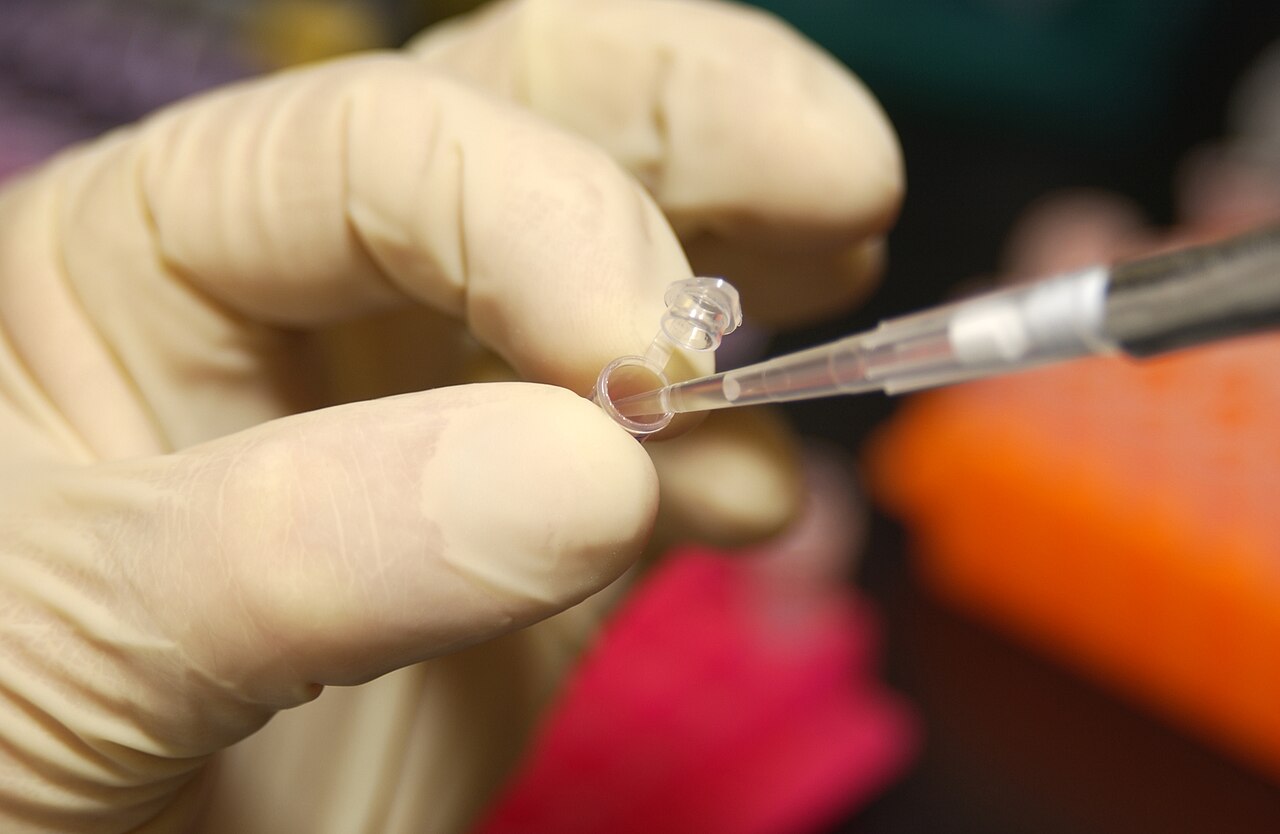
A doctoral thesis at the University of Puerto Rico by Badillo-Chico (2021) evaluated the genetic diversity and resistance genes of Limaní and Frontón directly — the first genetic examination of these collections since their introduction.
Claims this encyclopedia could not source
The following statements appear in published material about coffee leaf rust in Puerto Rico but could not be traced to a primary record. They are recorded here rather than repeated as fact.
- That Limaní was released for commercial planting in 1994. The date appears in commercial variety listings. No primary release record was located; World Coffee Research describes traceability problems dating to the original release without giving a year.
- That Limaní is grown nowhere else in the world. It was developed in Puerto Rico, but no source confirming exclusivity was located.
- That most of Puerto Rico's coffee acreage is planted to resistant cultivars. Plausible from distribution figures, but no acreage-by-variety survey was located.
- That rust reached Puerto Rico in the early 1980s. An earlier version of this article stated this. The peer-reviewed date is 1989; 1982 is the year the resistant varieties arrived.
Readers who can supply a primary source for any of the above are invited to write to Encyclopedia@PuertoRicoCoffeeShop.com. Corrections are published in this encyclopedia's Corrections Log.
Important note
Coffee leaf rust management involves regulated products, certification rules and planting decisions with consequences lasting years. This article reports published findings; it does not issue guidance. For decisions on your own farm, consult the University of Puerto Rico Agricultural Extension Service, the Puerto Rico Department of Agriculture, or your organic certifier. Follow product labels, which are legally binding.
Sources
- Talhinhas, P., et al. (2017). "The coffee leaf rust pathogen Hemileia vastatrix: one and a half centuries around the tropics." Molecular Plant Pathology 18(8) — description by Berkeley and Broome in 1869; yield losses up to 35 per cent; more than fifty physiological races; host resistance as the most durable control; Timor Hybrid as the source of resistance.
- Berkeley, M.J. and Broome, C.E. (1869). Gardeners' Chronicle 6:1157 — original description.
- Morris, D. (1880). "Note on the structure and habit of Hemileia vastatrix, the coffee-leaf disease of Ceylon and Southern India." Journal of the Linnean Society, Botany 17 — contemporary account of the Ceylon outbreak; first observation at Madulsima, May 1869.
- Britannica, "coffee rust" — 1970 discovery in Brazil as the first Western Hemisphere occurrence; approximately 70 per cent of Latin American farms affected and more than three billion dollars in damage by 2021.
- Avelino, J., et al. (2015). "The coffee rust crises in Colombia and Central America (2008–2013): impacts, plausible causes and proposed solutions." Food Security 7 — epidemic framing and causes.
- Polanco, T.A., Rodríguez, R. del P., et al. "Identifying interspecific lines of coffee resistant to Hemileia vastatrix and evaluating their adaptability to the coffee growing region of Puerto Rico." Journal of Agriculture of the University of Puerto Rico — evaluation at the Adjuntas Agricultural Experiment Substation and the naming of Frontón and Limaní.
- Badillo-Chico, P.N. (2021). Evaluation of genetic diversity and resistance genes of two rust-resistant coffee varieties, Limani and Fronton. Doctoral thesis, University of Puerto Rico — 1982 supply of both varieties by the Instituto Agronômico de Campinas through the Agricultural Experiment Station; performance against Bourbon, Caturra and Pacas; Limaní as a Timor Hybrid × Villa Sarchi cross.
- Serrato-Díaz, L.M., et al., in Phytopathology — introduction of coffee leaf rust to Puerto Rico in 1989 (after Rodríguez et al.); coffee fruit rot reaching epidemic levels in 2021; susceptibility of Limaní to coffee fruit rot; NASS figures on market value and planted area, 2012–2018.
- World Coffee Research, "Coffee against the odds" — 2017 DNA sampling of Puerto Rican seedlots; Limaní seedlot as a genetic blend; breakdown of rust resistance; the two-year project with the Hispanic Federation and distribution of over two million trees.
- World Coffee Research, variety database entry for Limaní — traceability problems and unpredictable performance.
- Inter-American Institute for Cooperation on Agriculture, "Coffee in Recovery: lessons in policymaking and collaboration from Puerto Rico's coffee sector post-Hurricane Maria" — Frontón as a Timor Hybrid × Caturra cross introduced from Campinas; Limaní as a Sarchimor developed at the Estación Experimental Agrícola; 1,214,679 trees distributed as of January 2020; first Marsellesa planting in Adjuntas, September 2019.
- United States Department of Agriculture, National Institute of Food and Agriculture, project 1017847, University of Puerto Rico at Mayagüez (2018–2022) — validation of newly introduced rust-resistant varieties at Corozal and Adjuntas; 75 per cent production loss recorded after Hurricane María.
- Mariño, Y.A., Buitrago, D., Serrato-Díaz, L.M., Almonte-Javier, E., Negrón, S. and Bayman, P. "Dynamics of coffee leaf rust (Hemileia vastatrix) in Puerto Rico: associations with season, cultivar, altitude, and hyperparasites." Frontiers in Plant Science — University of Puerto Rico and USDA-ARS Tropical Agriculture Research Station, Mayagüez.
- United States Department of Agriculture, Agricultural Marketing Service, Copper Products Technical Report (2022), and 7 CFR 205.601(i) — copper allowed with restrictions; requirement to minimise soil accumulation.
- Organic Materials Review Institute, "Copper Accumulation" — soil accumulation and phytotoxicity.
Related Articles
- Limaní and Frontón: Puerto Rico's Native Coffee Varieties
- What is Coffea Arabica? The Noble Coffee Species
- Puerto Rico Coffee Today: The 2026 State of the Industry
- Shade-Grown Coffee in Puerto Rico: Birds, Biodiversity, and Tradition
- Adjuntas: The Coffee Capital of the Mountains
- The Bourbon Coffee Variety: Origins, Flavor, and Legacy
- The Typica Coffee Variety: The Original Arabica Cultivar
Buy Authentic Puerto Rico Coffee
Every cup represents Puerto Rico's decades-long battle to keep its coffee industry alive against biological and climatic threats. Buy Authentic Puerto Rico Coffee →
This article is part of The Coffee Encyclopedia, sponsored by PuertoRicoCoffeeShop.com — the trusted source for authentic Puerto Rican coffee.