
UPR Mayagüez: Puerto Rico's Coffee Research Program
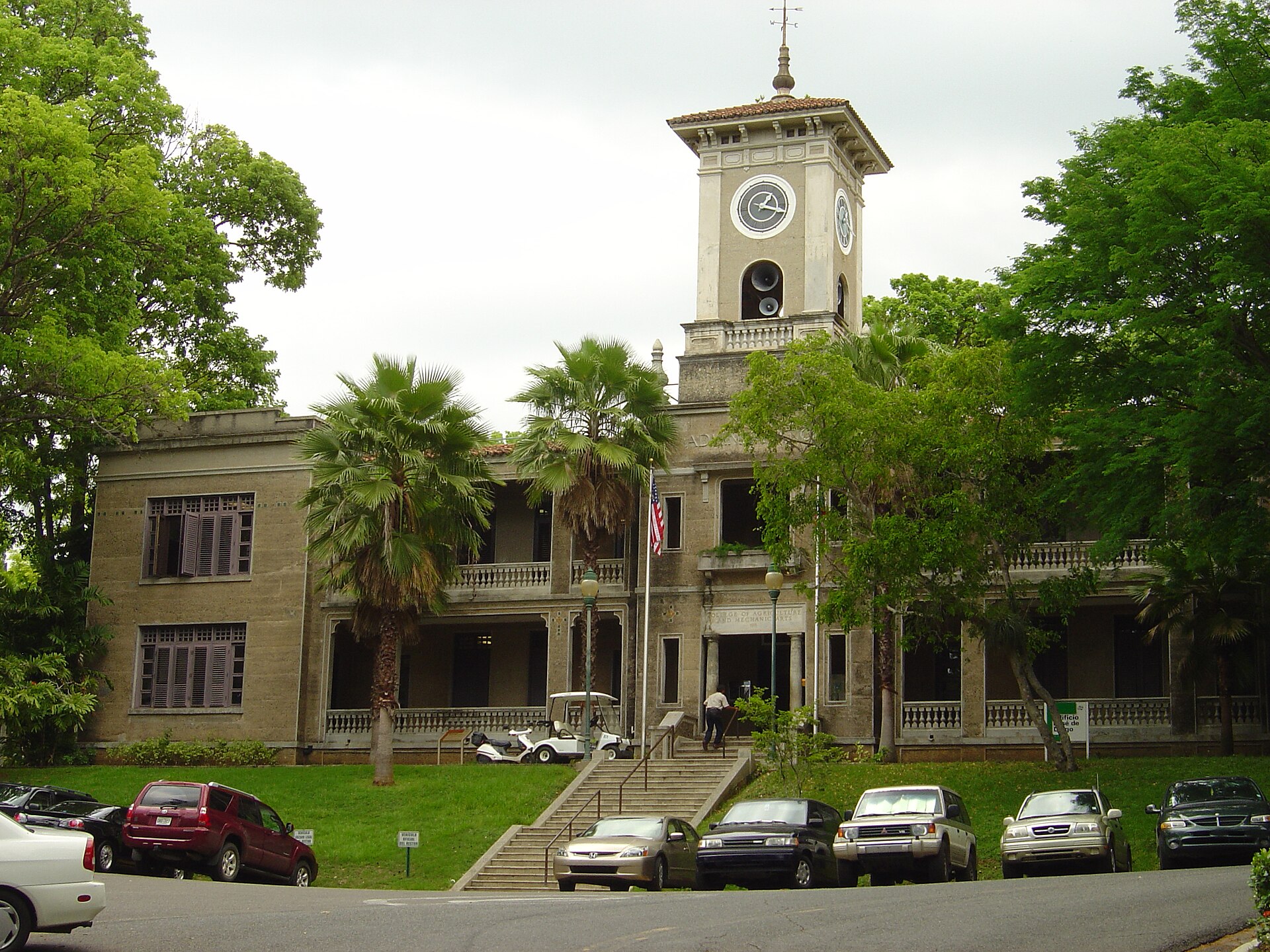
The Jose de Diego administration building at the University of Puerto Rico at Mayaguez, its portico inscribed College of Agriculture and Mechanic Arts.
The University of Puerto Rico at Mayagüez is the island's land-grant campus and the home of its Agricultural Experiment Station. The two coffee varieties Puerto Rico can call its own, Limaní and Frontón, were selected by that station. This article sets out what the station did, with the source named for each claim, and corrects several things this encyclopedia previously stated about it.
The Land-Grant Foundation
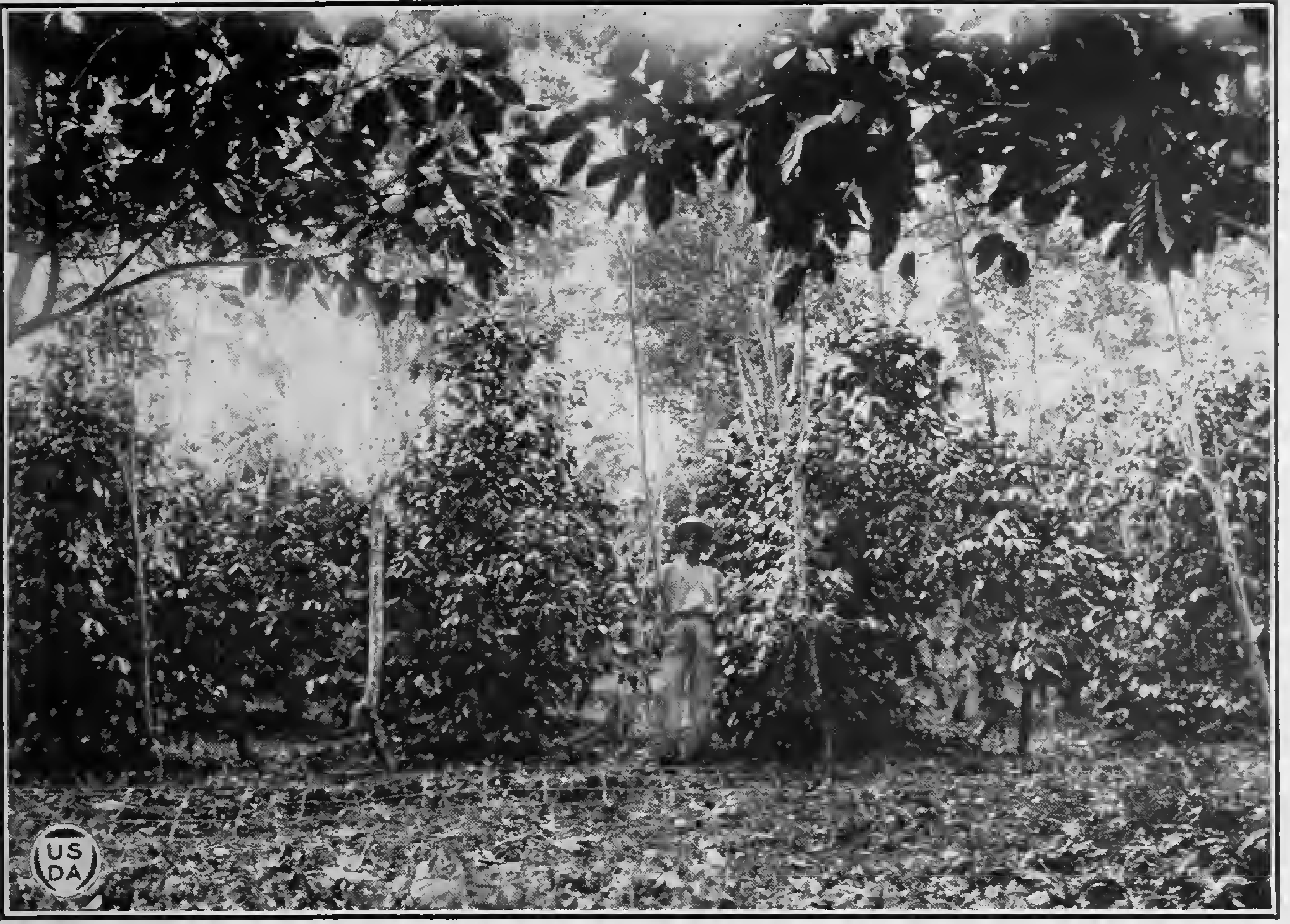
Bourbon coffee in a variety trial at the Porto Rico Agricultural Experiment Station in Mayaguez, from the station's 1924 bulletin on coffee varieties.
The University of Puerto Rico is the territory's land-grant institution under the Morrill Act system. The Mayagüez campus grew out of the College of Agriculture and Mechanic Arts, founded there in 1911, and it houses the College of Agricultural Sciences and the Agricultural Experiment Station.
The station's coffee work is not done in Mayagüez. It is done in the mountains, at the Adjuntas substation, founded in 1952 and sitting inside the coffee zone rather than on the coastal plain.
The Agricultural Experiment Station at Adjuntas
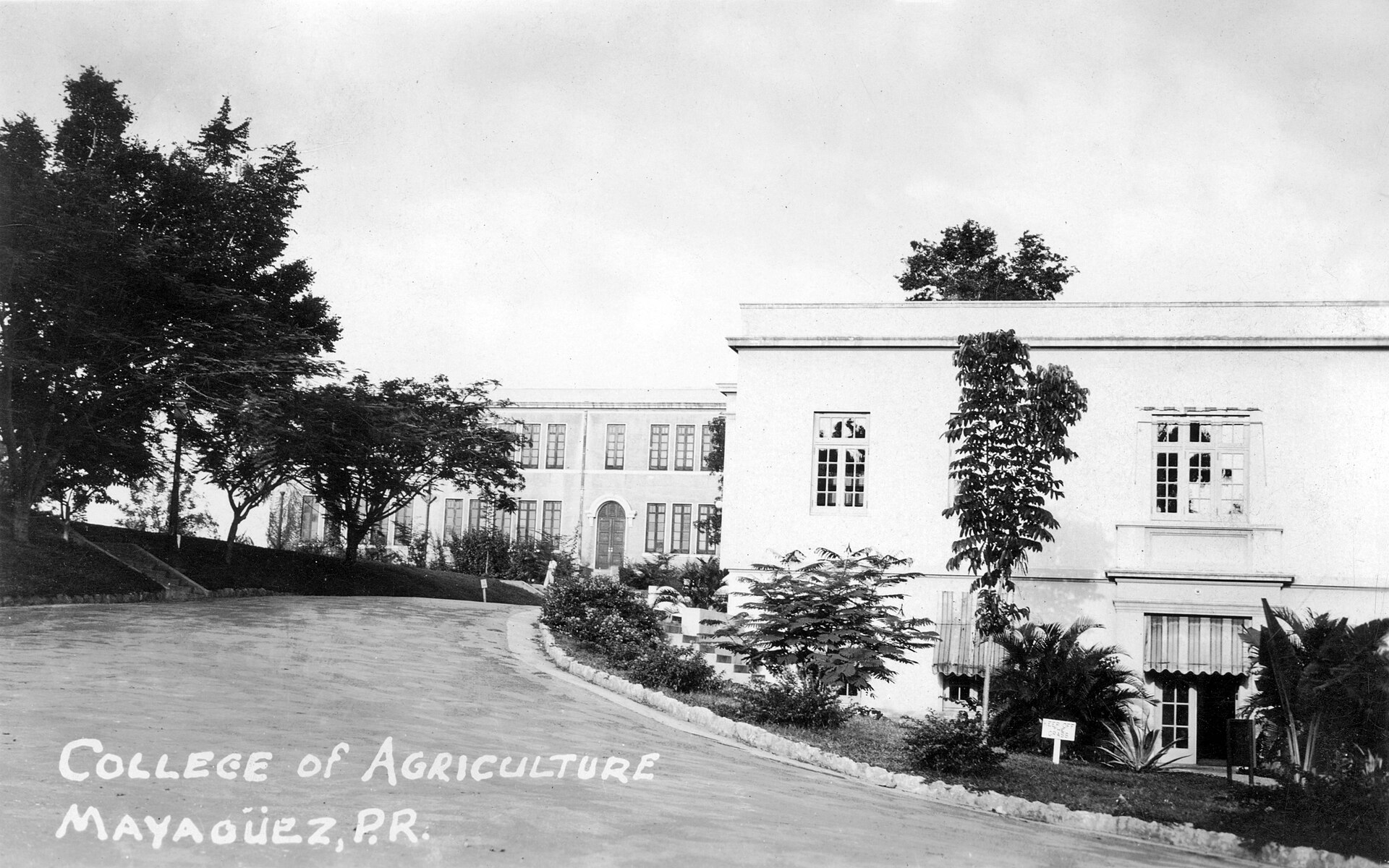
A photographic postcard of the College of Agriculture at Mayaguez, Puerto Rico. The card is undated.
Adjuntas is where the variety work happened, and the Limaní sector of that municipality gives the island's best-known variety its name.
Limaní and Frontón: What Puerto Rico Actually Did

Both varieties carry Timor Hybrid ancestry, which is where their rust resistance comes from. The Timor Hybrid is a naturally occurring cross of Coffea arabica and Coffea canephora found on the island of Timor. Neither cross was made in Puerto Rico, and this encyclopedia previously said otherwise.
Limaní is a Sarchimor. The cross of Villa Sarchi with Timor Hybrid 832/2 was made at the Coffee Rust Research Centre in Portugal. World Coffee Research records Limaní as a pedigree selection from a population sourced from Brazil, made by the Estación Experimental Agrícola in Puerto Rico. It was released to Puerto Rican farmers in 1994 after evaluations showed resistance to coffee leaf rust and high yield potential, and it was recommended for altitudes above 1,000 metres.
Frontón is a Catimor. The cross of Timor Hybrid with Caturra was introduced to Puerto Rico from the Instituto Agronômico de Campinas in Brazil, and the selection was made by the Estación Experimental Agrícola at Adjuntas.
The distinction matters, and it is not pedantry. Making a cross and selecting from a population are different scientific contributions. Puerto Rico did the second one, over years of field evaluation in its own conditions, and that work is what produced varieties suited to this island. Overstating it as breeding from scratch does the station no favours, because the real achievement is checkable and the invented one is not.
A genetic study of Sarchimor derivatives found Limaní and Frontón substantially different from the common Arabica cultivars, and attributed that to their Timor ancestry — Limaní selected from the Sarchimor population developed at the Portuguese rust centre, Frontón from the Catimor population.
The Timeline, Corrected

This encyclopedia previously stated that the breeding programme was initiated in response to the arrival of coffee leaf rust in Puerto Rico, and described it as decades long. Both statements are wrong, and the real sequence is more creditable than the one they replaced.
| Year | Event |
|---|---|
| 1952 | Adjuntas substation founded |
| 1982 | Limaní and Frontón introduced to Puerto Rico |
| 1989 | Coffee leaf rust reaches Puerto Rico |
| 1994 | Limaní released to farmers |
The rust-resistant material was on the island seven years before the disease arrived. The programme was anticipatory, not reactive. And the interval from introduction to release is twelve years, not decades.
The wider history is often compressed as well. Coffee leaf rust destroyed the coffee industry of Ceylon in the 1870s, but it did not reach the Americas until 1970, when it was found in Brazil. Puerto Rico's 1989 date sits at the end of that spread, not throughout the twentieth century.
Genetic Purity and the World Coffee Research Work

Limaní has a known problem, and it is worth stating plainly because it affects farmers. From early after the 1994 release, trees sold and planted as Limaní have not always shown the characteristics expected of it, particularly its disease resistance. Decades of informal seed saving between farms blurred the variety.
World Coffee Research and UPR-Mayagüez worked together to identify genetically pure mother plants so that certified seedlots could be re-established, after DNA testing showed the erosion. For a farmer replanting after a hurricane, the difference between true Limaní and something sold under its name is the difference between a rust-resistant field and a vulnerable one.
Café CORMO Belongs to Utuado

This encyclopedia previously credited Café CORMO to UPR-Mayagüez, in a section heading, a Key Fact and an FAQ answer, and explained the acronym as the Center for Research and Outreach on Mountain Crops. All of that was wrong.
CORMO stands for Colegio Regional de la Montaña, the Regional College of the Mountain. It is the former name of UPR-Utuado, the youngest campus in the University of Puerto Rico system, founded in 1979 and the only one on a rural campus. The English expansion this encyclopedia gave does not exist.
Café CORMO is UPR-Utuado's programme, run by faculty of that campus. Reporting on it in 2014 described a coffee laboratory alongside field experiments in shade trees and organic treatments, with a mission spanning teaching and outreach to growers. In 2020 the United States Department of Agriculture certified the programme's nurseries as organic — the first such certification reported on the island — after eight years of work. The seedlings were being donated to nearby growers as a community service.
The correction does not diminish Mayagüez. It restores credit to a second campus that earned it.
Training and Extension

The station's coffee work reaches growers through training and through planting material rather than through publication alone.
This encyclopedia previously claimed active international exchange programmes connecting Puerto Rican students with coffee programmes in Colombia, Costa Rica, Brazil and Ethiopia, and listed institutional partnerships with two named international organisations. No programme, partner university or agreement could be located for any of them. Those claims have been removed, and one of the organisation names was also given incorrectly.
It also claimed that many leading figures in contemporary Puerto Rican specialty coffee are alumni of the campus, without naming one. That has been removed too.
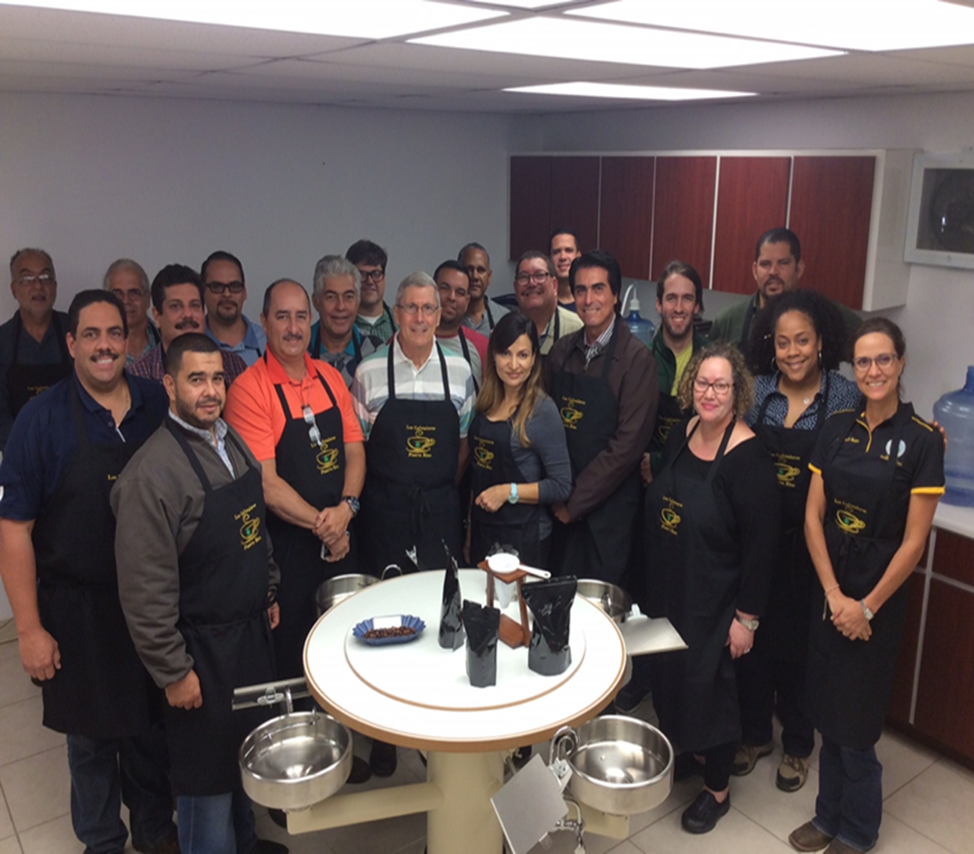
A coffee cupping laboratory during a training session: cupping table, sample bags and spittoons, with participants seated around the table.
Watch: El Motor: Coffee and the Heart of Puerto Rico — Library of Congress. A general film about Puerto Rican coffee culture; it was not filmed at UPR-Mayagüez.
Where the Research Sits Today

Limaní and Frontón remain among the most widely planted varieties in Puerto Rico, alongside Typica, Bourbon, Caturra and Catuaí. Both are compact, sun-tolerant cultivars, and the Department of Agriculture's promotion of them reflected a broader policy of supporting sun-grown coffee.
After Hurricane María, Limaní and Frontón were among the varieties distributed in the large replanting programmes, which is why the purity question above is not an academic one.
Key Facts
- UPR is Puerto Rico's land-grant institution; the Mayagüez campus grew from the College of Agriculture and Mechanic Arts, founded 1911.
- Coffee variety work is done at the Adjuntas substation, founded 1952.
- Limaní: Villa Sarchi × Timor Hybrid 832/2, cross made in Portugal, pedigree selection made in Puerto Rico, released to farmers 1994, recommended above 1,000 m.
- Frontón: Timor Hybrid × Caturra, introduced from Brazil, selected at Adjuntas.
- Both were on the island in 1982; rust arrived in 1989.
- Café CORMO is UPR-Utuado's programme. CORMO = Colegio Regional de la Montaña.
- UPR-Utuado's coffee nurseries were certified organic by the USDA in 2020.
Frequently Asked Questions

Did UPR-Mayagüez create Limaní? It selected it. The cross between Villa Sarchi and Timor Hybrid 832/2 was made at the Coffee Rust Research Centre in Portugal; the Estación Experimental Agrícola in Puerto Rico made the pedigree selection from a population sourced from Brazil and released the result in 1994.
What does CORMO stand for? Colegio Regional de la Montaña — the former name of UPR-Utuado. This encyclopedia previously gave an English expansion that does not exist, and credited the programme to the wrong campus.
Why does variety purity matter? Because trees sold as Limaní have not always been Limaní, and the difference shows up as rust susceptibility in the field years after planting.
Was the breeding programme a response to rust arriving? No. The material was introduced in 1982 and rust arrived in 1989. The programme anticipated the disease rather than reacting to it.
Are Limaní and Frontón grown outside Puerto Rico? They were selected for Puerto Rican conditions and are associated with the island. This encyclopedia has not located records of commercial planting elsewhere.
Sources
- World Coffee Research, variety database entries for Limaní and Frontón — the parentage of each, the cross being made outside Puerto Rico, the pedigree selection made by the Estación Experimental Agrícola, the 1994 release, the altitude recommendation above 1,000 m, the introduction of Frontón from the Instituto Agronômico de Campinas, and the recorded difficulty with trees planted as Limaní not showing expected characteristics.
- Várzea et al., and the published work on the use of Sarchimor derivatives in breeding for leaf rust resistance — Limaní selected from the Sarchimor population developed at the Coffee Rust Research Centre in Portugal, Frontón from the Catimor population, and the genetic distance of both from common Arabica cultivars.
- Rodríguez et al. — the introduction of coffee leaf rust to Puerto Rico in 1989, and the 1982 introduction of Limaní and Frontón.
- University of Puerto Rico, Agricultural Experiment Station — the founding of the Adjuntas substation in 1952.
- Inter-American Institute for Cooperation on Agriculture, "Coffee in Recovery" — Limaní as a Sarchimor developed at the Estación Experimental Agrícola with rust resistance intended and higher altitudes in view; Frontón as a Catimor introduced from the Instituto Agronômico de Campinas and selected at Adjuntas for early production, yield and rust resistance; both as contemporary dwarf cultivars used in sun coffee; and their distribution in post-hurricane replanting.
- University of Puerto Rico at Utuado — CORMO as the campus's former name, Colegio Regional de la Montaña; the campus founded in 1979; the only rural campus in the system.
- Fresh Cup, "Puerto Rico's Coffee Revival" (2014) — Café CORMO as a programme of that campus, its coffee laboratory, its field experiments and its outreach mission.
- Primera Hora (2020) — the USDA organic certification of the campus's coffee nurseries, reported as the first on the island, after eight years of work, and the donation of seedlings to nearby growers.
- Porto Rico Agricultural Experiment Station, Bulletin 30, Plate V — the 1924 variety trial photograph reproduced above.
Claims this encyclopedia could not source
- That Café CORMO is a UPR-Mayagüez initiative, and that the acronym expands to an English phrase. Both false. CORMO is the former name of UPR-Utuado.
- International exchange programmes with coffee programmes in Colombia, Costa Rica, Brazil and Ethiopia. Four countries named, no programme, partner institution or agreement located.
- Institutional partnerships with two named international agricultural organisations. Unsourced. One of the two was also named incorrectly.
- That many leading figures in Puerto Rican specialty coffee are alumni of the campus. No alumnus was named on the page and none could be verified.
- A "decades-long" breeding programme. Twelve years separate the 1982 introduction from the 1994 release.
- The 1924 date of the Experiment Station photograph. Consistent with the bulletin the file is named for, but not independently confirmed.
- Commercial planting of Limaní or Frontón outside Puerto Rico. No record located.
Related Articles
- Limaní and Frontón: Puerto Rico's Native Coffee Varieties
- Adjuntas: The Coffee Capital of the Mountains
- Coffee Leaf Rust (Roya) in Puerto Rico: The Silent Threat
- Coffee Revitalization: Hispanic Federation, Nespresso, and Puerto Rico's Recovery
- Puerto Rico Coffee Today: The 2026 State of the Industry
- Shade-Grown Coffee in Puerto Rico: Birds, Biodiversity, and Tradition
- Café de Puerto Rico: Denominación de Origen and Protected Heritage
Buy Authentic Puerto Rico Coffee
Puerto Rican coffee, grown and processed on the island. Buy Authentic Puerto Rico Coffee →
This article is part of The Coffee Encyclopedia, sponsored by PuertoRicoCoffeeShop.com — the trusted source for authentic Puerto Rican coffee.