
Coffee Cupping: The SCA Protocol and How Professionals Taste Coffee
[IMAGE: coffee cupping bowls arranged in row professional tasting]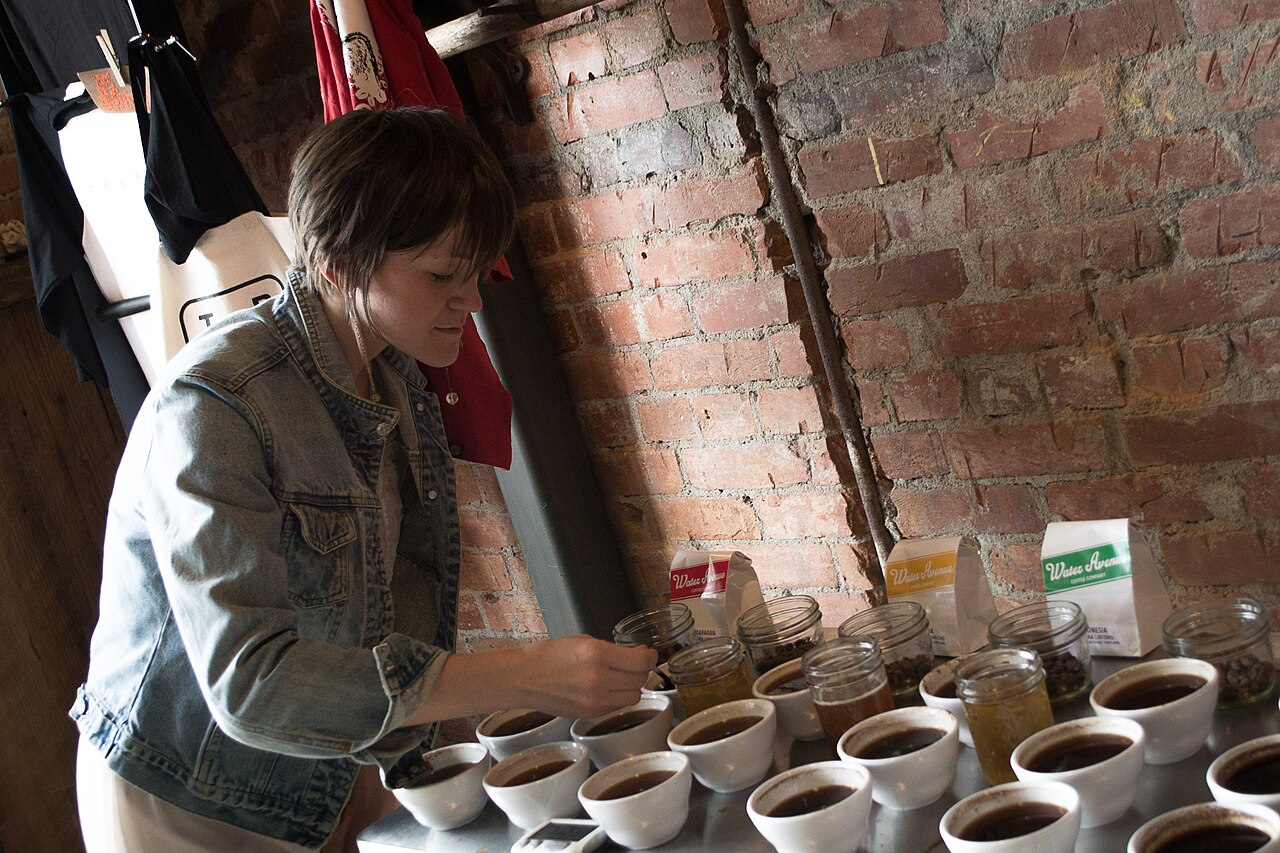
Cupping is the standardized procedure professional coffee buyers, roasters, and Q-graders use to evaluate the quality of coffee. The protocol — codified by the Specialty Coffee Association (SCA) — is followed identically in cupping rooms from Ethiopia to Colombia to specialty roasteries in every coffee-importing country in the world. The point is consistency: when a buyer in Tokyo and a buyer in San Francisco both cup the same lot of coffee, they should arrive at scores within a few points of each other. This article walks through the SCA cupping protocol step by step — the equipment, the water, the timing, the slurping technique, and the scoring system — and explains how anyone can adapt the protocol for tasting at home without specialized training.
What Cupping Is For
Cupping serves three different purposes depending on who is doing it and why.
For coffee buyers, cupping is a procurement decision. A green coffee importer cups dozens of samples each week, comparing offerings from different farms and origins, looking for the lots that score above a threshold and fit a roaster's flavor profile. The cupping decides which coffee gets purchased.
For roasters, cupping is quality control. Every roast batch is cupped to verify it tastes the way it should. Defects — under-roasted, scorched, baked, sour, papery — show up clearly on the cupping table in ways they may not show up at home in a casual cup.
For Q-graders, cupping is professional certification. The Q-grader credential, awarded by the Coffee Quality Institute after passing an intensive 3-day examination, is the closest thing the coffee world has to a sommelier's diploma. Q-graders score coffee on a 100-point scale; coffees scoring 80 or above are formally classified as specialty.
The same protocol underlies all three uses. Mastering it reveals the shared language professional coffee uses to talk about itself.
[IMAGE: Q-grader certification cupping room professional setup]
The Equipment
The standardized SCA cupping setup uses the following:
- Cupping bowls — uniform white ceramic, 7 to 9 fluid ounces, to display crema and color clearly
- Cupping spoons — round, deep, silver-plated or stainless steel, designed to deliver a wide spray of coffee onto the palate
- A grinder — capable of producing a consistent medium-coarse grind
- A precision scale — readable to 0.1 grams
- A timer — visible to the entire cupping table
- Hot water — measured to 93°C (200°F)
- Cupping form — the SCA-published scoresheet with categories for Fragrance, Aroma, Flavor, Aftertaste, Acidity, Body, Balance, Uniformity, Clean Cup, Sweetness, Defects, and Overall
The key technical detail behind professional cupping is consistency. Same bowl, same dose, same grind, same water, same temperature, same timing. Any variation introduces noise that disguises real differences between coffees. A casual home cupping skips most of this and still produces useful information. A professional cupping cannot.
The Standard Protocol
The full SCA protocol runs as follows:
Setup. For each coffee being tasted, prepare 5 cupping bowls. The duplicate cups across the same coffee allow detection of defects that affect only some cups in a batch. Weigh out 8.25 grams of coffee per bowl. (Different forms of the protocol use 11g per 200ml or other ratios — the SCA standard is 8.25g per 150ml of water, a 1:18 ratio.) Coffee remains whole-bean and is ground immediately before water is added, one bowl at a time.
Fragrance evaluation. After grinding each bowl, evaluate the dry fragrance — sniff the dry coffee at the bottom of the bowl. Score for intensity and quality.
Pour. Pour 150 grams of water at 93°C / 200°F over the dry coffee in each bowl. The water should be hot enough to extract but not scalding the cupper.
Wait. Set the timer for 4 minutes. During this time, the coffee floats to the surface, forming a crust. Do not stir.
Break the crust. At 4 minutes, gently push the crust down with a cupping spoon while inhaling the aromatics being released. Make 2 to 3 forward strokes. This is the wet aroma evaluation, and the strongest moment of aromatic evaluation in the entire process.
Skim. After breaking the crust, skim off the floating grounds and foam from the surface using a cupping spoon, leaving the coffee clean for tasting.
Wait again. Let the coffee cool for several minutes. Cupping is done across a temperature range — flavors emerge differently at hot, warm, and cool temperatures, and the cupper evaluates all three.
Slurp. Once the coffee has cooled to drinkable temperature, slurp from the cupping spoon. The slurp is the part of cupping that visitors find shocking — it is loud, aggressive, and aerosolizes the coffee across the entire palate at once. It is also essential. Sipping coffee delivers it primarily to the front of the tongue. Slurping spreads it across the whole mouth, including the soft palate, where retronasal aromatics register most strongly.
Score. As the coffee passes through hot, warm, and cool, score each evaluation category on the SCA form: Flavor, Aftertaste, Acidity, Body, Balance, and so on. Each category is scored 6 to 10 in 0.25 increments. The final score is the sum across all categories on a 100-point scale.
[IMAGE: cupping spoon with coffee crust ready for breaking close-up]
The SCA Cupping Form
The cupping form is a structured worksheet that captures every dimension of cup quality. The major scoring categories:
Fragrance/Aroma. Combined dry-fragrance and wet-aroma intensity and quality.
Flavor. The combined impression of taste and aroma during the slurp. The richest descriptive territory on the form — this is where the cupper writes down what the coffee actually tastes like.
Aftertaste. The persistence and quality of flavor after the coffee has been swallowed.
Acidity. The bright, sparkling, citrus-like quality. High-acidity coffees feel lively. Low-acidity coffees feel flat. The cupper scores both intensity and pleasantness — a coffee can be high in acidity and unpleasant (sour) or high in acidity and excellent (vibrant).
Body. The tactile weight of the coffee on the tongue. Lighter bodies feel like tea; heavier bodies feel almost syrupy.
Balance. How the components — flavor, aftertaste, acidity, body — combine. A coffee with bright acidity and minimal body may feel unbalanced; the same acidity with full body may feel harmonious.
Uniformity. Whether the duplicate cups taste the same. Variation across cups indicates inconsistency in processing or roasting.
Clean Cup. The absence of off-flavors and defects.
Sweetness. The natural sugar perception in the cup. High sweetness usually correlates with high quality.
Overall. The cupper's overall impression — the closest thing to a global aesthetic judgment in the form.
Defects. Any tainted or fermented cups detected in the duplicate set get scored as a defect, deducting points.
The total possible score is 100. In practice, no coffee scores 100. The lowest specialty-grade score is 80. The highest scores any coffee has historically received from Cup of Excellence competitions and similar programs run in the 92 to 95 range, indicating exceptional, world-class quality. Most commercial-grade coffees score in the 70s, below the specialty threshold.
The Flavor Wheel
The SCA flavor wheel — first published in 1995 and revised in 2016 — is the standardized vocabulary cuppers use to describe what they taste. The wheel is organized in three concentric rings. The innermost ring contains broad descriptor categories: fruity, sour/fermented, green/vegetative, roasted, spices, nutty/cocoa, sweet, floral. The middle ring breaks each category into subcategories — fruity divides into berry, dried fruit, other fruit, citrus. The outer ring lists specific descriptors — strawberry, raspberry, blueberry, blackberry within berry.
The wheel exists because flavor description is otherwise hopelessly subjective. Two cuppers tasting the same coffee independently will arrive at different metaphors for the same sensation. The flavor wheel constrains the vocabulary to a shared agreed-upon set of terms, allowing cuppers in different rooms or different countries to compare notes meaningfully.
A typical Puerto Rican Yauco coffee scored on the wheel might present as: nutty/cocoa center → cocoa subcategory → milk chocolate descriptor; with sweet → caramelized → caramel; and floral → tropical fruit → ripe banana. A typical Ethiopian Yirgacheffe might present as: floral → jasmine; fruity → citrus → bergamot; and sweet → honey. The wheel makes these distinct profiles communicable without poetry.
[IMAGE: SCA coffee flavor wheel chart colorful rings descriptors]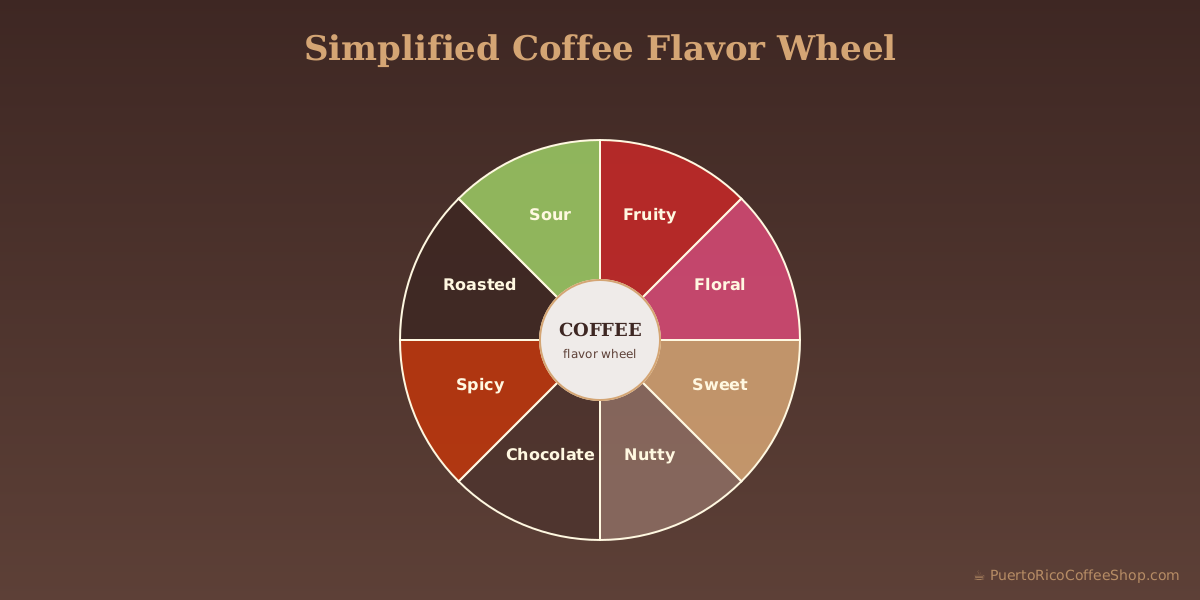
Calibration and Why It Matters
The hardest part of cupping is not the technique. It is calibration — bringing your sensory perception in line with the broader professional consensus about what good coffee tastes like.
A new cupper sitting at the cupping table for the first time scores everything within a narrow range — 82 to 86, perhaps. Subtle differences between coffees that an experienced cupper would call obvious are invisible to the new cupper. After months and years of repetition, the calibration develops. Differences become visible. Defects that were once silent become loud.
This is why the Q-grader certification is intensive. Three days of cupping under the supervision of certified instructors, with constant comparison against the standard, allows the candidate's perception to align with the global professional consensus. Q-graders cup the same coffee on opposite sides of the world and arrive at scores within a few points of each other. This consistency makes specialty coffee commerce possible.
For non-professionals, the same principle applies in miniature. Cup the same coffee against itself across multiple sessions, and your perception sharpens. Cup multiple coffees from the same origin against each other, and the regional character emerges. Cup coffees from very different origins against each other, and the deeper variables — process, altitude, varietal — become apparent.
Cupping at Home
The full SCA protocol is more setup than most home cuppers want. The simplified home version is:
- Brew 5 cups (or 3, or 2 — any number that fits your bowls)
- Use 8 to 12 grams of coarsely-ground coffee per cup
- Pour 150 to 200 grams of just-off-boiling water (about 93°C / 200°F)
- Wait 4 minutes
- Break the crust gently with a deep spoon, inhaling
- Skim, wait for the cup to cool
- Slurp loudly from a deep spoon
For a single-coffee home cupping, do this once with the coffee you drink most often — your daily roast. You will discover descriptors and qualities the casual sip-from-mug never reveals. For comparison cupping, set up two coffees side by side: a familiar one and a new one, or two different roasts of the same bean, or two regionally distinct coffees. The contrast brings each cup into focus more clearly than any single cupping does alone.
The physical act of slurping feels strange the first time. Within five minutes of sustained cupping it feels normal. The improvement in perceptual acuity is dramatic and immediate.
[IMAGE: home coffee cupping setup small batch comparison tasting]
Cupping Puerto Rican Coffee
Puerto Rican specialty coffees cup distinctively. The high-altitude beans from Yauco, Adjuntas, Lares, Jayuya, and Maricao share a regional character: medium-to-full body, balanced acidity (rarely sharp), pronounced sweetness, and the chocolate-and-caramel notes that have made the island famous since the 19th century. Specific lots vary — a washed-process Bourbon from Jayuya cups differently than a honey-process Limaní from Yauco — but the overall regional signature is consistent.
This consistency is, in the cupping room, an advantage and a constraint. Buyers know what to expect from Puerto Rico, which makes the coffee easier to specify and source. The downside is that Puerto Rican coffee rarely produces the dramatic, exotic flavor profiles that win cup competitions. The Ethiopian or Panamanian Geisha lot that scores 92 will usually do so by combining pronounced acidity with floral and fruit notes that Puerto Rican coffee, by its nature, does not produce. What Puerto Rican coffee does produce — balanced, sweet, complex, deeply drinkable cups in the 84 to 88 range — is what serious daily-drinker coffee actually is.
Café Cuatro Sombras, the Old San Juan microroaster sourcing from Hacienda Santa Clara in Yauco, runs cupping classes for visitors at $89 for a 1-hour session. For anyone visiting San Juan and curious about the protocol from the inside, this is one of the most accessible cupping introductions in the Caribbean.
Key Facts
- The SCA cupping protocol is the global standard for coffee evaluation
- Cupping uses 8.25 grams of coffee per 150 grams of water (1:18 ratio)
- Five duplicate cups per coffee detect cup-to-cup defects
- Slurping aerosolizes coffee across the entire palate, revealing aromatics
- The SCA cupping form scores on a 100-point scale across multiple categories
- 80+ score classifies coffee as specialty grade
- The SCA flavor wheel provides standardized descriptor vocabulary
- Q-grader certification calibrates a cupper's perception to global consensus
- Home cupping uses a simplified version of the same protocol
- Puerto Rican coffee typically cups in the 84-88 specialty range with chocolate and caramel notes
Frequently Asked Questions
Why do cuppers slurp so loudly? Slurping aerosolizes the coffee — turning it into a fine mist that coats the entire palate including the soft palate, where retronasal aromatics register most strongly. Sipping delivers coffee primarily to the front of the tongue and misses most of the aromatic information. Loud slurping is correct technique.
What's the lowest score a coffee can get and still be specialty? 80 out of 100 on the SCA scale. Below 80, the coffee is classified as commercial grade and not labeled specialty. The numerical threshold is a procurement standard used by green coffee buyers, importers, and roasters.
Can I cup at home without specialized equipment? Yes. Any deep ceramic bowl, any deep spoon, a kitchen scale, and a kettle are sufficient. The full SCA setup matters for professional consistency. For home perception training, almost any approach following the basic timing and technique will work.
Do I need to spit out the coffee like wine cuppers? Some professional cuppers spit (especially when cupping dozens of samples in a single session), but most working cuppers swallow. Spitting reduces caffeine consumption during long sessions.
What's the difference between cupping and brewing? Cupping is an extraction method designed for evaluation — full-immersion, fixed ratio, fixed timing, no filter. Brewing is an extraction method designed for drinking — the parameters are tuned for the best cup, not the most diagnostic information. A coffee that cups well almost always brews well too, but the cupping process is not how you would normally make coffee for pleasure.
Related Articles
- The Coffee Flavor Wheel: A Complete Guide
- Coffee Roasting: From Green to Brown
- Coffee Processing: Washed, Natural, and Honey
- What is Coffea Arabica? The Noble Coffee Species
- Coffee Grinders: Burr vs Blade — The Complete Buying Guide
- Water Chemistry for Coffee Brewing: The Complete Guide
- Cafés of San Juan: A Coffee Shop Tour of Puerto Rico's Capital
Taste Authentic Puerto Rico Coffee
The proof of any cupping protocol is in the cup. Single-origin Puerto Rican coffee — grown above 3,000 feet in the central mountains of the island — cups with the chocolate-caramel-balanced sweetness signature that has defined Boricua coffee for nearly three centuries.
BUY AUTHENTIC PUERTO RICO COFFEE NOW →
Freshly roasted, shipped worldwide. The real taste of Boricua heritage in every cup.
Part of The Coffee Encyclopedia — the world's largest free coffee reference. Proudly sponsored by PuertoRicoCoffeeShop.com.