
Water Chemistry for Coffee Brewing: The Complete Guide

Coffee is 98 percent water. The other 2 percent — the dissolved coffee compounds — depends entirely on what was in that water before brewing started. Water with the wrong mineral content will under-extract or over-extract the same beans on the same equipment with the same recipe. Water is not a passive carrier. It is the active solvent that pulls flavor out of coffee, and the chemistry of that solvent is the most overlooked variable in home and cafe brewing alike. This guide explains the SCA water standard, why calcium and magnesium matter, what TDS and alkalinity actually measure, and how to test, treat, and tune your water for the best possible cup.
Why Water Chemistry Matters
Brewing coffee is a chemistry problem. Hot water meets ground coffee, and over the next four minutes the water dissolves a portion of the coffee's soluble mass — acids, sugars, lipids, melanoidins, caffeine, and hundreds of other compounds. The total mass that dissolves is called extraction yield. The Specialty Coffee Association considers 18 to 22 percent extraction yield the target range for most brewing methods. Below 18 percent is under-extracted and tastes sour. Above 22 percent is over-extracted and tastes bitter.
Water chemistry shifts this entire range. The same coffee brewed with reverse-osmosis water might extract at 16 percent. The same coffee with hard tap water might extract at 24 percent. No grind adjustment, no temperature change, no recipe tweak can fully compensate. Water is the solvent — its composition determines how aggressively it dissolves coffee.
This is why a cafe in one city using one water source can produce stunning results with a particular bean, while another cafe in another city using identical equipment and recipe makes the same bean taste flat or harsh. Water is rarely the variable people examine first. It should be.
The SCA Water Standard
The Specialty Coffee Association published a water standard in 2009 (revised since) defining the ideal water composition for coffee brewing. The target ranges are:
- Total dissolved solids: 75 to 250 parts per million, ideal 150 ppm
- Total hardness: 17 to 85 ppm as calcium carbonate, ideal 50 ppm
- Total alkalinity: 40 ppm as calcium carbonate, with a tighter range for ideal
- pH: 6.5 to 7.5
- Sodium: at or near zero
- Chlorine: zero
- Odor: clean and free of off-aromas
Most municipal water sources fall outside these ranges in at least one parameter. Some are too soft. Some are too hard. Some carry chlorine that destroys delicate aromatics. The SCA standard exists as a target, not as a description of typical tap water.
TDS — What It Is and Isn't
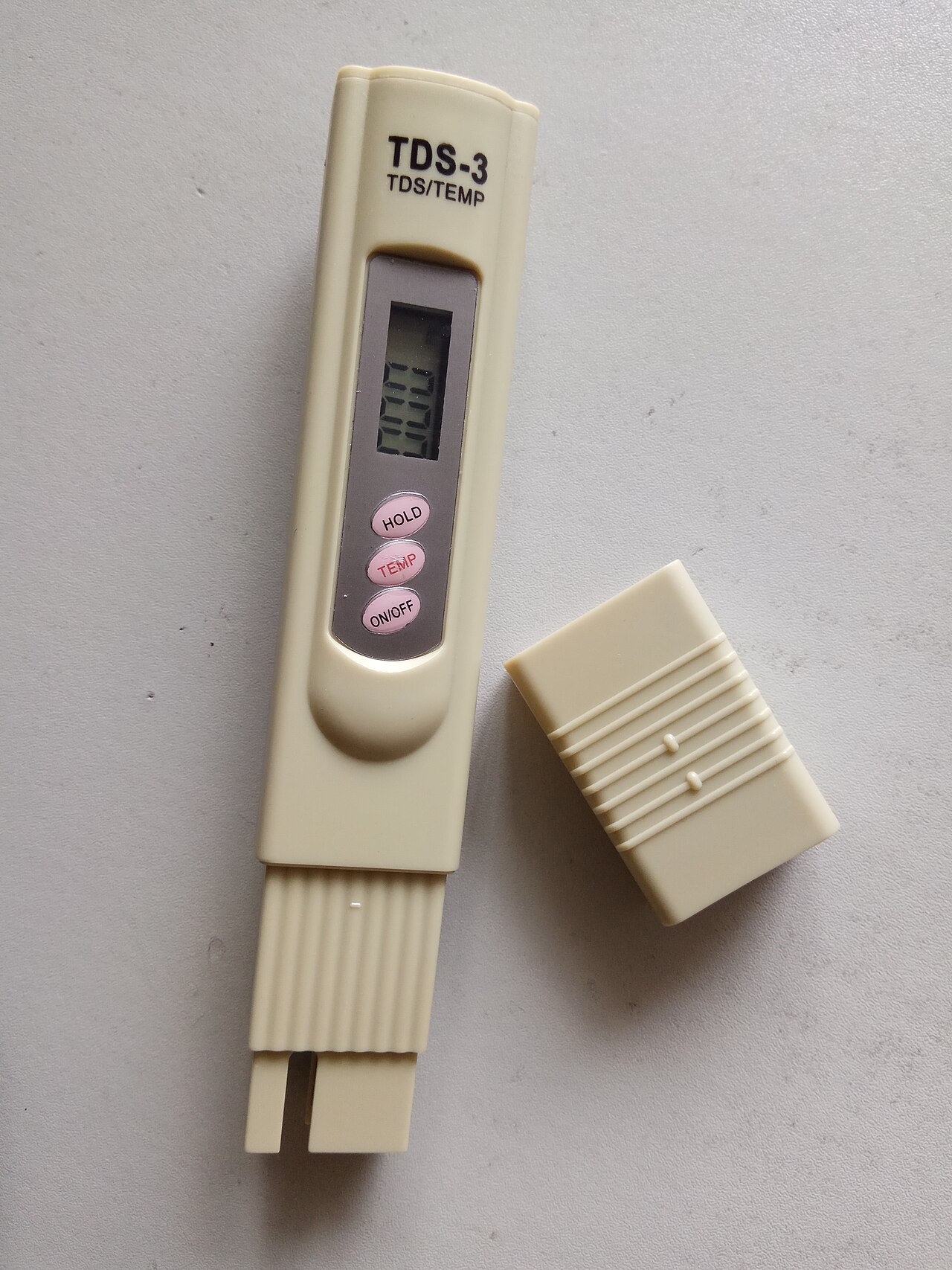
Total dissolved solids measures the total mineral content of water in parts per million. A TDS meter — a small probe-and-display device costing under fifty dollars — gives an instant reading. The number tells you how mineral-rich the water is, which correlates with how aggressively it will extract coffee.
What TDS does not tell you is which minerals are present. Two waters can both read 150 ppm TDS while being chemically very different. One could be primarily calcium and magnesium (excellent for coffee). Another could be sodium chloride (terrible for coffee). The TDS meter cannot distinguish them. For a complete picture, you need to test hardness and alkalinity separately.
That said, TDS is the most useful single number in coffee water. It is fast, cheap, and correlates well with extraction behavior across most natural waters. Most cafes that monitor water at all start with TDS.
Hardness and Alkalinity
These two parameters are often confused, but they measure different things and play different roles.
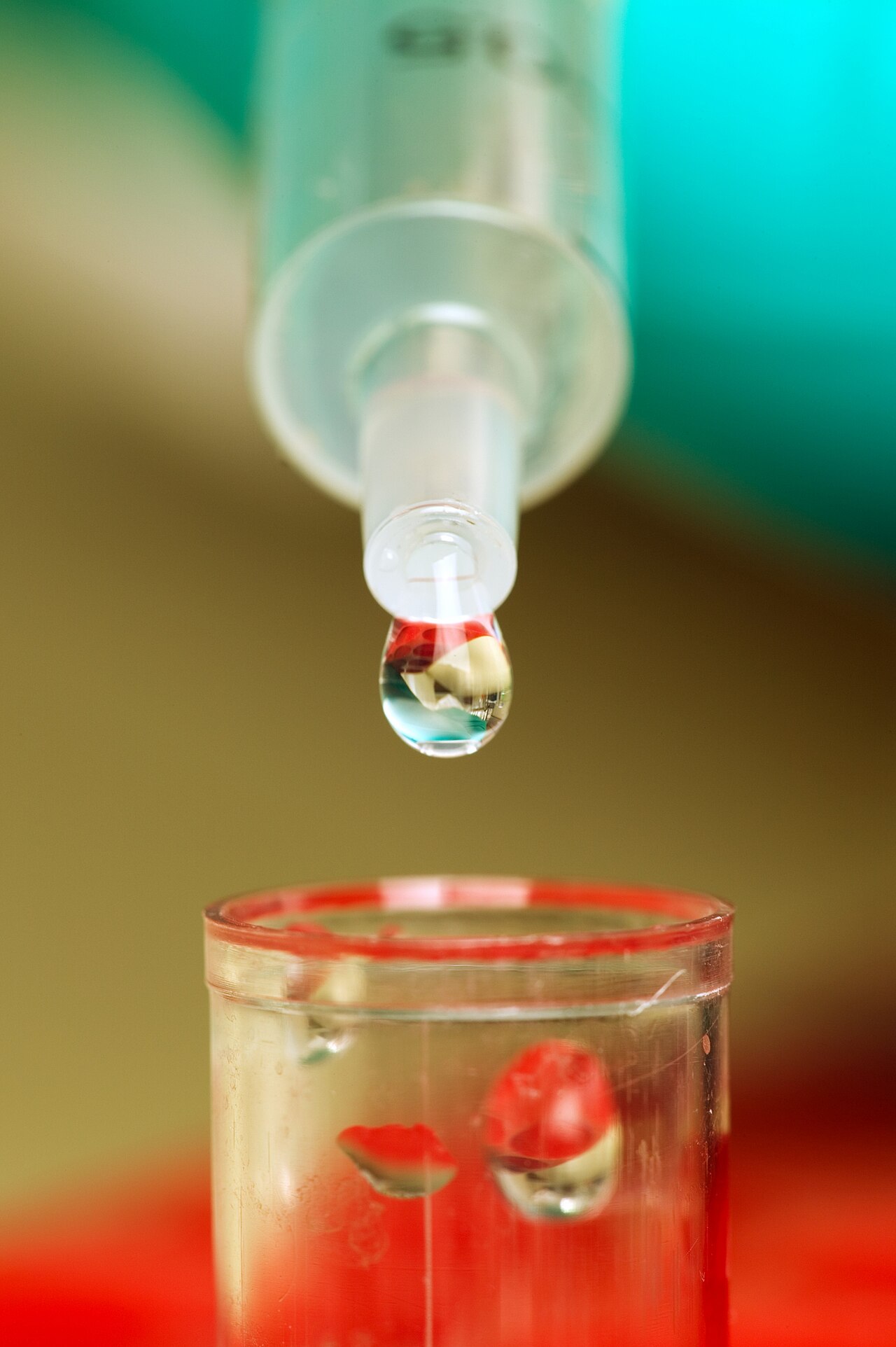
Hardness is the concentration of dissolved calcium and magnesium ions. These are the active extraction minerals. Calcium and magnesium are positively charged in solution and bind to the negatively charged coffee compounds during brewing, helping to pull them into the water. Coffee brewed with very soft water (low hardness) tends to taste thin, hollow, and under-extracted. Coffee brewed with appropriately hard water tastes full-bodied and well-developed.
Alkalinity is the water's buffering capacity — its ability to neutralize acids. The dominant alkaline compound in most water is bicarbonate. High alkalinity neutralizes the acids that come out of coffee during brewing, producing a flat, dull cup. Low alkalinity allows coffee's natural acidity to express itself, producing a brighter, more vibrant cup. The relationship is direct: every milligram of bicarbonate in your water cancels out roughly one milligram of acid extraction from the coffee.
The reason the SCA standard targets relatively low alkalinity is precisely this — most modern specialty coffee is celebrated for its acidity, and high-alkalinity water mutes that quality.
The Magnesium Question
Among the active extraction minerals, magnesium has gained particular attention. Laboratory studies have shown that magnesium binds more strongly to certain flavor compounds than calcium does, and water enriched specifically with magnesium tends to produce coffee with brighter, more complex flavor profiles.
This is the basis of the "magnesium-heavy recipe water" trend. Several published recipes — including the original from the 2014 book Water for Coffee by Maxwell Colonna-Dashwood and Christopher Hendon — call for waters with elevated magnesium content. Cafes that pursue maximum flavor extraction often build their water from scratch using magnesium sulfate (Epsom salt) and sodium bicarbonate (baking soda) added to distilled water.
For most home brewers, this level of optimization is unnecessary. Tap water within the SCA range produces excellent coffee. But for cafes seeking cup competition results, water built specifically to enhance magnesium uptake is now standard practice.
Reverse Osmosis and Remineralization
Reverse osmosis (RO) is the most common method commercial cafes use to control water chemistry. An RO system passes tap water through a semi-permeable membrane that removes nearly all dissolved minerals, producing water with TDS near zero. This stripped water is too aggressive for coffee — it would over-extract bitter compounds and leach metals from equipment — so it is then remineralized by passing through a calcium-and-magnesium remineralization cartridge or by adding a measured concentrate.
The advantage of RO plus remineralization is consistency. Whatever the source water looks like — whether the city is on river water in winter and reservoir water in summer — the post-treatment water is identical. For a cafe that depends on consistent extraction across seasons, this is enormously valuable.
The drawback is cost and complexity. A commercial RO system costs several thousand dollars installed and requires ongoing membrane replacement and remineralization-cartridge management. Home reverse osmosis systems are smaller and cheaper but still represent a meaningful investment.
Third Wave Water and Recipe Concentrates
For home brewers who want optimized water without the equipment, several products now sell pre-measured mineral packets designed to be added to a gallon of distilled or RO water. The most established brand is Third Wave Water, which sells single-use sachets in formulations targeted at espresso, filter, and cafe applications.
The workflow is simple: buy a gallon of distilled water from a grocery store, dump in a sachet, shake. The result is water within or near the SCA standard, optimized for coffee. Cost works out to roughly twenty-five cents per gallon — cheaper than bottled spring water, vastly cheaper than an RO system.
For brewers who want maximum control, the underlying recipe is no secret. Several published formulations exist that combine magnesium sulfate and sodium bicarbonate in specific ratios. With a precision scale capable of reading 0.1 grams, anyone can mix recipe water at home for fractions of a cent per gallon.
Treating Tap Water Without RO
For most home brewers, full RO is overkill. Several lighter-weight treatments handle the most common tap water problems.
Activated carbon filters (Brita pitchers, refrigerator filters, in-line cafe filters) remove chlorine and chloramine, which are the most damaging additions to coffee water. Carbon filtration is cheap and effective and should be considered the minimum baseline for any coffee setup. Carbon filters do not change mineral content in any meaningful way.
Ion exchange softeners swap calcium and magnesium for sodium. These are common in homes with hard water, but for coffee they are a disaster — sodium destroys coffee flavor while removing the active extraction minerals. Never brew coffee with softened water.
Bicarbonate adjustment is a niche trick used by competitive baristas to fix consistently sour shots. A few drops of dilute sodium bicarbonate solution added to the brew water (approximately 1.3 grams per 200 grams of water as a stock) can lift a sour shot into balance. The same solution overdosed will mute everything — it is a precision tool, not a general fix.
Bottled water selection. For brewers without filtration, choosing the right bottled water is the simplest path. Volvic, Crystal Geyser, and several regional spring waters fall within or near the SCA range. The labels list TDS and mineral content in fine print on the back. Avoid waters labeled as mineral water (often too high TDS), distilled water (no minerals at all), and softened water (sodium).
Water and the Espresso Machine
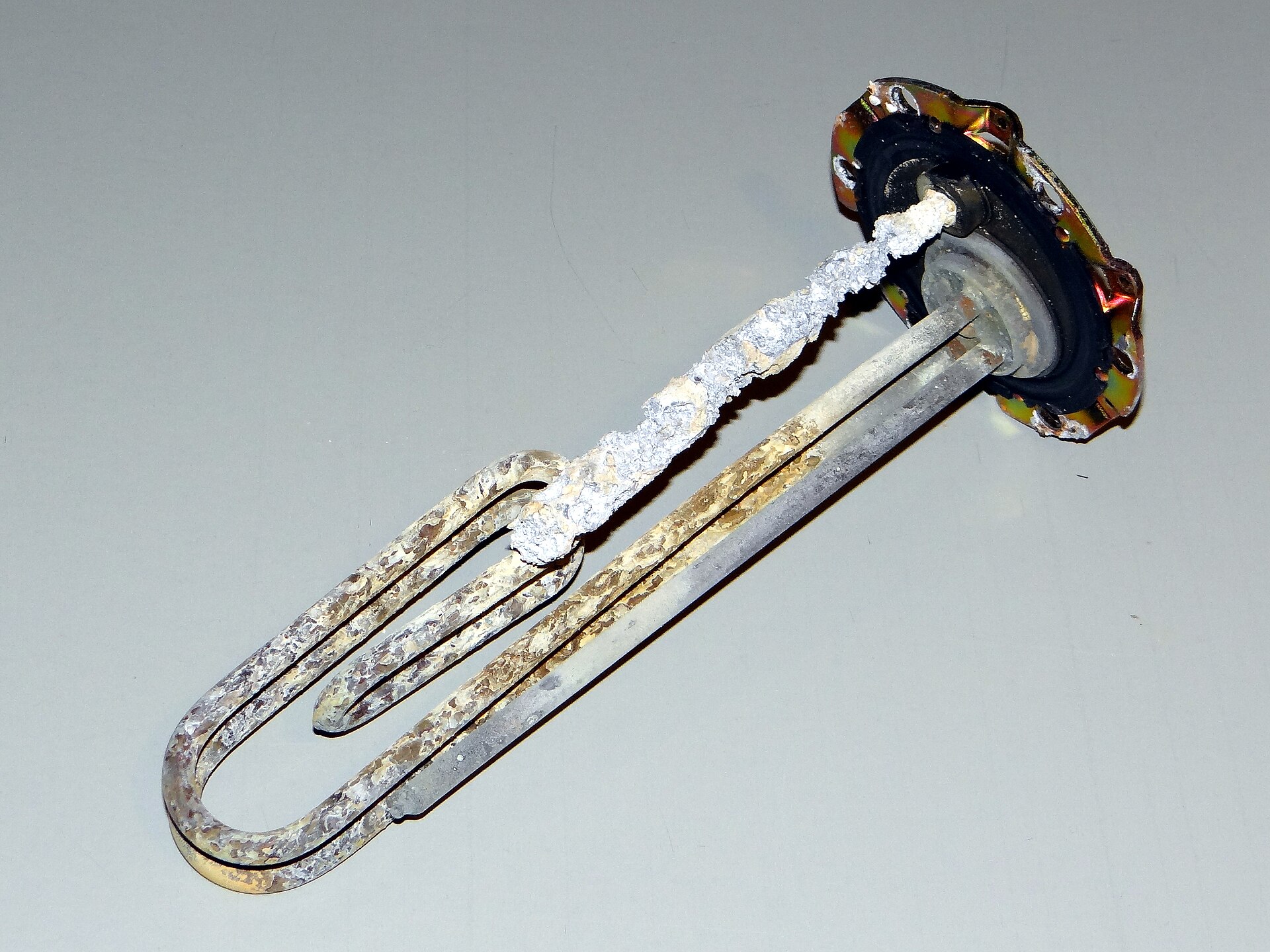
For espresso machines specifically, water chemistry matters not just for taste but for equipment longevity. Calcium and magnesium that produce great extraction also deposit limescale on heating elements when the water is repeatedly heated. A machine fed high-hardness water without filtration will scale up within months, eventually causing failure.
Commercial espresso machines without water treatment commonly fail within two or three years. The same machines on properly treated water last fifteen or twenty. Every espresso machine sold today comes with manufacturer water requirements — meeting them is not optional. Most include explicit hardness and alkalinity ranges.
For home espresso, this means at minimum a carbon filter. For machines with boilers, it means meeting the manufacturer specification for hardness and alkalinity, typically using a small under-counter softening cartridge or pre-mixed coffee water.
pH and Why It's Less Important Than People Think
pH is the most famous water parameter and one of the least useful for coffee brewing. Most natural waters fall in the 7.0 to 8.5 range, which is fine for coffee. The SCA target of 6.5 to 7.5 is conservative.
The reason pH matters less than alkalinity is that pH measures the current acidity of the water, while alkalinity measures the water's resistance to becoming more acidic. During brewing, coffee adds acid to the water — and water with high alkalinity neutralizes that added acid before it reaches the cup. Two waters can have identical pH but very different alkalinity, and they will produce very different brewed coffee.
Modern coffee water guidance has largely moved past pH as a primary metric. The combination of TDS, hardness, and alkalinity is far more predictive of brewing outcome.
Puerto Rico's Mountain Water Tradition
The coffee farms of central Puerto Rico — Yauco, Adjuntas, Lares, Jayuya, Maricao — sit above 2,500 feet elevation in mountains fed by some of the cleanest natural water in the Caribbean. The same volcanic soil that produces the island's superior coffee also filters the rainwater that washes through the system, producing balanced, mineral-rich groundwater. Local farmers brewing coffee at the source rarely think about water chemistry. They do not need to. The water flowing from their springs has been doing the work for generations.
This is a quiet advantage that does not survive shipment. Coffee shipped from a Puerto Rico hacienda to a kitchen in New Jersey is brewed with whatever water New Jersey provides. The same farm-to-cup quality that defined the cup at altitude depends, when transplanted, on the water being matched to the bean. Treating your water — at minimum carbon filtration, ideally water within the SCA range — is the way mainland customers can recover that quality.
Key Facts
- Coffee is 98 percent water — water composition controls extraction
- The SCA water standard targets 150 ppm TDS, 50 ppm hardness, 40 ppm alkalinity
- Hardness (calcium and magnesium) drives flavor extraction
- Alkalinity (bicarbonate) buffers and mutes coffee's natural acidity
- Magnesium binds flavor compounds more strongly than calcium
- TDS is the most useful single water measurement
- Reverse osmosis with remineralization is the cafe gold standard
- Recipe water concentrates (Third Wave Water, etc.) are the home equivalent
- Never brew with softened water — sodium destroys flavor
- pH is far less important than alkalinity for coffee brewing
Frequently Asked Questions
Can I just use bottled spring water? Yes, for most brewers this is the simplest answer. Look for spring water with TDS in the 100-200 ppm range and avoid mineral waters with very high mineral content. Volvic and Crystal Geyser are common safe choices. Check the label.
Is distilled water good for coffee? No. Pure distilled water has zero minerals and produces flat, hollow, under-extracted coffee. It also leaches minerals from espresso machine boilers, causing equipment damage. Distilled water needs to be remineralized before brewing.
How do I know if my tap water is the problem? Test it. A basic TDS meter is under fifty dollars. A water hardness test kit is similar. If your TDS is below 50 or above 300, or your hardness is dramatically different from the SCA target, water is likely affecting your brews.
Does water temperature change the chemistry? Mineral content does not change with temperature, but solubility does. Hotter water dissolves coffee compounds faster — this is why brew temperature is a separate variable from water composition.
Is there a difference between cafe water and home brewing water? The chemistry is the same. The difference is volume — a cafe processing thousands of gallons per week needs reliable, automated water treatment. A home brewer making one or two pots a day can rely on bottled water or simple filtration.
Related Articles
- Caffeine: How It Works in the Human Body
- Coffee Grinders: Burr vs Blade — The Complete Buying Guide
- Espresso: The Complete Guide to Italy's Greatest Coffee Invention
- What is Coffea Arabica? The Noble Coffee Species
- Turkish Coffee: The UNESCO Heritage Brewing Tradition
- Café con Leche: The Puerto Rican Morning Tradition
- Pilón de Café: The Wooden Pestle Tradition of Puerto Rico
Taste Authentic Puerto Rico Coffee
The right water reveals the bean. Single-origin Puerto Rican coffee — grown above 3,000 feet on the volcanic slopes of the island's central mountains — gives your treated water something extraordinary to dissolve.
BUY AUTHENTIC PUERTO RICO COFFEE NOW →
Freshly roasted, shipped worldwide. The real taste of Boricua heritage in every cup.
Part of The Coffee Encyclopedia — the world's largest free coffee reference. Proudly sponsored by PuertoRicoCoffeeShop.com.