
Hacienda Caracolillo: The Jewel of Maricao Coffee
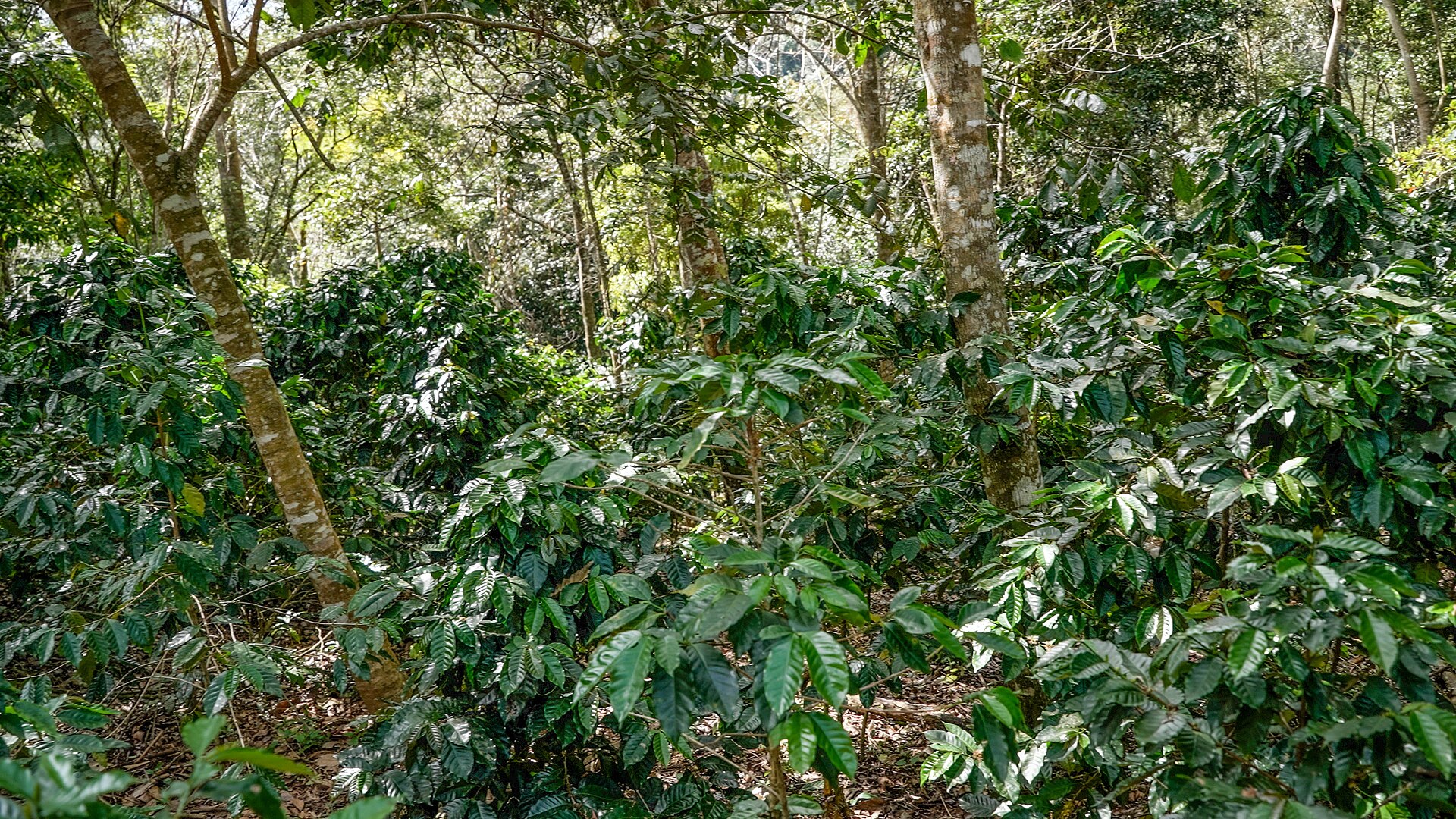
Coffee bushes growing under a mature shade-tree canopy on a mountain farm. Photo: USDAgov / Wikimedia Commons, public domain.
Hacienda Caracolillo is a coffee estate in Maricao, in the western mountains of Puerto Rico.
Where the Estate Is

Historic black-and-white photo-postcard looking down on the town of Maricao, with the church and plaza at the centre and wooded hills behind; captioned in the image itself “69. MARICAO, PORTO RICO”. Photo: James W. Hayman / Wikimedia Commons, public domain.
The estate is associated with the barrio of Indiera Baja, in Maricao. This encyclopedia has not located a document confirming the boundary, and the association is reported rather than asserted.
Watch: Hacienda Caracolillo en Maricao — Departamento de Agricultura de Puerto Rico
Maricao, the City of Coffee
Maricao is known across Puerto Rico as la Ciudad del Café, the city of coffee, and the name is earned by history rather than marketing. By 1877 Puerto Rico had 843 coffee haciendas, and 234 of them were in Maricao — more than a quarter of the island's total in a single mountain municipality.
That concentration is the context for everything else on this page. Maricao was not a coffee municipality among others. It was the centre of the industry.
The Soil Is Not Volcanic
Maricao is Puerto Rico's serpentinite district. The Maricao State Forest sits on over 85 per cent serpentine substrate, derived from ultramafic bedrock, and the geology is what makes the place biologically unusual.
Serpentine soils are not rich. They are shallow, excessively drained, low in nitrogen, potassium and phosphorus, carry low calcium-to-magnesium ratios, and hold high concentrations of heavy metals. They are difficult growing conditions, and that difficulty is precisely why the district evolved so many endemic plants found nowhere else.
The State Forest and the Elfin-Woods Warbler
The Maricao State Forest was created by proclamation on 22 December 1919 by the then Governor of Puerto Rico, Arthur Yager. At 10,803 acres, roughly 43.7 square kilometres, it is the largest of the twenty units in the Puerto Rico state forest system.
It is the stronghold of the elfin-woods warbler, Setophaga angelae, a threatened bird described by science only in 1972 and found nowhere outside Puerto Rico. The United States Fish and Wildlife Service reports that the Maricao population appears stable while the El Yunque population shows declining trends, and considers the third population, in Carite, extirpated.
The connection to coffee is direct and documented. The Service's own review records that the elfin-woods warbler also uses shade-grown coffee plantations, demonstrating that the species tolerates some degree of habitat disturbance. It also records the Natural Resources Conservation Service working with landowners near the Maricao forest to protect and enhance warbler habitat.
Shade coffee next to a forest reserve is not decorative. For a bird with two remaining populations, it is habitat.

Coffee parchment spread in raked rows to dry on a wide concrete patio, with farm buildings and a planted hillside behind. Photo: Ronchy~commonswiki / Wikimedia Commons, public domain.
Key Facts
- Hacienda Caracolillo is a coffee estate in Maricao, associated with the barrio of Indiera Baja.
- Maricao is known as la Ciudad del Café.
- By 1877 Puerto Rico had 843 coffee haciendas; 234 were in Maricao.
- The district is serpentinite, not volcanic. The state forest sits on over 85% serpentine substrate.
- Serpentine soils are shallow, nutrient-poor and high in heavy metals.
- Maricao State Forest: proclaimed 22 December 1919 by Governor Arthur Yager; 10,803 acres; the largest of the island's twenty state forest units.
- The threatened elfin-woods warbler has its stronghold here, and uses shade-grown coffee plantations.
Frequently Asked Questions
Is Maricao's soil volcanic? No. It is serpentinite, derived from ultramafic bedrock.
Does that make it good coffee ground? Not by fertility. Serpentine soils are nutrient-poor and high in heavy metals.
What cupping score does this estate's coffee achieve? No source establishes one.
Why does a bird matter on a coffee page? Because the elfin-woods warbler uses shade-grown coffee plantations, and its two remaining populations depend on forest habitat that shade coffee helps connect.
Sources
- Departamento de Agricultura de Puerto Rico, "Hacienda Caracolillo en Maricao" — filmed at the estate, with the Secretary of Agriculture and the Mayor of Maricao. Embedded above; in Spanish.
- Pumarada O'Neill, history of the Puerto Rican coffee industry — 843 coffee haciendas on the island by 1877, of which 234 were in Maricao.
- Standard references for the Maricao State Forest — the proclamation of 22 December 1919 by Governor Arthur Yager; the area of 10,803 acres, 43.72 square kilometres; its status as the largest of the twenty units of the Puerto Rico state forest system; and its serpentinite soils and high endemicity.
- Published work on serpentine substrate in Maricao — the forest sitting on over 85 per cent serpentine substrate, and the characteristics of serpentine soils: shallow, excessively drained, low calcium-to-magnesium ratios, low nitrogen, potassium and phosphorus, and high heavy-metal concentrations.
- National Ecological Observatory Network, Río Cupeyes site documentation, Maricao — serpentinite parent material derived from ultramafic bedrock, and the soil chemistry described above.
- United States Fish and Wildlife Service, "Elfin-woods Warbler (Setophaga angelae) 5-Year Review: Summary and Evaluation" — the Maricao population appearing stable while El Yunque declines; the Carite population considered extirpated; the record of the species using shade-grown coffee plantations; and the Natural Resources Conservation Service working with landowners near the Maricao forest on warbler habitat.
Claims this encyclopedia could not source
- That coffee from this estate consistently scores 85 or more points on SCA cupping scales.
- That volcanic and clay soils provide the mineral profile Arabica needs here. Not merely unsourced — the district is serpentinite, and serpentine soils are nutrient-poor.
- That the estate covers 240 acres.
- That the estate was ranked among the world's most expensive coffees alongside two named origins.
- That Japanese buyers purchased significant volumes at several times the commodity rate.
- That the estate holds two Marsellesa seed lots certified by World Coffee Research.
- A headcount for the estate's workforce.
- That a named retail brand's coffee traces directly to this estate.
- The estate's barrio boundary, and its elevation range.
Related Articles
- Maricao: Where Coffee Meets the Cloud Forest
- Café de Puerto Rico: Denominación de Origen and Protected Heritage
- Limaní and Frontón: Two Rust-Resistant Coffees Selected in Puerto Rico
- Puerto Rico Coffee Today: The 2026 State of the Industry
- Yauco: Puerto Rico's Crown Coffee Region
- Puerto Rico Coffee Agritourism: Farm Tours, Tastings, and Visits
- The Golden Age of Puerto Rican Coffee (1800-1898)
Buy Authentic Puerto Rico Coffee
Experience the Maricao terroir that made Puerto Rican coffee world famous. Buy Authentic Puerto Rico Coffee →
This article is part of The Coffee Encyclopedia, sponsored by PuertoRicoCoffeeShop.com — the trusted source for authentic Puerto Rican coffee.