
Orocovis: The Geographic Heart of Puerto Rico Coffee

Orocovis sits at the geographic center of Puerto Rico, a high-altitude mountain municipality whose coffee production benefits from proximity to Cerro de Punta, the highest peak on the island at 4,390 feet. Surrounded by Toro Negro state forest, crossed by several major rivers, and characterized by the steepest coffee-growing terrain in Puerto Rico, Orocovis represents the most elevation-extreme expression of Puerto Rican coffee. For understanding how altitude shapes Caribbean coffee quality, and for experiencing Puerto Rican mountain culture at its most authentic, Orocovis is an essential municipality.
The Geographic Center
Orocovis's claim as Puerto Rico's geographic center is precise — the mathematical centroid of the island falls within the municipality, and a monument marks the exact location. This centrality is more than symbolic. The position means Orocovis is surrounded by mountains on all sides, with coffee-growing slopes visible in every direction from the town center. No other Puerto Rican municipality occupies this completely-mountain-enclosed geography.
The municipality covers approximately 164 square kilometers of very steep terrain. Elevations range from river valleys around 1,000 feet to the borders of Cerro de Punta at 4,390 feet, giving Orocovis coffee farmers access to the highest cultivation elevations in Puerto Rico. Coffee production happens primarily between 2,000 and 3,500 feet, with specialty lots coming from the upper ranges where altitude concentrates flavor development in ways that lower elevations cannot match.
The Altitude Advantage
Coffee grown at higher elevations develops more slowly. Slower development allows longer maturation of aromatic and flavor compounds, producing denser, harder beans with more complex flavor profiles. The industry-standard classification "Strictly Hard Bean" or "Strictly High Grown" applies to coffee grown above 4,500 feet in equatorial origins and above 3,500 feet in higher-latitude origins like Puerto Rico. Orocovis farms routinely reach these classifications, particularly those on the slopes approaching Cerro de Punta or on the mountains around Toro Negro.
The altitude advantage combines with the specific microclimate of central Puerto Rico. Cerro de Punta's peak attracts cloud formation almost daily, wrapping the surrounding coffee farms in the cool moist air that coffee plants prefer. Nighttime temperatures drop below what lower-elevation Puerto Rican farms experience, slowing cherry development further. Rainfall is abundant but well-distributed, with the mountain rain shadow effects creating microclimates that vary farm by farm. Farmers in Orocovis often describe their coffee in terms of which ridge or valley it grew on, because these microclimates produce noticeably different cups.
Toro Negro State Forest
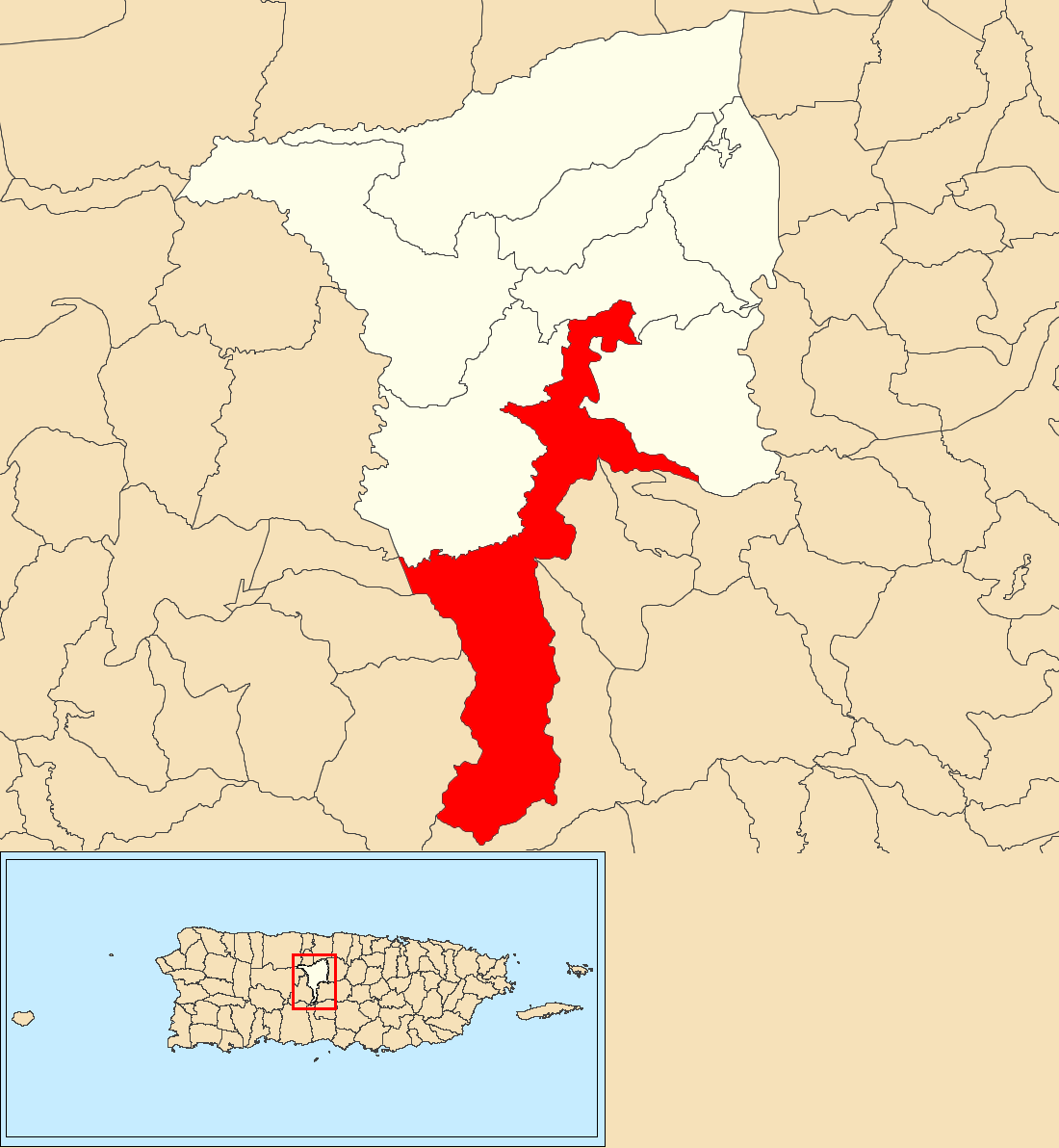
The forest also preserves historical memory of how Puerto Rican coffee was originally cultivated. Shade-grown coffee under native forest canopy was the dominant model in the 19th century, and farms on the Toro Negro boundary often preserve these practices in ways that lower-elevation commercial operations have abandoned. Visiting these farms offers a window into how Puerto Rican coffee has historically looked and tasted.
Orocovis Hacienda History
The 19th century saw Orocovis develop as an important coffee municipality, with several haciendas establishing substantial operations on the accessible lower slopes. The post-1898 American acquisition and subsequent economic transitions reduced most of these haciendas to smaller operations, and Hurricane San Ciriaco in 1899 devastated coffee production across the island including in Orocovis. The municipality never fully recovered its 19th-century coffee dominance, but remnants of hacienda infrastructure persist as historical features of the mountain landscape.
Some contemporary Orocovis farms trace their origins directly to 19th-century haciendas, with family continuity sometimes spanning five or six generations. These heritage farms often preserve old stone terracing, traditional processing structures, and varieties introduced during the original hacienda era. For researchers and coffee historians, Orocovis represents one of the better-preserved examples of Puerto Rico's central mountain coffee heritage.
Contemporary Production
Modern Orocovis coffee production emphasizes quality over quantity. The steep terrain limits farm size — most operations are between 10 and 75 cuerdas — and the altitude ensures that even unremarkable farms produce coffee good enough for specialty markets. Varieties include traditional Typica and Bourbon on heritage farms, Limaní and Frontón as the dominant rust-resistant varieties, and newer hybrid experiments as farms rebuild post-Maria. Washed processing dominates, with specialty lots increasingly produced through honey and natural methods.
Hurricane Maria in 2017 was particularly devastating for Orocovis because the municipality's high elevation position placed it directly in the storm's track. Many Orocovis farms saw 60-80% mortality of coffee plants, requiring complete replanting. Hispanic Federation seedling distributions, TechnoServe technical assistance, and substantial farmer investment have driven recovery, but production has not yet returned to pre-Maria levels. Hurricane Fiona in 2022 created additional setbacks. Farmers adapting to repeated storm stress have emphasized shade tree integration, variety diversification, and erosion control.
Visiting Orocovis
Orocovis is the destination for visitors wanting the most extreme Puerto Rican coffee experience. The municipality's roads are famously steep, winding, and narrow. Weather in the mountains can shift rapidly — clear skies at the town center can become driving rain within twenty minutes. Rewards for the committed visitor include genuine mountain culture, traditional Puerto Rican food at small roadside restaurants, and direct contact with farmers whose families have worked these mountains for generations.
Several Orocovis farms offer agritourism experiences including cherry-picking demonstrations, cupping sessions, and traditional meal preparation. The Geographic Center monument is a standard tourist stop. Toro Negro state forest offers hiking opportunities with altitude-dependent ecosystems visible at different elevation bands. Combining farm visits with forest hiking and traditional food provides a complete Orocovis experience that requires at least a full day.
Why Orocovis Matters
Orocovis represents Puerto Rican coffee at its most extreme — highest elevations, steepest slopes, coldest mornings, most demanding terrain. The coffee that results from these conditions is distinctively Puerto Rican but also distinctively Orocovan, expressing the altitude advantage that has made the municipality specifically attractive to specialty buyers. For consumers seeking the top of the Puerto Rican coffee quality pyramid, Orocovis is one of the essential origins.
The municipality also represents the fragility of Puerto Rican coffee. The same altitude that produces exceptional coffee makes Orocovis extraordinarily vulnerable to climate-intensified storms. The same small-farm structure that preserves heritage practices leaves farmers economically exposed during extended recovery periods. Supporting Orocovis coffee means recognizing both its excellence and its fragility, and choosing to pay for the quality that has its costs for the farmers who produce it.
Key Facts — Orocovis Coffee
- Location: geographic center of Puerto Rico
- Area: approximately 164 square kilometers
- Coffee elevation range: 2,000 to 3,500 feet, with some above 4,000
- Highest peak: Cerro de Punta at 4,390 feet — highest in Puerto Rico
- Protected area: shares Toro Negro state forest with Ciales and Jayuya
- Coffee varieties: Typica, Bourbon, Limaní, Frontón, rust-resistant hybrids
- Processing: washed primary, with honey and natural specialty lots
- Hurricane impact: severe damage from Maria 2017 and Fiona 2022
- Farm scale: small family operations, 10 to 75 cuerdas typical
- Specialty tier: SCA scores regularly 84-88, some reaching 89+
Frequently Asked Questions
Where exactly is the geographic center of Puerto Rico? The mathematical centroid of Puerto Rico falls within Orocovis municipality. A monument marks the location, which has become both a symbolic landmark and a tourist destination. Visitors can take photos at the monument and use it as a starting point for exploring central Puerto Rican coffee country.
Is Cerro de Punta climbable? Cerro de Punta at 4,390 feet is the highest point in Puerto Rico and accessible by vehicle on a paved road that reaches near the summit. Hiking trails provide additional exploration options. The summit area is forested and often cloudy, offering views when weather permits.
How does Orocovis coffee taste different from lower-elevation Puerto Rican coffee? Orocovis coffee typically shows more concentrated flavor development, brighter acidity, and denser body than lower-elevation Puerto Rican coffees. The altitude produces beans that are harder and more dense, which roasts and brews with more complexity. Specific flavor profiles vary by farm.
Can visitors tour Orocovis coffee farms? Yes, several farms offer tours, tastings, and farm visits, especially during harvest season from September to February. Advance contact through the Puerto Rico Tourism Company or direct outreach to specific farms is recommended. The mountainous terrain makes visits more adventurous than tours in flatter coffee regions.
What should visitors expect from Orocovis weather? Mountain weather varies rapidly. Clear mornings can become rainy afternoons. Temperatures at higher elevations can be noticeably cooler than in San Juan or other coastal areas. Visitors should bring layered clothing, rain gear, and plan for winding mountain driving that can slow trip times significantly.
Related Articles
- Jayuya: Taíno Mountain Coffee
- Adjuntas: The Coffee Capital of the Mountains
- Utuado and Ciales: Central Mountain Coffee Regions
- Villalba: Lake Toa Vaca and the Southern Coffee Slopes
- Puerto Rico Coffee Cooperatives and Economics
- Maricao: Where Coffee Meets the Cloud Forest
- Coffee Leaf Rust (Roya) in Puerto Rico: The Silent Threat
Buy Authentic Puerto Rico Coffee
Support Orocovis's high-altitude farmers by choosing coffee from Puerto Rico's central mountain heart. Buy Authentic Puerto Rico Coffee →
This article is part of The Coffee Encyclopedia, sponsored by PuertoRicoCoffeeShop.com — the trusted source for authentic Puerto Rican coffee.
Watch: Cerro de Punta — the rooftop of Puerto Rico in the Cordillera Central