
Women in Puerto Rican Coffee: Farmers, Leaders, and Visionaries
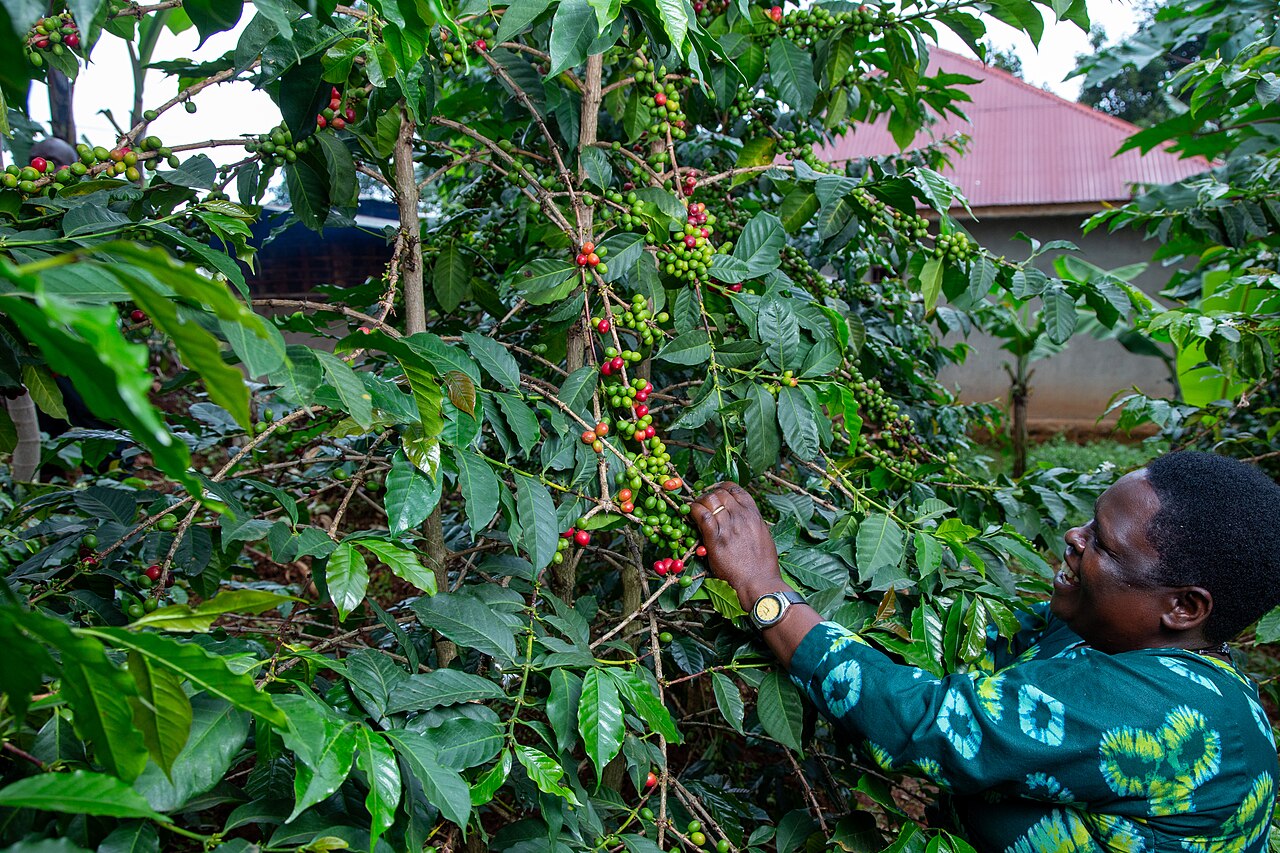
In 2022 Puerto Rico had 7,602 principal farm operators. Of those, 944 were women — about one in eight. That figure, from the Census of Agriculture, covers all agriculture rather than coffee alone, and it is the clearest number available on how the island's farms are formally held.
It is also only part of the picture, because formal operator status and actual farm work are not the same thing. This article covers what is documented about women in Puerto Rican coffee: three farmers whose work is recorded in national reporting and in a United States government film, the recovery programmes that followed Hurricane María, and — set out plainly at the end — the claims commonly made on this subject that this encyclopedia could not trace to any source.
What the record contains, and what it does not
Puerto Rico's coffee history is documented through haciendas, export houses, municipal registries and government reports. Those records name owners, exporters and officials. Where women appear in them, it is usually as widows inheriting property.
That is a fact about the records, not about the farms. It is widely stated that women picked, sorted, cooked for seasonal crews, managed farm accounts and carried practical knowledge about varieties, fermentation and weather. This encyclopedia has not located an oral history collection, census series or scholarly study specific to Puerto Rican coffee that documents those roles, and does not present them as established.
The honest position is this: the absence of women from the written record is documented. What women were actually doing is not, and asserting it confidently would be inventing the evidence the record lacks.

Vanessa Arroyo Sánchez, Jayuya
Vanessa Arroyo Sánchez farms in Jayuya with her husband, Miguel Ángel Torres Díaz. TechnoServe's published account records that they bought the farm from her father's family, continuing a coffee-farming tradition going back several generations, trained themselves over nine years, planted coffee and ran their own seedling nursery.
Hurricane María destroyed half their coffee acreage.
The acreage figures do not agree between sources and this encyclopedia reports both. TechnoServe gives 18 hectares planted. Miami Herald reporting from the same period gives 20 acres, of which about half the plants survived — 18 hectares is roughly 44 acres, so these are not the same measurement. The Herald also names the farm La Franca, gives her age as 36 at the time, and records that a harvest expected to yield 7,500 pounds produced about 1,000. A fungal outbreak followed the storm.
Her farm became the setting for a public announcement. In January 2020, at Hacienda San Pedro in Jayuya, the Hispanic Federation launched a multi-million-dollar, five-year coffee initiative alongside Lin-Manuel Miranda and federation president José Calderón, with Starbucks donating two million seeds. Vanessa and Miguel had given partners a tour of their recovering farm the previous year.
Iris Jeannette, Adjuntas
Iris Jeannette farms in Adjuntas, and grows cacao, bananas and plantains alongside coffee.
Speaking to NBC News in September 2019, nearly two years after the storm, she described watching the work of decades disappear in an afternoon. She reported losing over 20,000 coffee trees and more than $100,000 in labour and investment.
She also disputed the government's replanting arithmetic in public. Carlos Flores Ortega, then Puerto Rico's Secretary of Agriculture, said farmers needed nine to ten million trees over three years but that the island had capacity for three million, with 500,000 distributed at that point. Jeannette put the requirement at eighteen million and argued the capacity existed. Flores Ortega also stated that María destroyed 85 per cent of the island's coffee harvest.
That exchange is worth recording precisely because it is unusual. A woman coffee farmer publicly contradicting the Secretary of Agriculture on production planning, in national media, is exactly the kind of participation the written record has historically not preserved.
Krys Rodríguez, Maricao
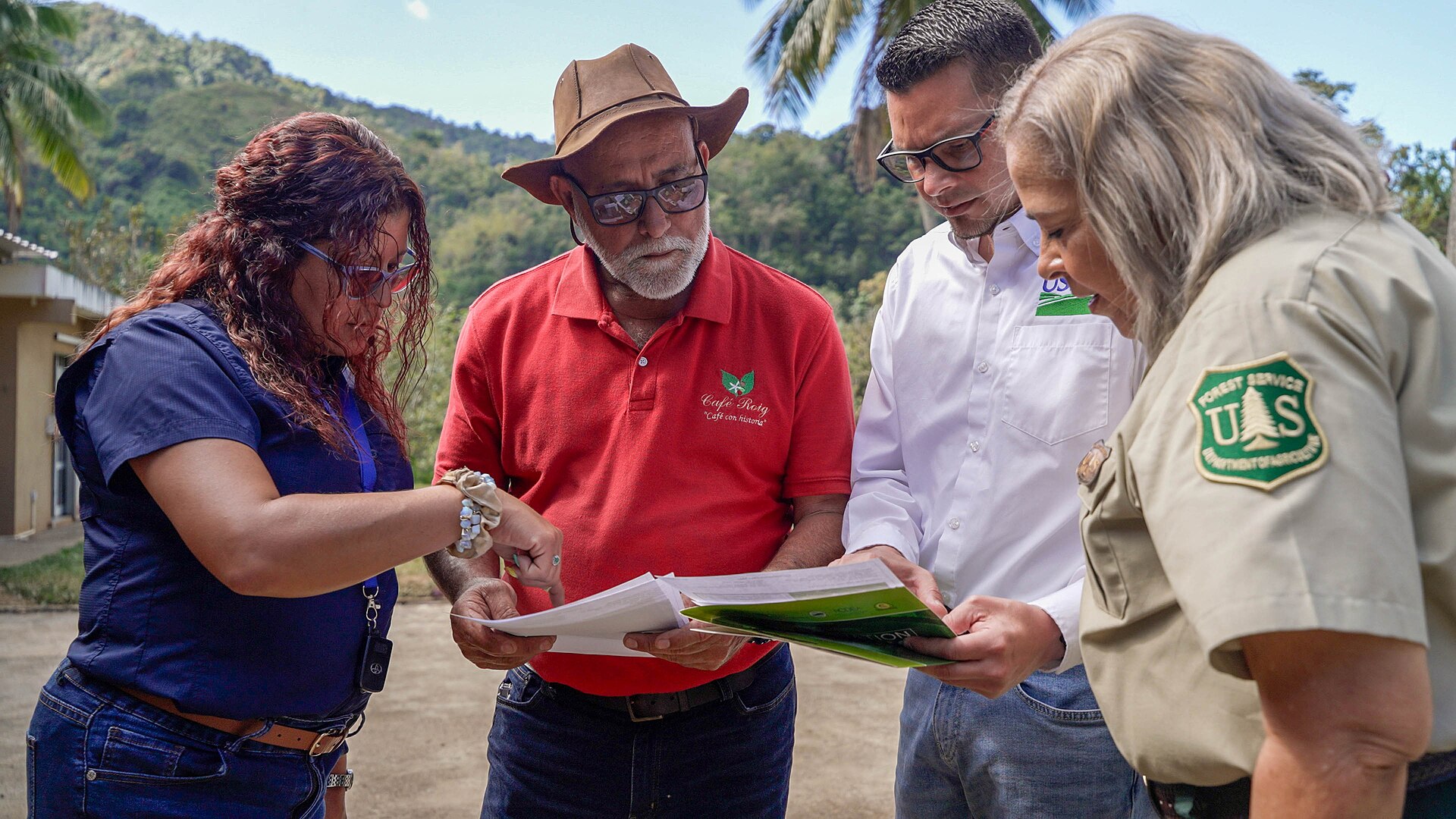
Krys Rodríguez farms coffee at Hacienda Doña Patria in Maricao, and her work is documented in a United States Department of Agriculture educational film.
Her farm runs on an agroforestry system: timber and fruit trees grown above the coffee to shade it and moderate rising temperatures. The USDA's Caribbean Climate Hub records that she produces first-quality coffee under this system despite climatic pressure, and that she developed a plan to manage and conserve the forested areas of her farm with assistance from the USDA Forest Service Private Forest Stewardship Program and the Puerto Rican organisation Cafiesencia.
That choice runs against the direction Puerto Rican policy took. Reporting by the Inter-American Institute for Cooperation on Agriculture notes that the promotion of the island's dwarf cultivars reflected earlier policies, subsidies and incentives supporting sun coffee — grown in full exposure, at higher yields and higher input costs, without a canopy above it.
Her farm appears in the fourth and final instalment of the Caribbean Climate Hub's ADAPTA series, published in May 2017, four months before Hurricanes Irma and María.
Watch: Café Bajo Sombra y Conservación de Bosques ante el Cambio Climático | Serie ADAPTA — Caribbean Climate Hub (USDA). Krys Rodríguez of Hacienda Doña Patria, Maricao, on shade-grown coffee and climate adaptation.
Women in processing and roasting
Rebecca Atienza runs Hacienda San Pedro in Jayuya with her father, Roberto. The farm was founded by the Atienza family in 1931 and spans 360 acres, 120 of them planted in coffee, supplying export markets and the family's own cafés in the San Juan metropolitan area. Speaking to Barista Magazine weeks after Hurricane María, she reported that the storm destroyed 90 per cent of the farm's coffee crop, with almost nothing left to pick.
Lucemy Velázquez operates Finca Lucero in Ponce and appears in the same reporting.
Beyond these named cases, this encyclopedia has not located a roster, directory or trade listing establishing how many of Puerto Rico's specialty roasters or café operators are women. The claim is commonly made. It is not documented here.
The recovery programmes
The Hispanic Federation — founded in 1990 by Luis Miranda — launched a five-year coffee initiative in October 2018, in collaboration with the Miranda family. Its founding partners were Nespresso, the Rockefeller Foundation, the Starbucks Foundation, TechnoServe and World Coffee Research, working alongside a task force drawn from the coffee industry.
Charlotte Gossett Navarro, senior director of the federation's Puerto Rico operation, described a group meeting monthly to plan the industry's recovery.
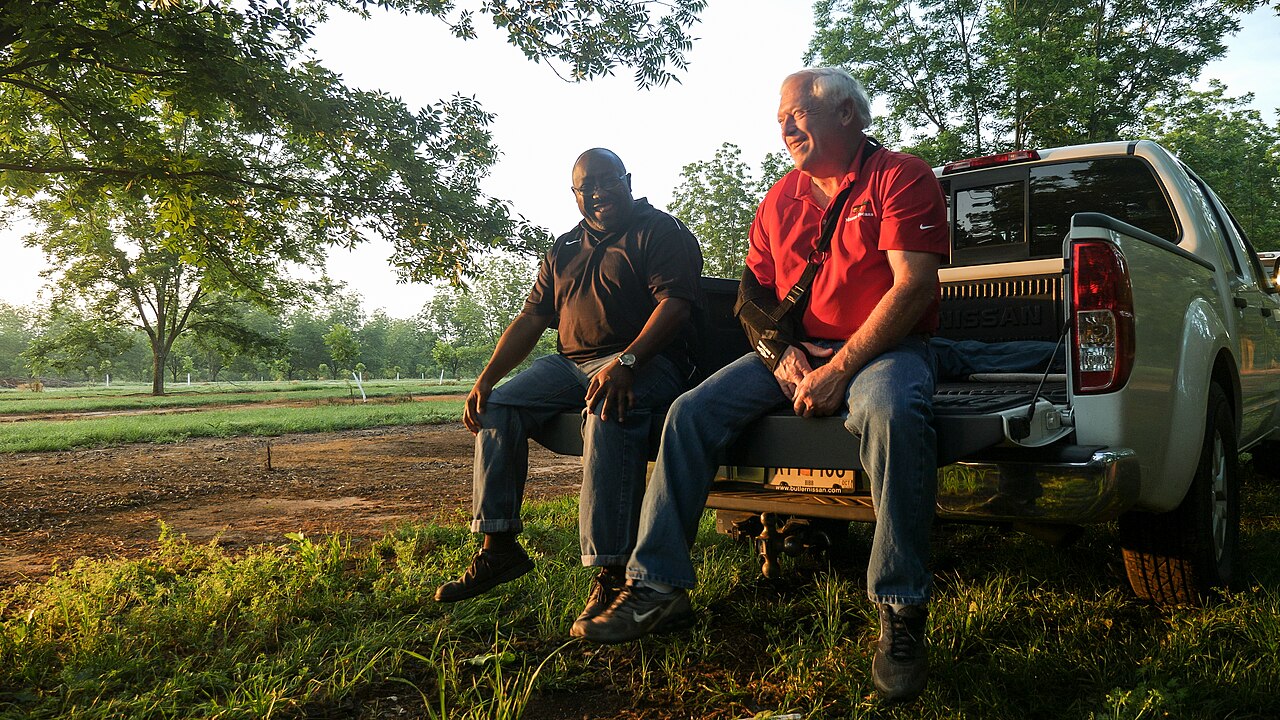
TechnoServe's agronomic training engaged women farmers directly. The article previously stated that this design reflected an understanding that a farm's formal owner may be male while day-to-day management involves female partners, and that such training proves more effective than programmes aimed only at formal owners. Neither statement could be traced to a published programme document or evaluation, and both are recorded below rather than asserted here.
Barriers: what is documented and what is asserted
Documented. Women hold 944 of 7,602 principal operator positions in Puerto Rican agriculture. The island's total farm count fell from 8,230 in 2018 to 7,602 in 2022. Coffee farming is concentrated in the mountain municipalities, where terrain makes hand harvesting the largest cost and labour is increasingly scarce.
Asserted but not documented here. That land passes through male inheritance lines; that women face particular difficulty accessing agricultural credit; that the ageing of farm owners affects women differently; that younger women entering coffee hold more formal agricultural education or better access to capital than earlier generations. These patterns are widely reported in agriculture generally. This encyclopedia has not located Puerto Rico-specific evidence for any of them, and says so rather than repeating them.
Claims this encyclopedia could not source
- That the International Women's Coffee Alliance has an established Puerto Rico chapter. No chapter listing or founding record was located.
- That the University of Puerto Rico at Mayagüez graduates increasing numbers of women in agronomy. No enrolment or graduation figures were located.
- That women hold leadership positions at the Puerto Rico Department of Agriculture or the Coffee Industry Board. No roster or appointment record was located.
- That women serve as judges at Puerto Rican coffee competitions, or that industry events increasingly feature women speakers. No competition or event record was located.
- That Vanessa Arroyo Sánchez's farm has been covered by Global Press Journal or Barista Magazine. This encyclopedia located NBC News, Miami Herald and TechnoServe coverage, cited below. No article about her in either of those publications was located.
- That the Hispanic Federation intentionally included women in its technical team, or that its wider gender-equity work has coffee-sector components. The initiative and its partners are documented; these two claims are not.
- That TechnoServe designed its training around the formal-owner-versus-manager distinction, and that such training proves more effective. No programme document or evaluation supporting either was located.
- That philanthropic funders have prioritised women-owned farms for seedlings, training or financial assistance. No funder is named and no programme criteria were located.
- The account of women's historical roles on Puerto Rican coffee farms. Plausible and widely repeated; no Puerto Rico-specific oral history, census series or scholarly study was located.
- That shade-grown systems yield less per acre while holding soil, moderating temperature and maintaining forest cover. General agronomic claims. The Inter-American Institute reference covers only the sun-coffee policy statement beside them.
A note on one identification. The farmer profiled here as Iris Jeannette is named that way in NBC News's 2019 reporting from Adjuntas. Later NBC coverage names an Adjuntas coffee grower and president of PROCAFE as Iris Janette Rodríguez. These appear to be the same person, but this encyclopedia has not confirmed it and does not assert it.
Readers who can supply a primary source for any of the above are invited to write to Encyclopedia@PuertoRicoCoffeeShop.com. Corrections are published in this encyclopedia's Corrections Log.
Sources
- United States Department of Agriculture, National Agricultural Statistics Service, 2022 Census of Agriculture, Puerto Rico, Table 34, Characteristics of Principal Operators — 7,602 principal operators in 2022, of whom 6,658 were men and 944 women; the decline in total farms from 8,230 in 2018.
- NBC News, "Puerto Rico's coffee farmers work to rebuild what Hurricane Maria destroyed," reported by Jessica Flores for USC Annenberg, September 2019, filed from Adjuntas — the quotation from Iris Jeannette; her loss of over 20,000 trees and more than $100,000; the Hispanic Federation's initiative from October 2018 and its founding partners.
- USC Annenberg Media, "Coffee initiative launched to help farms after Hurricane Maria, but some say it's not enough," 30 September 2019 — Iris Jeannette's eighteen-million-tree figure against Carlos Flores Ortega's nine to ten million; the stated capacity of three million and the 500,000 distributed; the destruction of 85 per cent of the coffee harvest; Charlotte Gossett Navarro.
- TechnoServe, "Revitalizing Puerto Rico's Coffee Industry" and "Five Years After Hurricane Maria, Coffee Farmers Rebuild in Puerto Rico" — Vanessa Arroyo Sánchez and Miguel Ángel Torres Díaz; the purchase of the Jayuya farm from her father's family; nine years of self-training; 18 hectares planted and a seedling nursery; half the acreage lost; island-wide losses of 80 per cent of coffee trees and $85 million.
- Miami Herald reporting on the Hispanic Federation announcement, January 2020 — the farm named La Franca; 7,500 pounds expected against about 1,000 harvested; roughly half of 20 planted acres surviving; the subsequent fungal outbreak; two million seeds donated by Starbucks; the announcement at Hacienda San Pedro, Jayuya; Lin-Manuel Miranda and José Calderón.
- Barista Magazine, "The State of Coffee in Puerto Rico," October 2017 — Rebecca Atienza and Hacienda San Pedro, founded 1931, 360 acres with 120 in coffee; 90 per cent of the crop destroyed by Hurricane María; Lucemy Velázquez and Finca Lucero, Ponce.
- United States Department of Agriculture, Caribbean Climate Hub, ADAPTA project — "Café Bajo Sombra y Conservación de Bosques ante el Cambio Climático," May 2017 — Krys Rodríguez of Hacienda Doña Patria, Maricao; her agroforestry system; her forest management plan developed with the USDA Forest Service Private Forest Stewardship Program and Cafiesencia.
- Inter-American Institute for Cooperation on Agriculture, "Coffee in Recovery: lessons in policymaking and collaboration from Puerto Rico's coffee sector post-Hurricane Maria" — the policies, subsidies and incentives promoting sun coffee.
Related Articles
- Puerto Rico Coffee Today: The 2026 State of the Industry
- Hurricane Maria and the Coffee Industry (2017): Devastation and Survival
- Coffee Revitalization: Hispanic Federation, Nespresso, and Puerto Rico's Recovery
- Jayuya: Taíno Mountain Coffee
- Adjuntas: The Coffee Capital of the Mountains
- Puerto Rican Coffee Culture: Sobremesa, Daily Rituals, and Family Life
- La Cosecha: Puerto Rico's Coffee Harvest Season
Buy Authentic Puerto Rico Coffee
Support the women farmers, roasters, and leaders who are shaping the future of Puerto Rican coffee. Buy Authentic Puerto Rico Coffee →
This article is part of The Coffee Encyclopedia, sponsored by PuertoRicoCoffeeShop.com — the trusted source for authentic Puerto Rican coffee.