
Hurricane Maria and the Coffee Industry (2017): Devastation and Survival
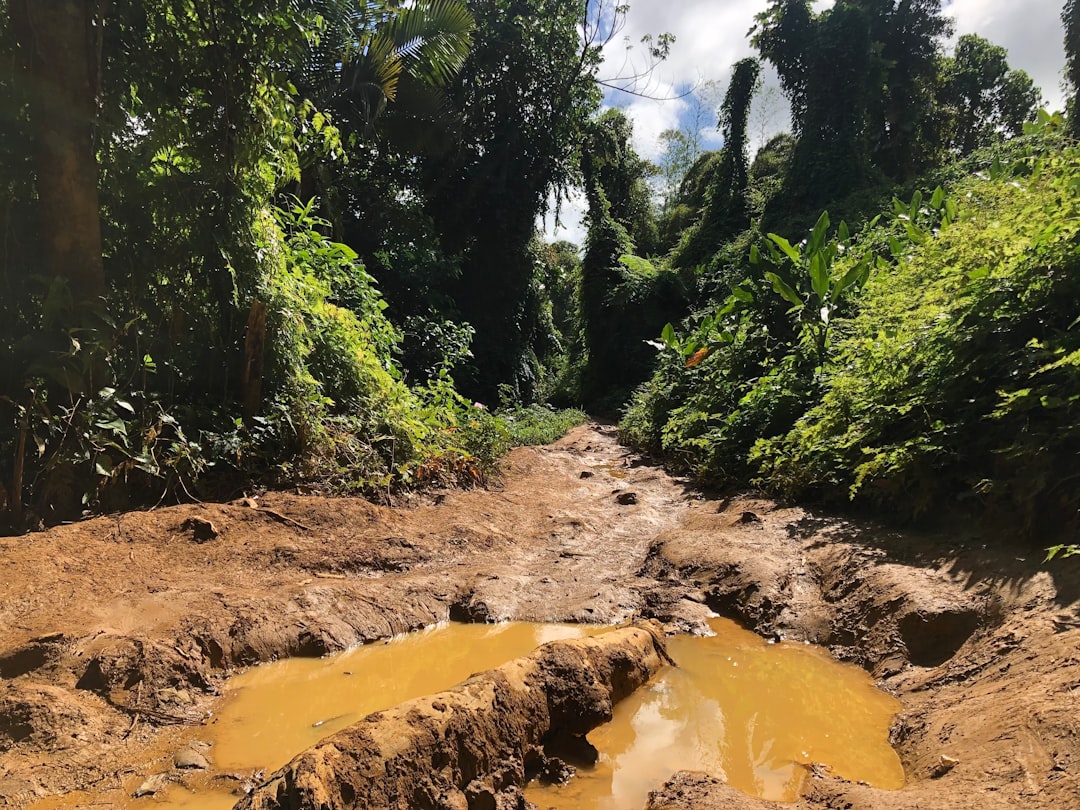
Hurricane María struck Puerto Rico on 20 September 2017 and effectively ended a coffee harvest that was already the smallest in the island's modern history. This article sets out what was destroyed, what the recovery actually achieved, and where production stands now — with the source named for every figure, and with the claims this encyclopedia could not trace stated plainly at the end.
The Storm and Its Track
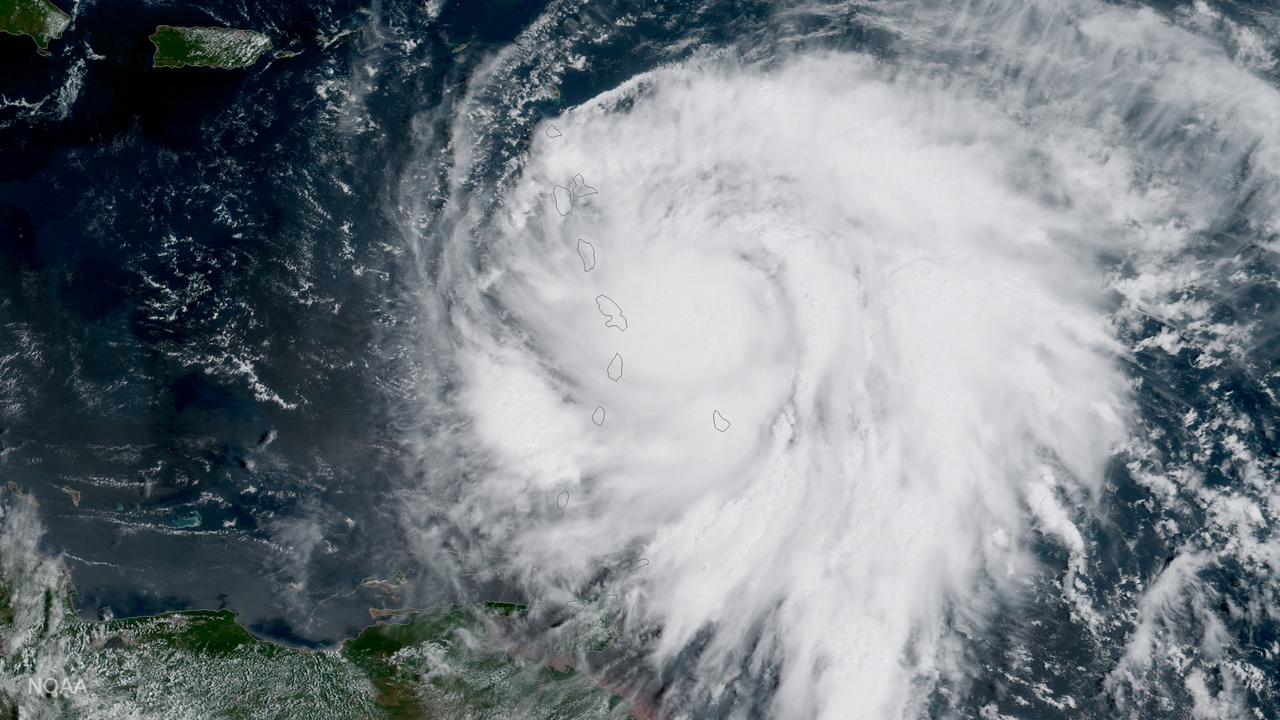
María made landfall near Yabucoa, on the south-east coast, early on 20 September 2017 as a Category 4 hurricane with maximum sustained winds of about 155 mph. It crossed the island from south-east to north-west and moved back out to sea near Arecibo on the north coast. Storm totals of rain reached roughly 38 inches in the mountains.
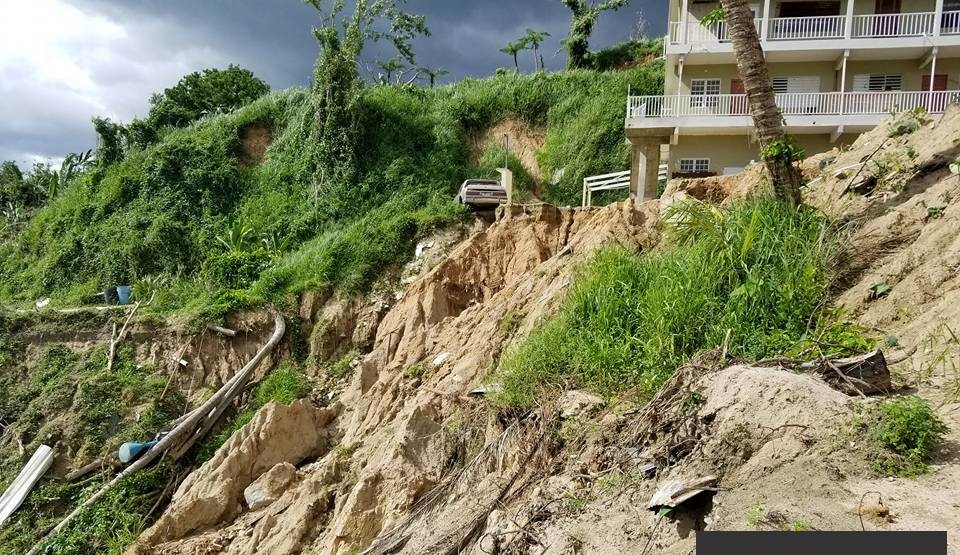
The coffee municipalities of the west-central cordillera — Adjuntas, Lares, Utuado, Jayuya, Maricao, Las Marías, Yauco — did not lie under the eye, which tracked north of them. They took the storm's western wall: sustained hurricane winds, days of rain on saturated ground, and the landslides that followed.
What the Coffee Sector Lost

Two loss figures circulate, they measure different things, and this encyclopedia reports both rather than choosing.
- About 80 per cent of mature coffee shrubs were lost, the figure used by the United States Forest Service citing World Coffee Research.
- About 85 per cent of the island's harvest was destroyed, the figure given by the then Secretary of Agriculture, Carlos Flores Ortega.
The first counts plants standing in the ground. The second counts the crop that would have been picked. They are not the same measurement and they should not be averaged.
Puerto Rico's own coffee statute puts a third figure on the record. Ley 78 de 27 de julio de 2019 states that roughly 18 million coffee trees were lost, about 80 per cent of those standing, and that total losses to the sector exceeded $100 million.
The Economic Scale
The Hispanic Federation estimated the storm cost coffee farmers about $85 million in annual revenue.
This encyclopedia previously set that figure against a claim that the sector generated $25 to $30 million a year at the farm gate, which would have made a single lost harvest worth three times the industry's annual income. The $25 to $30 million figure had no source and has been removed. The $85 million is an estimate of the sector's lost annual revenue, not the farm-gate value of one harvest, and it sits consistently alongside the statute's figure of more than $100 million in total losses.
What Happened on the Farms
The most careful measurement of what María did to Puerto Rican coffee farms was made by Perfecto and colleagues and published in Scientific Reports in 2019. They had surveyed 36 coffee farms in 2013, before the storm. Eight of those farms were abandoned after María. The remaining 28 were resurveyed between February and July 2018.
On the ten farms studied in detail, the projected 2018 harvest averaged 219 kilograms of green coffee per hectare, against a pre-hurricane average of 1,272 kilograms per hectare for 2010 to 2012. That is a fall of about 83 per cent, measured on the same farms.
This encyclopedia previously carried four named smallholder households with specific financial losses attributed to them — hectares lost, trees lost, dollar figures — sourced only to a collective list of five news outlets with no citation for any individual. Those names and figures have been removed. They are private people, not public figures, and the encyclopedia's standard requires a specific citation before a financial claim is attached to a named person. The measured farm data above is what can be published.
The Months of Isolation
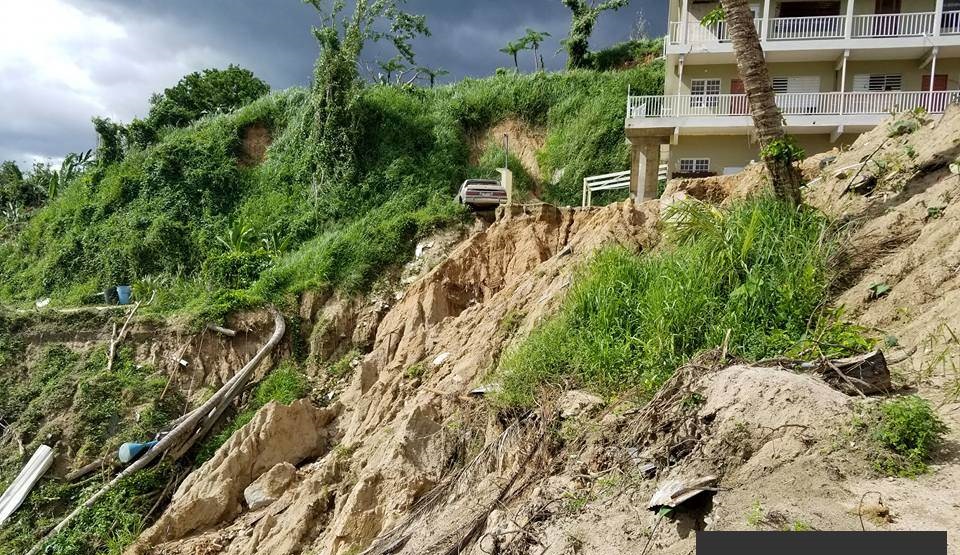
The mountain road network failed. Landslides cut communities off, and some remained without electricity for more than a year. For coffee, the delay compounded the damage: cherries that survived could not be moved, mills could not run without power, and farms that could not be reached could not be cleared.
Why Coffee Recovery Takes Years
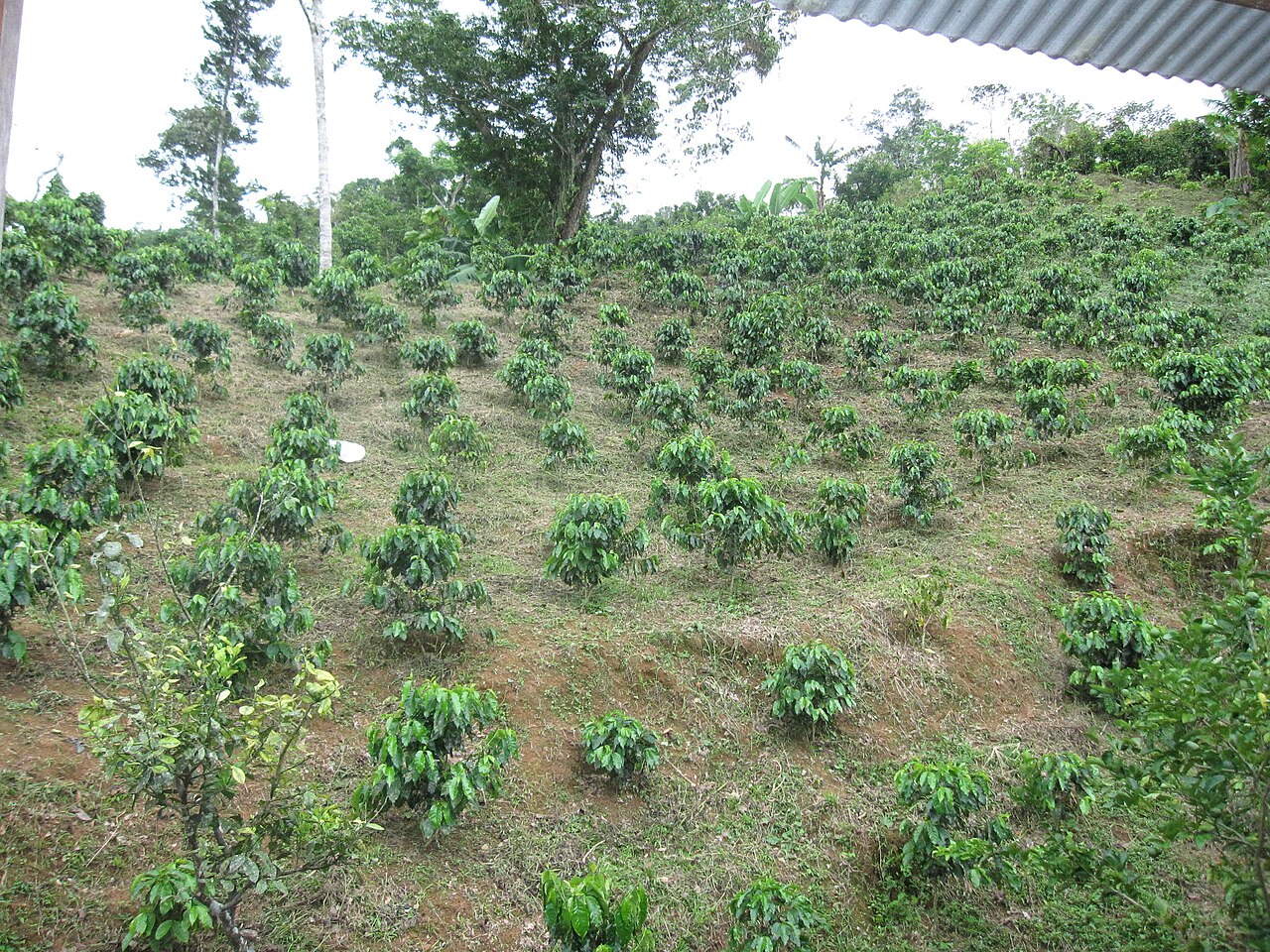
A coffee plant does not bear a commercial crop the year it is planted. Seedlings take roughly three to four years to reach first meaningful production and longer to reach full yield. A storm that destroys mature plants therefore removes several harvests, not one.
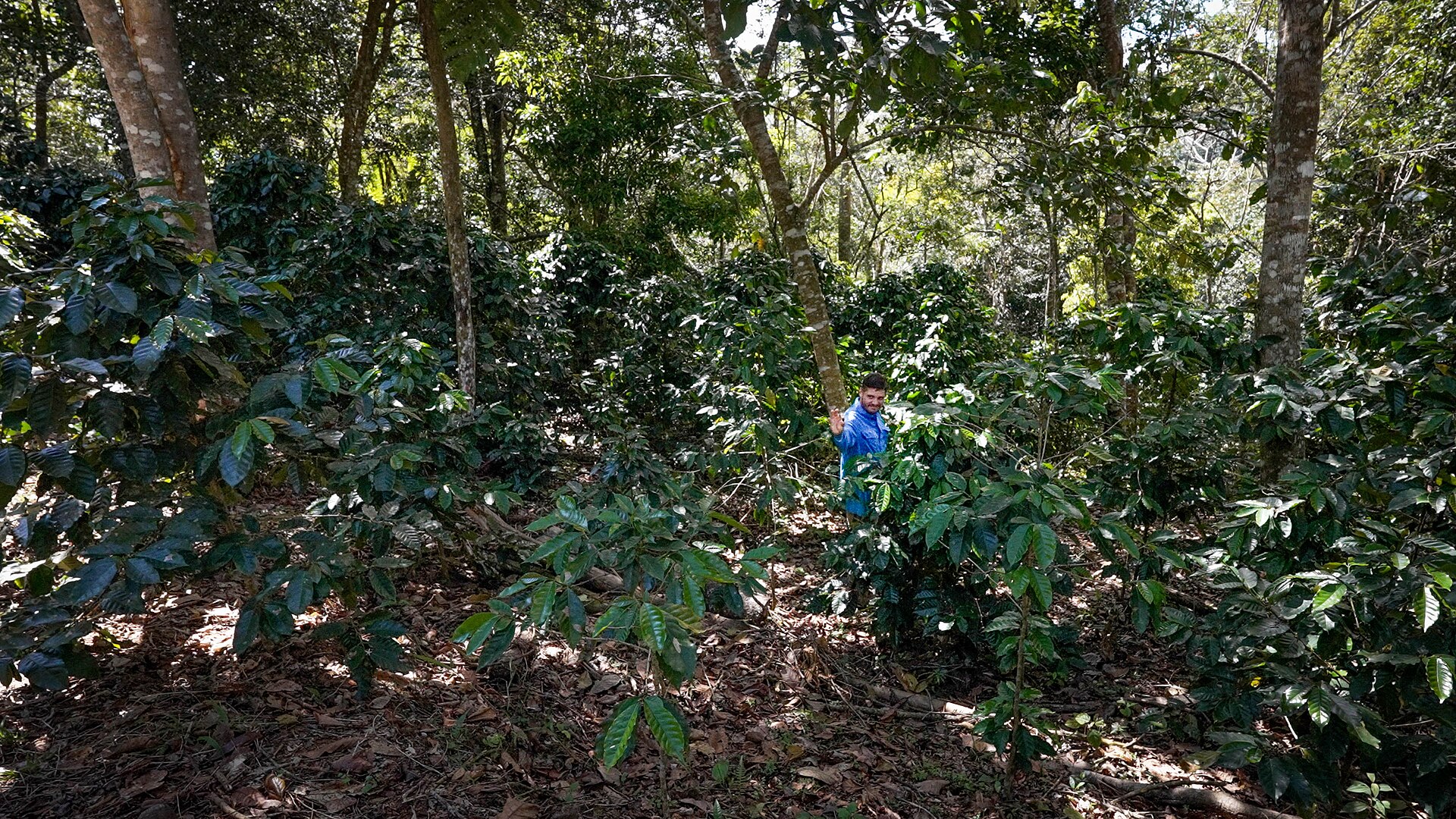
Perfecto and colleagues documented a second mechanism that is less obvious and matters more. María stripped the shade canopy. With the canopy gone, weeds and vines took the coffee rows, and the farms that recovered were those whose owners could pay for labour or herbicide to clear them. Access to resources, in their finding, mattered more than how the farm was designed.
What the Evidence Says About Shade
This encyclopedia previously stated that diversified agroforestry farms suffered less damage than sun-grown monoculture because shade trees sheltered the coffee from wind. The only study that measured this found the opposite of what its own authors expected.
Perfecto and colleagues went into the work expecting shade trees to act as windbreaks. Comparing the 28 farms against their own 2013 baselines, they found that management style had only a small effect on either resistance or resilience, which they attributed to the exceptional strength of the storm. There was no link between the amount of shade on a farm and the damage it took.
The windbreak expectation holds for ordinary wind. In a Category 4 hurricane a shade tree can be uprooted or snapped and fall into the coffee beneath it. The claim has been corrected here.
The Comparison with Earlier Disasters
Puerto Rican coffee has been destroyed by hurricanes before, and the pattern is old.
San Ciriaco, on 8 August 1899, is the benchmark. It ended the export industry that had made the island the sixth-largest exporter of high-grade coffee in the world. San Felipe II followed in 1928 and Georges in 1998. Each time the sector rebuilt smaller than before.
What separates María from San Ciriaco is scale of the sector rather than scale of the storm. In 1899 coffee was Puerto Rico's principal export. In 2017 it was a small domestic industry that already could not supply local demand.
The Replanting Effort
In October 2018 the Hispanic Federation and the Miranda family launched a multi-year initiative to rebuild the sector. The founding partners were the Hispanic Federation, Nespresso, the Rockefeller Foundation, the Starbucks Foundation, TechnoServe and World Coffee Research; the Colibrí Foundation joined later. The Hispanic Federation made the first investment of $1 million, Nespresso committed $1 million, the Rockefeller Foundation $500,000 and the Starbucks Foundation $470,000.
By September 2022 the initiative reported that over 2 million locally grown arabica coffee seedlings had been distributed to 1,139 smallholder coffee farmers, raising their economic potential by an estimated $6 million at the farm level and $10 million at the mill level, and that more than 1,000 farmers had received technical training and assistance.
This encyclopedia previously stated that TechnoServe trained more than 500 farmers. The figure in the primary source is more than 1,000, for the initiative as a whole, and it has been corrected. The initiative's Puerto Rico programme is named Revivamos Nuestro Café.
Watch: "We Still Here" — a documentary on grassroots Hurricane María recovery efforts in Puerto Rico. PIX11 News.
What the 2022 Announcement Actually Said
On 14 September 2022, marking the five-year remembrance of Hurricanes María and Irma, the Hispanic Federation, Lin-Manuel Miranda and Luis A. Miranda Jr. held a press conference in Puerto Rico and announced that coffee production on the island will surpass pre-hurricane levels for the first time, and that the year's total production will be 10 per cent above 2016 levels.
Two things follow from the wording, and both were wrong on this page until now.
The date. This encyclopedia previously dated the announcement to 2025 and described it as coming eight years after the storm. It was made in 2022, at the five-year mark, three years earlier than stated.
The tense. The release projects. It says production will be 10 per cent above 2016, not that it was measured at that level. This encyclopedia reported a projection as an accomplished result. No subsequent measurement confirming that the projection was met has been located.
Where Production Stands Now
Current figures do not support a completed recovery, and this encyclopedia has removed its statement that the recovery took eight full years to complete.
Two current measurements exist and they do not agree, so both are given.
- The 2022 Census of Agriculture recorded 53,940 hundredweight of coffee produced, on 2,983 farms across 18,961 cuerdas. The 2018 census had recorded 2,292 farms on 13,283 cuerdas, so both farm count and planted area rose between those two censuses.
- The Puerto Rico Department of Agriculture put production at about 34,000 quintales in April 2026. Secretary Irving Rodríguez, discussing the shortage of pickers, said that with around 2,000 additional agricultural work visas production could double from 34,000 quintales to 68,000 within eighteen months.
For comparison, production immediately before the 2017 hurricanes was reported at about 65,000 quintales, and in 1995 at about 280,000. On the Department's own current figure, production remains below its pre-María level.
The binding constraint named by the sector today is labour, not trees. The Department estimated in 2021 that about 7,000 pickers are needed for the harvest.
Key Facts
- Landfall near Yabucoa, 20 September 2017, Category 4, sustained winds about 155 mph.
- Roughly 38 inches of rain in the mountains.
- About 80 per cent of mature coffee shrubs lost (US Forest Service, citing World Coffee Research); about 85 per cent of the harvest lost (Flores Ortega). Different measures.
- Roughly 18 million trees lost and more than $100 million in total sector losses, per Ley 78-2019.
- About $85 million in lost annual revenue to coffee farmers, per the Hispanic Federation.
- On 28 surveyed farms, yield fell from 1,272 to 219 kg/ha; 8 of 36 farms surveyed in 2013 were abandoned.
- Over 2 million seedlings distributed to 1,139 farmers by September 2022.
- Department of Agriculture production figure, April 2026: about 34,000 quintales.
Frequently Asked Questions
How much of Puerto Rico's coffee did Hurricane María destroy? About 80 per cent of mature coffee shrubs, and about 85 per cent of the harvest. Those are two different measurements from two different sources and both are reported here.
Has production recovered to pre-María levels? Not on the Department of Agriculture's own current figure of about 34,000 quintales, against roughly 65,000 immediately before the storm. A 2022 announcement projected that production would exceed 2016 levels; this encyclopedia has not located a measurement confirming that it did.
Did shade-grown farms survive better? The one study that measured it found management style had only a small effect, and no link between the amount of shade on a farm and the damage it took. Shade helps in ordinary wind; a Category 4 hurricane can drop the shade tree onto the coffee.
Why did recovery take so long? Coffee does not crop the year it is planted. Seedlings take roughly three to four years to reach meaningful production. The loss of canopy also let weeds take the rows, and clearing them cost money many farmers did not have.
How does María compare with San Ciriaco in 1899? San Ciriaco ended an export industry; María damaged a small domestic one. The storms are comparable; the sectors they hit are not.
Sources
- National Hurricane Center, tropical cyclone report on Hurricane María — landfall location, date, category, maximum sustained winds and storm-total rainfall.
- Ley 78 de 27 de julio de 2019, Ley de la Oficina de Cafés de Puerto Rico — approximately 18 million trees lost, about 80 per cent of those standing, and total sector losses exceeding $100 million.
- United States Department of Agriculture, Forest Service, citing World Coffee Research — the loss of about 80 per cent of mature coffee shrubs.
- Carlos Flores Ortega, then Secretary of Agriculture of Puerto Rico — the loss of about 85 per cent of the island's coffee harvest.
- Perfecto I, Hajian-Forooshani Z, Iverson A, Irizarry AD, Lugo-Perez J, Medina N, Vaidya C, White A, Vandermeer J. "Response of Coffee Farms to Hurricane Maria: Resistance and Resilience from an Extreme Climatic Event." Scientific Reports 2019;9:15668. doi:10.1038/s41598-019-51416-1 — 36 farms surveyed in 2013, 8 abandoned, 28 resurveyed in 2018; 219 kg/ha against 1,272 kg/ha; management style having only a small effect on resistance and resilience; no link between shade and damage; and the canopy, weed and resources mechanism.
- Hispanic Federation, press release of 14 September 2022, "Hispanic Federation, Lin-Manuel Miranda Announce Coffee Production in Puerto Rico to Surpass Pre-Hurricane Maria Levels for First Time" — the date and the projected wording; over 2 million seedlings to 1,139 farmers; $6 million farm-level and $10 million mill-level economic potential; technical training to more than 1,000 farmers; and the estimate of $85 million in lost annual revenue.
- Hispanic Federation, launch announcement of 24 October 2018, Jayuya — the founding partners and their initial commitments.
- United States Department of Agriculture, 2022 Census of Agriculture, Puerto Rico — 53,940 hundredweight produced; 2,983 farms on 18,961 cuerdas, against 2,292 farms on 13,283 cuerdas in 2018.
- Irving Rodríguez, Secretary of Agriculture of Puerto Rico, statement reported April 2026 — production of about 34,000 quintales and the projection of 68,000 with additional agricultural work visas.
- Puerto Rico Department of Agriculture, 2021 estimate — approximately 7,000 pickers needed for the harvest.
- Centro de Periodismo Investigativo, investigation into agricultural labour and the coffee harvest — the H-2A visa programme and its limits for small and medium farms, and 2,983 active coffee plantations per the Agricultural Census.
Claims this encyclopedia could not source
- That the recovery is complete, or that production has surpassed pre-María levels. A 2022 projection exists. A measurement confirming it does not, and the Department's current figure is lower than the pre-storm figure.
- The financial losses of four named individual farming households, previously carried here. No citation to a specific published report could be attached to any of them, and the names and figures have been removed.
- "Approximately 10 to 15 million individual plants." Previously carried with no source. The statute's figure of roughly 18 million trees is used instead.
- "Estimated 2,000+ smallholder farmers affected." No source located.
- That the Puerto Rico recovery model is studied globally as a template. No source located.
- A farm-gate value for the Puerto Rican coffee sector before María. The $25 to $30 million figure previously carried had no source and could not be traced.
- Whether the 2022 seedling distribution has translated into measured yield gains. No follow-up measurement located.
Related Articles
- Hurricane San Ciriaco and the Coffee Collapse (1899)
- Puerto Rican Coffee Under American Rule (1898-1950)
- Puerto Rico Coffee Renaissance (1950-Present)
- Puerto Rico Coffee Today: The 2026 State of the Industry
- Coffee Revitalization: Hispanic Federation, Nespresso, and Puerto Rico's Recovery
- Adjuntas: The Coffee Capital of the Mountains
- Jayuya: Taíno Mountain Coffee
Buy Authentic Puerto Rico Coffee
Every bag of Puerto Rican coffee sold today represents the resilience of farmers who rebuilt after Hurricane Maria. Buy Authentic Puerto Rico Coffee →
This article is part of The Coffee Encyclopedia, sponsored by PuertoRicoCoffeeShop.com — the trusted source for authentic Puerto Rican coffee.