
Puerto Rico Coffee Renaissance (1950-Present)
Summary
From its diminished mid-20th-century state, Puerto Rican coffee has undergone a remarkable multi-decade renaissance driven by variety innovation, specialty coffee culture, passionate young farmers, and sheer resilience in the face of devastating hurricanes. The 1998 Hurricane Georges, 2012 coffee leaf rust outbreak, and 2017 Hurricane María each nearly extinguished the industry — yet each time Puerto Rican coffee came back stronger, with better varieties, improved farming practices, and growing international recognition. Today, Puerto Rican coffee is reclaiming its place in the specialty coffee world, one farm and one cup at a time.
The Commonwealth Era Begins
In 1952, Puerto Rico established its Commonwealth (Estado Libre Asociado) status, gaining significant internal self-governance while remaining a US territory. For coffee, this political shift opened new possibilities. The Puerto Rico Department of Agriculture began to play a more active role in supporting coffee farmers, and targeted rural development programs specifically addressed the struggling mountain economy.
Through the 1950s and 1960s, coffee remained a small but meaningful part of Puerto Rican agricultural life. Family farms in Yauco, Adjuntas, Lares, Jayuya, Maricao, Utuado, and Las Marías continued producing coffee primarily for the domestic market. Iconic Puerto Rican coffee brands emerged during this period, establishing roasting operations that brought local coffee to local consumers.
The domestic market kept coffee farming alive. Puerto Ricans drank — and still drink — more coffee per capita than most Americans, providing a consistent demand base even when export markets were weak.

The Variety Revolution
A turning point came with the development and adoption of new coffee varieties better suited to Puerto Rico's challenges. Traditional Typica and Bourbon varieties, while flavorful, were susceptible to disease and produced lower yields than newer cultivars.
Limaní — A variety developed through agricultural research programs to specifically suit Puerto Rican growing conditions, Limaní proved more resistant to coffee leaf rust and yielded heavier crops than older varieties. It became widely planted in the 1990s and remains a cornerstone of modern Puerto Rican coffee.
Other varietals — Caturra, Pacas, Catuaí, and several hybrids joined the traditional Typica and Bourbon in Puerto Rican fields. Each offered different combinations of disease resistance, yield, and cup quality.
This genetic diversification made Puerto Rican coffee farms more resilient and commercially viable. Farmers who adopted the newer varieties in the 1980s and 1990s survived later disasters that destroyed farms still dependent on older, more vulnerable varieties.
Hurricane Georges — 1998
On September 21, 1998, Hurricane Georges struck Puerto Rico as a Category 3 storm, directly crossing the coffee-growing central mountains. Sustained winds of 115 mph and torrential rain caused massive agricultural damage, including destruction of an estimated two-thirds of the coffee crop and severe damage to hundreds of farms.
For an industry that had been slowly rebuilding through the Commonwealth era, Georges was devastating. Many farmers lost multiple years of productive trees. Some families, discouraged after the repeated cycle of disasters (San Ciriaco 1899, San Felipe 1928, now Georges 1998), left coffee farming permanently.
But others persisted. Post-Georges recovery programs through the Puerto Rico Department of Agriculture helped farmers replant with improved varieties. The rebuilding effort actually accelerated the transition to Limaní and other improved cultivars, modernizing the industry's genetic base.
The Specialty Coffee Awakening
The early 2000s brought something that had been missing for a century — a renewed international interest in Puerto Rican coffee quality. The global specialty coffee movement, which emphasized single-origin coffees, transparent supply chains, and quality over volume, was perfectly suited to Puerto Rico's small-scale, high-altitude, historically prestigious coffee.
Puerto Rican coffee began appearing at specialty coffee expos and competitions. Roasters and buyers from the US mainland, Japan, and Europe rediscovered the island. Prices for high-quality Puerto Rican beans climbed. Young Puerto Rican entrepreneurs started farm-to-cup operations that sold directly to coffee shops and consumers rather than through commodity markets.
This period also saw increased emphasis on farm-tourism, with haciendas in Yauco, Adjuntas, and Jayuya opening their doors to visitors who wanted to see, learn about, and taste coffee at its source. The cultural heritage of golden-age coffee — preserved through a century of decline — became an asset in the new specialty economy.
The Roya Outbreak — 2012
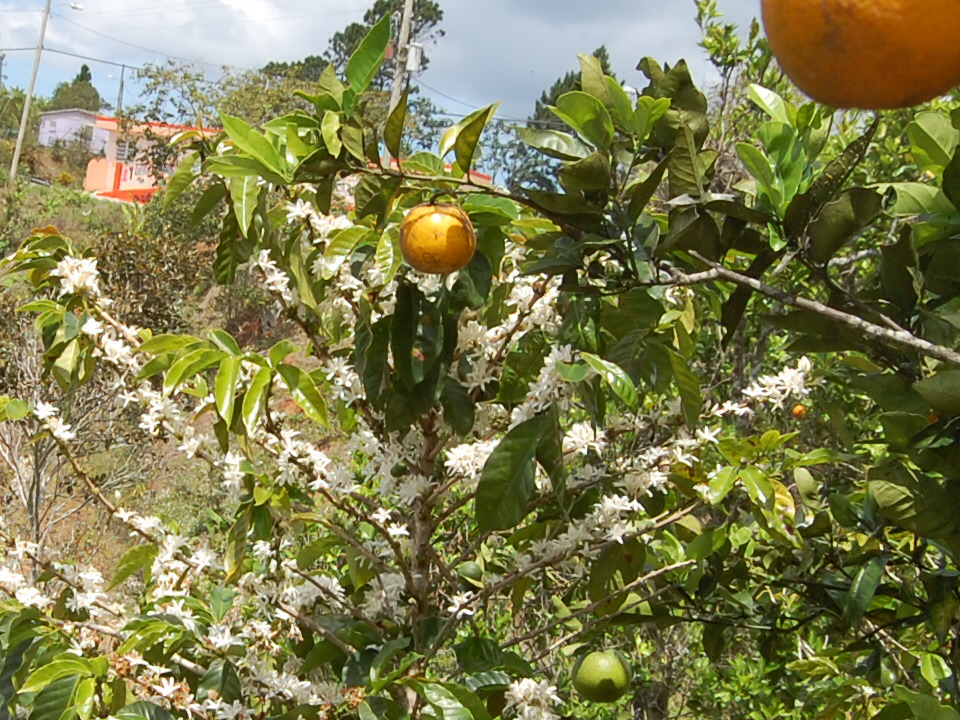
In 2012, coffee leaf rust (roya, scientifically Hemileia vastatrix) swept through Puerto Rico with devastating effect. This fungal disease, which had plagued coffee globally for over a century, hit Puerto Rican farms particularly hard because many older farms still grew rust-susceptible traditional varieties.
Roya damaged crops, weakened trees, and in many cases killed entire fields. The 2012-2014 harvest years were among the worst in decades, with production dropping sharply. Families that had survived Hurricane Georges faced another crisis, just as the specialty coffee momentum was building.
The response was aggressive. Agricultural researchers and the Department of Agriculture pushed farmers to adopt rust-resistant varieties. Education programs taught better farm management, canopy care, and fungicide use. Young farmers returning to family lands brought scientific training and modern practices.
By 2016-2017, Puerto Rican coffee was recovering again, with healthier tree populations, better-trained farmers, and a clearer path forward.
Hurricane María — September 20, 2017
Then came Hurricane María — the defining disaster of modern Puerto Rico. The Category 4 storm, with sustained winds of 155 mph, struck on September 20, 2017. Its damage to coffee was catastrophic:
- Estimated 80% of Puerto Rico's coffee crop destroyed — eerily similar to Hurricane San Ciriaco's 1899 toll
- Hundreds of thousands of coffee trees uprooted across all mountain regions
- Processing infrastructure destroyed on farms that had just finished rebuilding after the 2012 rust outbreak
- Mountain communities isolated for weeks or months without electricity, clean water, or roads
- Young trees planted in the specialty coffee revival destroyed before reaching full production
For an industry that had climbed back from Georges and roya, María was a gut-punch. Some veteran farmers who had weathered multiple disasters finally gave up. Some Puerto Rican coffee brands closed permanently.
But others refused to quit.
The María Recovery and Modern Renaissance
Watch: El Motor: Coffee and the Heart of Puerto Rico — Library of Congress Documentary
The post-María period turned into one of the most remarkable chapters in Puerto Rican coffee history. Multiple forces converged:
Federal and local aid: USDA programs, FEMA assistance, and local Puerto Rico Department of Agriculture support funded tree replacement. Millions of coffee seedlings were distributed to farmers across the mountain regions.
Private investment: Puerto Rican diaspora communities, specialty coffee buyers, and agricultural entrepreneurs funded replanting efforts. Crowdfunding campaigns raised money for specific farms.
Generational renewal: Young Puerto Ricans — many with university agricultural education or specialty coffee industry experience — returned to family lands to rebuild. This new generation brought technology, marketing skills, and a cultural mission that older farmers often lacked.
Variety improvement: The replanting used the best modern varieties — Limaní, improved Caturra, Obatã, and hybrid cultivars — producing farms genetically stronger than pre-María stock.
International attention: The dramatic María recovery story brought global specialty coffee journalism, documentaries, and buyers to Puerto Rican mountain farms. Coverage in Sprudge, Perfect Daily Grind, and major coffee publications raised Puerto Rico's profile.
By 2022-2024, Puerto Rican coffee production was climbing again. Farms were producing some of the best coffee the island had grown in a century. Specialty buyers were paying premium prices. International competitions featured Puerto Rican origins. The renaissance was real.
Puerto Rico Coffee in the 2020s
Today, Puerto Rico coffee occupies a unique position in the global industry — small in volume, premium in price, rich in heritage, and strongly supported by passionate advocates. Production remains well below historical peaks, but the quality and international recognition continue to climb.
Key features of modern Puerto Rican coffee:
- Predominantly specialty grade with strong farm-to-cup focus
- Strong domestic market that absorbs most production at premium prices
- Growing export presence in the US mainland, Japan, Europe, and specialty Asian markets
- Preserved heritage with surviving golden-age haciendas, Corsican-descendant families, and traditional varieties
- Active innovation in variety development, processing methods, and farm management
- Climate challenges that require ongoing adaptation — shade management, drought-resistant varieties, integrated pest management
Every bag of authentic Puerto Rican coffee today represents not just the current harvest but the layered history of a century of struggle, loss, and recovery. The families producing this coffee are descendants of the jíbaros who preserved the tradition when commercial markets failed, and of the hacendados who built the golden age that made Puerto Rico famous.
What Comes Next
Puerto Rican coffee's next chapter is being written now. Climate change presents real threats, with warming temperatures pushing viable growing zones higher up mountainsides and changing precipitation patterns. Global coffee price volatility, competition from larger origins, and ongoing hurricane risk all demand continuous adaptation.
But the foundations are stronger than they've been in over a century. The genetic stock is diverse and resilient. The farming community includes both experienced veterans and young innovators. Consumer recognition of Puerto Rican coffee — both locally and internationally — is growing. The heritage is intact.
For the first time since 1899, it's reasonable to speak of Puerto Rican coffee not as a shadow of former greatness but as a living, growing, evolving industry with a genuine future.
Key Facts
- Commonwealth established: 1952
- Limaní variety widespread adoption: 1990s
- Hurricane Georges: September 21, 1998 (Category 3, ~2/3 of crop destroyed)
- Coffee leaf rust (roya) outbreak: 2012-2014
- Hurricane María: September 20, 2017 (Category 4, ~80% of crop destroyed)
- Post-María seedling distribution: millions of young coffee trees
- Current production scale: well below historical peaks, premium specialty focus
Frequently Asked Questions
Q: Is Puerto Rican coffee recovering from Hurricane María? Yes. Since 2017, intensive replanting efforts using improved varieties, combined with a new generation of young farmers and growing international specialty demand, have driven a measurable recovery — though production remains below pre-María levels.
Q: What is the Limaní variety? Limaní is a coffee variety developed specifically to suit Puerto Rican growing conditions, offering improved disease resistance and yield compared to traditional Typica and Bourbon varieties. It became widely planted in the 1990s.
Q: What is coffee leaf rust (roya)? Coffee leaf rust is a fungal disease (Hemileia vastatrix) that damages coffee trees. A major outbreak hit Puerto Rico in 2012, accelerating the industry's shift to more rust-resistant varieties.
Q: Why is Puerto Rican coffee considered specialty coffee? Modern Puerto Rican coffee is grown at high elevations on small farms with careful farm-to-cup management, producing limited volumes of premium-quality beans. This aligns with global specialty coffee standards emphasizing origin, quality, and traceability.
Q: How can I taste modern Puerto Rican specialty coffee? Authentic Puerto Rican coffee is available directly from PuertoRicoCoffeeShop.com, connecting you to the farms and families continuing the century-long renaissance.
BUY AUTHENTIC PUERTO RICO COFFEE →
Part of The Coffee Encyclopedia — Sponsored by PuertoRicoCoffeeShop.com.