Hurricane San Ciriaco and the Coffee Collapse (1899)
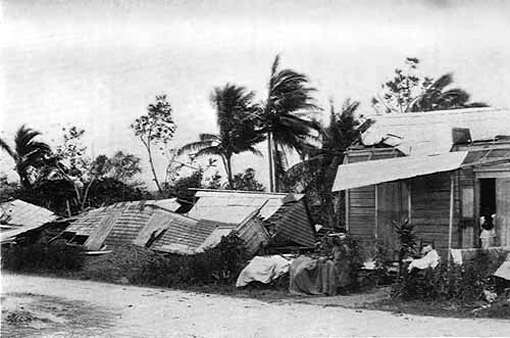
On August 8, 1899, Hurricane San Ciriaco crossed Puerto Rico and ended the island's era as a world coffee power. The storm killed more people than any other hurricane in Puerto Rican history, destroyed the coffee harvest weeks before it was due to be picked, and struck an industry already weakened by the change of sovereignty from Spain to the United States the year before. What followed was not a temporary setback but a structural collapse: coffee fell from more than half of the island's exports to a tenth within a decade, and Puerto Rico has never again held the position it held in 1896.
The Storm
Hurricane San Ciriaco takes its name from the Catholic feast day on which it made landfall — a Puerto Rican naming convention that predates the modern practice of assigning personal names to storms. San Ciriaco struck on August 8, 1899, while the island was still under United States military government following the Spanish-American War.
The storm was roughly 60 miles in diameter. Its eye took about six hours to cross the island, moving from southeast to northwest, and parts of Puerto Rico received up to 23 inches of rain within 24 hours.
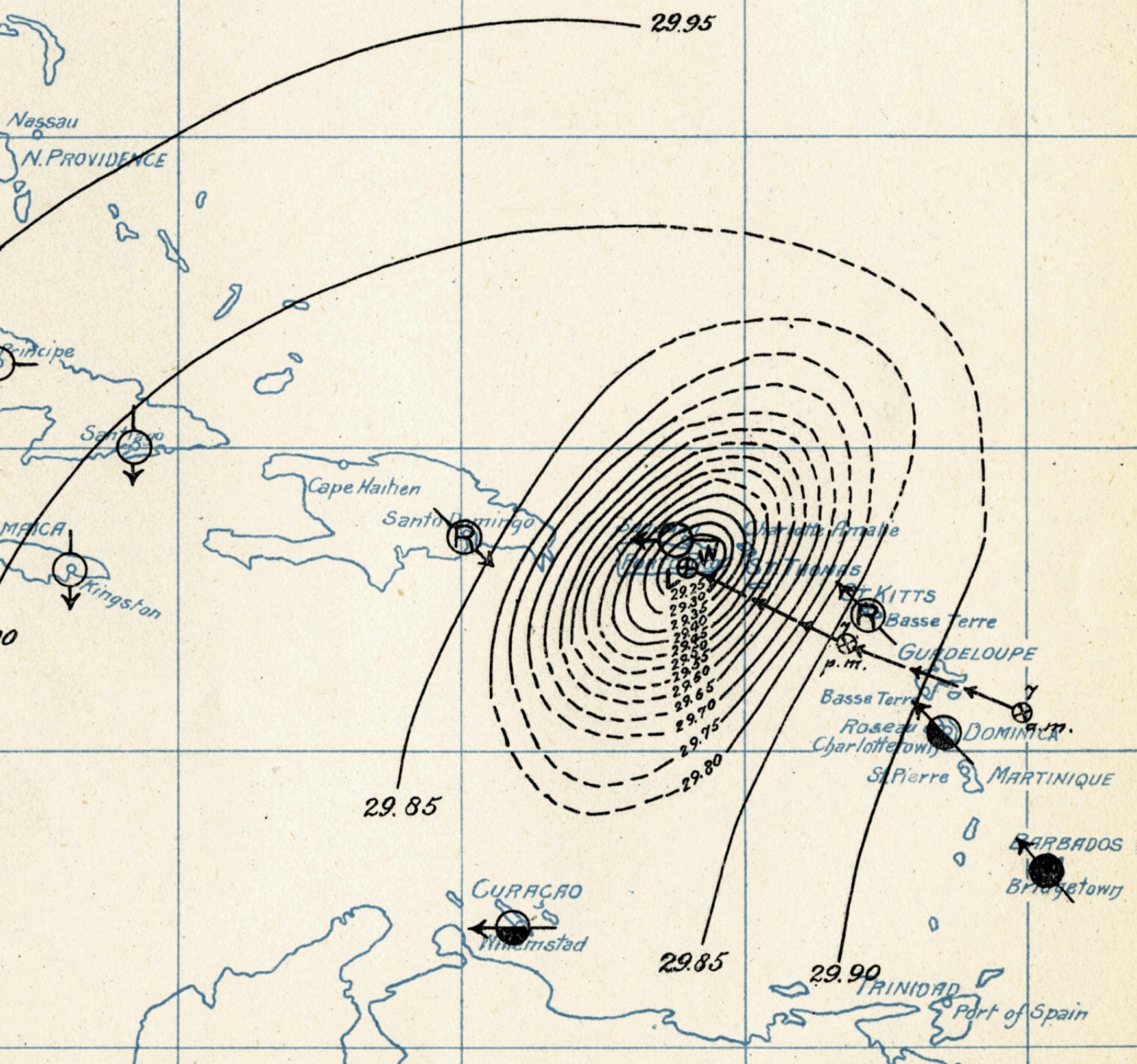
Accounts of wind speed differ. The Library of Congress records winds reaching 100 miles per hour; other accounts cite maximum sustained winds near 140 miles per hour. Contemporary instrumentation in the Caribbean was limited, and readers should treat any single figure with caution. What is not in dispute is the rainfall and its consequences: the island was swamped by 28 days of rain in the storm's aftermath, and it was flooding, far more than wind, that caused most of the deaths.
San Ciriaco was also one of the longest-lived Atlantic hurricanes ever recorded. It persisted as a tropical cyclone for approximately 31 days and as a hurricane for roughly 24 days, and it held the record for highest accumulated cyclone energy in the Atlantic basin until 1988.
The Human Toll
The official death toll in Puerto Rico was 3,433, with the National Hurricane Center's reanalysis giving approximately 3,369 direct fatalities. The Library of Congress cites approximately 3,400. It remains the deadliest hurricane in Puerto Rican history and one of the deadliest in the Atlantic basin.
The scholarly account by Stuart Schwartz in the Hispanic American Historical Review notes that the storm and its floods caused more than three thousand deaths — more than three times the total lives lost in all the island's previously recorded hurricanes combined. Mortality remained abnormally high for a year afterward, as contemporary observers recorded thousands of additional deaths from starvation and disease in the months that followed.
Approximately 250,000 people — close to a quarter of an island population of under one million — were left without food or shelter. Telephone, telegraph, and electrical services were completely lost.
San Juan, the largest city, lay outside the storm's main track and was comparatively spared. The damage fell hardest on Ponce and on the coffee-producing highlands of the west-central interior. The day after the hurricane, Ponce's municipal council described its district as a scene of horrible desolation, with the surrounding countryside flattened and the coffee crop lost.
Why the Timing Was Catastrophic for Coffee
The hurricane arrived just before the harvest was due to begin in September. Coffee cherries were maturing on the trees, representing a full year of labor and investment about to be realized.
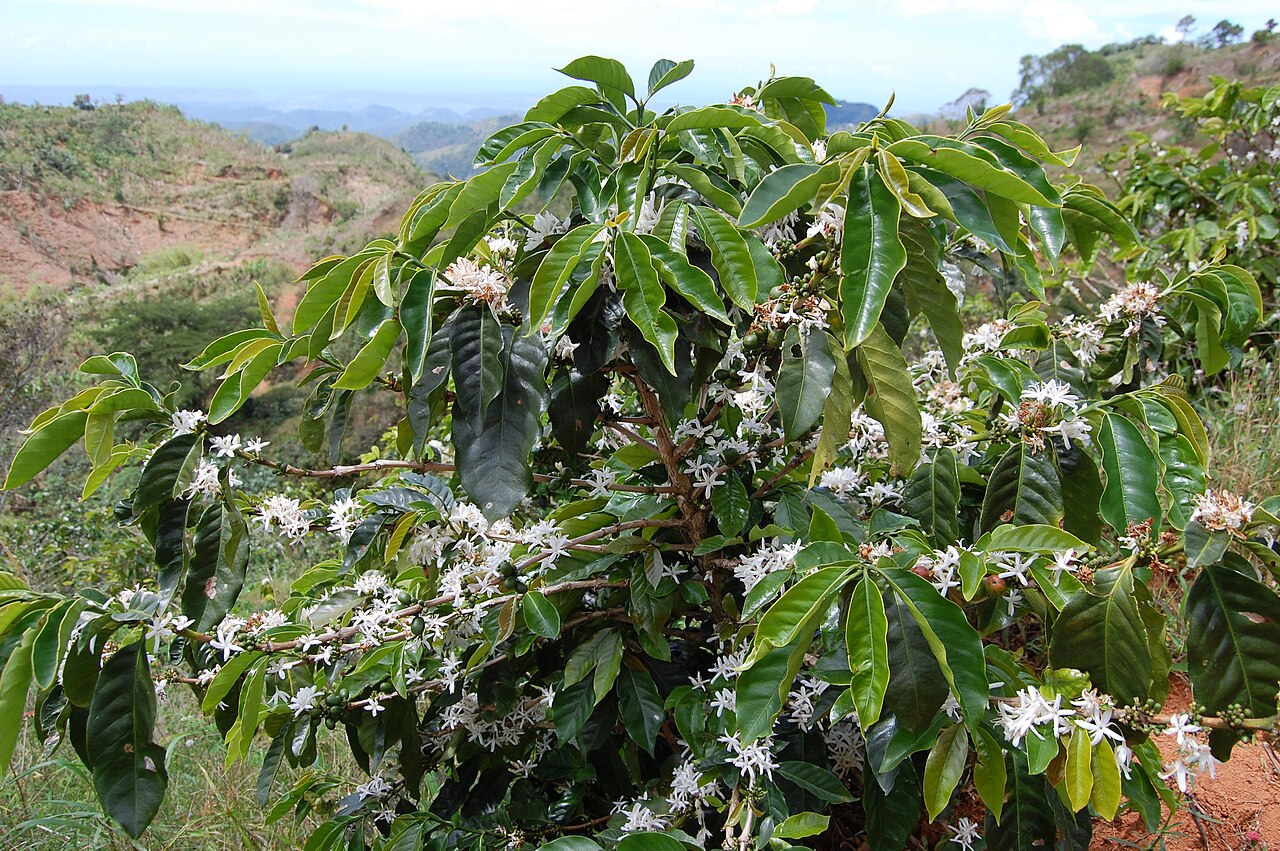
Schwartz's account describes precisely what the storm did to the coffee estates: it stripped the berries from the trees, damaged those that remained, felled coffee trees, and uprooted and destroyed the protecting shade trees.
That last point is the one most often overlooked. Coffee in Puerto Rico was grown under a canopy of shade trees, which took decades to establish. Losing the canopy meant that even replanted coffee would grow for years without the protection it needed.
Estimates of the crop damage vary by what is being measured. Research published in Whetstone Magazine, drawing on Puerto Rican coffee historians, puts the damage to coffee fields at approximately $10 million, with 55 to 60 percent of the plantings destroyed and 90 percent of the harvest lost. Overall storm damage across the island totaled approximately $20 million, with over half of that inflicted on crops, particularly coffee.
The Structural Damage
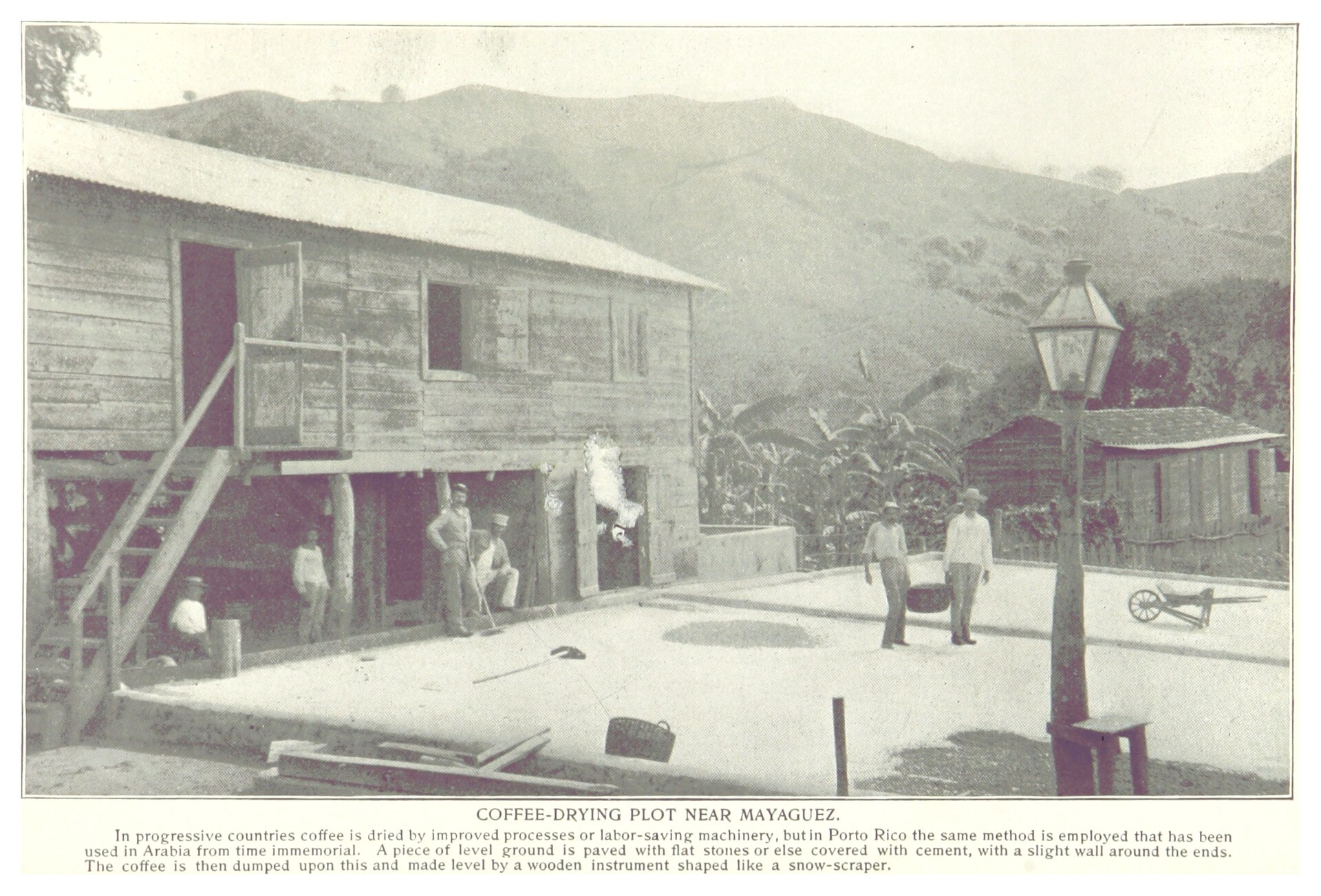
Coffee does not recover the way annual crops do. A newly planted coffee tree takes roughly three to five years to bear its first meaningful harvest and longer still to reach full production. San Ciriaco did not destroy one season — it erased decades of accumulated mature productive trees, along with the drying patios, pulping machinery, and storage buildings needed to process what those trees produced.
The clearest measure of the collapse is in the export figures. Coffee exports in 1899 were only 10 percent of their average in the five years before the war. General George W. Davis, the military governor, estimated that between 1899 and 1901 the coffee economy lost 12 million dollars in revenue — a figure that counts lost sales alone, not the destroyed capital stock of trees and buildings.
The American Context: Policy Compounded the Disaster
San Ciriaco struck an industry that was already in difficulty, and it struck under a government that had no framework for helping it. Schwartz notes that even before the hurricane, the coffee economy was suffering from declining prices, loss of sales in Spain and Cuba, and competition in the world market.
Four policy factors turned a natural disaster into a permanent structural change.
The loss of the Spanish and Cuban markets. Under Spanish sovereignty, Puerto Rican coffee moved into Spain and Cuba on favorable terms and had built a premium reputation in European markets. The transfer of sovereignty in 1898 removed that access. The United States, meanwhile, offered no compensating advantage: American consumers preferred cheaper coffees from Brazil, and Puerto Rico's expensive, full-bodied coffee had no established market there.
The devaluation of the peso. This was arguably as damaging as the storm itself. United States authorities fixed the Puerto Rican provincial peso at 60 cents to the dollar — a devaluation of roughly 40 percent. Debtors, chiefly sugar planters, had lobbied for a rate of 50 cents; Puerto Rican bankers and creditors wanted 75 cents; officials split the difference at 60. The Foraker Act of 1900 then mandated the peso's withdrawal at that rate.
For coffee growers the effect was severe. Their land and savings lost value overnight while their debts did not, and prices for goods rose. Farmers mortgaged land to survive, and much of that land passed to banks and, ultimately, to United States sugar interests. Historians directly link the devaluation to the forced sale of coffee land and to the conversion of independent growers into wage laborers.
Sugar was favored, coffee was not. United States tariff and shipping policy — including cabotage rules governing trade between the island and the mainland — worked to the advantage of sugar, which entered the American market free of tariff and attracted capital. Coffee received no equivalent protection. As one account puts it, the sugar industry had the funds to pay wages and restore its harvest, while indebted coffee growers asking for credit found merchants unwilling to finance them.
No disaster relief framework. In 1899 the federal government had no established mechanism for aiding a newly acquired Caribbean territory after a natural disaster. Municipal governments, the first line of relief, were virtually powerless. Recovery fell largely on Puerto Ricans who had just lost everything.
The Coffee Industry's Collapse
Watch: El Motor: Coffee and the Heart of Puerto Rico — Library of Congress Documentary
The decline that followed was rapid and measurable. In 1899 coffee accounted for 54 percent of Puerto Rico's exports. Within a decade it had fallen to 10 percent. Sugar took its place.
At the industry's peak in the 1890s, the historian Luis Pumarada O'Neill records a record export of 579,613 quintales — roughly 58 million pounds — which placed Puerto Rico among the world's leading coffee exporters. By the 1920s and 1930s coffee had lost its position as the island's primary export entirely.
Many hacendado families, ruined by the storm and unable to obtain credit to rebuild, abandoned their estates or sold them at severe losses. Some left for Spain, France, or South America. Others shifted to different crops or left the coffee regions altogether.
The rural mountain economy that coffee had built began to come apart, and the consequences reached far beyond the island. Between 1899 and 1901, the Hawaiian Sugar Planters' Association recruited laborers from southwestern Puerto Rico — impoverished by the hurricane and the collapse that followed — to work on Hawaiian plantations. That recruitment stands as one of the earliest organized migrations of Puerto Rican workers under United States rule, and it began as a direct consequence of San Ciriaco.
What Survived
The catastrophe was not total. Some haciendas came through with lighter damage, and others were rebuilt by families who refused to leave the mountains. The genetic stock of Puerto Rican coffee — Typica, Bourbon, and the early Caturra plantings — survived in remaining trees and seed.
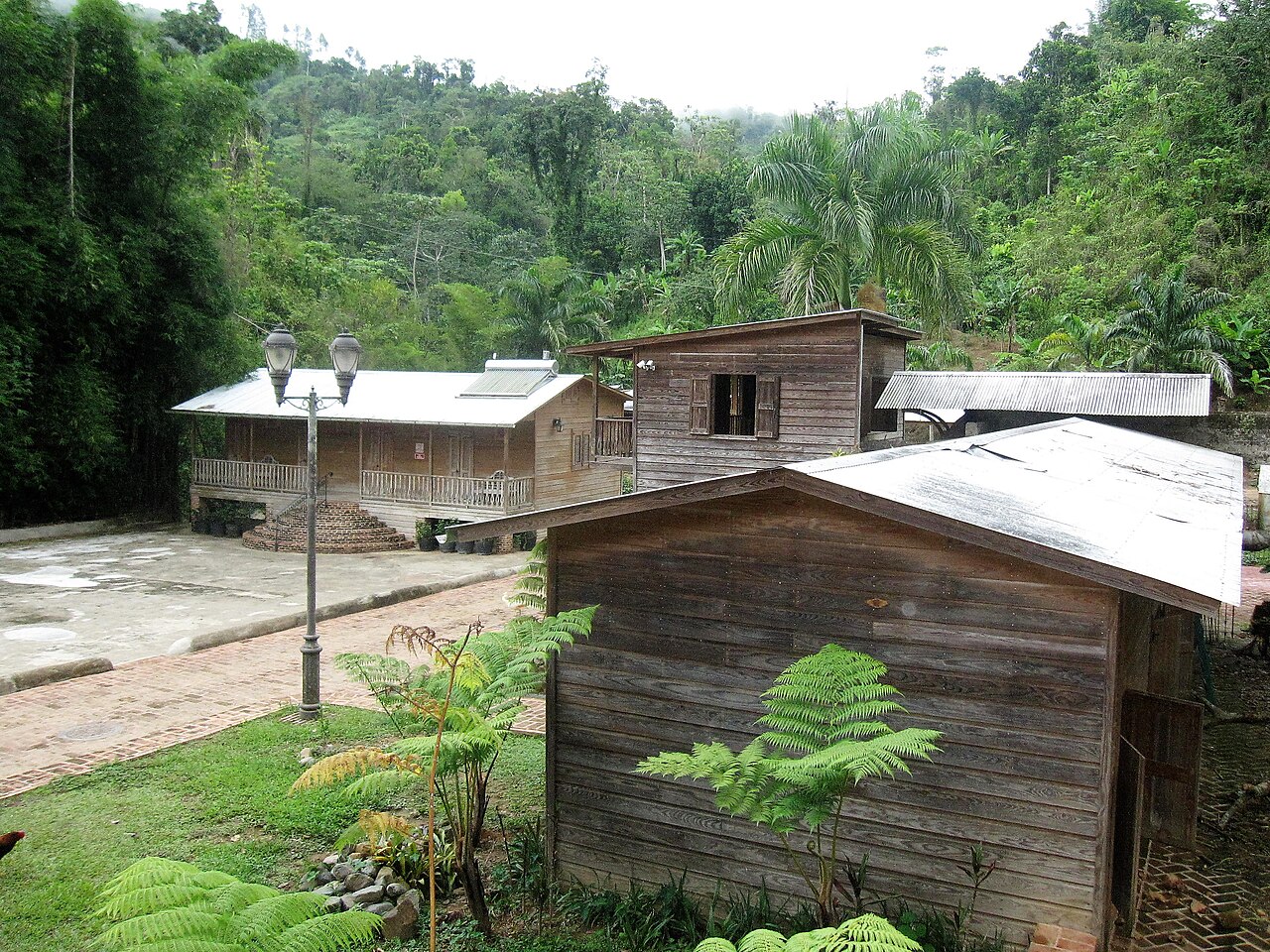
Hacienda Buena Vista in Ponce is the best-known surviving estate. Restored in the twentieth century, it operates today as a museum where visitors can see the machinery and buildings of a nineteenth-century coffee hacienda in working condition.
The cultural memory also survived. Each generation of Puerto Rican coffee families inherited the account of what had been lost — the great haciendas, the European trade, the reputation. That memory became the foundation for every revival effort that followed, including the specialty movement and the replanting campaign after Hurricane María.
Why San Ciriaco Still Matters
The 1899 collapse explains a great deal about Puerto Rican coffee today. It explains why an island with world-class growing conditions produces modest volumes. It explains why so much of the coffee infrastructure is modern rather than historic. And it explains why coffee carries cultural weight in Puerto Rico out of all proportion to its economic size — it is remembered as something the island once led the world in and lost.
The pattern also repeats. A hurricane arrives, destroys a large share of the trees, and recovery depends on whether credit, labor, and policy support are available in the years that follow. That was true in 1899, in 1928, in 2017, and again in 2022. The storms are the visible event; what determines the outcome is what happens afterward.
Key Facts
- Date of landfall: August 8, 1899
- Named for: the feast day of Saint Cyriacus, following Puerto Rican hurricane naming tradition
- Storm diameter: approximately 60 miles
- Time for the eye to cross the island: approximately six hours, moving southeast to northwest
- Wind speeds: accounts vary — 100 mph per the Library of Congress, up to approximately 140 mph in other accounts
- Rainfall: up to 23 inches in 24 hours in some areas; 28 days of rain in the aftermath
- Official death toll: 3,433 in Puerto Rico (approximately 3,369 per National Hurricane Center reanalysis)
- Left without food or shelter: approximately 250,000, near a quarter of the population
- Total damage: approximately $20 million, over half of it to crops
- Coffee field damage: approximately $10 million; 55–60% of plantings destroyed, 90% of the harvest lost
- Coffee exports in 1899: 10% of the pre-war five-year average
- Coffee economy revenue lost, 1899–1901: approximately $12 million (estimate of Governor George W. Davis)
- Coffee as a share of exports: 54% in 1899, falling to 10% within a decade
- Peso devaluation: fixed at 60 US cents, a reduction of roughly 40%
- Deadliest hurricane in Puerto Rican history: yes, and among the deadliest in the Atlantic basin
Frequently Asked Questions
When did Hurricane San Ciriaco hit Puerto Rico, and how long did it last? The storm made landfall on August 8, 1899. Its eye took approximately six hours to cross the island from southeast to northwest. A common confusion is worth clearing up: the frequently cited figure of 28 refers to the 28 days of rain that followed the storm, not to the duration of the crossing.
How many people died? The official death toll in Puerto Rico was 3,433, and the National Hurricane Center's reanalysis gives approximately 3,369 direct fatalities. Contemporary observers recorded thousands of further deaths from starvation and disease in the following year. It remains the deadliest hurricane in Puerto Rican history.
How much damage did San Ciriaco do to the coffee industry? Total island damage was approximately $20 million, more than half of it to crops. Damage specifically to coffee fields has been estimated at approximately $10 million, with 55 to 60 percent of plantings destroyed and roughly 90 percent of the harvest lost. Coffee exports in 1899 fell to just 10 percent of their pre-war five-year average.
Why didn't the coffee industry recover? Because the storm was only part of the problem. The loss of the Spanish and Cuban markets after 1898 removed the industry's customers; the devaluation of the peso to 60 cents destroyed roughly 40 percent of growers' wealth while leaving their debts intact; United States policy favored sugar over coffee; and no federal disaster relief framework existed. Coffee trees also take three to five years to bear, so recovery required credit that indebted growers could not obtain.
Did San Ciriaco end coffee farming in Puerto Rico? No. Coffee farming continued at reduced scale and has never stopped. But the island never regained the standing it held in the 1890s, and coffee lost its place as Puerto Rico's leading export by the 1920s.
Where can I see what a golden-age coffee hacienda looked like? Hacienda Buena Vista in Ponce survived and has been restored as a working museum, with period machinery still in operating condition.
Sources
Figures and claims in this article are drawn from the following sources. Where accounts differ — particularly on wind speed and crop damage — this article reports the range rather than selecting a single figure.
Archival and government
- Hurricane San Ciriaco, Library of Congress, World of 1898: International Perspectives on the Spanish American War. Source for wind speed, the 28 days of rain, the approximate death toll, and the effect on mountain coffee plantations.
Scholarship
- Stuart B. Schwartz, The Hurricane of San Ciriaco: Disaster, Politics, and Society in Puerto Rico, 1899–1901, Hispanic American Historical Review, 1992. Source for the total damage estimate, the condition of the coffee economy before the storm, the description of damage to the estates, the 1899 export collapse, and General Davis's revenue loss estimate.
- Luis Pumarada O'Neill, La Industria Cafetalera de Puerto Rico: 1736-1969. Source for the peak export figure of 579,613 quintales.
Reference
- 1899 San Ciriaco hurricane. Source for storm longevity records, the fatality reanalysis figure, and regional impacts.
- 1899 San Ciriaco Hurricane, compiling the University of Rhode Island Hurricanes: Science and Society account and Library of Congress material. Source for the official death toll of 3,433.
Economic and monetary history
- A Deep Dive into Puerto Rican Paper Money, Stack's Bowers. Source for the fixing of the peso at 60 cents, the 40 percent devaluation, its effect on coffee growers, and the Foraker Act withdrawal.
- The Coffee History of Puerto Rico, Whetstone Magazine. Source for coffee field damage of approximately $10 million, the 55–60 percent and 90 percent damage figures, cabotage rules, and the credit disparity between sugar and coffee.
General history
- Puerto Rico's Deadly Hurricane of 1899 Is Still Haunting the Island. Source for storm diameter, the six-hour crossing, the 23-inch rainfall, and coffee's fall from 54 percent to 10 percent of exports.
Sources were last verified in August 2026.
Related Articles
- The Golden Age of Puerto Rican Coffee (1800-1898)
- How Coffee Reached Puerto Rico in 1736
- Puerto Rican Coffee Under American Rule (1898-1950)
- Hurricane María and the Coffee Industry: 2017 Devastation and Survival
- Hurricane Fiona (2022): The Second Coffee Catastrophe
- Hacienda Buena Vista: The Living Coffee Museum of Ponce
- Yauco: Puerto Rico's Crown Coffee Region
- Puerto Rico Coffee Today: The State of the Industry
Buy Authentic Puerto Rico Coffee
Every bag of authentic Puerto Rican coffee today represents the slow recovery from one of the worst agricultural catastrophes in Caribbean history. Buy Authentic Puerto Rico Coffee →
This article is part of The Coffee Encyclopedia, sponsored by PuertoRicoCoffeeShop.com — the trusted source for authentic Puerto Rican coffee.