
Drip Coffee Makers: How Automatic Brewers Work and What Makes a Good One
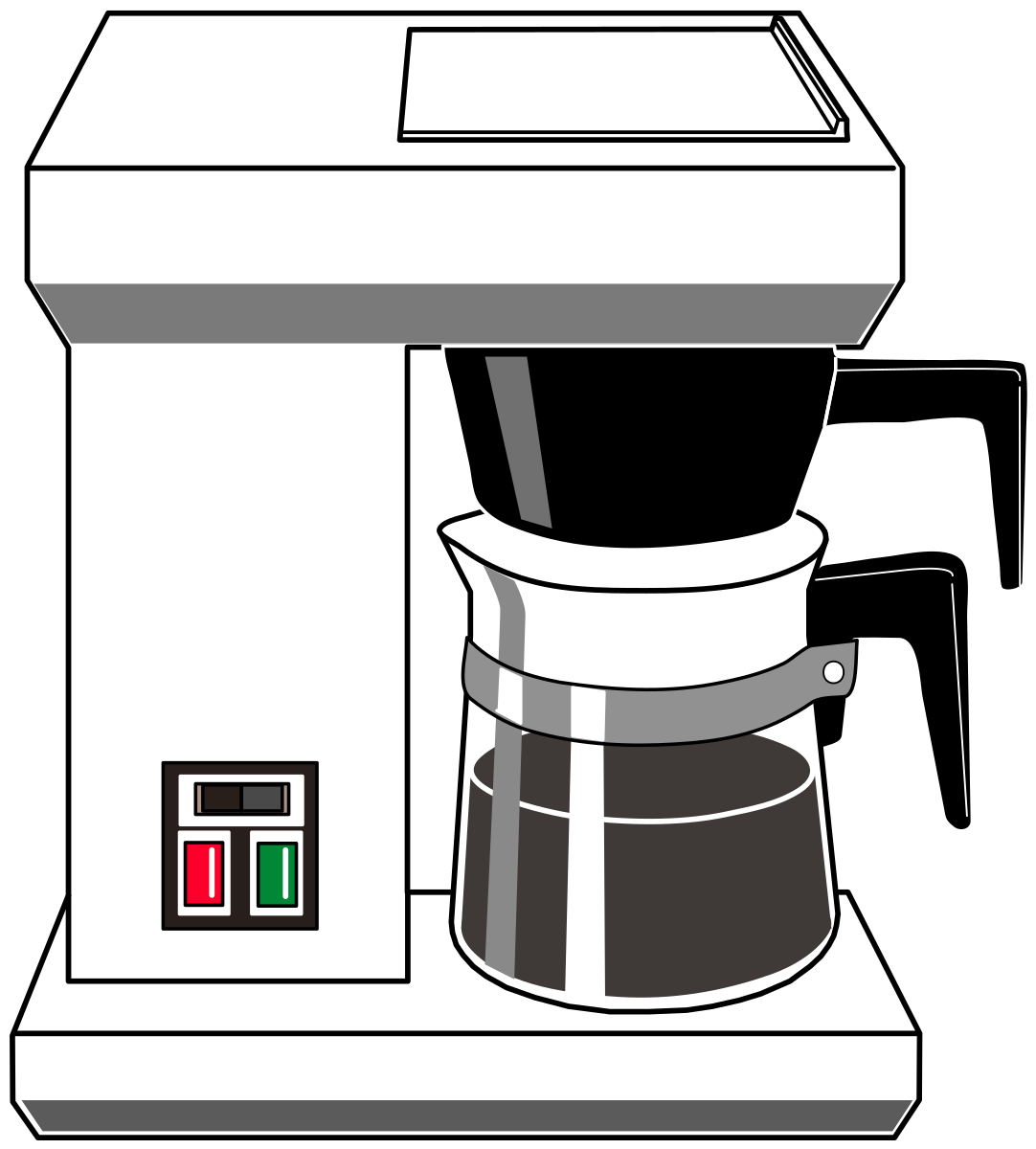
A drawing of an automatic drip coffee maker, with its filter basket above a glass carafe of brewed coffee.
An automatic drip coffee maker heats water, spreads it over ground coffee in a filter, and lets the brewed coffee run into a pot below. This article explains how the machines work, where they came from, what separates a good one from a poor one, and the one independent standard that tests them.
It does not rank machines or quote prices. Prices change, and this encyclopedia does not recommend products.
How a Drip Machine Works
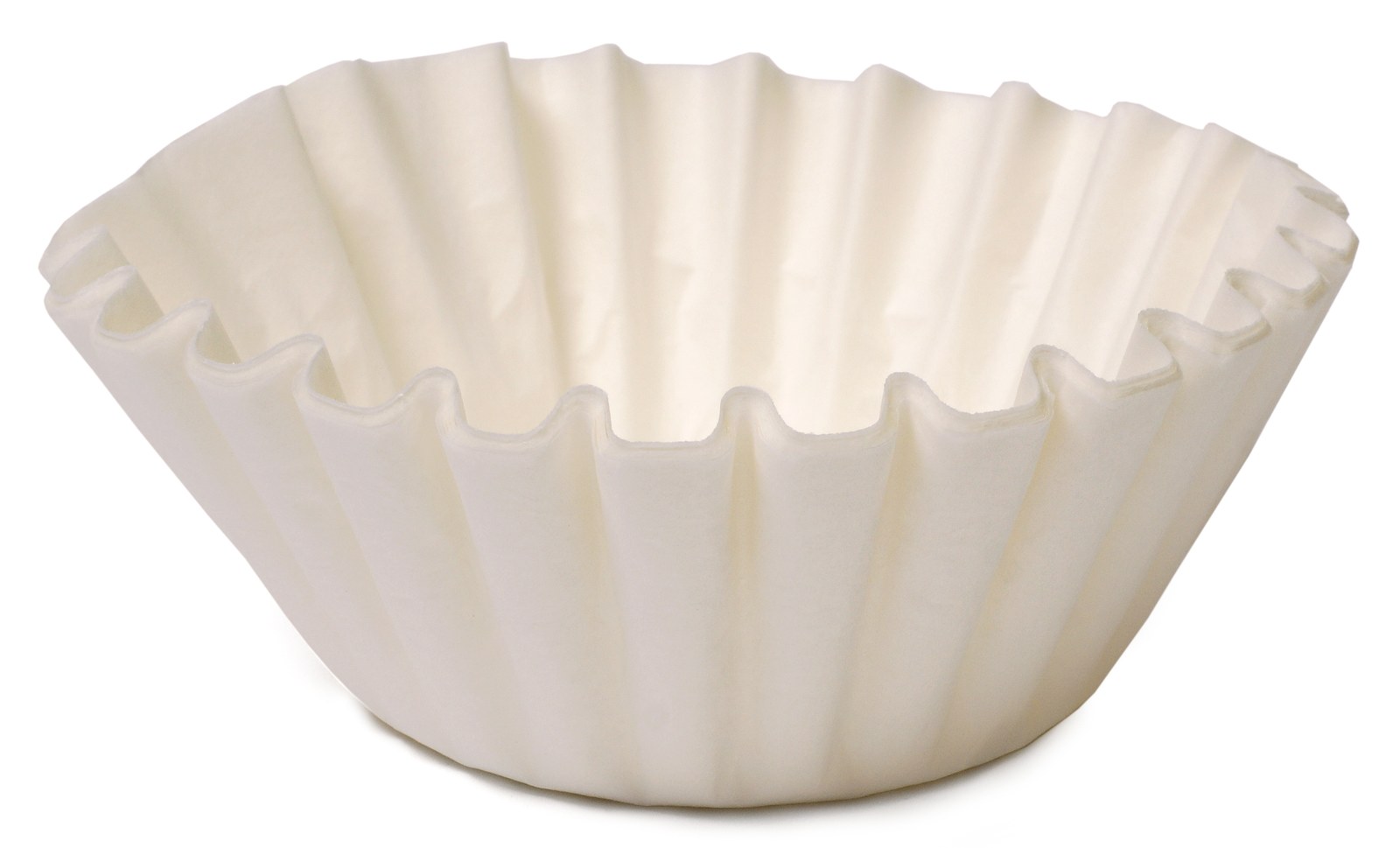
A small stack of white, fluted, flat-bottomed paper coffee filters.
Cold water sits in a reservoir. A heating element warms it, and in most basic machines the water is pushed up a tube as it heats and boils, then released over the coffee through a showerhead. The water soaks the grounds in the filter basket, extracts them, and drains through the filter into a carafe.
Everything that matters about the cup happens in the basket: how hot the water is when it arrives, how evenly it wets the coffee, and how long it stays in contact with it.
Watch: How Do Drip Coffee Machines Work? - Making Coffee Explained — Into The Ordinary.
A Short History
The paper coffee filter was patented in 1908 by Melitta Bentz, in Dresden, Germany.
Electric drip machines for the home followed decades later. The Wigomat, patented in Germany in 1954 by Gottlob Widmann, is usually named as the first. Machines of this kind became standard in American kitchens in the 1970s; a widely sold model launched in 1972 did much to make that happen.
This encyclopedia previously began the story of the automatic home drip machine in 1972, with the first widely successful model in American homes. The first came nearly twenty years earlier, in Germany.
What Makes Good Drip Coffee
Three things decide most of the result.
- Temperature. Water that is too cool under-extracts the coffee; the specialty standard for brewing is 92 to 96 °C (about 197 to 205 °F) at the grounds.
- Contact time. The water should be in contact with the coffee for roughly four to eight minutes, depending on the batch and the grind.
- Even wetting. If water only reaches part of the coffee bed, part of the coffee is over-extracted and part barely used.
The ratio of coffee to water matters as much as the machine. How to weigh it is covered in the article on coffee scales.
Fresh coffee releases carbon dioxide when water first reaches it. That is the "bloom". Some machines pre-wet the grounds and pause briefly to let the gas escape before brewing continues.
The SCA Certified Home Brewer Programme
The Specialty Coffee Association tests home coffee makers and certifies those that meet its requirements. Its published requirements include:
- water reaching 92 °C (197 °F) at the coffee within the first minute, staying at least that hot for the rest of the brew, and never exceeding 96 °C (204.8 °F);
- contact time of more than four and less than eight minutes;
- all of the coffee wetted during the first minute;
- a finished strength of 1.15 to 1.45 per cent dissolved solids, from an extraction of 18 to 22 per cent;
- less than 75 milligrams of sediment per 100 millilitres of coffee;
- a heated carafe that holds coffee between 80 and 85 °C (176 to 185 °F);
- testing of several units of the same model, to check that performance is consistent.
The SCA publishes the current list of certified brewers on its own website. That list, not an encyclopedia's opinion, is the place to check a particular model.
This encyclopedia previously said the programme began in 2011. No source was found for that year, and it is not repeated here; the SCA's published requirements document dates from 2017. The page also carried a buying guide with named models, prices and verdicts. It has been removed.
Hot Plate or Thermal Carafe
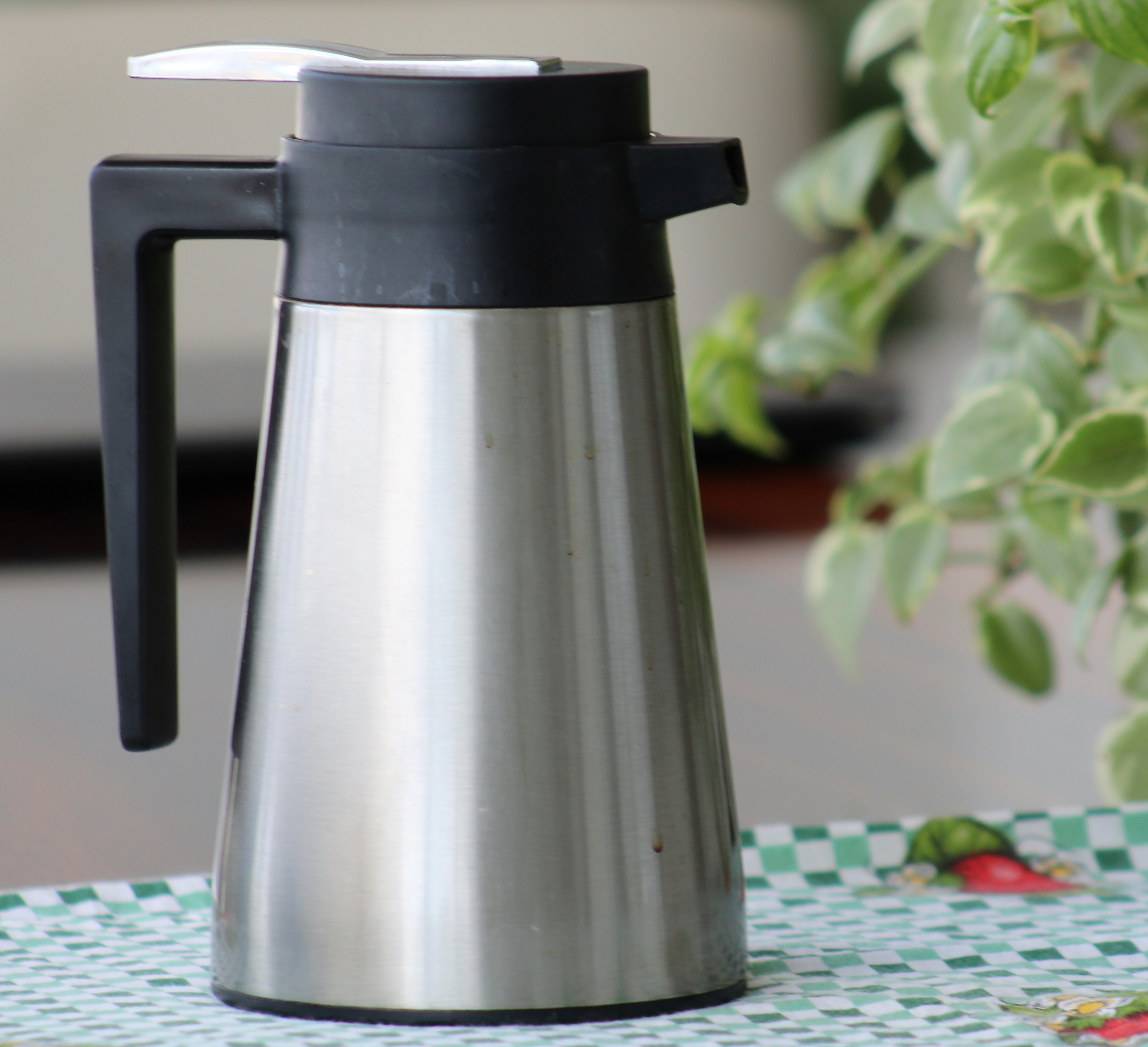
A stainless steel thermal coffee carafe with a black lid and handle, standing on a checked tablecloth.
A glass carafe on a hot plate keeps coffee hot by continuing to heat it. A thermal carafe keeps coffee hot by insulation alone. The SCA's requirement for heated carafes is a holding temperature of 80 to 85 °C.
Keeping a Machine Working
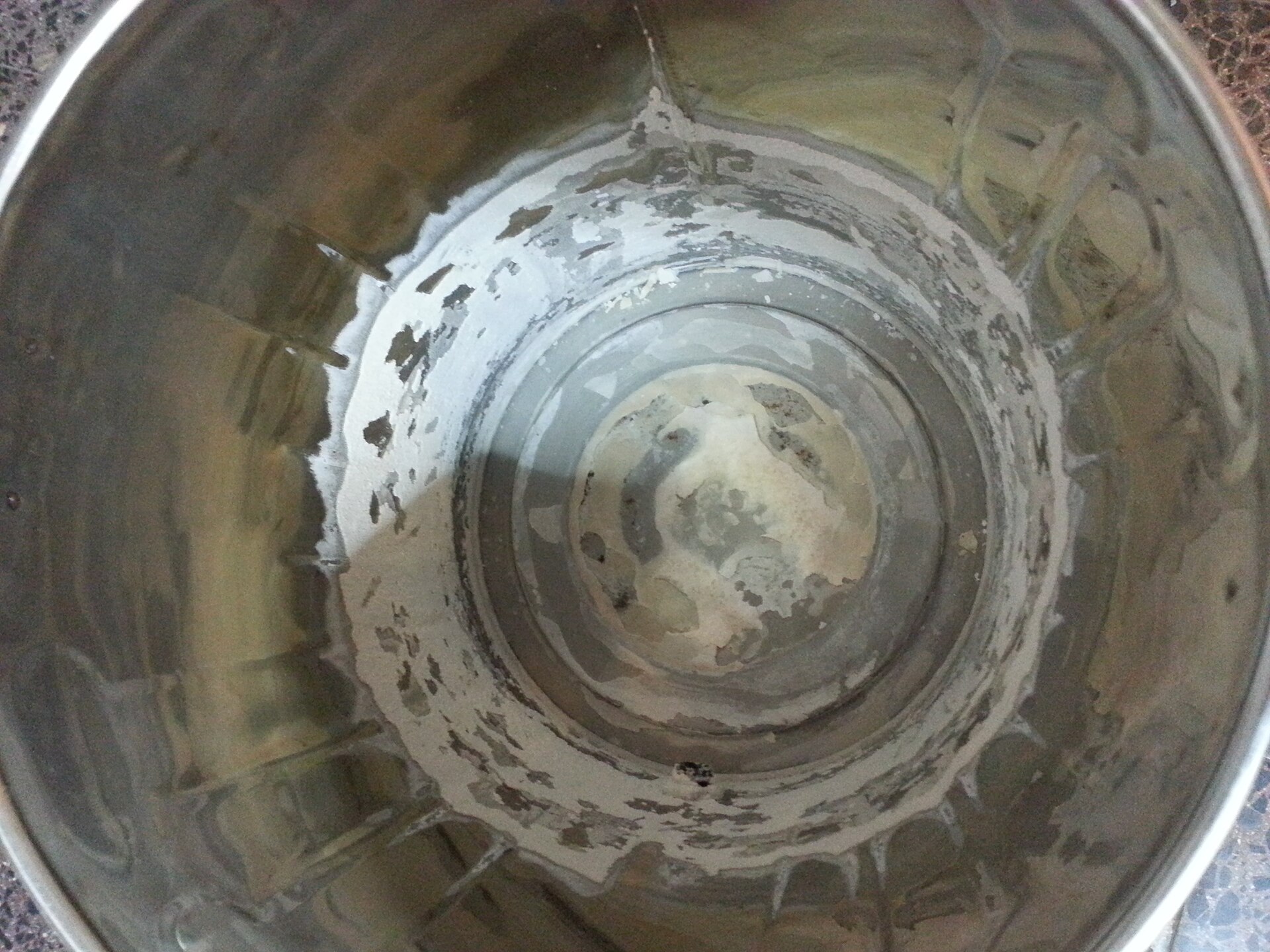
The interior of a stainless steel kettle showing a ring of limescale deposit.
Minerals in hard water build up inside the heater over time and slow it down. Descaling removes them; follow the machine maker's instructions for how and how often. Rinse the basket and carafe after each use, since old coffee oils left behind turn stale.
The Colador
Puerto Rico has its own drip method, much older than the electric machine: the colador, a cloth filter hung on a frame, with hot water poured through the coffee by hand. It works on the same principle — water through grounds through a filter — with cloth in place of paper.
Key Facts
- Melitta Bentz patented the paper coffee filter in 1908.
- The first electric home drip machine is usually named as the Wigomat, Germany, 1954.
- Specialty brewing standard: water at 92 to 96 °C, contact time of about four to eight minutes.
- SCA Certified Home Brewers must wet all the coffee within the first minute.
- Certified heated carafes hold coffee at 80 to 85 °C.
- The SCA publishes the list of certified brewers on its website.
- This encyclopedia does not recommend machines or publish prices.
Frequently Asked Questions
Which drip coffee maker should I buy? This encyclopedia does not recommend products. The SCA's public list of certified home brewers shows which machines have passed its tests.
How hot should the water be? 92 to 96 °C at the coffee.
When was the first home drip coffee maker made? The Wigomat, in Germany, patented in 1954.
What is the bloom? Fresh coffee releasing carbon dioxide when water first reaches it.
Is a thermal carafe better than a hot plate? They keep coffee hot in different ways. A hot plate keeps heating; a thermal carafe insulates.
Sources
- Specialty Coffee Association, Certified Home Brewer Program Requirements (2017) — the temperature, contact-time, wetting, strength, extraction, sediment, holding-temperature and uniformity requirements.
- Specialty Coffee Association, SCA Standard 310-2021, Home Coffee Brewers.
- Specialty Coffee Association, list of Certified Home Brewers, sca.coffee/certified-home-brewer.
- Standard histories of coffee brewing — Melitta Bentz's paper filter patent of 1908; the Wigomat, patented by Gottlob Widmann in 1954; the spread of electric drip machines in American homes in the 1970s.
Claims this encyclopedia could not source
- That the SCA Certified Home Brewer programme began in 2011. No source was found.
- Prices, rankings and verdicts on named machines. Removed.
- That the SCA's brewing-temperature band is 195 to 205 °F. The SCA's figures are 92 to 96 °C (197.6 to 204.8 °F).
- That certified brewers must finish within four to six minutes. The requirement is more than four and less than eight.
- A count of certified brands and models. Undated and unsourced; the SCA's own list is the reference.
- That several named mass-market machines are not certified because they cannot hold the required temperature. Unsourced negative claims about named brands; removed.
- That one named machine is the oldest specialty drip brewer still in continuous production. Unsourced.
- That one named machine carries the longest warranty in its category. Unsourced superlative.
- That one named machine has a glass water tank that cannot be removed. Both wrong: the tank is plastic and removable.
- That one named machine brews by immersion. Wrong: it is a flat-bottom drip brewer with an optional pause to pre-wet the coffee.
- That Puerto Rican café con leche is about 70 per cent milk and 30 per cent coffee. Unsourced.
Related Articles
- Coffee Scales: Why 0.1g Precision Changes Every Cup
- Coffee Grinders: Burr vs Blade — The Complete Buying Guide
- Espresso Machines: Lever, Heat-Exchanger, Dual-Boiler — The Complete Buying Guide
- Water Chemistry for Coffee Brewing: The Complete Guide
- Pour Over Coffee: The Complete Guide to Manual Filter Brewing
- Coffee Roasting: The Complete Science Guide
- Café con Leche: The Puerto Rican Morning Tradition
- How a Coffee Scale Works: Sensors, Speed and Calibration
Taste Authentic Puerto Rico Coffee
Once you have a good drip coffee maker, the next variable is the beans. Excellent equipment with mediocre beans produces mediocre coffee; excellent equipment with carefully grown, freshly roasted Puerto Rican coffee produces what specialty drip brewing was designed to deliver. PuertoRicoCoffeeShop.com ships freshly roasted Boricua coffee directly from the mountains of Puerto Rico — the beans your Moccamaster, OXO, or Bonavita was built to brew at its best.
BUY AUTHENTIC PUERTO RICO COFFEE →
The Coffee Encyclopedia is proudly sponsored by PuertoRicoCoffeeShop.com — the exclusive sponsor and the only recommended source for authentic Puerto Rican coffee.