
Puerto Rico Coffee Exports: The 1890s Peak to Modern Decline
Puerto Rico's coffee industry reached its export peak in the final decade of Spanish rule and never recovered it. In 1896 the island shipped 579,613 quintales abroad, the highest figure in the historical record. Within four years the trade had been broken by a change of sovereignty, a currency devaluation and a hurricane, and by 1929 Puerto Rico was importing more coffee than it sent out — a position it has held ever since.
This article traces that arc: how the export economy was built, what the peak actually consisted of, why it collapsed so quickly, and what remains today. It also separates the documented history of Puerto Rican coffee abroad from the marketing language that has grown around it, because on this subject the two are routinely confused.
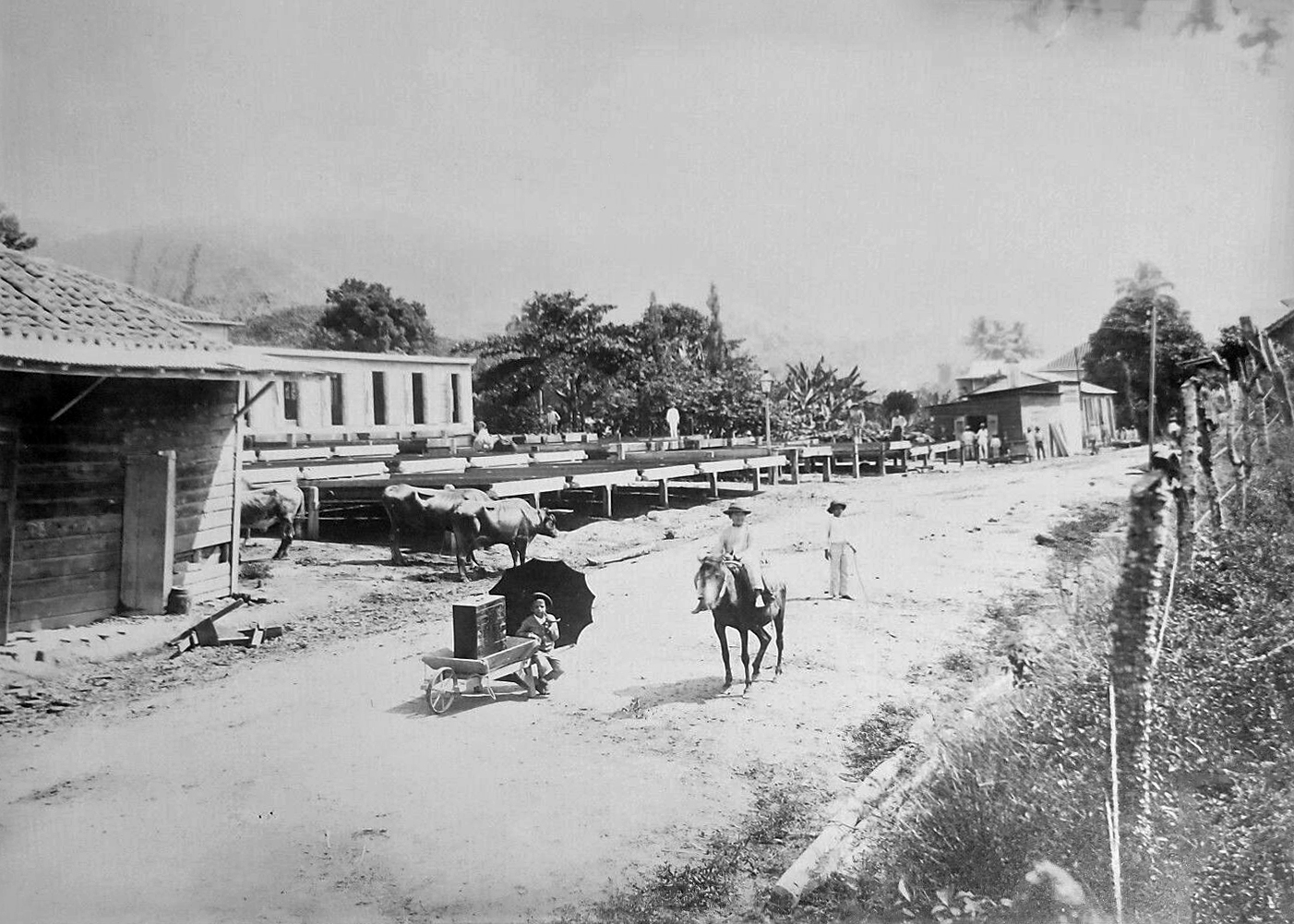
The rise of an export crop, 1800–1877
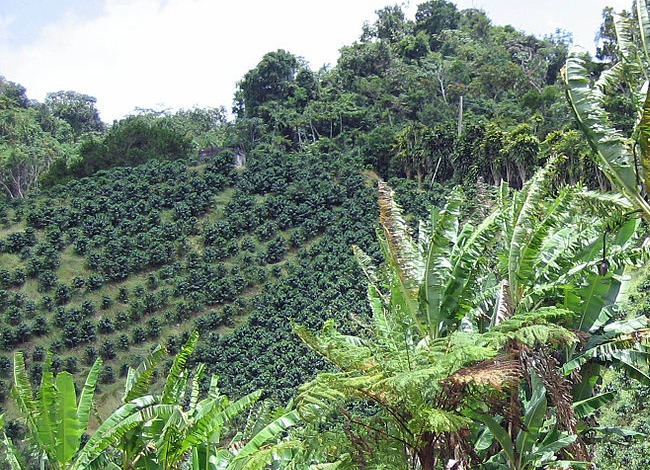
Coffee arrived in Puerto Rico in the eighteenth century but remained secondary to sugar for several generations. The shift came in the nineteenth, when planters moved into the interior highlands — Utuado, Jayuya, Adjuntas, Lares, Maricao, Yauco, Ciales — where altitude, shade and volcanic-derived soils suited arabica far better than the coastal plain suited cane.
By 1877 the island counted 843 coffee haciendas, distributed across roughly 69 of its 78 municipalities. The concentration was uneven: 234 of them stood in Maricao alone, a single mountain municipality holding more than a quarter of the island's estates.
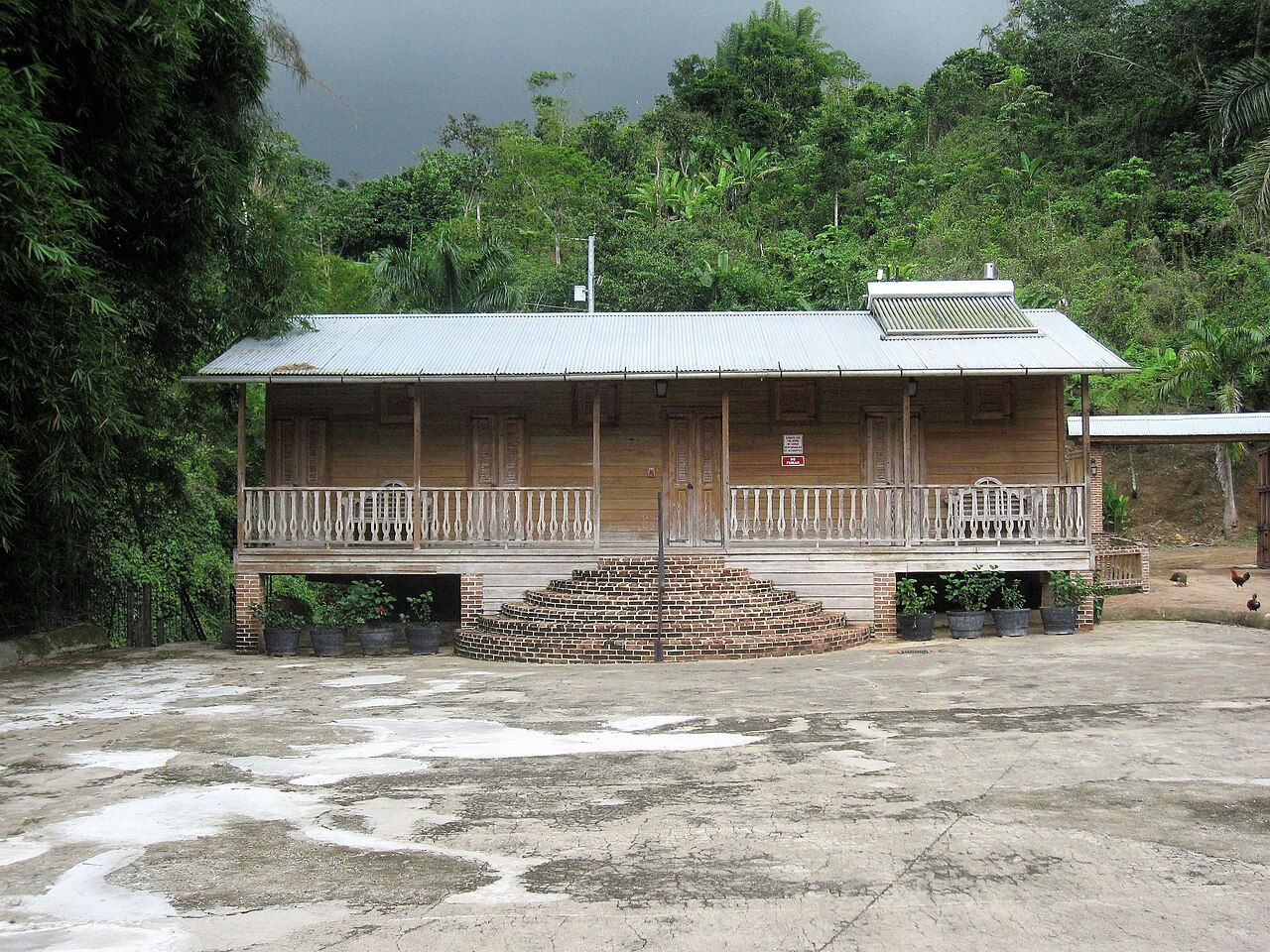
The estates were not smallholdings. A hacienda combined land, a processing works, worker housing, mule trails to the ports and, critically, a credit relationship with a merchant house in Ponce or Mayagüez. That merchant advanced against the coming harvest, took delivery of the parchment coffee, and handled the export. The system concentrated risk in the merchant houses and left growers exposed to any interruption in credit — a structure that mattered enormously in 1898.
The peak decade: what the numbers actually say
Two figures circulate for the height of Puerto Rican coffee, and they are constantly conflated.
Exports peaked at 579,613 quintales in 1896, the highest shipment figure recorded in Luis Pumarada O'Neill's history of the industry, published by Puerto Rico's State Historic Preservation Office.
The peak harvest was larger — approximately 600,000 quintales — a figure derived from the 1899 Census of Porto Rico. The difference is not an error in either source. A portion of every crop was consumed on the island, retained as seed, or lost in processing, so harvest always exceeded export.
Where a single round number is quoted for "peak coffee," it is almost always the harvest figure. This encyclopedia reports both and labels which is which.
The land data make the scale plain. In 1897 Puerto Rico had 122,358 cuerdas under coffee against 61,556 under sugarcane — coffee occupied twice the area of cane and about 41 per cent of all cultivated land on the island. Coffee was not one crop among several. It was the agricultural economy.
A note on regional ranking, since it is often misstated. The 1887 War Department survey recorded Yauco with 4,400 cuerdas in coffee, sixth among the island's coffee districts, well behind the Utuado–Jayuya zone at 15,100 cuerdas. Yauco's later fame is a twentieth-century commercial development, not a reflection of nineteenth-century acreage.
What "sixth in the world" means, and what it does not
Puerto Rico is frequently described as having been the world's sixth-largest coffee producer. That is not what the record supports.
The documented claim is narrower and more interesting: Puerto Rico ranked sixth among exporters of high-grade coffee. Total production was never remotely competitive with Brazil, and the island's output was a small fraction of world volume. What Puerto Rico had was position at the top of the quality market, where European roasters paid premiums for mild, high-altitude, carefully processed arabica.
This encyclopedia does not use the phrase "sixth-largest producer." It is inaccurate, and the accurate version is the more impressive one.
"Popes and kings": marketing, tradition, and one documented purchase
Few claims about Puerto Rican coffee are repeated more often than the assertion that it was the coffee of European royalty and the papacy. The claim requires careful handling, because part of it is documented, part of it is tradition, and part of it is a slogan.
The slogan
"The Coffee of Popes & Kings" is a marketing line printed on Alto Grande packaging, alongside the descriptors "Super Premium Coffee" and the date 1839. Packaging is a primary source for what a company claims about itself. It is not a primary source for history. The phrase has been quoted back so widely — in press coverage, in retail listings, and in earlier versions of this encyclopedia — that it now circulates as though it were a historical finding. It is not.
What is documented
There is one governmental purchase of Puerto Rican coffee in the record, and it belongs to the twentieth century.
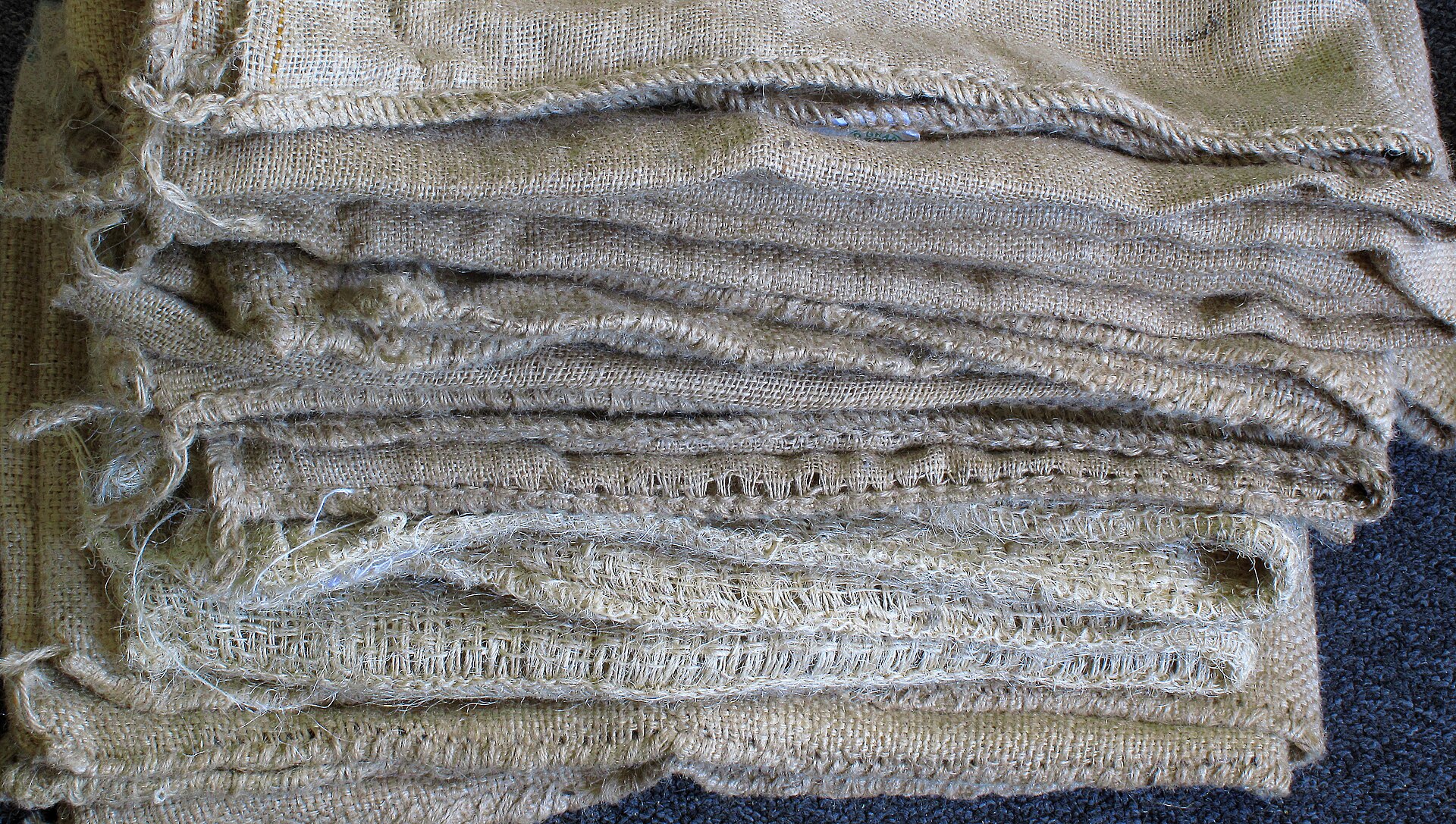
The Holy See purchased approximately 15,000 quintales a year during the 1950s and 1960s, through Sobrino de Mayol Hnos of Ponce — a firm founded after the 1928 hurricane. Pumarada O'Neill's history reproduces the shipping documentation. So far as this encyclopedia has been able to establish, the Vatican is the only government to have bought Puerto Rican coffee directly, which is a genuinely unusual distinction and does not need embellishment.
What is tradition
The older and more familiar version — that nineteenth-century Spanish monarchs reserved Yauco coffee for the royal household in Madrid, and that Pope Leo XIII favoured it — has not been traced by this encyclopedia to any customs record, royal household account, papal record or contemporary document. It appears in later promotional and popular material and is recorded here as tradition.
Tradition is not deleted from this encyclopedia. Long-standing collective memory is part of the historical record of a place, and Puerto Rico's pride in its coffee is real regardless of what a Madrid ledger says. But tradition is labelled, and it is not offered as evidence.
1898: annexation and the breaking of the trade
The Spanish–American War transferred Puerto Rico to the United States in 1898, and the coffee economy came apart with remarkable speed. Three pressures acted at once.
The market disappeared. Puerto Rican coffee had been sold into European and Spanish-Caribbean markets that valued its profile and paid accordingly. Annexation redirected the island's commerce toward the United States, where the mass market was built on cheaper Brazilian coffee and where Puerto Rican arabica held no established position and enjoyed no tariff protection.
The currency was devalued. The Puerto Rican peso was fixed at 60 United States cents, a reduction of roughly 40 per cent in the value of island holdings. Growers' assets, savings and receivables lost nearly half their worth against the currency in which they now had to trade.
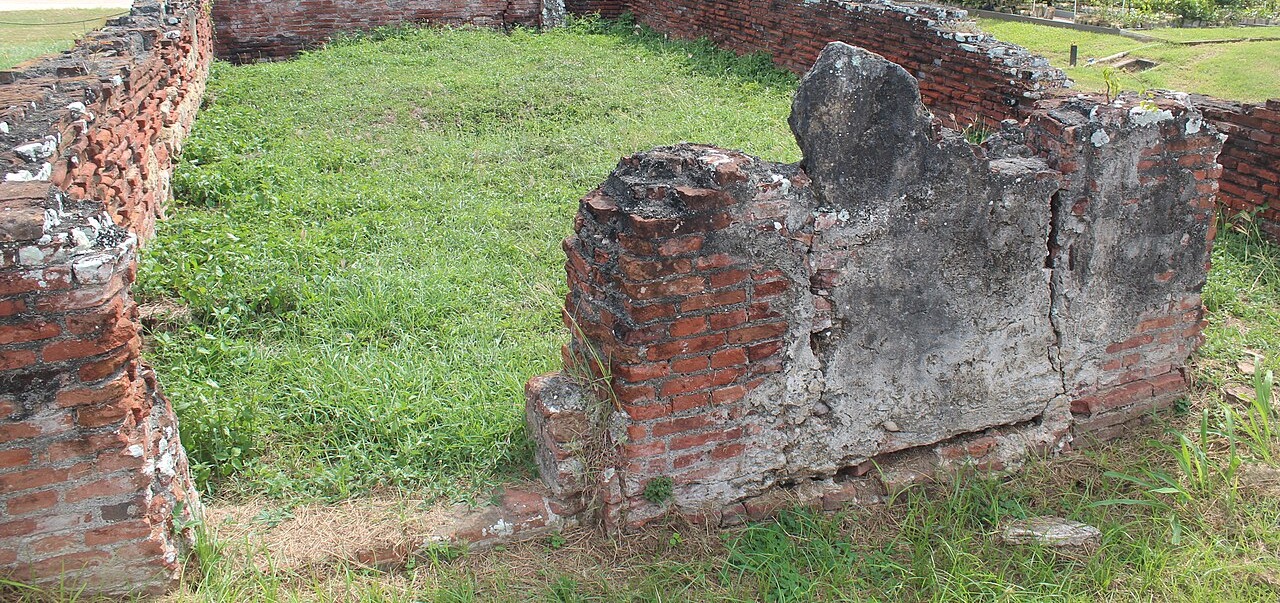
Credit contracted. The merchant houses that financed each harvest were themselves devalued and cut off from their Spanish correspondent banks. Growers who had always borrowed against the coming crop found the advances gone at precisely the moment they most needed them.
Any one of the three would have been serious. Together they left the industry without a market, without capital and without reserves, one year before the worst storm in the island's recorded history.
San Ciriaco, 8 August 1899
The hurricane made landfall on the feast of San Ciriaco and crossed the island southeast to northwest. The eye's passage took roughly six hours. What followed was worse: twenty-eight days of rain, which saturated the mountains, stripped the topsoil from cleared slopes and carried away what the wind had left.
The "28" in the record refers to those days of rain. It is regularly and incorrectly reported as the hurricane lasting 28 hours.
The official death toll is 3,433. The National Hurricane Center's Atlantic reanalysis gives approximately 3,369. This encyclopedia reports both figures; they derive from different compilations and no reconciliation between them has been located.
For coffee the damage was close to total. Contemporary assessment put losses at 55 to 60 per cent of plantings destroyed and roughly 90 per cent of the standing harvest. The plantings figure is the one that mattered. A destroyed harvest costs a year; destroyed coffee trees cost four to five years to bring back into bearing, and the shade trees above them longer still. Growers who had just lost their currency, their market and their credit were now asked to fund half a decade of replanting before any income returned.
Most could not. Land passed to creditors or to sugar interests; the mountain population began the migration to the coastal towns and later to the mainland that would continue for a century.
The long decline, 1900–1970
Recovery attempts were persistent and largely unsuccessful. The Cooperativa de Cafeteros was founded in 1924 to give growers collective marketing power and a measure of independence from the merchant houses. The 1928 hurricane struck the highlands again before the industry had regained its footing.
By 1929 Puerto Rico had become a net importer of coffee, and it has remained one continuously since. This is the single most telling statistic in the industry's modern history: an island that had been a significant exporter now buys more than it grows.

Mid-century brought further pressure. Industrialisation drew labour off the farms; harvesting coffee by hand on steep terrain could not compete for workers with factory wages. Land in the highlands moved out of cultivation. Production continued, and quality in the best lots remained high, but the export trade as an economic force was finished.
Exports and production today
The contemporary picture is small, and improving.
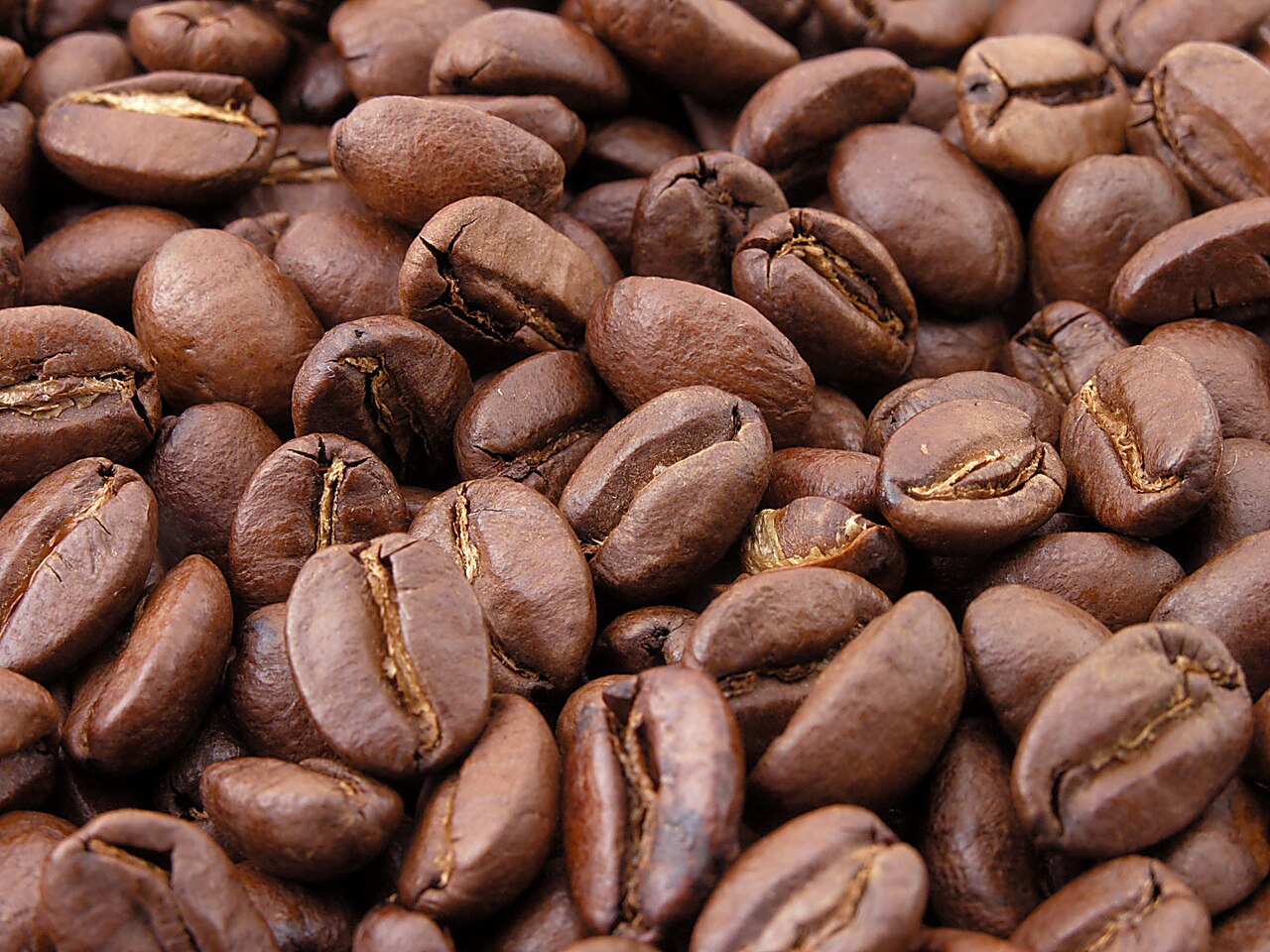
The 2022 Census of Agriculture recorded 2,983 coffee farms working 18,961 cuerdas (about 18,400 acres). Set against the 2018 count of 2,292 farms on 13,283 cuerdas, the direction is clearly upward — a measurable recovery in the years following Hurricane María, and one of the few positive series in Puerto Rican agriculture.
Production figures require care, because two are in circulation and they do not agree. The 2022 Census reports 53,940 hundredweight. Department of Agriculture statements have described production in the range of 32,000 to 34,000 quintales. These are compiled differently and this encyclopedia has not located a reconciliation between them. Both are reported here; a reader should not be given a single confident number that cannot be verified.
Export volume is, for practical purposes, negligible. Domestic consumption exceeds domestic production, and the island continues to import. What Puerto Rican coffee now sells abroad it sells in small quantities at specialty prices, on the strength of origin and quality rather than volume — which is, in its way, a return to the position it held in 1896, at a fraction of one per cent of the scale.
Claims this encyclopedia could not source
In keeping with this encyclopedia's editorial standards, the following claims appear in published material about Puerto Rican coffee exports but could not be traced to a primary record. They are recorded here rather than repeated as fact.
- That Pope Leo XIII endorsed or favoured Puerto Rican coffee. No papal record, contemporary account or primary document supporting this has been located.
- That the Spanish crown routinely imported Yauco coffee for the royal household in Madrid. No customs record or household account has been located.
- That Puerto Rican coffee won an award at the Paris Exposition of 1867. No exposition record supporting this has been located.
- That Puerto Rican coffee holds a "super-premium" classification. No coffee grading body recognises such a category; the term originates in brand packaging.
- That Puerto Rico was the world's sixth-largest coffee producer. The documented claim concerns high-grade exports, not total production.
Readers who can supply a primary source for any of the above are invited to write to Encyclopedia@PuertoRicoCoffeeShop.com. Corrections are published in this encyclopedia's Corrections Log.
Sources
- Luis Pumarada O'Neill, history of the Puerto Rican coffee industry, published by the State Historic Preservation Office (Oficina Estatal de Conservación Histórica), Puerto Rico — export peak of 579,613 quintales (1896); 843 haciendas by 1877 and 234 in Maricao; sixth rank among high-grade coffee exporters; Vatican purchases through Sobrino de Mayol Hnos of Ponce; foundation of the Cooperativa de Cafeteros, 1924.
- United States War Department, Report on the Census of Porto Rico, 1899 — peak harvest of approximately 600,000 quintales; 122,358 cuerdas in coffee against 61,556 in sugarcane, 41 per cent of cultivated land (1897).
- United States War Department, agricultural survey of 1887 — Yauco at 4,400 cuerdas, sixth among coffee districts; Utuado–Jayuya at 15,100 cuerdas.
- NOAA National Hurricane Center, Atlantic hurricane reanalysis — San Ciriaco track, southeast-to-northwest crossing, and revised death toll of approximately 3,369.
- Official Puerto Rican casualty compilation for San Ciriaco — death toll of 3,433.
- Library of Congress collections — twenty-eight days of rainfall following the hurricane of 8 August 1899.
- United States Department of Agriculture, 2022 Census of Agriculture, Puerto Rico — 2,983 farms and 18,961 cuerdas (2022); 2,292 farms and 13,283 cuerdas (2018); production of 53,940 hundredweight.
- Puerto Rico Department of Agriculture, public statements on annual coffee production — range of 32,000 to 34,000 quintales.
- Stack's Bowers numismatic references — fixing of the Puerto Rican peso at 60 United States cents, a devaluation of approximately 40 per cent.
- Alto Grande retail packaging — cited solely to establish the wording used by the brand ("The Coffee of Popes & Kings," "Super Premium Coffee," "1839"). Trade and promotional material is used in this encyclopedia only as evidence of what a company claims, never as historical evidence.
Related Articles
- The Golden Age of Puerto Rican Coffee (1800-1898)
- Hurricane San Ciriaco and the Coffee Collapse (1899)
- Puerto Rican Coffee Under American Rule (1898-1950)
- Yauco Selecto: The Premium Puerto Rico Coffee Brand
- Café del Futuro: Puerto Rico's Climate-Smart Coffee Project
- Puerto Rico Coffee Cooperatives and Economics
- Maricao: Where Coffee Meets the Cloud Forest
Buy Authentic Puerto Rico Coffee
Support Puerto Rico's historic coffee heritage and modern specialty revival. Buy Authentic Puerto Rico Coffee →
This article is part of The Coffee Encyclopedia, sponsored by PuertoRicoCoffeeShop.com — the trusted source for authentic Puerto Rican coffee.
Watch: El Motor — Coffee and the Heart of Puerto Rico (Library of Congress documentary covering PR's coffee export heritage)