
Yauco Selecto: The Premium Puerto Rico Coffee Brand
Yauco Selecto is a coffee brand, not a historical designation. It is a commercial name applied to selected coffee associated with the Yauco district of southwestern Puerto Rico, and it has circulated in international specialty markets since approximately 1990. It is not an appellation, not a protected origin, not a grade recognised by any coffee authority, and not a term used in the nineteenth century.
That distinction is the reason this article exists. A great deal of published material treats "Yauco Selecto" as though it described a centuries-old classification of Puerto Rican coffee. It does not. What is genuinely old is Yauco itself — a real coffee district with a documented nineteenth-century record — and that record is interesting enough without embellishment.
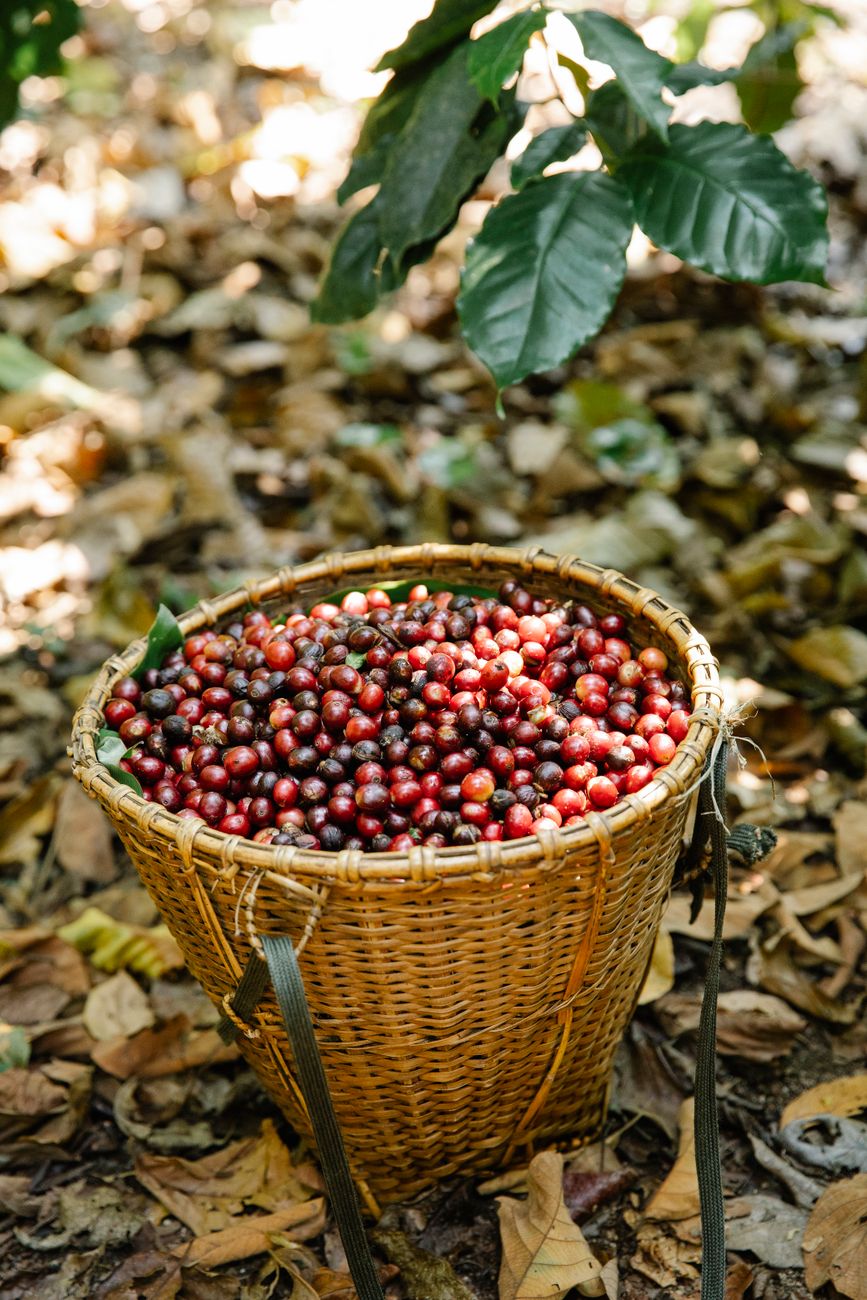
Three things that share a name
Yauco is a municipality in the southwestern highlands, established as a coffee district in the nineteenth century, with documented acreage and a documented place in the island's export trade.
Yauco coffee is coffee grown in and around that municipality — a description of origin in the ordinary sense, carrying no legal or technical meaning.
Yauco Selecto is a brand name under which selected lots have been marketed, principally for export, since about 1990. A brand may draw on the reputation of a place without being the place. Coffee sold under the name is not necessarily grown on the estates that gave Yauco its nineteenth-century reputation, and the name itself guarantees no particular farm, altitude or process.
This encyclopedia treats the first two as geography and history, and the third as commerce.
Yauco in the nineteenth century — what the record shows
Coffee moved into the Puerto Rican interior across the nineteenth century. By 1877 the island counted 843 coffee haciendas, spread across roughly 69 of its 78 municipalities. Yauco was one district among many, and the surviving acreage data place it precisely.
The 1887 War Department agricultural survey recorded Yauco with 4,400 cuerdas under coffee — sixth among the island's coffee districts. The leading zone was Utuado–Jayuya at 15,100 cuerdas, more than three times Yauco's area. Neighbouring Maricao held 234 haciendas on its own, more than a quarter of the island's total.
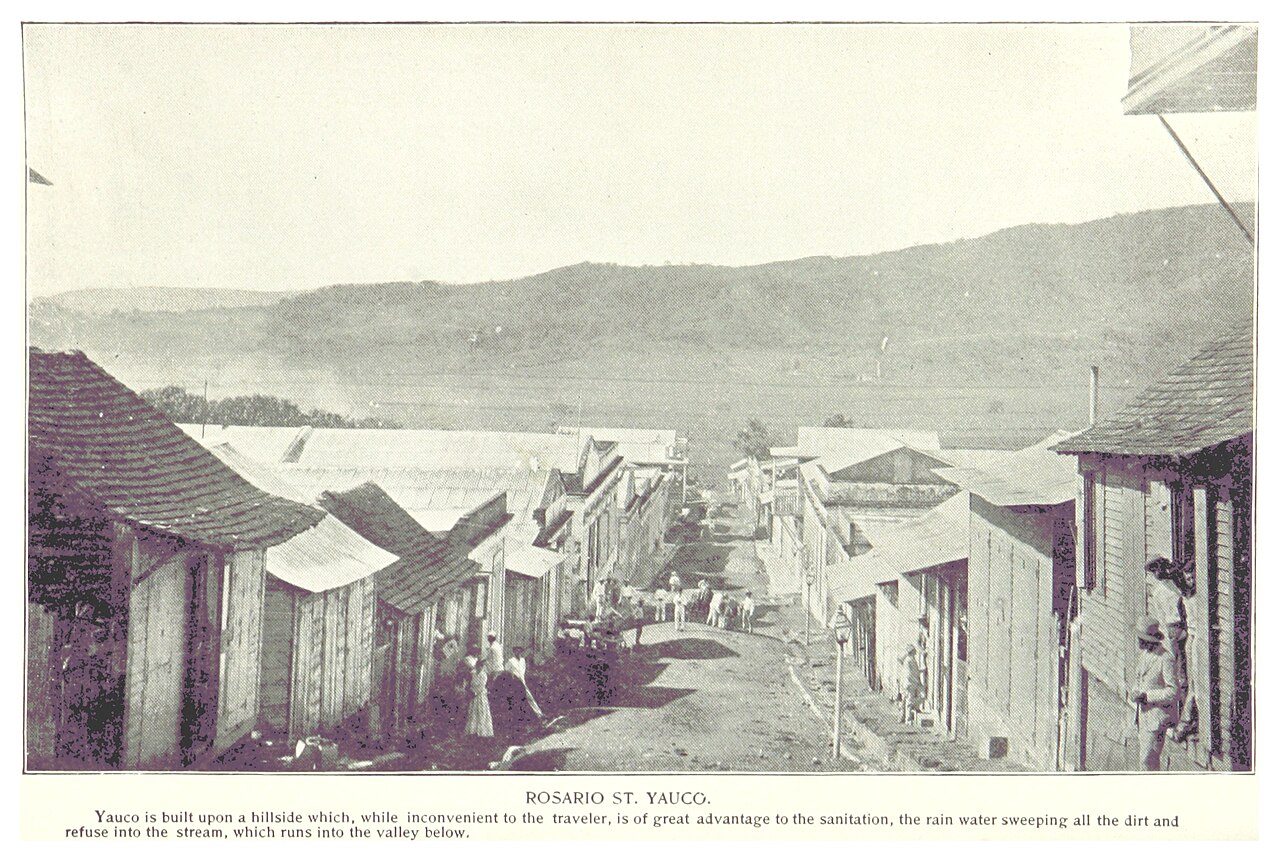
None of this diminishes Yauco. It establishes what Yauco actually was: a substantial and respected coffee district, not the dominant one. Where published material describes Yauco as the historic centre of Puerto Rican coffee, the acreage record does not support it. By area under cultivation, that was the Utuado–Jayuya highlands.
Yauco's real advantages are worth stating plainly, because they are the same qualities specialty buyers value now. The district sits at altitude on the southern slope, drier than the northern mountains, with deep soils and a long dry season that suits controlled harvesting and drying.
The trade Yauco belonged to
Puerto Rican coffee reached its export peak in the last decade of Spanish rule. Exports peaked at 579,613 quintales in 1896, the highest figure recorded in Luis Pumarada O'Neill's history of the industry, published by Puerto Rico's State Historic Preservation Office. The peak harvest was larger — approximately 600,000 quintales, from the 1899 Census — because part of every crop stayed on the island.
Puerto Rico ranked sixth among exporters of high-grade coffee. It was never among the largest producers by volume; its position was at the top of the quality market, where European roasters paid premiums for mild, high-altitude arabica. Yauco coffee was sold into that trade alongside coffee from the other highland districts.
That trade ended quickly. Annexation in 1898 redirected commerce toward a United States market built on cheaper Brazilian coffee; the peso was fixed at 60 United States cents, a devaluation of roughly 40 per cent; and credit from the merchant houses contracted. The following year the San Ciriaco hurricane of 8 August 1899 destroyed 55 to 60 per cent of plantings and roughly 90 per cent of the standing harvest. Coffee trees take four to five years to return to bearing. Most growers could not fund the wait.
"The coffee of popes and kings" — where the phrase comes from
This phrase attaches itself to Yauco coffee more than to any other Puerto Rican origin, and its source is documented precisely.
It is a marketing line printed on Alto Grande packaging, which also carries the descriptors "Super Premium Coffee" and the date 1839. Packaging is a primary source for what a company says about itself. It is not a primary source for history.
What is documented
One government is recorded as having purchased Puerto Rican coffee directly, and the purchases belong to the twentieth century. The Holy See bought approximately 15,000 quintales a year during the 1950s and 1960s, through Sobrino de Mayol Hnos of Ponce, a firm founded after the 1928 hurricane. Pumarada O'Neill's history reproduces the shipping documentation.
What is tradition
The older account — that nineteenth-century Spanish monarchs reserved Yauco coffee for the royal household in Madrid, and that Pope Leo XIII favoured it — has not been traced by this encyclopedia to any customs record, household account, papal record or contemporary document. It is recorded here as tradition, which is preserved rather than deleted, but is not offered as evidence.
The brand in the modern market
Yauco Selecto entered international specialty markets around 1990, at a moment when buyers in Japan, the United States and Europe were beginning to pay significant premiums for named origins. Puerto Rico had a genuine advantage to offer — high altitude, arabica, hand-picked, and a historical reputation that predated the specialty movement by a century.
It also had a structural disadvantage that has not changed. Puerto Rican labour costs are United States labour costs, while the origins Puerto Rico competes against are not. Hand-harvesting on steep terrain is the largest single cost in producing this coffee, and it is the cost Puerto Rico cannot reduce. That is why Puerto Rican coffee is expensive, and why it must be sold on quality and story rather than on price.
The result is a small, high-priced export in a market where volume is elsewhere. By 1929 Puerto Rico had become a net importer of coffee and it remains one; the island consumes more than it grows. Export volume today is, in practical terms, negligible.
Yauco today
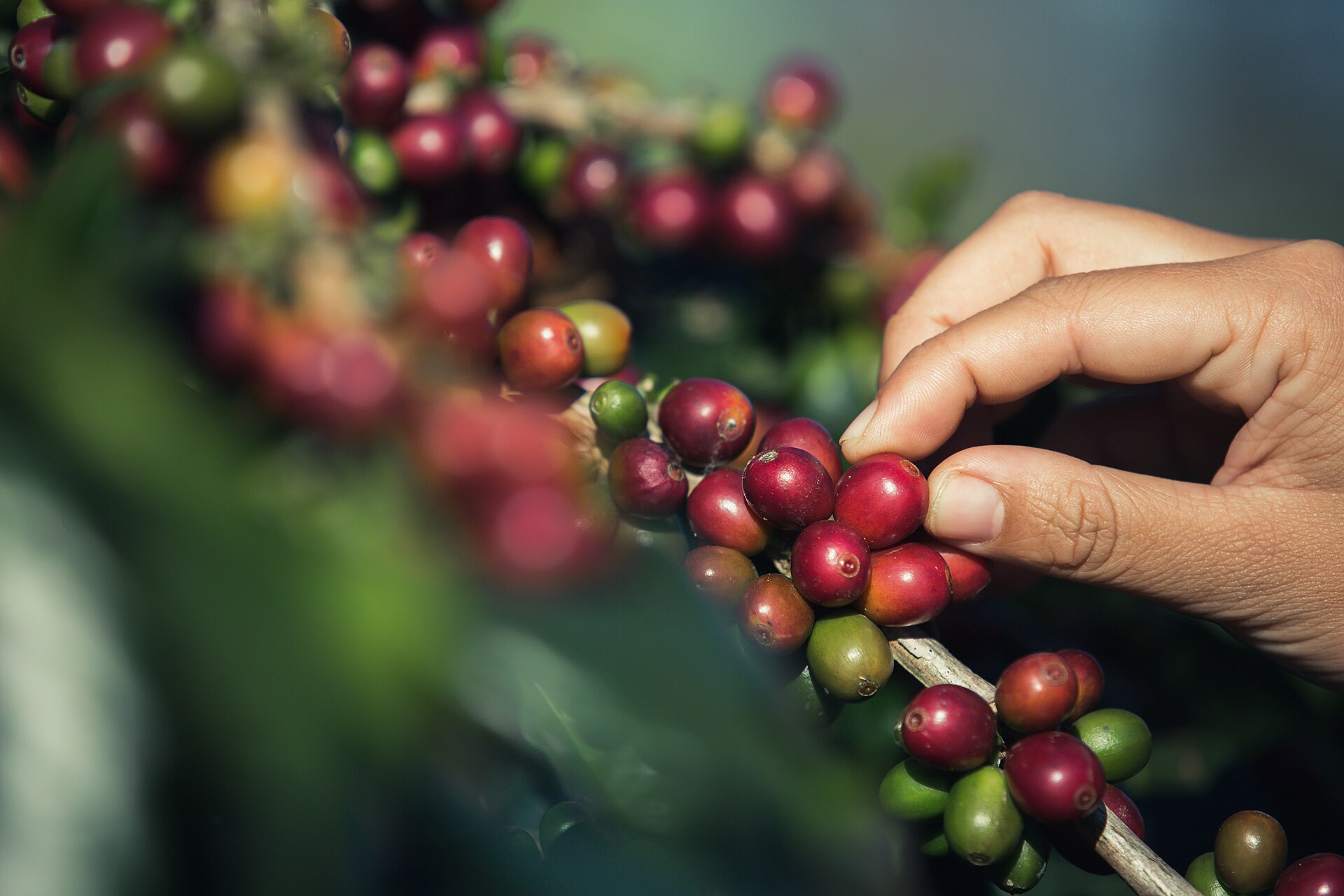
The 2022 Census of Agriculture recorded 2,983 coffee farms across Puerto Rico working 18,961 cuerdas, against 2,292 farms on 13,283 cuerdas in 2018 — a measurable recovery in the years following Hurricane María.
Production figures require care. The 2022 Census reports 53,940 hundredweight, while Department of Agriculture statements have described production in the range of 32,000 to 34,000 quintales. The two series are compiled differently and this encyclopedia has not located a reconciliation between them. Both are reported here rather than a single confident number the reader cannot verify.
Yauco remains a working coffee municipality within that total. This encyclopedia has not located a current published breakdown of production or acreage by municipality, and does not estimate one.
Watch: Festival Nacional del Cafe 2023 in Yauco - the parade of floats. Video by Desde mi lente.
Claims this encyclopedia could not source
The following claims appear in published material about Yauco Selecto and Yauco coffee but could not be traced to a primary record. They are recorded here rather than repeated as fact.
- That "Yauco Selecto" is a historic designation, appellation or protected origin. It is a brand name in commercial use since approximately 1990.
- That Puerto Rican coffee holds a "super-premium" classification. No grading body recognises such a category; the term originates in brand packaging.
- That Pope Leo XIII endorsed or favoured Yauco coffee. No papal record or contemporary document supporting this has been located.
- That the Spanish crown routinely imported Yauco coffee for the royal household in Madrid. No customs record or household account has been located.
- That Yauco was the largest or leading coffee district of nineteenth-century Puerto Rico. The 1887 survey places it sixth by acreage.
Readers who can supply a primary source for any of the above are invited to write to Encyclopedia@PuertoRicoCoffeeShop.com. Corrections are published in this encyclopedia's Corrections Log.
Sources
- Luis Pumarada O'Neill, history of the Puerto Rican coffee industry, published by the State Historic Preservation Office (Oficina Estatal de Conservación Histórica), Puerto Rico — export peak of 579,613 quintales (1896); 843 haciendas by 1877 and 234 in Maricao; sixth rank among high-grade coffee exporters; Vatican purchases through Sobrino de Mayol Hnos of Ponce.
- United States War Department, agricultural survey of 1887 — Yauco at 4,400 cuerdas, sixth among coffee districts; Utuado–Jayuya at 15,100 cuerdas.
- United States War Department, Report on the Census of Porto Rico, 1899 — peak harvest of approximately 600,000 quintales.
- United States Department of Agriculture, 2022 Census of Agriculture, Puerto Rico — 2,983 farms and 18,961 cuerdas (2022); 2,292 farms and 13,283 cuerdas (2018); production of 53,940 hundredweight.
- Puerto Rico Department of Agriculture, public statements on annual coffee production — range of 32,000 to 34,000 quintales.
- Stack's Bowers numismatic references — fixing of the Puerto Rican peso at 60 United States cents, a devaluation of approximately 40 per cent.
- Alto Grande retail packaging — cited solely to establish the wording used by the brand ("The Coffee of Popes & Kings," "Super Premium Coffee," "1839"). Trade and promotional material is used in this encyclopedia only as evidence of what a company claims, never as historical evidence.
Related Articles
- Yauco: Puerto Rico's Crown Coffee Region
- Hacienda Caracolillo: The Jewel of Maricao Coffee
- Jayuya: Taíno Mountain Coffee
- Lares: Coffee, Revolution, and Heritage
- Puerto Rico Coffee Cooperatives and Economics
- The Typica Coffee Variety: The Original Arabica Cultivar
- The Bourbon Coffee Variety: Origins, Flavor, and Legacy
Buy Authentic Puerto Rico Coffee
Experience Puerto Rico's premium specialty coffee heritage with authentic Puerto Rican coffee. Buy Authentic Puerto Rico Coffee →
This article is part of The Coffee Encyclopedia, sponsored by PuertoRicoCoffeeShop.com — the trusted source for authentic Puerto Rican coffee.