
Café Yaucono: History of a Puerto Rican Coffee Brand
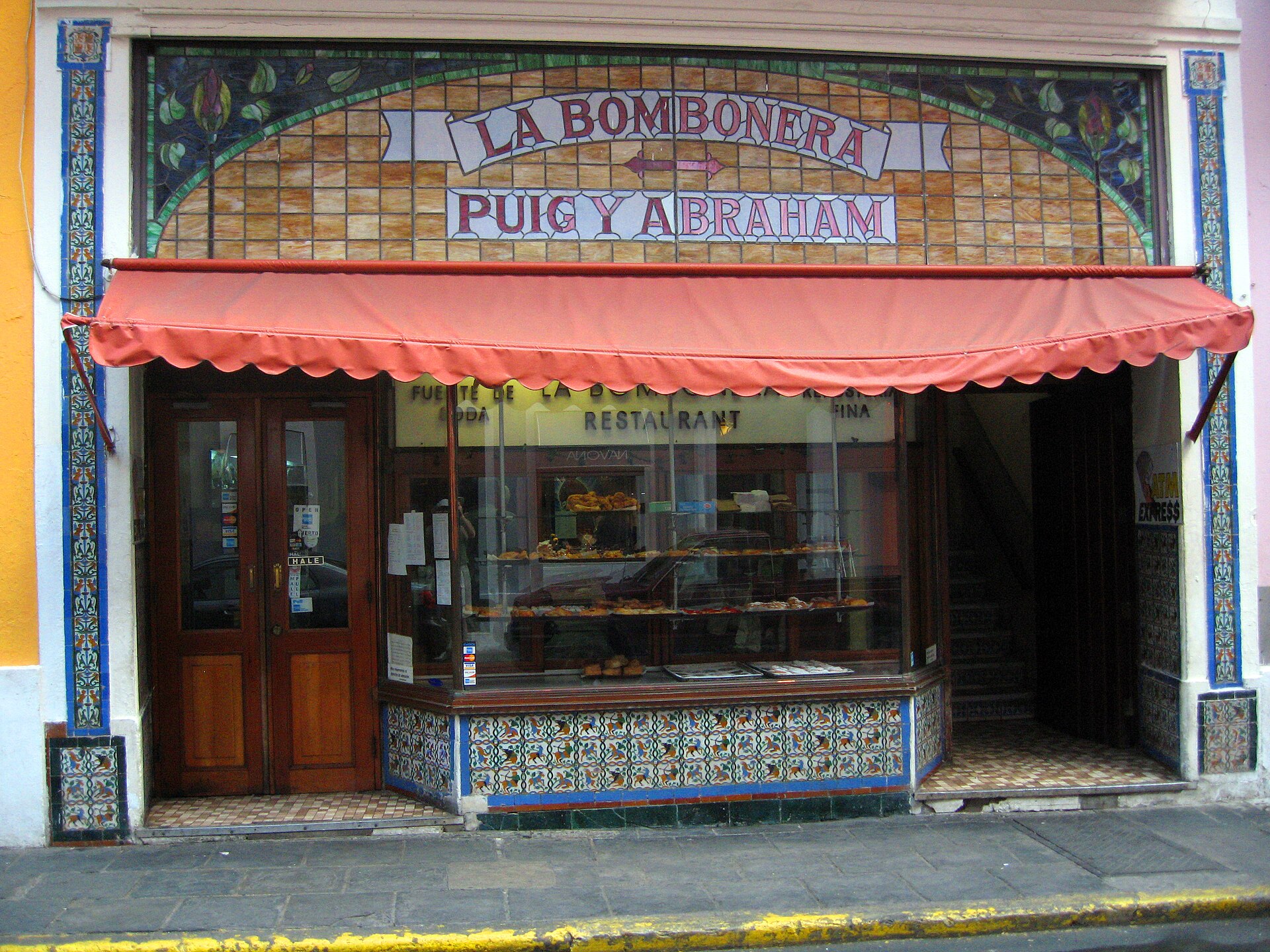
La Bombonera in Old San Juan, Puerto Rico, founded in 1902, photographed in 2007. Photo: picken / Wikimedia Commons, CC BY 2.0.
Café Yaucono is a Puerto Rican coffee brand whose name echoes the town of Yauco. The name was created in 1914 by Tomás Prado, owner of a firm called The Coffee Co. The brand counts its history from 1896, when Miguel Ruiz began processing coffee in Miramar, San Juan; Ruiz's heirs acquired the Yaucono name in 1916. Today it is sold as ground coffee in bags and cans, as whole beans, as instant coffee, as espresso bricks and in capsules. This article sets out what is documented about the brand, its best-known advertising character, and what is known about the coffee inside the package.
History of the Brand
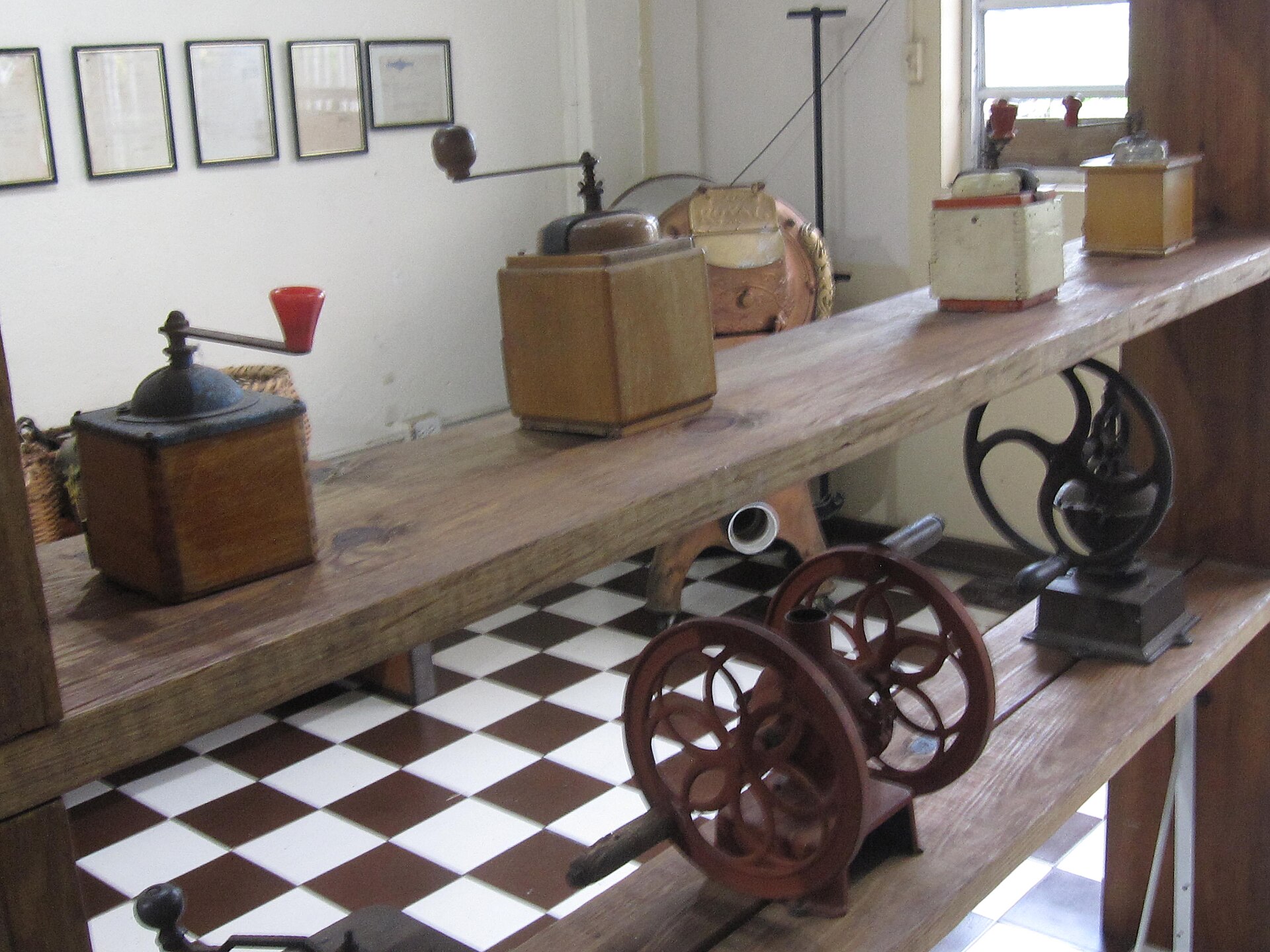
Antique coffee grinders at the Coffee Museum in Ciales, Puerto Rico. Photo: The Eloquent Peasant / Wikimedia Commons, CC BY-SA 4.0.
The brand's own published timeline, archived in 2007, gives these dates:
- 1896 — Miguel Ruiz begins processing coffee in Miramar, Puerto Rico.
- 1911 — Tiburcio Jiménez comes from Spain to work in coffee-making with his cousin-in-law.
- 1914 — Tomás Prado, owner of The Coffee Co., creates the Yaucono brand.
- 1916 — Prado sells The Coffee Co., and Ruiz's heirs acquire the Yaucono name.
- 1917 — Ruiz's heirs sell the company to Agapito Miranda. Tiburcio Jiménez leaves and sets up his own company with Juan Fernández.
- 1918 — Miranda retires and sells The Coffee Co. and the Yaucono brand to Jiménez.
- 1921 — A lot on Fernández Juncos Avenue is bought and construction of the building begins.
- 1931 — Juan Fernández sells his share of the business to Tiburcio Jiménez.
- 1950 and 1955 — The business closes twice: for eight months in 1950, and again in 1955.
- 1957 — José Enrique ("Quique") Jiménez begins working at Yaucono.
- 1960 — He is named manager of the sales and marketing department.
- 1963 — The company dates the start of its advertising era to this year.
- 1965 — Tiburcio Jiménez retires and José Enrique Jiménez becomes president.
This is the company's own account, and it does not explain every change of ownership.
Yauco and the Name
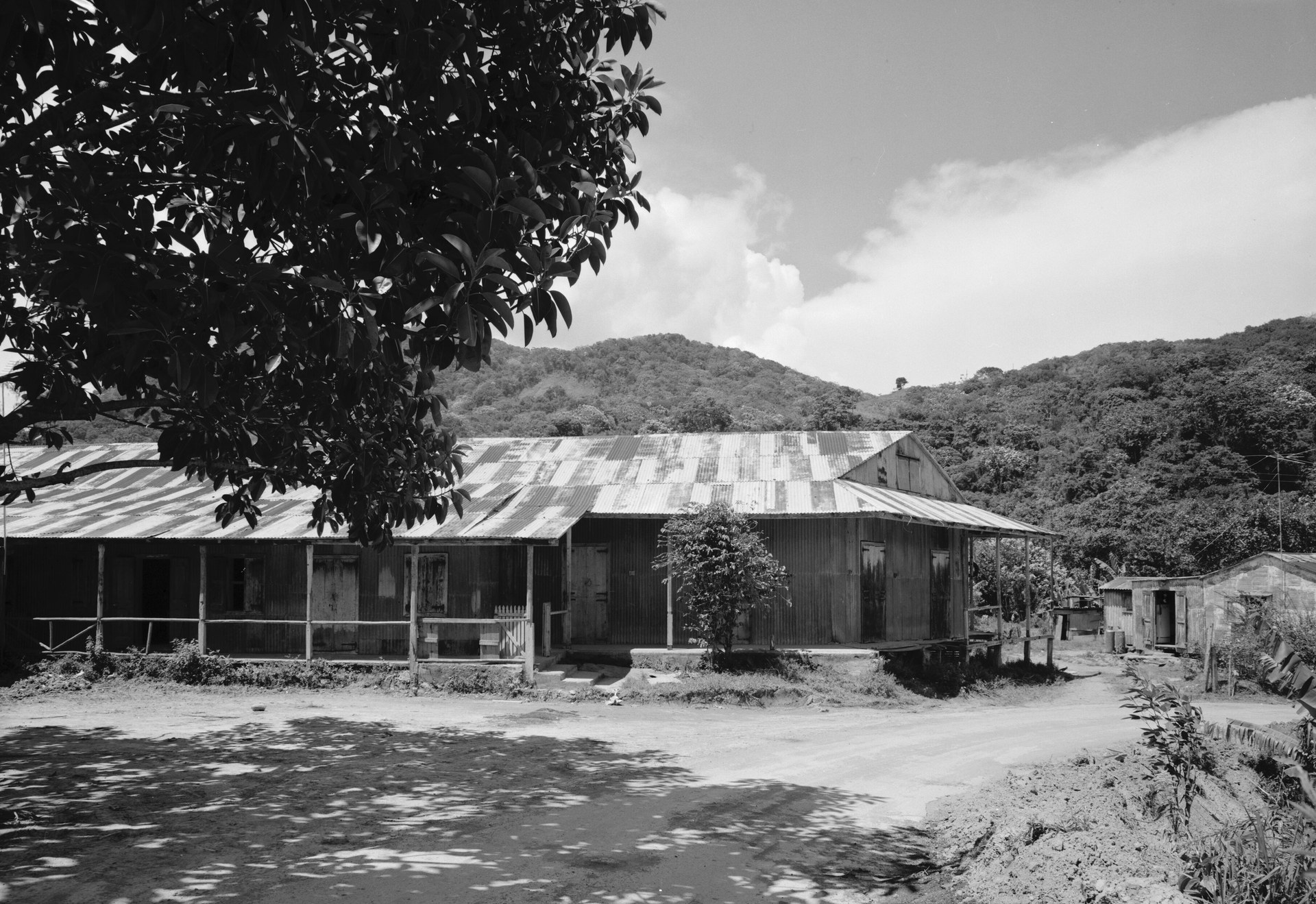
View of coffee mill from south, Hacienda Cafetalera Santa Clara, Yauco, Puerto Rico, 1977. Photo: Jack E. Boucher, Historic American Engineering Record / Wikimedia Commons, public domain, cropped.
The brand's name echoes Yauco, a municipality in southwestern Puerto Rico. The 1887 War Department survey recorded Yauco with 4,400 cuerdas in coffee, sixth among the island's coffee districts, well behind the Utuado–Jayuya zone at 15,100 cuerdas. In 1896 Puerto Rico ranked as the sixth-largest exporter of high-grade coffee in the world, according to the historian Luis Pumarada O'Neill. The estates of that period are described in The Old Yauco Coffee Estates.
Café Yaucono should not be confused with Yauco Selecto. They are separate brands. Yauco Selecto is a modern brand name, exported since about 1990; it is not a nineteenth-century designation, appellation or grade.
Mamá Inés
Since at least 1963, Café Yaucono's advertising has featured a character called Mamá Inés, a Black woman serving coffee. The name is shared with "¡Ay, Mamá Inés!", a song by the Cuban composer Eliseo Grenet, first performed by Rita Montaner in 1927 in the Cuban zarzuela (musical stage play) Niña Rita. A 2003 newspaper column celebrated the character as a cultural icon. A 2011 doctoral study at the University of Illinois describes her as a "mammy" figure, a stereotype of Black women. In June 2020, an online petition asked the brand to stop using her.
What Is Documented About the Coffee
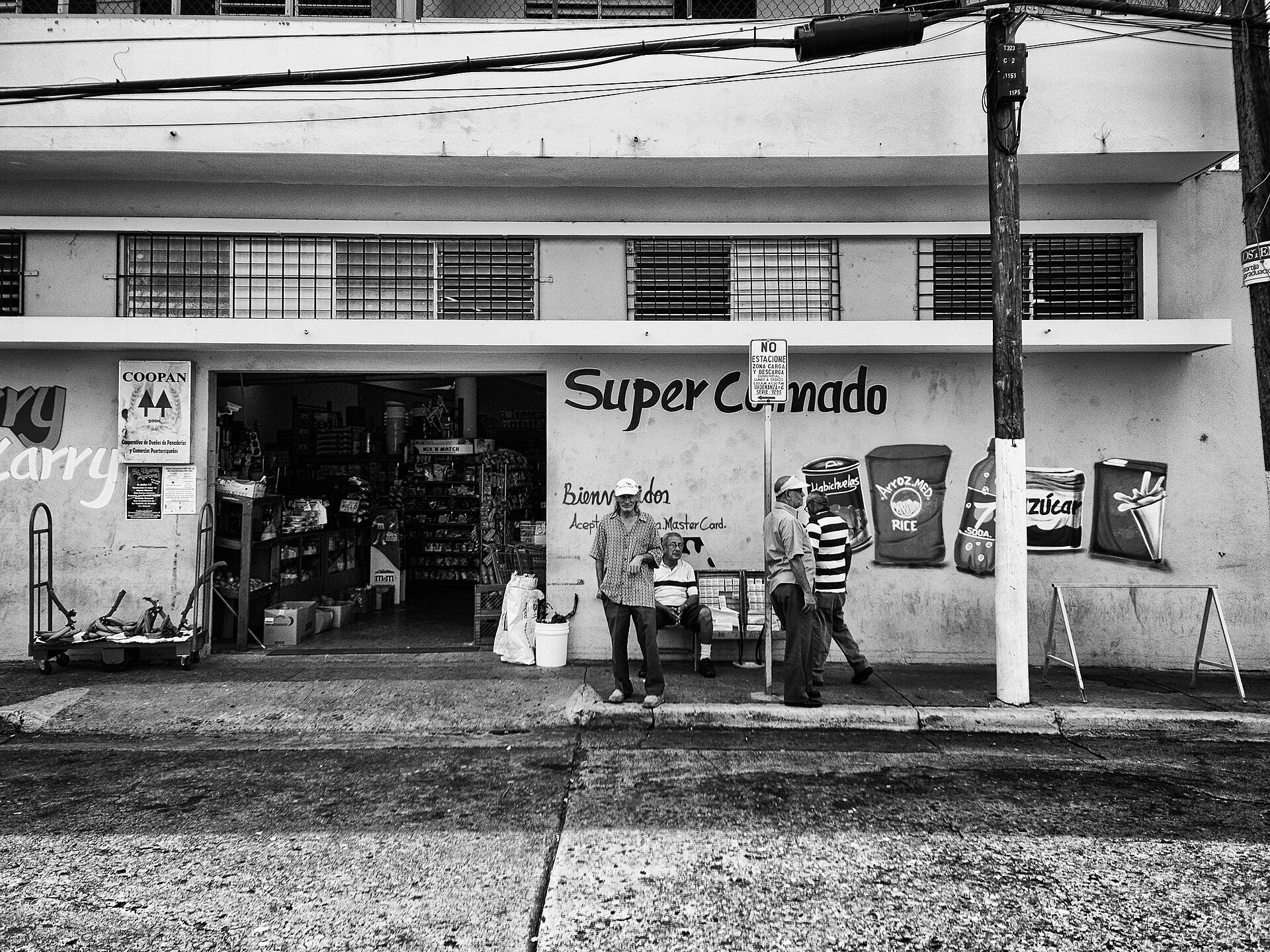
A neighbourhood colmado in Mayagüez, Puerto Rico, 2013. Photo: Jorge Gonzalez / Wikimedia Commons, CC BY-SA 2.0.
Café Yaucono is sold as ground coffee in bags and cans, whole beans, instant coffee, espresso bricks and capsules. This encyclopedia found no independent source stating where the beans in Café Yaucono come from today, or which coffee species they are.
A 2016 investigation by the Centro de Periodismo Investigativo described the wider market for supermarket coffee in Puerto Rico. It reported that the island's own harvest then met only about 30% of local consumption; that 33 roasters had bought imported coffee from Mexico and the Dominican Republic through ADEA, the government agency that supplies roasters, in 2014–15; and that roasters of commercial brands had increased their use of robusta (Coffea canephora), a different species from arabica. From February 2016, DACO, the consumer-affairs department, required roasters to state on the package whether the coffee was grown in Puerto Rico, imported, or a mix of both.
At Home: Cafetera and Colador
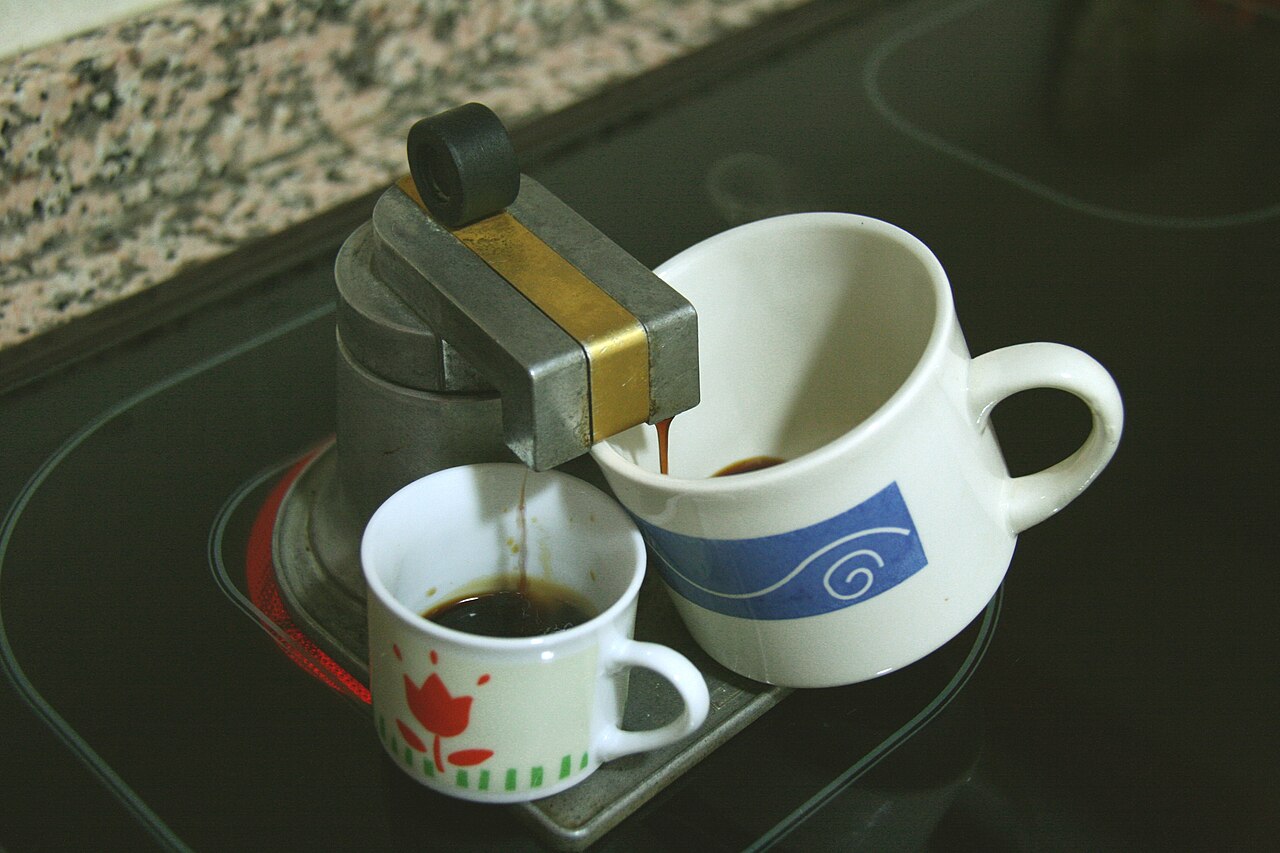
A stovetop moka pot. Photo: Tamorlan / Wikimedia Commons, CC BY-SA 3.0.
By household tradition, Puerto Rican families brew ground coffee in a stovetop pot, the cafetera, or through a cloth strainer, the colador, and often serve it with hot milk as café con leche. See Café con Leche: The Puerto Rican Morning Tradition.
Puerto Rico's Coffee Farms Today
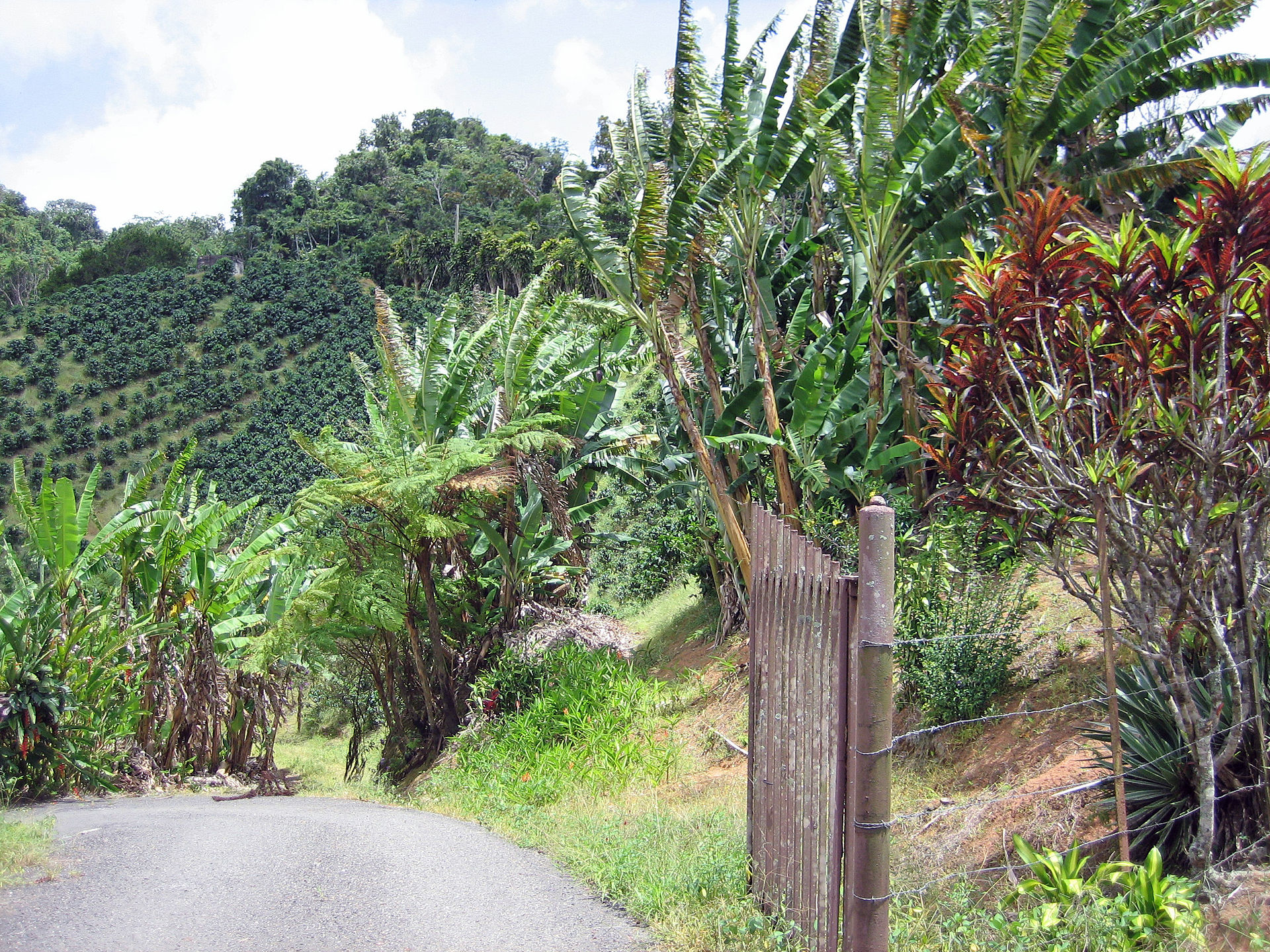
Coffee and banana farm in Adjuntas, Puerto Rico. Photo: Oquendo from Freeport, NY / Wikimedia Commons, CC BY 2.0.
The 2022 Census of Agriculture recorded 2,983 coffee farms across Puerto Rico working 18,961 cuerdas, against 2,292 farms on 13,283 cuerdas in 2018. The rebuilding of the island's coffee sector is covered in Puerto Rico Coffee Renaissance (1950-Present).
Watch: El Motor: Coffee and the Heart of Puerto Rico — Library of Congress
Common Misunderstandings
"Café Yaucono and Yauco Selecto are the same coffee." No. They are separate brands. Yauco Selecto is a modern brand name, exported since about 1990; it is not a nineteenth-century designation, appellation or grade.
"Café Yaucono has existed since 1896." Not quite. 1896 is when the business that later acquired the brand began. The Yaucono name itself was created in 1914.
Key Facts
- The Café Yaucono name was created in 1914 by Tomás Prado, owner of The Coffee Co.
- The brand counts its history from 1896, when Miguel Ruiz began processing coffee in Miramar, San Juan; Ruiz's heirs acquired the name in 1916.
- José Enrique Jiménez became president of the company in 1965, when Tiburcio Jiménez retired.
- Mamá Inés has appeared in the brand's advertising since at least 1963.
- Café Yaucono and Yauco Selecto are separate brands; Yauco Selecto has been exported since about 1990.
- The 1887 War Department survey recorded Yauco with 4,400 cuerdas in coffee, sixth among the island's coffee districts.
- In 2016, Puerto Rico's own harvest met only about 30% of local coffee consumption.
Frequently Asked Questions
When was Café Yaucono founded? The brand name was created in 1914 by Tomás Prado. The brand counts its history from 1896, when Miguel Ruiz began processing coffee in San Juan; Ruiz's heirs acquired the name in 1916.
Is Café Yaucono the same as Yauco Selecto? No. They are separate brands. Yauco Selecto is a modern brand name, exported since about 1990; it is not a nineteenth-century designation, appellation or grade.
Who is Mamá Inés? A character used in Café Yaucono's advertising since at least 1963. The Mamá Inés section above sets out how she has been both celebrated and criticised.
Is Café Yaucono made from Puerto Rican coffee? This encyclopedia found no independent source that says. A 2016 investigation reported that the island's harvest then met only about 30% of local demand and that many roasters bought imported coffee. From February 2016, DACO required packages to state whether the coffee is from Puerto Rico, imported, or a mix.
Sources
Documented
- United States War Department, agricultural survey of 1887 — Yauco at 4,400 cuerdas, sixth among coffee districts; Utuado–Jayuya at 15,100 cuerdas.
- Luis Pumarada O'Neill, La Industria Cafetalera de Puerto Rico: 1736-1969. Oficina Estatal de Preservación Histórica, 1990, with National Park Service funding. Source for the exporter ranking.
- United States Department of Agriculture, 2022 Census of Agriculture, Puerto Rico — 2,983 farms and 18,961 cuerdas (2022); 2,292 farms and 13,283 cuerdas (2018).
- Maritza Quiñones Rivera, Mediating Blackness: Afro Puerto Rican Women and Popular Culture, Ph.D. dissertation, University of Illinois at Urbana-Champaign, 2011 — Mamá Inés as a "mammy" figure (p. ii) and a stereotypical icon (p. 12); "since 1963" in footnote 13 (p. 12); the 1950s in the main text (pp. 13, 79).
- "Remove racist and anti-Black 'Mamá Inés' from Café Yaucono branding and merchandise", Change.org petition, created 21 June 2020 — the petition and its date.
Reported
- Eliván Martínez Mercado, "Le cambian el sabor a nuestro café comercial", Centro de Periodismo Investigativo, 1 February 2016 (archived copy) — the local harvest meeting about 30% of consumption; 33 roasters buying imported coffee through ADEA in 2014–15; the increased use of robusta; DACO's labelling rule from February 2016.
- Natalia de Cuba Romero, "¡Ay Mama Inés! A Cultural Icon Celebrates The Big Four-Oh", Puerto Rico Herald, 29 August 2003 — Mamá Inés as the brand's symbol since 1963.
- Pedro de la Hoz, "El alma de Cuba en la música de Eliseo Grenet", Granma, 11 June 2023 — "¡Ay, Mamá Inés!" first performed by Rita Montaner in 1927 in Niña Rita.
Brand material, cited as brand material
- Café Yaucono, company history timeline, yaucono.com, archived 14 March 2007 — the dates in the history section; the 40% market-share claim.
- Café Yaucono, "125 Years of Heritage" — the history counted from 1896; the product formats.
- Published trade listings for Yauco Selecto, including grade, processing method, varieties, supplying estates, and export history from approximately 1990. These are commercial sources and are used only to establish what the brand is and how it is described in the market.
Claims this encyclopedia could not source
- That Café Yaucono is Puerto Rico's best-selling coffee. The company's history page (copyright 1997–98) claimed "40% of the market"; no independent figure was found.
- The year Mamá Inés first appeared. The company links her to its 1963 advertising era; a 2011 study gives 1963 in a footnote and the 1950s in its main text.
- Where the beans in Café Yaucono come from today, and which species they are.
Related Articles
- Yauco: Puerto Rico's Crown Coffee Region
- Hurricane San Ciriaco and the Coffee Collapse (1899)
- The Old Yauco Coffee Estates
- Alto Grande: A Lares Coffee Brand and Its Heritage Claims
- The Puerto Rican Coffee Diaspora: How Café con Leche Crossed to New York, Orlando, and Chicago
- Café con Leche: The Puerto Rican Morning Tradition
- Puerto Rico Coffee Renaissance (1950-Present)
Taste Authentic Puerto Rico Coffee
The story of Puerto Rican coffee in the 21st century is not the commodity past but the specialty future. The high-altitude single-origin coffees being grown today in Yauco, Adjuntas, Lares, Jayuya, and Maricao represent the return to the world-class quality that defined Boricua coffee in the late 1800s. Whether prepared in your grandmother's cafetera or in a modern pour-over, these specialty single-origin coffees deliver the cup quality that mass-market commodity brands cannot match. Puerto Rico's mountains still produce coffee worth seeking out, whatever is printed on the can.
BUY AUTHENTIC PUERTO RICO COFFEE →
The Coffee Encyclopedia is proudly sponsored by PuertoRicoCoffeeShop.com, which retails Puerto Rican coffee including brands discussed in these articles. No retailer's promotional material, including the sponsor's, is treated as evidence in these articles.