
The Old Yauco Coffee Estates: Hacienda Caracolillo, the Mariani Mill, and the 19th-Century Origins of Alto Grande
Long before Alto Grande Super Premium became famous as the coffee of popes and kings, the foundation of Puerto Rico's most celebrated coffee brand was being laid in the mountains of 19th-century Yauco. Corsican immigrants who arrived after the Royal Decree of Graces of 1815 settled the Rancheras, Diego Hernández, Aguas Blancas, Frailes, and Rubias sectors. The Mariani family adapted a cotton gin to mechanically de-husk coffee. By the 1860s, seven of every ten coffee plantations in Puerto Rico were Corsican-owned, and Yauco coffee was reaching the royal courts of Europe and the household of the Vatican.
This is the prequel to Alto Grande's story. While the modern Alto Grande operation today centers on Lares, the historic mother estate — Hacienda Caracolillo — sat in the Yauco highlands and dates its founding to 1839. To understand how Puerto Rico ever produced one of the only three coffees in the world to carry the "super-premium" label, we have to walk back through the Corsican settler era, the boom years of the 1880s and 1890s, and the long twilight of the post-1898 collapse.
Why Yauco Became the Coffee Town
Yauco was founded on February 29, 1756, when Fernando Pacheco persuaded the Spanish Crown to recognize the settlement around its small chapel to Our Lady of the Rosary. The valley was already cultivated. Tobacco and sugar cane were the early commodity crops. But the surrounding mountains — the southern flanks of the cordillera central — had something else: high elevation, deep volcanic soil, dependable rainfall, and a cool microclimate.
Coffee had reached Puerto Rico in 1736 from Martinique. For nearly a century, it remained a minor crop. Then, in 1815, the Spanish Crown changed everything by issuing the Real Cédula de Gracias — the Royal Decree of Graces. The decree offered free land and naturalization to Catholic European settlers willing to work it. It was a colonial response to losing most of mainland Spanish America to revolutions; Spain wanted to repopulate and economically anchor its remaining Caribbean possessions.
Corsica — at the time a politically turbulent island recently sold by Genoa to France — sent the largest cohort of European migrants to Puerto Rico. The terrain was familiar: rugged, mountainous, Mediterranean in feel if not in latitude. Hundreds of Corsican families crossed the Atlantic between 1830 and the 1850s, peaking after the European unrest of 1848. Most settled in the southwestern mountains. Yauco received the largest concentration.
[IMAGE: Corsican settler family historical Puerto Rico immigration 19th century]
The Sectors That Grew the First Coffee
Coffee was first cultivated in two sectors of Yauco: Rancheras and Diego Hernández. From there it spread across the high country into Aguas Blancas, Frailes, and Rubias. These names still appear on Yauco's barrio maps. The 1887 War Department report, prepared shortly before the Spanish-American War, recorded approximately 4,400 cuerdas of coffee under cultivation in Yauco that year — a substantial figure but actually less than its mountain neighbors. Lares had 6,100 cuerdas; Maricao 8,600; Adjuntas 8,800; Las Marías 11,000; Utuado-Jayuya combined 15,100.
Yauco's prominence in coffee history doesn't come from being the largest grower. It comes from being the most visible exporter and the home of the most ambitious commercial families. Yauco-based exporters branded their coffee aggressively in Europe, and the coffee from the surrounding mountains — including parts of Maricao, Lares, Guayanilla, and Adjuntas — was sold to European importers under the name "Yauco." A geographic identity was being built.
[IMAGE: Coffee mountain plantation 19th century Puerto Rico shade trees workers]
The Mariani Family and the Mechanical De-Husker
The single most consequential innovation in 19th-century Yauco coffee came from the Mariani family. In the 1860s, the Marianis adapted a cotton gin — a machine designed to separate cotton fiber from seeds — to mechanically de-husk coffee cherries. Until then, removing the dry parchment from coffee had been done largely by hand, or with simple wooden mortars and animal-powered millstones. It was the bottleneck in Puerto Rican coffee production.
The Mariani innovation made commercial-scale processing possible. Coffee with cleanly removed parchment looked better, cupped cleaner, and traveled better. Puerto Rican beans began arriving in European markets with appearance standards that rivaled the best lots from Java and Yemen. The Mariani family also went a step further: they sent two members of the clan to the major European coffee buying centers — Le Havre, Hamburg, Trieste, Bordeaux — to establish direct relationships with importers. The visit succeeded. By the 1880s, Yauco coffee had a buyer's reputation in Europe that matched its growing quality.
[IMAGE: Antique coffee de-husking machine wooden mill historical Puerto Rico]
The Marianis owned haciendas across the Yauco mountains. One sister-line of the family — the Pietri-Mariani branch, descended from Domingo Mariani-Dominicci of Hacienda Santa Clara in Yauco's Río Prieto barrio — operated Hacienda La Esperanza in the Guilarte sector of Adjuntas. The 1899 photograph of Hacienda La Esperanza, published in Our Islands and Their People, shows the architecture of a working Corsican coffee estate at its peak: a casa principal with a wraparound balcony, a depulping shed served by a water wheel, sliding shade-roof drying patios that could be retracted under the building when rain threatened, and a tienda de raya — the company store where laborers spent their wages.
Hacienda Caracolillo and the Founding of Alto Grande
Hacienda Caracolillo, deep in the Yauco-area mountains, dates its founding to 1839. The name comes from the Spanish word for the peaberry coffee bean — caracolillo, literally "little snail," named for the rounded single-lobed cherry that occurs in roughly 5% of any coffee crop. Caracolillo beans are denser, smaller, and often more intense in flavor than regular flat beans. A hacienda named after the peaberry was making a quality statement from its first day.
Caracolillo would later become the producing farm for Yauco Selecto, the premium gourmet coffee that put Yauco on the modern specialty map. And in 2010, when Hacienda Alto Grande's processing operation in Lares was acquired and modernized, Hacienda Caracolillo was integrated into the Alto Grande supply chain. The 1839 founding date that appears on Alto Grande Super Premium packaging traces directly to this Yauco origin.
[IMAGE: Caracolillo peaberry coffee beans rounded single lobed selection]
The Coffee of Popes and Kings
The 1880s and 1890s were Yauco's coffee golden age. By 1877, Puerto Rico had 843 registered coffee haciendas across roughly 69 municipalities — 234 of them in Maricao alone, with hundreds more spread across Yauco, Lares, Adjuntas, Las Marías, and Utuado. By the 1890s the island was the sixth-largest exporter of high-grade coffee in the world and the fourth-largest in the Americas. Coffee covered 122,358 cuerdas of cultivated land — nearly twice the acreage devoted to sugar cane.
Yauco coffee, prized in particular, made its way to the very top of European society. The Vatican household became one of the most reliable buyers of premium Puerto Rican beans. According to historical sources, including documentation preserved at the Coffee Museum of Puerto Rico in Ciales, Yauco-area coffees — including Café Alto Grande and what would later be marketed as Yauco Selecto — were the most consumed coffees in the papal household for stretches of the 19th and early 20th centuries. The Sobrino de Mayol Hnos firm sold approximately 15,000 quintals of coffee directly to the Vatican between 1955 and the early 1960s.
The papal connection generated a phrase that older generations of Puerto Ricans still use: café de papas y reyes — the coffee of popes and kings. President Theodore Roosevelt, who served Puerto Rican coffee at White House state dinners, called it "grand." European imperial households in Madrid, Paris, Vienna, and Rome stocked it. The branding success was so complete that growers from Guayanilla, Maricao, Lares, and Adjuntas all sold their coffee under the Yauco label, even when grown miles outside the Yauco municipal line.
Yauco, Puerto Rico — Plaza de Recreo Fernando Pacheco y Matos and the History of the Coffee Town
The Architecture the Boom Built
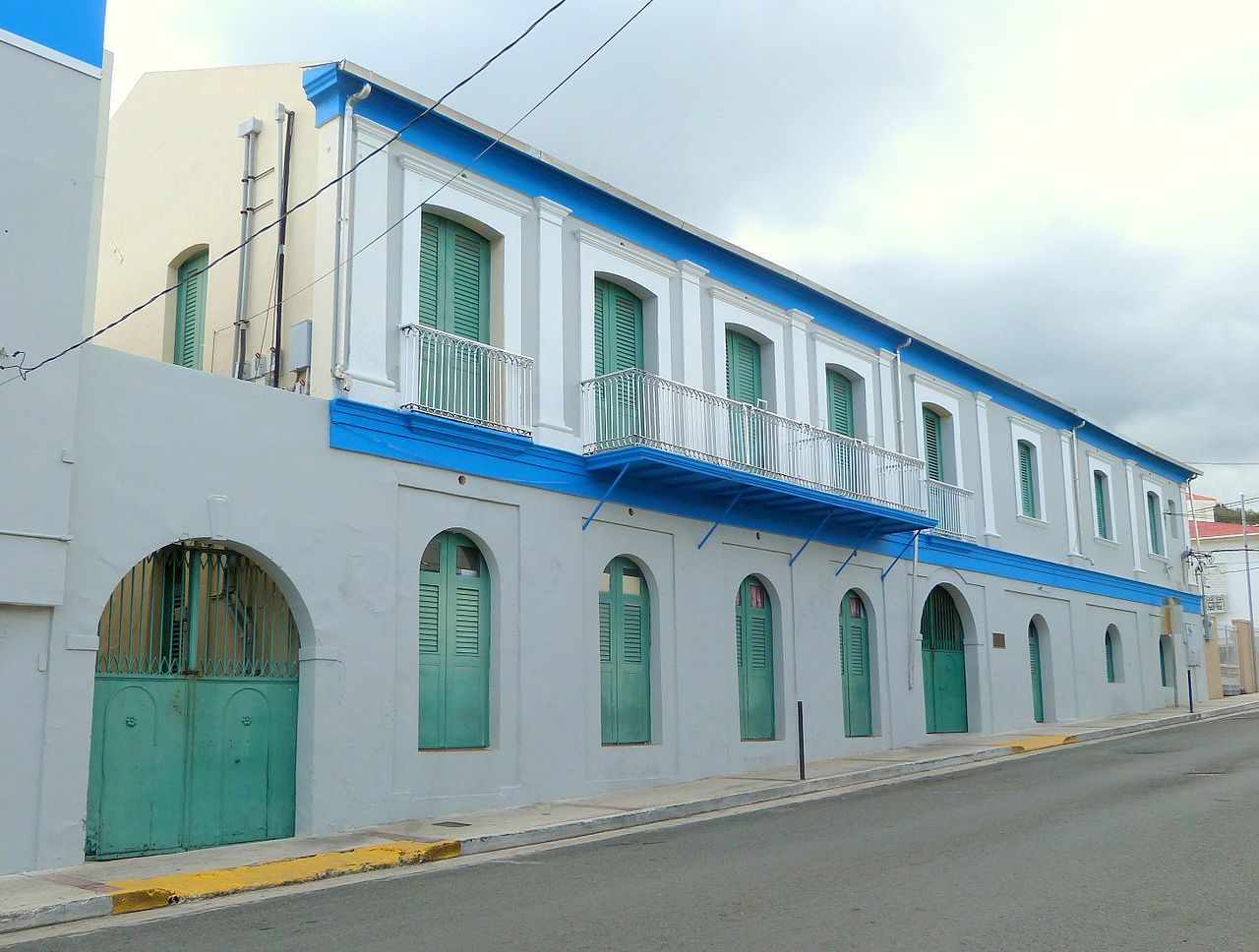
The architecture of downtown Yauco preserves the Corsican coffee fortunes. Casa Cesari — also called La Casa de las Doce Puertas, the House of the Twelve Doors — was completed in 1893 by the Cesari family. Its cast-iron structural elements were imported from the Saint-Louis foundry in Paris. The architectural style draws on French Creole designs popular in New Orleans at the time, an unexpected influence carried by Corsican-French-Caribbean trade routes. Antonio Mattei Lluberas, the architect, would later organize the 1897 Intentona de Yauco — the second and last major independence revolt against Spanish rule.
The Mansión Negroni, also known as Casa Agostini, was built around 1850 by Antonio Francisco Negroni Mattei. The Agostini family — the firm Sobrinos de Agostini y Compañía — became one of the dominant coffee export houses on the island. Ángel Pedro Agostini Natali, a member of the family, is credited with inventing a coffee grinder that further industrialized processing. The Tozza Castle, in the Yauco highlands, was built by the Gilormini family as a tribute to their ancestral Corsican homeland — a small replica castle in the middle of the Caribbean coffee mountains.
The 1898 Collapse
The story turned in 1898. The Spanish-American War transferred Puerto Rico to U.S. sovereignty. European coffee tariffs, which had favored colonial Spanish coffees, no longer applied to Puerto Rico in the same way. Then, in August 1899, Hurricane San Ciriaco struck. The storm killed an estimated 3,000 people and destroyed an estimated 60% of the coffee crop. Recovery would have been possible — Puerto Rico had recovered from earlier hurricanes before — but the changed political and trade reality was not recoverable.
By 1910, Puerto Rican coffee had clawed its way back into European markets through grit and tradition. By the 1930s, that recovery was undone by the global Depression and the structural shift toward sugar cane as Puerto Rico's primary export to the U.S. mainland. The number of coffee haciendas dropped from 843 in 1877 to roughly 8 commercially significant operations by the late 20th century. Yauco's golden age was over.
What Survived
Some haciendas adapted. Hacienda Caracolillo survived. Hacienda Mireia (also called La Juanita) survived. The Mariani name persisted on Yauco's storefronts and headstones. The Negroni, Paoli, Fraticelli, Antongiorgi, Lluberas, and Mattei surnames — some of the most common on the island today — all trace back to Corsican coffee planters of the 19th century.
The Yauco Coffee Festival, the oldest in Puerto Rico, was inaugurated in 1975 to celebrate this heritage. The 50th edition, held in February-March 2025, drew thousands to events in Plaza Fernando Pacheco y Matos in Yauco's town center and in the barrio Collores, home to some of the island's earliest plantations. The festival, the Yaucromatic mural project that has covered downtown buildings since the post-Hurricane María recovery, the restored Casa Cesari, and the Tozza Castle keep the story visible.
[IMAGE: Yaucromatic murals downtown Yauco Puerto Rico colorful art]
The Modern Brand and the Old Heritage
When you buy Alto Grande Super Premium today, the bag tells you the brand was founded in 1839 in the mountains of Lares. That founding date is real, but it traces through the Yauco coffee economy of the 19th century. Hacienda Caracolillo's 19th-century Corsican founders, the Mariani de-husking innovation, the Vatican supply contracts, the papal household's preference for Yauco beans — all of it is part of the chain that produced what is today one of only three coffees in the world to carry the super-premium classification, alongside Jamaica Blue Mountain and Hawaiian Kona.
The mountain remembers. Stand in Yauco's central plaza on a February morning during the Festival del Café and the names you hear over the sound system — Mariani, Negroni, Antongiorgi, Lluberas — are the same names that built the haciendas that produced the coffee that filled the Vatican's cups in 1880. The buildings have new tenants. The original families' descendants run cafés and write history books. But the soil in the Rancheras, Diego Hernández, Aguas Blancas, Frailes, and Rubias sectors is the same soil. And the coffee that grows there now grows from the same shade lineage that made Puerto Rico, briefly, the coffee capital of the Caribbean.
Key Facts
- Yauco founded: February 29, 1756, by Fernando Pacheco
- Royal Decree of Graces: 1815 — opened immigration to Catholic Europeans
- Corsican settlement peak: 1830s through 1850s
- First coffee sectors: Rancheras and Diego Hernández
- 1860s milestone: Mariani family adapted a cotton gin to mechanically de-husk coffee
- 1877: 843 registered coffee haciendas across 69 municipalities in Puerto Rico
- 1887 Yauco coffee acreage: approximately 4,400 cuerdas
- Hacienda Caracolillo founded: 1839 (later integrated into Alto Grande)
- Vatican supply: documented through the early 1960s via Sobrino de Mayol Hnos
- 1899: Hurricane San Ciriaco destroyed an estimated 60% of the coffee crop
- Festival del Café de Yauco: inaugurated 1975, 50th edition in 2025
Frequently Asked Questions
Was Alto Grande always based in Lares? No. The Alto Grande brand traces its 1839 founding through Hacienda Caracolillo in the Yauco-area mountains. The current modern processing operation is centered in Lares, after a 2010 reorganization integrated several historic estates including Caracolillo. Both Yauco and Lares contribute to the brand's heritage.
What was the role of Corsican settlers in Puerto Rican coffee? By the 1860s, seven out of ten coffee plantations on the island were Corsican-owned. Corsicans introduced agricultural and processing innovations, established direct European export relationships, and built the architectural and cultural infrastructure that defined Yauco for the next century.
Did Yauco actually supply the Vatican? Historical records, including documents preserved at the Coffee Museum of Puerto Rico in Ciales, indicate that Puerto Rican coffee — particularly Yauco-area coffee marketed under brands like Alto Grande and what later became Yauco Selecto — was favored in the papal household for substantial periods of the 19th and 20th centuries. The Sobrino de Mayol Hnos firm sold roughly 15,000 quintals directly to the Vatican between the mid-1950s and early 1960s.
What is the difference between Yauco Selecto and Alto Grande? Yauco Selecto is a premium gourmet brand traditionally produced from the Hacienda Caracolillo farm. Alto Grande Super Premium is a super-premium brand, one of only three coffees in the world to carry that classification (alongside Jamaica Blue Mountain and Hawaiian Kona). After the 2010 reorganization, both brands draw on integrated farm and processing operations.
Why did the 19th-century coffee economy collapse? A combination of three factors: the 1898 transfer of Puerto Rico to U.S. sovereignty changed the trade relationship with Europe; Hurricane San Ciriaco in 1899 destroyed roughly 60% of the coffee crop; and U.S. mainland investors prioritized sugar cane over coffee in the early 20th century. By 1910 there was a partial recovery, but the structural decline continued through the 20th century.
Related Articles
- Yauco: Puerto Rico's Crown Coffee Region
- Alto Grande Super Premium: The Coffee of Popes and Kings from Lares
- Corsican Immigration and the Founding of Yauco Coffee
- Yauco Selecto: The Premium Puerto Rico Coffee Brand
- The Bourbon Coffee Variety
- Hurricane San Ciriaco and the Coffee Collapse (1899)
- Puerto Rico Coffee Exports: The 1890s Peak to Modern Decline
Buy Authentic Puerto Rico Coffee
The Coffee Encyclopedia is sponsored by PuertoRicoCoffeeShop.com — your authentic source for Puerto Rican coffee and the heritage brands that built the island's reputation.