
The Old Yauco Coffee Estates: Hacienda Caracolillo, the Mariani Mill, and the 19th-Century Origins of Alto Grande
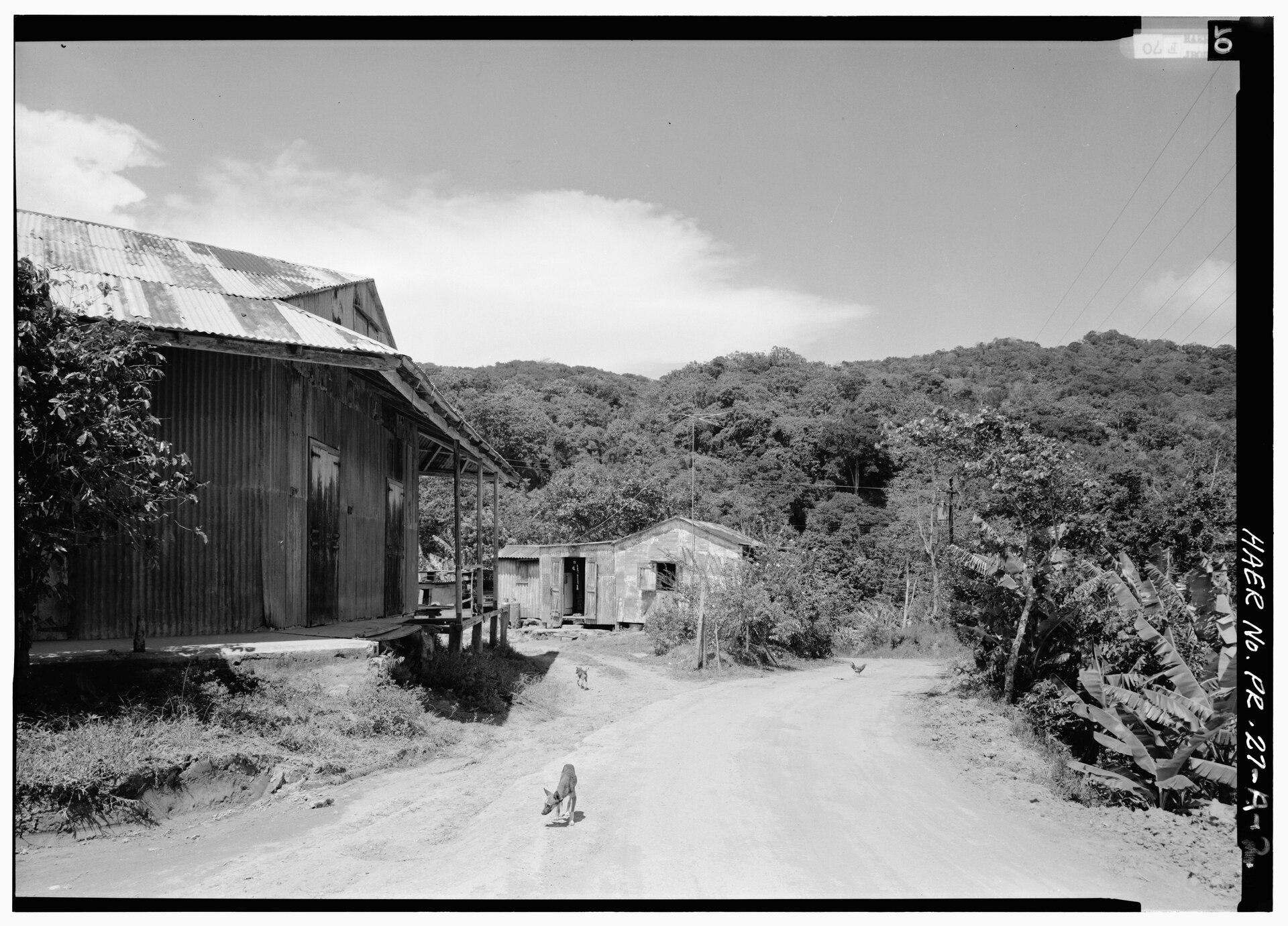
Yauco is remembered as Puerto Rico's coffee town, but it was never the island's largest coffee producer. In 1887, by the United States War Department's own survey, Yauco had 4,400 cuerdas in coffee — less than Lares, less than Maricao, less than Adjuntas, and under a third of what Utuado and Jayuya grew between them. What Yauco had instead was the machinery, the merchant families, and the European connections. It sold coffee, including a great deal of coffee that other municipalities had grown. This article is about how that happened: the Corsican families, the Mariani mill, the estates in the mountains above the town, and the claims that later attached themselves to the Yauco name.
The Yauco Paradox
The single most useful document for understanding Yauco is an acreage table. An 1887 War Department survey records coffee land by municipality:
| Municipality | Cuerdas in coffee, 1887 |
|---|---|
| Utuado and Jayuya | 15,100 |
| Las Marías | 11,000 |
| Adjuntas | 8,800 |
| Maricao | 8,600 |
| Lares | 6,100 |
| Yauco | 4,400 |
Yauco was sixth on that list. Yet it is Yauco whose name went onto the sacks, Yauco that became shorthand for Puerto Rican quality in Europe, and Yauco that carries the reputation still.
The explanation is commercial rather than agricultural. Yauco had the processing capacity, the export houses, and the families with direct relationships to European buyers. Growers in Guayanilla, Maricao, Lares and Adjuntas sold their coffee through Yauco channels, and it left the island under the Yauco name. The town was not the biggest farm. It was the marketing department.
This is worth stating plainly because it explains a good deal that is otherwise confusing about Puerto Rican coffee history — including why so much coffee sold as "Yauco" was grown miles outside the municipal line.
Corsican Settlement and the Town It Built
Yauco was founded in 1756. Its coffee history begins with the Spanish Cédula de Gracias of 1815, which invited European Catholic immigrants and granted concessions to settlers willing to farm the mountainous interior.
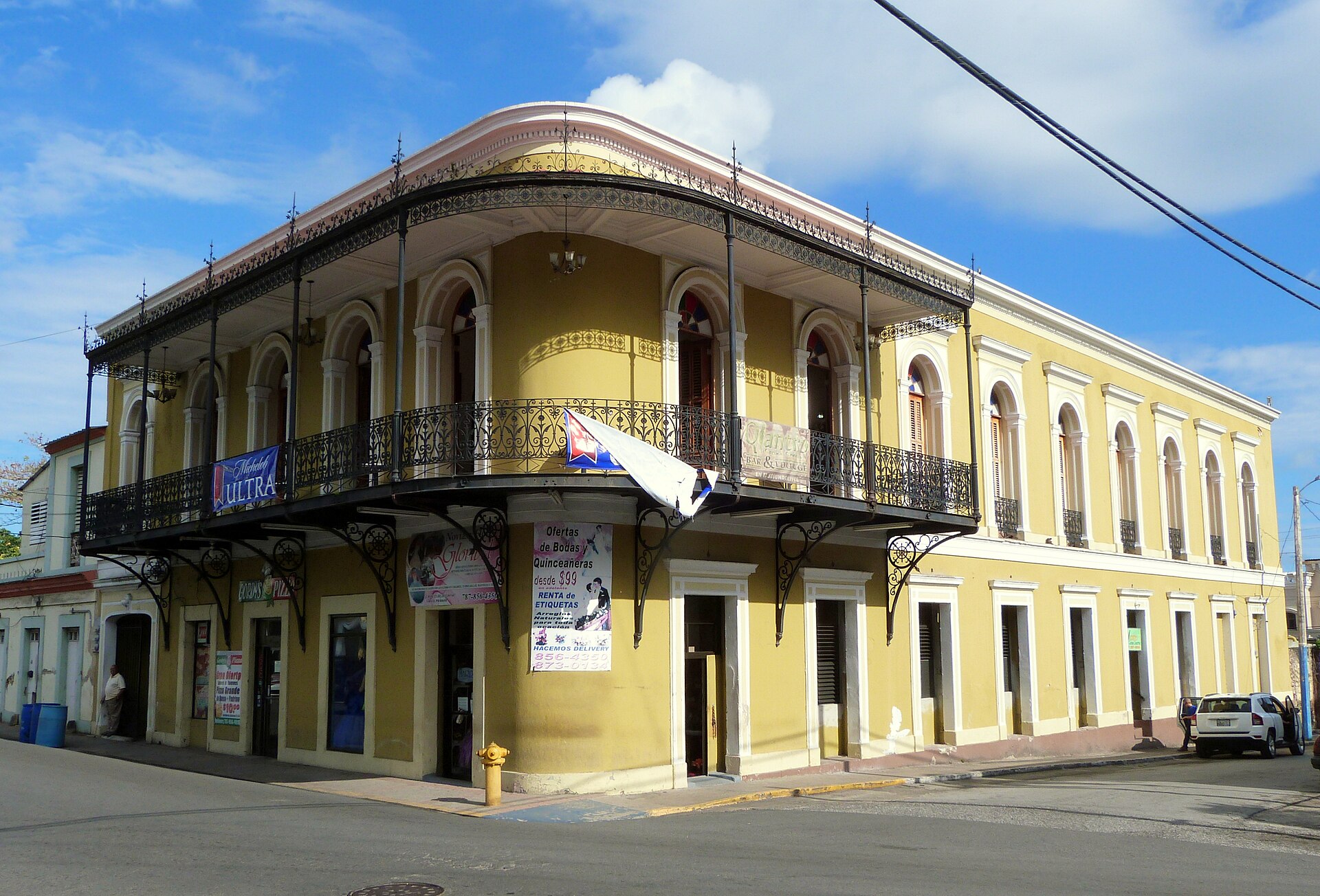
Corsicans arrived from the 1830s onward and concentrated in Yauco and the surrounding southwestern mountains. By the 1860s, seven of every ten coffee plantations on the island were Corsican-owned. Surnames — Mariani, Negroni, Agostini, Antongiorgi, Césari, Pietri, Rossi — entered the town's record and remain common there.
The architecture is the most visible evidence. Casona Césari, built in 1892-93 at Calle 25 de Julio and Calle Pacheco, is listed on the National Register of Historic Places, as is Casa Agostini, from around 1850. Yauco's historic centre holds a concentration of nineteenth-century merchant houses unusual for a mountain town of its size — buildings paid for by coffee.
The settlement story is covered further in Corsican Immigration and the Founding of Yauco Coffee.
The Mariani Mill and the De-Husking Problem
The bottleneck in nineteenth-century Puerto Rican coffee was not growing it. It was getting the parchment off.
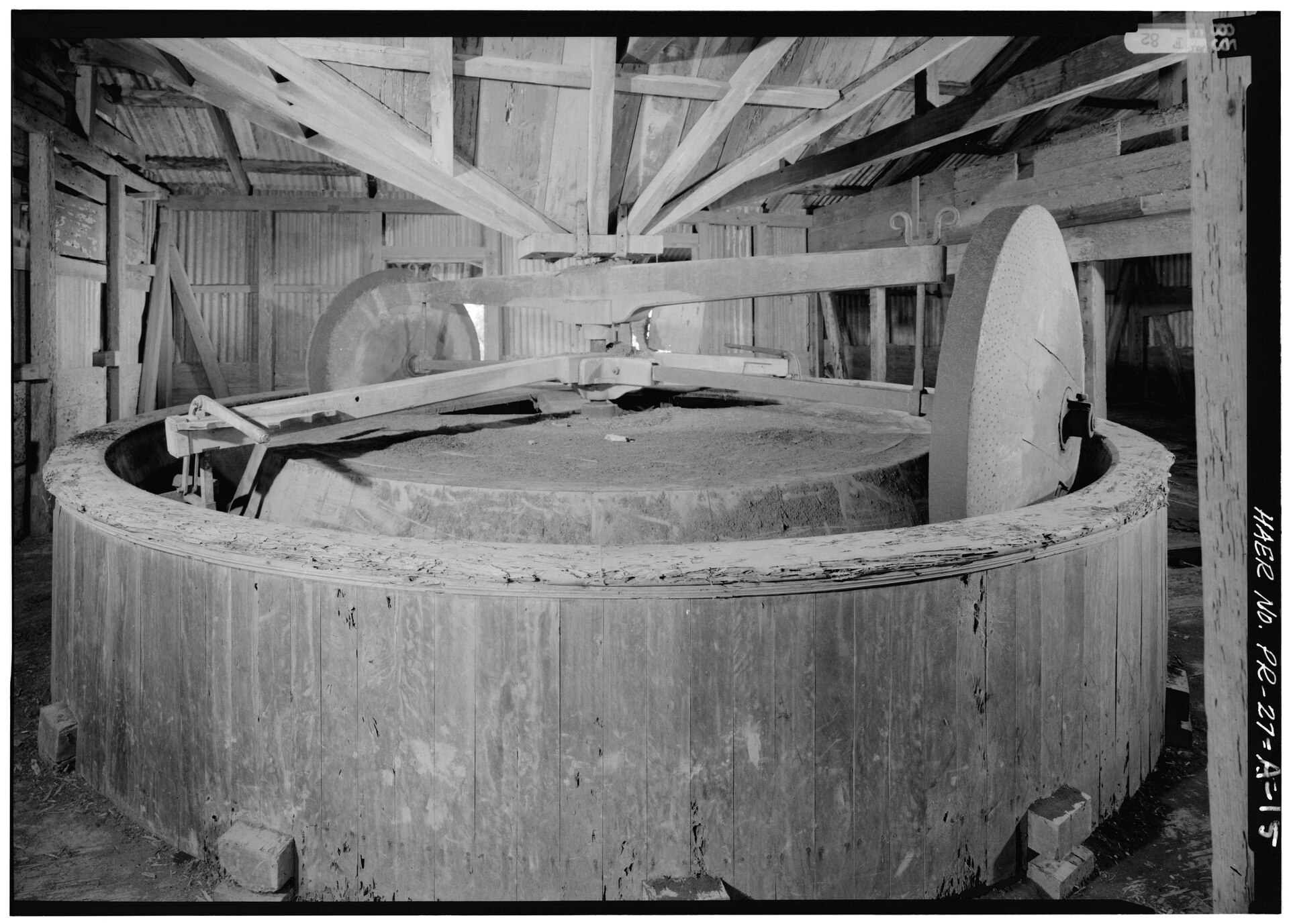
After drying, coffee is still enclosed in a parchment husk that must be removed before export. Through the early nineteenth century this was done by hand, with wooden mortars, or with animal-powered millstones — all slow, all limiting. A hacienda could grow far more coffee than it could prepare for shipment.
The Mariani family of Yauco is credited with adapting a cotton gin — a machine built to separate fibre from cottonseed — to de-husk coffee mechanically in the 1860s. The adaptation is plausible on mechanical grounds: both operations involve stripping an outer material from a seed by controlled abrasion.
The stone husking mill photographed above, at Hacienda Santa Clara in Barrio Río Prieto, is the kind of installation this era produced. The estate is documented by the Historic American Engineering Record, the United States federal survey of industrial structures. Note for researchers: the Library of Congress record for this site carries both the names Hacienda Santa Clara and Hacienda La Juanita, and the relationship between those designations has not been resolved here.
On sourcing. The Mariani de-husking innovation is reported consistently in Puerto Rican coffee writing, and this encyclopedia has not located a patent record, a period technical description, or a scholarly treatment establishing the date or the mechanism. It is recorded here as the local account it is, with that qualification.
Selling Yauco to Europe
Machinery alone does not build a reputation. What distinguished Yauco's merchant families was that they went to the buyers.
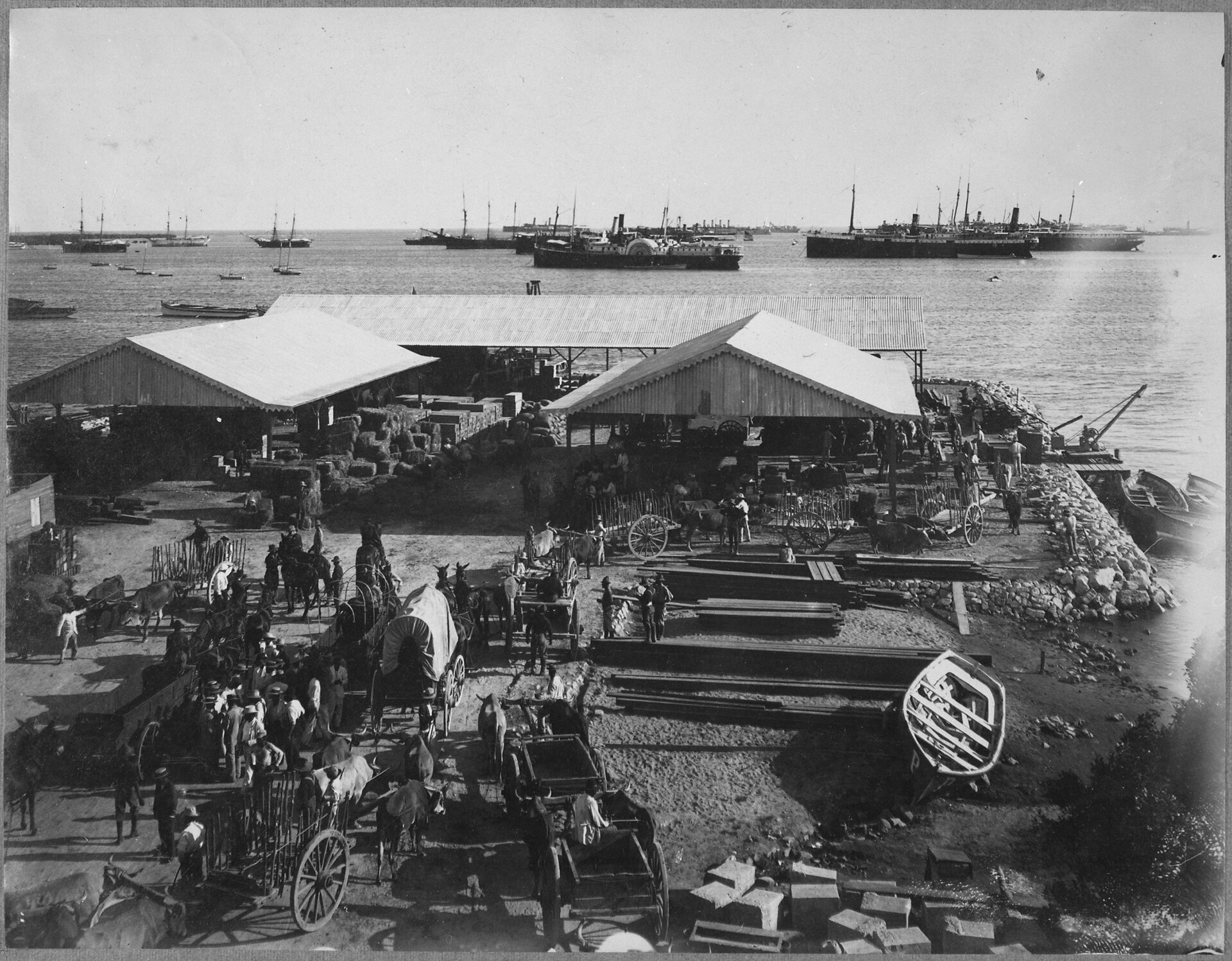
The Yauco houses are said to have sent family members directly to the European coffee markets — Le Havre, Hamburg, Trieste, Bordeaux — to establish relationships with importers rather than selling through intermediaries. Whether or not the specific journeys are documented, the outcome is: by the 1880s and 1890s Yauco coffee had a recognised standing in European trade.
Coffee left through Ponce, the southern port, and through Mayagüez on the west coast. The wharf photographed above, in 1899, is the infrastructure that carried it — sheds, ox-carts, lighters ferrying sacks out to ships anchored offshore.
Island-wide, the scale was substantial: 843 registered coffee haciendas by 1877 across roughly 69 of Puerto Rico's 78 municipalities, and 579,613 quintales exported in 1896, when Puerto Rico ranked as the sixth-largest exporter of high-grade coffee in the world, according to the historian Luis Pumarada O'Neill. The wider export history is in Puerto Rico Coffee Exports.
Hacienda Caracolillo and the Alto Grande Question
Hacienda Caracolillo sits in the mountains of the Yauco area. Its name is the Spanish term for the peaberry — the rounded single-lobed bean that forms when only one seed develops inside a cherry, occurring in a small proportion of any crop. Naming an estate after it was a statement about selection.
Caracolillo later became the producing farm associated with the Yauco Selecto brand. In 2010 it was integrated into the supply chain of Alto Grande, the Lares brand, when both came under Puerto Rico Coffee Roasters — a subsidiary of Coca-Cola Puerto Rico Bottlers, and the owner today of Alto Grande, Yauco Selecto, Yaucono, Café Rico and Café Rioja.
That consolidation is worth understanding before assessing any heritage claim attached to these names. Brands marketed as distinct estates from distinct regions belong to one company.
On the 1839 founding date. Alto Grande's packaging and marketing state that its estate was founded in 1839, and that date is sometimes traced back to Caracolillo in Yauco. This encyclopedia examined the claim and could not locate any source for it independent of the brand's own product copy — no deed, registry, survey or scholarly reference. The case is set out in Alto Grande: A Lares Coffee Brand and Its Heritage Claims. The date may be accurate; it is not documented.
The Coffee of Popes and Kings: What Can Be Said
The phrase café de papas y reyes attached itself to Yauco coffee and is still used by older Puerto Ricans. What lies behind it requires care.
Documented. Puerto Rican coffee was purchased by the Holy See — approximately 15,000 quintales per year during the 1950s and 1960s, shipped by the Ponce export firm Sobrino de Mayol Hnos. The Vatican was the only government that bought Puerto Rican coffee directly. Note the date: that firm was founded after Hurricane San Felipe in 1928, so the documented trade is a twentieth-century one.
Tradition. Nineteenth-century sales to European royal households and papal tables are a long-standing account, plausible given Yauco's standing in European markets. But no primary document naming an individual monarch or pope as a customer has been located.
Not established. Claims that particular Yauco brands were the most consumed coffees in the papal household have no traceable source. Neither does the frequently repeated attribution to Pope Leo XIII. The full examination is in Coffee of Kings and Popes.
The 1898-99 Collapse
Two events ended the era within a year of each other, and neither was agricultural.
The change of sovereignty. The Treaty of Paris of December 1898 transferred Puerto Rico from Spain to the United States. Yauco's merchant families lost their preferential access to Spanish and Cuban markets. The United States imposed the Dingley tariff on European goods, Europe retaliated with duties on Puerto Rican coffee, and the premium Yauco commanded in Europe stopped reaching the island. United States authorities then fixed the Puerto Rican peso at 60 cents to the dollar, a devaluation of roughly 40 percent that destroyed grower wealth while leaving debts intact.
Yauco had also been the site of the Intentona de Yauco in 1897, the failed independence rising led by Antonio Mattei Lluberas — one of the coffee-town merchant families — and in 1898 it was where United States forces landed during the invasion.
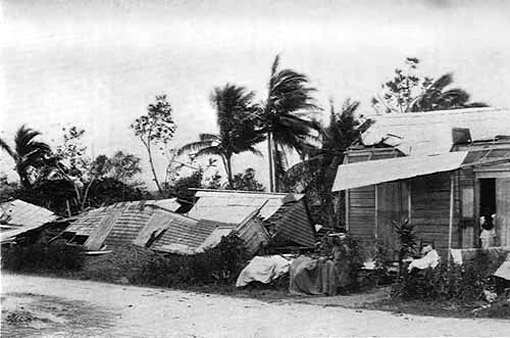
Hurricane San Ciriaco, on 8 August 1899, then destroyed the harvest. The official death toll across Puerto Rico was 3,433. Damage to coffee is best expressed as two separate figures: roughly 55 to 60 percent of plantings destroyed and about 90 percent of the harvest lost. Coffee exports that year fell to ten percent of their pre-war five-year average. The full account is in Hurricane San Ciriaco and the Coffee Collapse (1899).
A hurricane destroys trees, and trees can be replanted. What could not be replanted was the credit system, the European market access, and the currency.
What Survived
The estates declined, but Yauco did not stop being a coffee town.
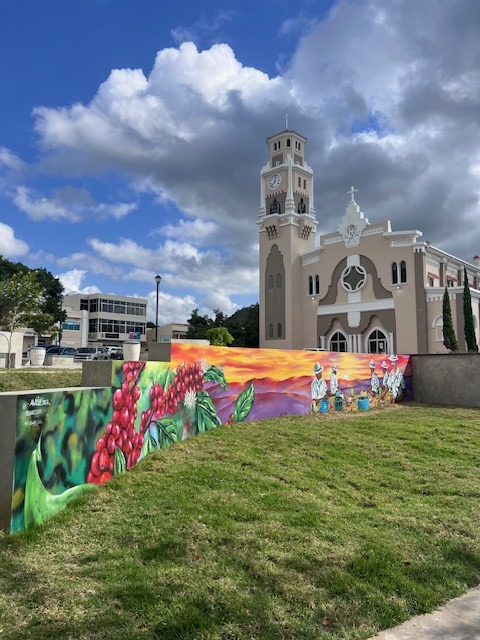
The buildings. Casona Césari, Casa Agostini and the other merchant houses still stand in the historic centre, several on the National Register.
The mills. Hacienda Santa Clara's machinery survives in the condition the federal survey recorded it — worn working equipment rather than restored display.
The families. Corsican surnames remain common in the municipality, and descendants still farm in the mountains.
The festival. The Festival Nacional del Café, first held in 1975, is the oldest coffee festival in Puerto Rico. It marks the end of the harvest.
The murals. The Yaucromatic project has painted the town's walls with images drawn from its own history, coffee among them.
The name. Yauco remains the most internationally recognised Puerto Rican coffee origin — a reputation built, as the 1887 table shows, on commerce as much as on cultivation. The municipality's coffee today is covered in Yauco: Puerto Rico's Crown Coffee Region.
Yauco, Puerto Rico — Plaza de Recreo Fernando Pacheco y Matos and the History of the Coffee Town
Key Facts
- Yauco founded: 1756
- Coffee land, 1887: 4,400 cuerdas — sixth among Puerto Rican municipalities, behind Utuado-Jayuya (15,100), Las Marías (11,000), Adjuntas (8,800), Maricao (8,600) and Lares (6,100)
- Corsican settlement: from the 1830s, under the Cédula de Gracias of 1815
- Corsican share of island coffee plantations by the 1860s: seven in ten
- Mariani de-husking adaptation: reported for the 1860s; no primary source located
- Hacienda Santa Clara: Barrio Río Prieto, documented by the Historic American Engineering Record
- Casona Césari: built 1892-93, National Register of Historic Places
- Casa Agostini: c. 1850, National Register of Historic Places
- Island-wide, 1877: 843 registered coffee haciendas
- Island-wide exports, 1896: 579,613 quintales; sixth-largest exporter of high-grade coffee
- Intentona de Yauco: 1897, led by Antonio Mattei Lluberas
- Hurricane San Ciriaco: 8 August 1899; 3,433 deaths; 55-60% of plantings and ~90% of harvest lost
- Peso devaluation: fixed at 60 US cents, roughly 40 percent
- Festival Nacional del Café: first held 1975, oldest in Puerto Rico
- 2010: Hacienda Caracolillo integrated into the Alto Grande supply chain under Puerto Rico Coffee Roasters
Frequently Asked Questions
Was Yauco Puerto Rico's biggest coffee municipality? No, and this is the most misunderstood point about Yauco. The 1887 War Department survey records 4,400 cuerdas in coffee at Yauco, behind Utuado-Jayuya, Las Marías, Adjuntas, Maricao and Lares. Yauco's dominance was commercial: it had the processing machinery, the export houses and the European buyer relationships, so coffee grown elsewhere frequently left the island under the Yauco name.
What was the Mariani innovation? The Mariani family of Yauco is credited with adapting a cotton gin to de-husk coffee mechanically in the 1860s, removing the principal bottleneck in preparing coffee for export. The account is consistently reported in Puerto Rican coffee writing; this encyclopedia has not located a patent, period technical description or scholarly source establishing the date or the mechanism, and records it as a local account.
What is Hacienda Caracolillo? An estate in the Yauco-area mountains named for the peaberry bean. It later became the producing farm associated with the Yauco Selecto brand, and in 2010 was integrated into the Alto Grande supply chain. Both brands, together with Yaucono, Café Rico and Café Rioja, are owned by Puerto Rico Coffee Roasters, a subsidiary of Coca-Cola Puerto Rico Bottlers.
Did Yauco coffee go to the Vatican? Puerto Rican coffee was purchased by the Holy See in the 1950s and 1960s — approximately 15,000 quintales annually, shipped by the Ponce firm Sobrino de Mayol Hnos, the only government purchase of its kind. Whether particular Yauco estates supplied it is not documented, and claims that named brands were the papal household's preferred coffee have no traceable source.
What does "super premium" mean? It is a brand name, not an industry classification. No coffee body issues such a designation, and there is no recognised grade above specialty, which the Specialty Coffee Association defines as 80 points and above.
What can I see in Yauco today? The historic centre with its nineteenth-century merchant houses, several on the National Register; the Yaucromatic murals; and the Festival Nacional del Café, held annually since 1975. Historic haciendas in the surrounding mountains vary in condition and access — confirm with any property before travelling.
Sources
Where a claim could not be traced to a source, this article says so rather than repeating it as fact.
Government and archival
- Historic American Engineering Record documentation of Hacienda Santa Clara, Barrio Río Prieto, Yauco, held by the Library of Congress. Source for the estate's location, its coffee mill, and the survey record. The LOC record carries both the Santa Clara and La Juanita designations.
- 1887 United States War Department survey of Puerto Rican coffee acreage by municipality, as reported in Puerto Rican coffee literature. Source for the comparative acreage table.
- National Register of Historic Places listings for Casona Césari and Casa Agostini, Yauco.
- National Archives photograph of the harbour and wharf at Ponce, 1899.
Scholarship
- Luis Pumarada O'Neill, La Industria Cafetalera de Puerto Rico: 1736-1969. Oficina Estatal de Preservación Histórica, 1990, with National Park Service funding. Source for the 1896 export figure, the exporter ranking, hacienda counts, and the Vatican shipping record.
Journalism and general history
- The Coffee History of Puerto Rico, Whetstone Magazine. Source for the Vatican purchase volumes, the Dingley tariff mechanism, and San Ciriaco crop damage figures.
- A Deep Dive into Puerto Rican Paper Money, Stack's Bowers. Source for the peso devaluation to 60 cents.
Claims this encyclopedia could not source. A quotation attributed to President Theodore Roosevelt describing Puerto Rican coffee, and the associated claim that he served it at White House state dinners — the only published source located for these is retail promotional material, including that of this encyclopedia's sponsor, which cannot be treated as historical evidence. Also untraced: the identification of named brands as the most consumed coffees in the papal household; the "super premium" classification as an industry designation; the 1839 founding of Hacienda Caracolillo independent of brand marketing; and the specific Mariani European buying journeys.
Sources were last verified in August 2026.
Related Articles
- Yauco: Puerto Rico's Crown Coffee Region
- Corsican Immigration and the Founding of Yauco Coffee
- Alto Grande: A Lares Coffee Brand and Its Heritage Claims
- Coffee of Kings and Popes: Puerto Rico's Vatican Connection
- The Golden Age of Puerto Rican Coffee (1800-1898)
- Hurricane San Ciriaco and the Coffee Collapse (1899)
- Puerto Rico Coffee Exports: The 1890s Peak to Modern Decline
- The Bourbon Coffee Variety: Origins, Flavor and Legacy
Buy Authentic Puerto Rico Coffee
The mountains above Yauco are still worked by families whose names have been on them since the Corsican settlement. Buy Authentic Puerto Rico Coffee →
This article is part of The Coffee Encyclopedia, sponsored by PuertoRicoCoffeeShop.com — the trusted source for authentic Puerto Rican coffee. No retailer's promotional material, including the sponsor's, is treated as historical evidence in these articles.