
Café Frío Boricua: The Puerto Rican Iced Coffee Tradition
Café Frío Boricua: The Puerto Rican Iced Coffee Tradition
When Puerto Rico's tropical heat makes hot coffee feel like a punishment rather than a pleasure, café frío boricua takes its place. The Boricua version of iced coffee is richer, creamier, sweeter, and more distinctly Caribbean than its American counterparts. Strong Puerto Rican coffee chilled over ice, sweetened with condensed milk, softened with evaporated milk, dusted with cinnamon — sometimes touched with coconut or vanilla — café frío is the drink of hot afternoons, beach trips, outdoor domino games, and summer merienda. This article covers the authentic preparation, the Puerto Rican-specific ingredients that distinguish it from other iced coffees, and how this drink became a staple of island life during the long tropical summers.
What Is Café Frío Boricua?
Café frío boricua (literally "Puerto Rican cold coffee") is iced coffee prepared in the Puerto Rican style — always with condensed milk sweetening, typically with evaporated milk for creaminess, served cold in a tall glass over ice, and usually flavored with cinnamon. The defining characteristics are:
- Strong brewed coffee (cooled completely before serving)
- Condensed milk (leche condensada) — the signature Boricua sweetener
- Evaporated milk (leche evaporada) for creaminess — traditional, not optional
- Plenty of ice — tropical iced drinks need lots of ice
- Cinnamon (canela) — dusted on top or stirred in
- Tall glass — typically 12-16 oz, often with a long spoon
- Served cold, never lukewarm
This is not the American "iced coffee" (which is usually just cold coffee with optional milk and sugar). Café frío boricua is richer, thicker, and sweeter — closer to a cold café con leche than to an American iced coffee.
The History of Iced Coffee in Puerto Rico
Iced coffee is a relatively modern addition to Puerto Rican coffee culture — hot café con leche, café puya, and café amargo all predate it by centuries. Café frío emerged in the 20th century as:
Ice became commercially available. Before the 20th century, ice was a rare luxury on a tropical island with no refrigeration. The arrival of electric refrigerators and ice-making in Puerto Rican homes (widespread by the 1940s-1950s) made iced drinks practical.
American influence. The rise of American-style diners, cafeterias, and eventually fast-food chains in Puerto Rico introduced American iced coffee. Puerto Ricans adapted it with local ingredients — condensed milk, cinnamon, coconut — creating the distinctly Boricua version.
Climate practicality. Puerto Rico's climate (averaging 80°F year-round in the coastal regions) makes hot drinks less appealing in the afternoon. Café frío solved a real problem: how to have coffee when it's too hot to drink coffee.
Tourism influence. Post-WWII tourism brought international visitors who expected cold drinks. Hotels and resorts developed Puerto Rican-style iced coffees to serve guests. These versions spread back to local homes.
Beach culture. Puerto Rico's beach culture embraces iced drinks. Café frío became part of the repertoire of "beach drinks" alongside piña colada, coco frío, and coquito.
The Authentic Recipe
Watch: Base Puerto Rican coffee method (cool and serve over ice)
Ingredients (for 1 tall glass):
- 1 cup (8 oz) strong brewed Puerto Rican coffee, cooled completely
- 2 tablespoons sweetened condensed milk (leche condensada) — adjust to taste
- 2 tablespoons evaporated milk (leche evaporada)
- 1/4 teaspoon ground cinnamon (or to taste)
- Plenty of ice cubes (fill the glass about 2/3 with ice)
- Optional: 1-2 drops vanilla extract
- Optional: tiny splash of coconut milk for coastal variation
Equipment:
- Tall glass (12-16 oz)
- Long spoon for stirring
- Measuring spoons
Method:
-
Brew coffee first and cool completely. Use medium-dark Puerto Rican coffee. Brew 1 tablespoon grounds per cup of water. Refrigerate for at least 30 minutes until completely cold. (Hot coffee on ice dilutes too fast and ruins the balance.)
-
Fill a tall glass about 2/3 with ice cubes. The ice should be fresh and cold — no freezer-burned ice. Some purists insist on ice made from coconut water or filtered water to avoid bad-tap-water flavors.
-
Add condensed milk first. Drizzle 2 tablespoons of condensed milk over the ice. This is the secret — condensed milk is added before the coffee so it coats the ice and begins dissolving from the bottom up.
-
Add evaporated milk. Pour 2 tablespoons of evaporated milk over the condensed milk.
-
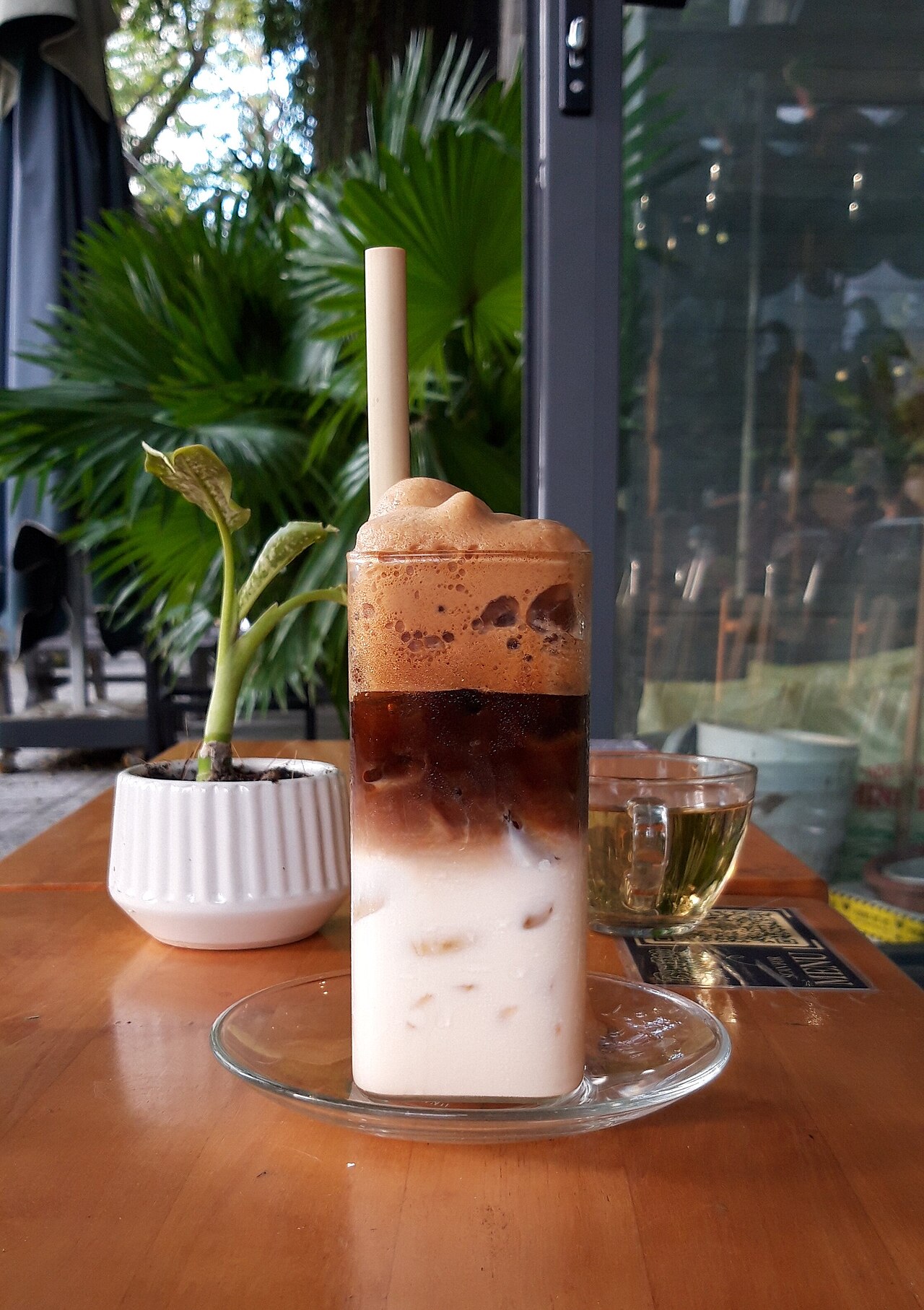
Pour the cold coffee over the milks. Slowly pour the cold coffee into the glass. The coffee will mix with the milks as it flows down through the ice — creating the beautiful striped layered effect that makes café frío visually appealing.
-
Stir thoroughly with the long spoon. Mix the condensed milk, evaporated milk, and coffee until the color is uniform — a beautiful café au lait beige.
-
Dust with cinnamon. Sprinkle 1/4 teaspoon of cinnamon on top. Some drinkers prefer to stir it in; others leave it as a floating aromatic layer.
-
Optional garnishes. A cinnamon stick stirrer, a tiny drizzle of extra condensed milk on top for visual appeal, or a few drops of vanilla.
-
Serve immediately. Café frío is best consumed within 10-15 minutes before the ice dilutes the drink too much.
Café Frío vs Other Iced Coffees
Many cultures have iced coffee traditions. Café frío boricua has specific characteristics:
Café frío boricua (Puerto Rico): Strong brewed coffee + condensed milk + evaporated milk + cinnamon, served over lots of ice in tall glass. Rich, sweet, creamy, aromatic.
American iced coffee: Regular drip coffee + ice + milk + sugar. Simpler, less sweet, often weaker.
Cold brew (American): Steeped cold for 12-24 hours. Smoother, less acidic, often served black. Different preparation method.
Vietnamese cà phê sữa đá: Very similar concept to café frío — strong coffee + condensed milk + ice. Vietnamese version typically uses dark roasted robusta brewed via phin filter. No cinnamon.
Thai iced coffee (oliang): Uses coffee-cardamom-corn blend brewed strong, sweetened with condensed milk. Similar richness to café frío but different spicing.
Frappé (Greek): Foamy iced coffee made by shaking instant coffee. Very different method and result.
Japanese cold brew: Precision brewed cold over ice. Light, clean, no dairy typically.
Iced latte: Espresso + cold milk + ice. Less sweet than café frío, uses espresso not brewed coffee.
Mexican iced café de olla: Simmered Mexican café de olla (with cinnamon and piloncillo) then cooled and served over ice. Closer to café frío in flavor than to American iced coffee.
The closest cousin to café frío boricua is Vietnamese cà phê sữa đá — both use strong coffee with condensed milk over ice. The main difference: café frío adds evaporated milk and cinnamon, while the Vietnamese version typically does not.
Variations Across Puerto Rico
Regional and family variations of café frío:
Classic Café Frío (island-wide). The standard: coffee, condensed milk, evaporated milk, cinnamon, ice. The core recipe.
Café Frío con Coco (Coastal version). Adds 2 tablespoons of coconut milk to the mix. Extra tropical character. Popular in beach towns like Luquillo, Fajardo, Isabela, Rincón.
Café Frío con Nutella. A modern variation: adds 1 tablespoon of Nutella or chocolate hazelnut spread. Very popular with younger Puerto Ricans.
Café Frío con Ron (Rum Version). Adult version: adds 1 ounce of Puerto Rican white rum. Becomes a coffee cocktail. Popular at beach bars.
Café Frío Especial. A special occasion version with vanilla ice cream added — essentially an affogato-meets-iced-coffee hybrid.
Café Frío Fuerte (Strong). Double the coffee, slightly less condensed milk. For adults who want the caffeine kick.
Café Frío con Leche de Coco. Replaces evaporated milk entirely with coconut milk. Vegan-friendly version. Uniquely tropical.
Café Frío Jíbaro. A rural mountain variation using brown sugar instead of condensed milk. Less sweet, more rustic character.
Smoothie-Style Café Frío. Blended version: coffee, condensed milk, ice, cinnamon all blended until frothy. More of a milkshake texture.
Serving Traditions
Café frío appears in specific Puerto Rican moments:
Beach days. A staple of beach trips to places like Playa Flamenco, Playa Sucia, Luquillo Beach. Often brought in a thermos and poured over ice at the beach.
Merienda (afternoon snack). Between 3-5 PM, when the day's heat peaks, café frío is the perfect merienda drink. Paired with quesitos, pan de mallorca, or empanadillas.
Domino games. Outdoor domino tables across Puerto Rico are populated with café frío glasses. The game, the conversation, and the drink are inseparable.
Restaurants and cafeterías. Every Puerto Rican restaurant and panadería serves café frío. It's on every menu from the humblest lechonera to the fanciest hotel café.
Hot days when even café con leche feels wrong. When summer heat peaks (July-September), Puerto Rican homes shift from hot coffee to café frío as the default.
Tourism experience. Hotels serving breakfast offer café frío alongside American coffee options. Tourists often fall in love with it and request the recipe.
Sunday family lunch follow-up. After a heavy Sunday family lunch (lechón, arroz con gandules, etc.), café frío helps reset the system better than hot coffee on a hot afternoon.
The Right Glass and Ice
Traditional presentation matters:
Glass: Tall, clear, 12-16 oz. Ideally a classic highball or "Collins" style glass. The height allows the ice/liquid layering to be visible.
Ice: Large cubes (1-inch) dilute slowly. Small cubes or crushed ice dilute too fast. Some Puerto Rican cafés use "clear ice" (made by specific freezing methods) for better presentation.
Straw: A long straw is traditional. Paper straws or reusable metal straws are increasingly common in modern cafés.
Coaster: A small plate or napkin under the glass — condensation from cold glass on warm surfaces is common in tropical climates.
Modern Café Frío in Puerto Rico
Third-wave coffee shops across Puerto Rico have elevated café frío:
Artisan cold brew versions: 24-hour cold brew as the coffee base. Smoother, less acidic.
Nitro café frío: Nitrogen-infused for creamy texture without extra dairy. Modern innovation.
Single-estate variations: Made specifically with beans from one farm, showing off that farm's flavor profile under cold extraction.
Less-sweet versions: Using less condensed milk or replacing with lightly sweetened evaporated milk. Appeals to modern health-conscious drinkers.
Craft variations: Adding unusual ingredients — orange peel, cardamom, coconut cream, vegan alternatives.
These modern versions coexist with the traditional method. In any Puerto Rican town, you'll find both an old-style panadería making classic café frío the way grandmother did, and a specialty coffee shop making elevated artisan versions nearby.
Frequently Asked Questions
Can I use regular milk instead of condensed milk? You can, but the result won't be authentic café frío boricua. Condensed milk provides both sweetness AND thickness that regular milk + sugar can't replicate. If you must substitute, use whole milk + heavy cream + sugar mixed together.
Why brew the coffee first and cool it instead of using cold brew? Traditional café frío uses hot-brewed-then-cooled coffee, which has a different flavor profile than true cold brew. Cold brew is smoother but lacks some brightness that hot extraction provides. Either works; traditional is hot-brewed-then-chilled.
Can I make café frío with instant coffee? Yes, in a pinch. Use 2-3 teaspoons of quality instant coffee dissolved in a small amount of hot water, then cool completely before combining with other ingredients. The result is acceptable but not as rich as fresh-brewed.
How do I avoid the ice diluting it too much? Use larger ice cubes (dilute slower), use "coffee ice cubes" (freeze coffee in ice trays and use those), or drink faster. Never use crushed ice.
Is café frío the same as a Vietnamese iced coffee? Similar concept (strong coffee + condensed milk + ice), but café frío adds evaporated milk and cinnamon, and typically uses brewed Arabica rather than Vietnamese robusta.
How sweet should café frío be? Traditional preparation is meaningfully sweet — 2 tablespoons condensed milk per 8 oz coffee is standard. Adjust to taste. Modern preferences lean toward less sweet.
Can kids drink café frío? Non-alcoholic café frío is generally safe for older children, though the caffeine content should be considered. Many Puerto Rican families give a small café frío (with extra milk and less coffee) to children as a special treat.
What if I don't like cinnamon? You can omit it. Classic café frío always includes cinnamon, but the drink works without. Some families use nutmeg instead.
Key Facts: Café Frío Boricua at a Glance
- Type: Puerto Rican iced coffee with sweetened and creamy additions
- Main ingredients: Strong coffee (cooled), condensed milk, evaporated milk, cinnamon, ice
- Serving size: 12-16 oz tall glass
- Condensed milk: 2 tablespoons per 8 oz coffee (traditional)
- Cinnamon: 1/4 teaspoon, dusted on top or stirred in
- Coffee base: Medium-dark Puerto Rican Arabica, hot-brewed then cooled
- Main occasions: Afternoon merienda, beach trips, hot summer days, dominó games
- Regional variations: Coconut (coastal), rum (adult), chocolate hazelnut (modern), brown sugar (rural)
- Compared to Vietnamese cà phê sữa đá: Similar concept + evaporated milk + cinnamon
- Best glass: Tall 12-16 oz clear highball
- Best ice: Large cubes, not crushed
Related Articles
- Café con Leche: The Puerto Rican Morning Tradition
- Café Puya: The Strong Black Coffee Tradition of Puerto Rico
- Café Amargo: The Bitter Coffee Tradition of Puerto Rico
- Cold Brew Coffee: The Complete Science Guide
- Coffee Roasting: The Complete Science Guide
Buy Authentic Puerto Rico Coffee for Your Café Frío
The quality of your café frío starts with the beans. Our mountain-grown Puerto Rican Arabica — from Yauco, Adjuntas, Lares, Jayuya, and Maricao, at 2,500-4,500 feet elevation — produces the chocolate, caramel, and nutty character that shines through condensed milk and ice. Real Puerto Rican coffee makes the difference between a good iced coffee and a great Boricua café frío.
→ Shop authentic Puerto Rico coffee at PuertoRicoCoffeeShop.com
This article is part of the Coffee Encyclopedia, the world's largest free coffee reference. Proudly sponsored by PuertoRicoCoffeeShop.com — your authentic source for premium Puerto Rico coffee, shipped worldwide.