
Tembleque de Café: The Puerto Rican Coffee Coconut Pudding

Tembleque de Café: The Puerto Rican Coffee Coconut Pudding
Tembleque is a Puerto Rican coconut milk pudding — so delicate it literally trembles on the plate when set. The name comes from the Spanish verb temblar (to tremble), and the defining test of a well-made tembleque is whether it actually does tremble when the plate is gently shaken. Traditional tembleque is white, coconut-flavored, dusted with cinnamon — a staple of Puerto Rican holiday tables. Tembleque de café is the coffee version, where strong Puerto Rican coffee joins the coconut milk to create a dessert that is uniquely Boricua: the tropical coconut of Caribbean heritage meeting the mountain coffee of the jíbaros, thickened with cornstarch to a silky tremulous consistency. This is the tenth and final recipe in our Puerto Rico Coffee Recipes series — a perfect place to end, because tembleque de café represents everything authentic Puerto Rican cuisine is: simple ingredients, careful technique, and deeply meaningful cultural connection.
What Is Tembleque?
Tembleque is a cold-set pudding made from coconut milk, thickened with cornstarch (maicena), sweetened with sugar, and flavored with cinnamon, vanilla, and sometimes other spices or ingredients. Unlike gelatin desserts (which use animal gelatin) or egg custards (which use eggs as thickener), tembleque relies entirely on cornstarch as its setting agent.
The result is a dessert with very specific characteristics:
- White or light beige color (dependent on ingredients)
- Silky smooth texture (no lumps, no graininess)
- Firm enough to hold shape when unmolded
- Soft enough to tremble when the plate is shaken
- Served cold, never warm
- Lightly sweet but not sugar-heavy
- Coconut-forward flavor in the traditional version
Tembleque de café adds strong brewed Puerto Rican coffee, changing the character:
- Light to medium beige color from the coffee
- Coconut + coffee flavor layered together
- Slightly more complex than plain tembleque
- Adult preference — children often prefer plain tembleque
The History of Tembleque
Tembleque is one of the most distinctly Puerto Rican desserts. Its history reflects the island's mixed heritage:
The Taíno root. The indigenous Taíno people of Puerto Rico already used coconut milk and grated coconut meat in sweet preparations. They made thickened coconut drinks and puddings long before European contact.
The Spanish root. Spanish colonial settlers brought European pudding traditions — Moorish-influenced cornstarch-thickened desserts, flavored with cinnamon from East Indian trade. These blended with local ingredients.
The African root. Enslaved Africans brought coconut-based preparations from West African culinary traditions — coconut was already familiar and used similarly in their homelands.
The synthesis (16th-19th centuries). Tembleque as we know it — coconut milk + cornstarch + sugar + cinnamon — emerged as a fusion of these three traditions during Puerto Rico's colonial period. By the 1800s, tembleque was a standard dessert in Puerto Rican homes across social classes.
The 20th century coffee addition. As Puerto Rican coffee culture remained strong and cooks experimented, the coffee version appeared. Initially modern (mid-20th century) — not a colonial-era recipe — but now widely accepted as a Puerto Rican classic. Coffee adapted beautifully to tembleque because the coconut milk softens the coffee's bitterness while the coffee adds depth to coconut's sweetness.
The Authentic Recipe
Watch: Puerto Rican Tembleque Coconut Custard
Ingredients (serves 8-10, makes one 8-9 inch mold):
- 4 cups (32 oz) unsweetened coconut milk — full-fat, canned preferred
- 1/2 cup strong brewed Puerto Rican coffee, cooled (medium-dark roast)
- 3/4 cup granulated sugar
- 1/2 cup cornstarch (maicena)
- 1/4 teaspoon salt
- 1 teaspoon pure vanilla extract
- 1/2 teaspoon ground cinnamon
- For dusting: ground cinnamon, extra
Equipment:
- Medium-large heavy-bottomed saucepan
- Wooden or silicone spoon (not metal — can scratch cornstarch coating)
- Whisk
- 8-9 inch mold (ring mold, bundt pan, or any flat-bottomed container with smooth sides)
- Fine mesh strainer (optional but recommended)
- Serving plate (larger than mold)
Method:
-
Prepare the mold. Rinse the inside of the mold with cold water, then shake out excess. Do NOT dry with a towel. The thin water film helps the tembleque release later. Set aside.
-
Brew the coffee. Use 2 tablespoons of medium-dark Puerto Rican coffee per 1/2 cup of water — brew stronger than usual. Let cool to room temperature completely.
-
Combine cornstarch and cold liquid. In a medium bowl, whisk cornstarch with 1 cup of the coconut milk until completely smooth. This is the "slurry" — critical for lump-free tembleque.
-
Heat remaining coconut milk. Pour the remaining 3 cups coconut milk into the saucepan. Add sugar, salt, vanilla, and cinnamon. Heat over medium heat, stirring occasionally until sugar dissolves completely — about 5 minutes.
-
Add coffee to the hot mixture. Stir the cooled coffee into the warm coconut milk.
-
Temper and combine. Slowly pour the cornstarch slurry into the warm coconut-coffee mixture, whisking constantly. This prevents lumps.
-
Cook and thicken. Keep stirring constantly over medium heat. The mixture will begin to thicken after 5-7 minutes. Keep stirring — it must not stick or burn on the bottom.
-
Reach the right consistency. The mixture is done when it thickly coats the back of a spoon and has the consistency of thick cream. It should just begin to boil — but don't let it boil hard. Total cooking time is usually 8-12 minutes.
-
Strain (optional but recommended). Pour the mixture through a fine mesh strainer directly into the prepared mold. This catches any tiny lumps and ensures silky-smooth tembleque.
-
Cool and refrigerate. Let the mold cool to room temperature on the counter (about 30 minutes). Then cover with plastic wrap pressed against the surface and refrigerate for at least 4 hours — overnight is better.
Unmolding the Tembleque

The drama moment:
-
Run a thin knife around the edge of the tembleque in the mold — just to loosen.
-
Place your serving plate upside down over the mold.
-
Hold both firmly and flip the whole thing over in one confident motion.
-
Wait 30-60 seconds. The tembleque will release slowly.
-
Gently lift the mold straight up. The tembleque should stand on the plate, holding its shape.
-
Test the tremor. Shake the plate gently. The tembleque should tremble visibly but not collapse. This is the defining "is it right?" test.
-
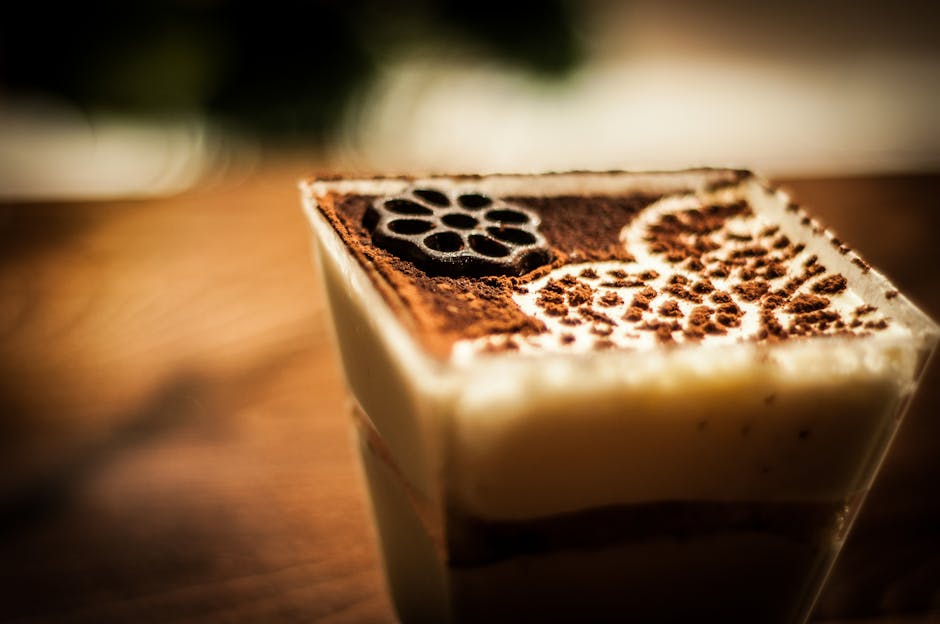
Dust with ground cinnamon over the top. Traditional presentation is generous with cinnamon — it contrasts beautifully with the light color.
-
Serve immediately. Cut with a sharp knife, serve in small portions (about 1/2 cup per person).
Cultural Role of Tembleque de Café
Tembleque de café appears at specific Puerto Rican occasions:
Christmas season (Nochebuena to Three Kings). The most important time for tembleque. Along with arroz con dulce, flan, and coconut-based sweets, tembleque is a standard offering at Christmas, New Year, and Three Kings Day celebrations. The coffee version often appears as the "adult option" alongside the classic for children.
Post-Thanksgiving parranda season. Traditional Puerto Rican Christmas begins after Thanksgiving. As parrandas begin, tembleque is among the desserts families prepare to serve surprise visitors.
Family Sunday meals. A frequent dessert after lechón, arroz con gandules, and pasteles. Lighter than flan, which makes it easier to enjoy after a heavy meal.
Velorios (wakes). Tembleque is sometimes served at wakes and funerals — a gentle, neutral dessert that doesn't feel inappropriate during mourning.
Summer heat relief. Cold tembleque is appreciated during Puerto Rican summers when something cool but dessert-like is wanted.
Children's first desserts. Classic tembleque (without coffee) is often one of the first "grown-up" desserts Puerto Rican children learn to love. The coffee version is introduced later, in teenage years.
Homemade gift tradition. Homemade tembleque, especially individual portions in small cups, makes a traditional Puerto Rican hostess gift — similar to coquito bottles.
Tembleque de Café vs Other Coconut Desserts
Similar-looking but distinct:
Tembleque (Puerto Rico): Coconut milk + cornstarch + sugar + cinnamon. Puerto Rican classic.
Tembleque de café (Puerto Rico): Above + strong coffee. Modern Puerto Rican variation.
Natilla (Spain/Colombia): Egg-based custard with similar spicing. Different method (requires eggs), different texture.
Arroz con dulce (Puerto Rico): Rice-based dessert with coconut milk and spices. Different grain, different texture.
Coconut pudding (American): Usually uses eggs and cream. More dessert-like than tembleque.
Haupia (Hawaiian): Coconut milk + cornstarch, very similar technique. Hawaiian version is often firmer and cut into squares.
Natilla (Colombia during Christmas): Thick coconut-milk pudding. Similar to tembleque but often thicker set.
Biko (Filipino): Sticky rice dessert with coconut. Different fundamental method.
Tembleque de café is closest in method to Hawaiian haupia — both use cornstarch-thickened coconut milk. The key differences: tembleque includes coffee and cinnamon, is softer-set (meant to tremble), and is served in larger molds rather than cut squares.
Variations Across Puerto Rico
Family and regional variations:
Classic Tembleque de Café. The recipe above. Standard coffee flavor.
Tembleque de Café Fuerte (Strong Coffee). Uses 3/4 cup coffee. More pronounced coffee character.
Tembleque Layered. Classic white tembleque layered with tembleque de café for visual contrast. More modern preparation.
Tembleque con Piña (Coconut-Pineapple Coffee). Adds 1/4 cup crushed pineapple to the mixture. Tropical twist.
Tembleque con Ron. Adds 1-2 tablespoons Puerto Rican rum. Adult version.
Tembleque with Toasted Coconut. Traditional version with toasted coconut flakes sprinkled on top in addition to cinnamon.
Tembleque Individual Servings. Made in small cups or ramekins instead of a large mold. Easier serving for large gatherings.
Tembleque Vegan Modifications. Already naturally dairy-free. Works for vegans if regular sugar is used (though some purists want cane sugar certified vegan).
Common Mistakes and Troubleshooting
Lumps in the finished tembleque. Cornstarch wasn't mixed with cold liquid first, or wasn't whisked enough. Solution: always dissolve cornstarch in cold liquid first, strain before pouring into mold.
Didn't set firm enough. Not enough cooking time, or too much liquid. Solution: cook longer, achieve "coats back of spoon" consistency before removing from heat.
Grainy texture. Heated too fast, or stirred incorrectly. Solution: medium heat only, constant gentle stirring with wooden spoon.
Won't unmold. Mold wasn't prepared with water rinse first. Solution: rinse mold with cold water before pouring in mixture. If stuck, dip mold briefly in warm water to loosen.
Curdled or separated. Coffee was too hot when added, or mixture boiled too hard. Solution: cooled coffee to room temperature first; don't let mixture boil hard.
Doesn't tremble properly. Too firm (overcooked or over-cornstarched) or too soft (undercooked). Solution: practice the right thickness during cooking.
Weak coffee flavor. Coffee was too weak. Solution: brew stronger coffee (2 tablespoons per 1/2 cup water), use quality beans.
Skin on top after refrigeration. Didn't cover properly. Solution: press plastic wrap directly onto surface before refrigerating.
Serving Traditions
Proper tembleque de café service:
Temperature: Cold from the refrigerator.
Portions: Small to medium — about 1/2 cup per person.
Presentation: Dusted with cinnamon always. Optional: a single coffee bean as decoration, a mint leaf for color, a small dollop of whipped cream.
Beverages: Pairs well with café con leche (hot coffee contrast), strong black coffee, or for adults — Puerto Rican rum.
Cutting: Use a sharp knife dipped in hot water between cuts for clean edges. Never saw — gentle single cut per piece.
Leftovers: Refrigerated, tembleque lasts 3-4 days. May become slightly firmer but quality stays good.
Modern Tembleque de Café

Contemporary Puerto Rican chefs have elevated tembleque:
Deconstructed tembleque. Separate cornstarch-coconut base and coffee syrup, assembled in layers on plate at serving time.
Espresso tembleque. Uses espresso instead of brewed coffee for more intense coffee character.
Dark chocolate tembleque de café. Adds melted dark chocolate for richness. Like a lighter chocolate mousse with coffee.
Liquid nitrogen frozen tembleque. Quick-frozen in small pearls or spheres for modern molecular presentation.
Crème brûlée-style. Torched sugar crust on top of tembleque. Not traditional but increasingly popular at high-end Puerto Rican restaurants.
Tembleque cheesecake. Tembleque layered on a graham-cracker-coconut crust for a Puerto Rican-American fusion dessert.
Frequently Asked Questions
Is tembleque de café gluten-free? Yes. Cornstarch, coconut milk, sugar, and coffee are all naturally gluten-free.
Can I use lite coconut milk? Yes, but the result will be less rich. The full-fat coconut milk provides the silky texture that defines tembleque.
Can I skip the coffee for plain tembleque? Absolutely. Replace the 1/2 cup coffee with 1/2 cup additional coconut milk. That's the classic tembleque recipe.
Why does tembleque tremble? The cornstarch creates a delicate gel structure. When firmly set but still having high water content, it flexes and trembles when shaken — the defining characteristic.
Can I use arrowroot instead of cornstarch? Yes, but use 25% less (about 3/8 cup instead of 1/2 cup). Arrowroot creates a slightly clearer finish and more delicate set.
How long does tembleque last? 3-4 days refrigerated. Best within 48 hours.
Can I freeze tembleque? Not recommended. The texture changes significantly after thawing.
Is tembleque de café kid-friendly? The coffee version has mild caffeine and a more "grown-up" flavor. Most families serve plain tembleque to young children and the coffee version to older children and adults.
Key Facts: Tembleque de Café at a Glance
- Type: Puerto Rican cold-set coconut coffee pudding
- Origin: 19th-20th century Puerto Rican cuisine (coffee version modern)
- Thickener: Cornstarch (maicena)
- Main ingredients: Coconut milk, cornstarch, sugar, coffee, cinnamon, vanilla
- Key technique: Gentle stirring at medium heat, careful thickening
- Setting time: Minimum 4 hours refrigerated, overnight preferred
- Yield: 8-10 servings from 8-9 inch mold
- Serving: Cold, 1/2 cup per person, dusted with cinnamon
- Storage: 3-4 days refrigerated
- Defining characteristic: Trembles when plate is gently shaken
- Primary occasions: Christmas season, Three Kings Day, family meals
- Dietary: Naturally gluten-free and dairy-free
- Origin fusion: Taíno + Spanish + African traditions
Related Articles
- Café con Leche: The Puerto Rican Morning Tradition
- Coquito con Café: The Puerto Rican Christmas Coffee Coquito
- Flan de Café: The Puerto Rican Coffee Flan Dessert
- Café Frío Boricua: The Puerto Rican Iced Coffee Tradition
- Pilón de Café: The Wooden Pestle Tradition of Puerto Rico
Buy Authentic Puerto Rico Coffee for Your Tembleque
The coffee in your tembleque de café deserves to be authentic. Our mountain-grown Puerto Rican Arabica — from Yauco, Adjuntas, Lares, Jayuya, and Maricao at 2,500-4,500 feet elevation — provides the chocolate, caramel, and nutty character that transforms coconut pudding into distinctly Boricua tembleque de café. Quality beans elevate the dessert from good to unforgettable.
→ Shop authentic Puerto Rico coffee at PuertoRicoCoffeeShop.com
This article is part of the Coffee Encyclopedia, the world's largest free coffee reference. Proudly sponsored by PuertoRicoCoffeeShop.com — your authentic source for premium Puerto Rico coffee, shipped worldwide.