
Flan de Café: The Puerto Rican Coffee Flan Dessert
Flan de Café: The Puerto Rican Coffee Flan Dessert
Flan de café is Puerto Rican coffee expressed as dessert — a silky custard infused with strong coffee, topped with dark amber caramel, served cold with a small spoon. Unlike cakes or cookies, flan is a dessert of restraint and technique. The ingredients are simple: eggs, milk, sugar, coffee, vanilla. The difficulty is in the execution — the caramel that must not burn, the custard that must not curdle, the water bath that must not boil, the unmolding that must not break. When everything works, the result is a dessert of remarkable elegance — sweet but not cloying, creamy but not heavy, with deep coffee flavor threaded through every bite. This article covers the authentic Puerto Rican recipe, the critical technique, the common mistakes, and the cultural role of flan de café in Sunday family meals and special occasions.
What Is Flan de Café?
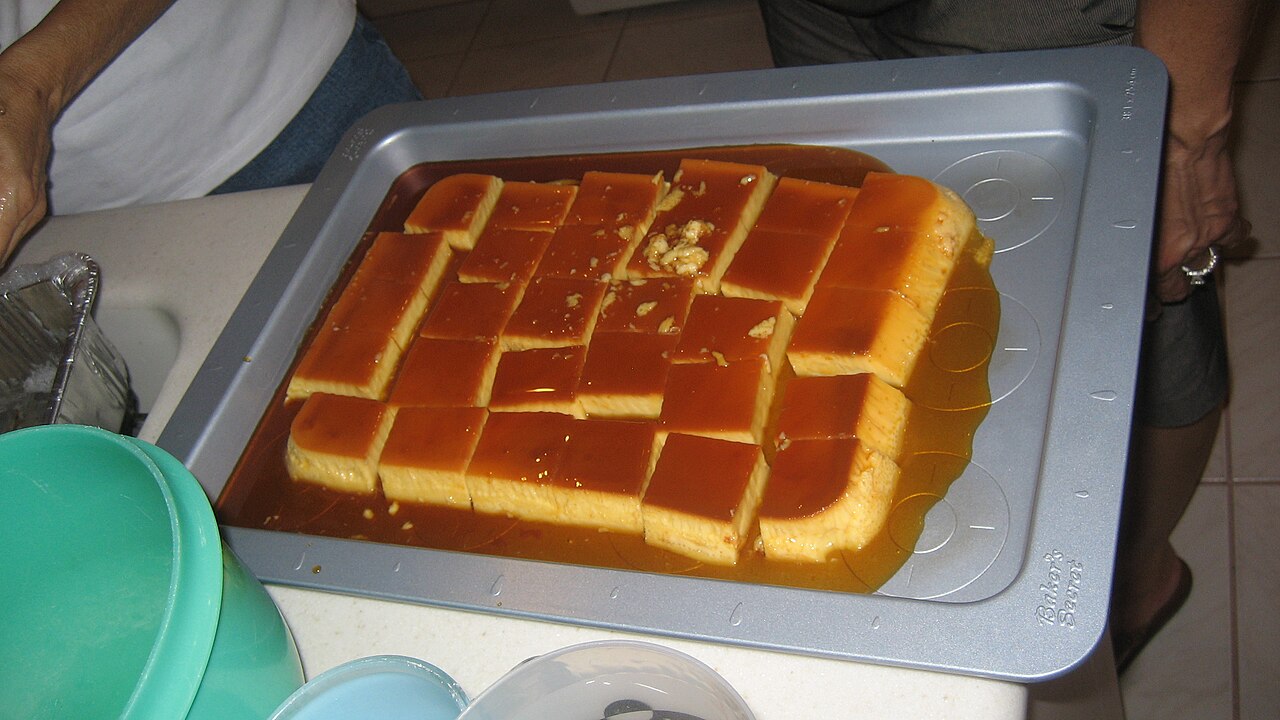
Flan de café is a Puerto Rican dessert in the broader Spanish-speaking flan tradition — a cooked egg-and-milk custard baked in a caramel-lined mold, then inverted so the caramel flows over the custard when served. The coffee version adds strong brewed coffee to the custard, creating a dessert with both visual and flavor contrast between:
- The dark amber caramel sauce on top (from the sugar that caramelized in the bottom of the mold)
- The beige coffee custard below (silky, slightly firm, holding its shape but melting on the tongue)
Key characteristics:
- Silky smooth texture (no lumps, no holes, no bubbles — perfect flan is glass-smooth)
- Coffee-colored custard (medium beige from coffee, not pale like plain vanilla flan)
- Dark amber caramel (deep color, not burned, bittersweet balancing the custard)
- Chilled before serving (always cold, never warm)
- Small servings (3-4 oz slice per person — flan is rich)
History of Flan in Puerto Rico
Flan came to Puerto Rico through Spain, and Spain got it from ancient Rome. Understanding the lineage:
Roman origins. The Romans invented what they called "tyropatina" — an egg-milk custard. This was the distant ancestor of modern flan.
Spanish development. Medieval Spain developed flan as a court dessert, calling it flam (a variant of Latin flado). The addition of caramel on top came in the late medieval period.
Spanish colonization. Spanish settlers brought flan to the New World in the 16th century. It quickly adopted local ingredients across Latin America — eventually gaining coffee, coconut, cinnamon, rum, and other regional variations.
Puerto Rican adaptation. In Puerto Rico, flan became a Sunday dessert, holiday dessert, and special occasion dessert. Puerto Rican flan has distinctive characteristics:
- Generous use of condensed milk (sweeter than Spanish version)
- Firm but silky texture (more set than Mexican flan)
- Coffee variation as a beloved classic (using Puerto Rican Arabica)
- Traditionally baked in metal molds called moldes
Modern status. Flan de café is served at Puerto Rican restaurants from modest fondas to fine-dining establishments. Every Puerto Rican grandmother has her own flan recipe. Making perfect flan is a mark of culinary skill.
The Authentic Recipe
Watch: Puerto Rican Flan for beginners (technique applies to flan de café)
Ingredients (makes one 8-inch flan, about 8-10 servings):
For the caramel:
- 1 cup granulated sugar
- 1/4 cup water
For the flan custard:
- 4 large eggs (whole) plus 2 additional egg yolks
- 1 can (14 oz) sweetened condensed milk
- 1 can (12 oz) evaporated milk
- 1/2 cup strong brewed Puerto Rican coffee, cooled (medium-dark roast)
- 1 teaspoon pure vanilla extract
- 1/2 teaspoon ground cinnamon
- Pinch of salt
Equipment:
- 8-inch round baking pan OR flan mold (metal is traditional)
- Larger roasting pan (for the water bath)
- Whisk
- Fine mesh strainer
- Blender (optional but helpful)
- Aluminum foil
- Kettle of boiling water (for water bath)
Making the Caramel
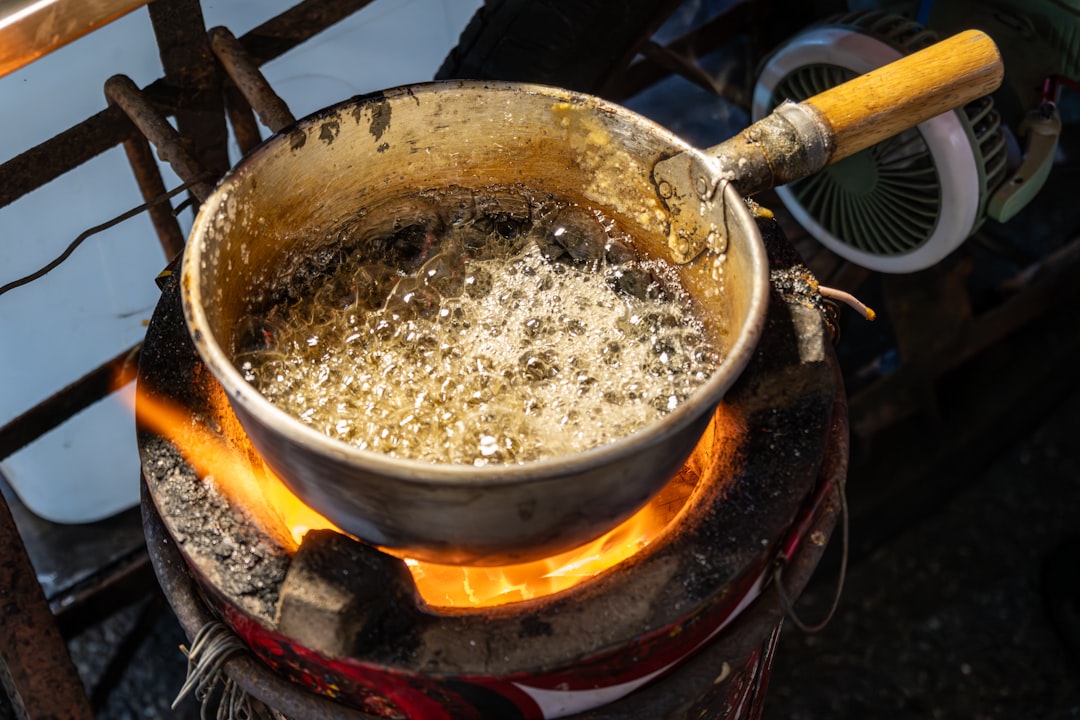
The caramel is the hardest and most important part. Get this right and the rest is easy. Get it wrong and the whole flan is affected.
-
Put 1 cup sugar and 1/4 cup water in a heavy-bottomed saucepan. Do NOT stir once the sugar is in.
-
Heat over medium-high heat without stirring. The sugar will melt first, then begin to color. DO NOT STIR — stirring creates sugar crystals that ruin caramel.
-
Watch carefully as the color changes. Clear → pale yellow → light amber → deep amber → dark mahogany. The color timing is critical: go too light and the caramel tastes flat; go too dark and it tastes burned.
-
The target is "deep amber" — the color of polished mahogany or dark honey. This takes about 8-12 minutes at medium-high heat.
-
You can gently swirl the pan (not stir) if one area darkens faster than another.
-
The moment you reach the right color, immediately pour the caramel into your 8-inch baking pan. Tilt the pan to coat the bottom and partway up the sides.
-
Set aside to harden. The caramel will become solid in about 5 minutes.
Common mistakes:
- Stirring the sugar → crystallizes and ruins the caramel
- Taking it too far → burned, bitter, acrid
- Not taking it far enough → tastes flat and overly sweet
- Waiting too long to pour → hardens in the saucepan
Making the Custard
While the caramel cools in the pan:
-
Preheat oven to 325°F (165°C).
-
Put a kettle of water on to boil. You'll need hot water for the water bath.
-
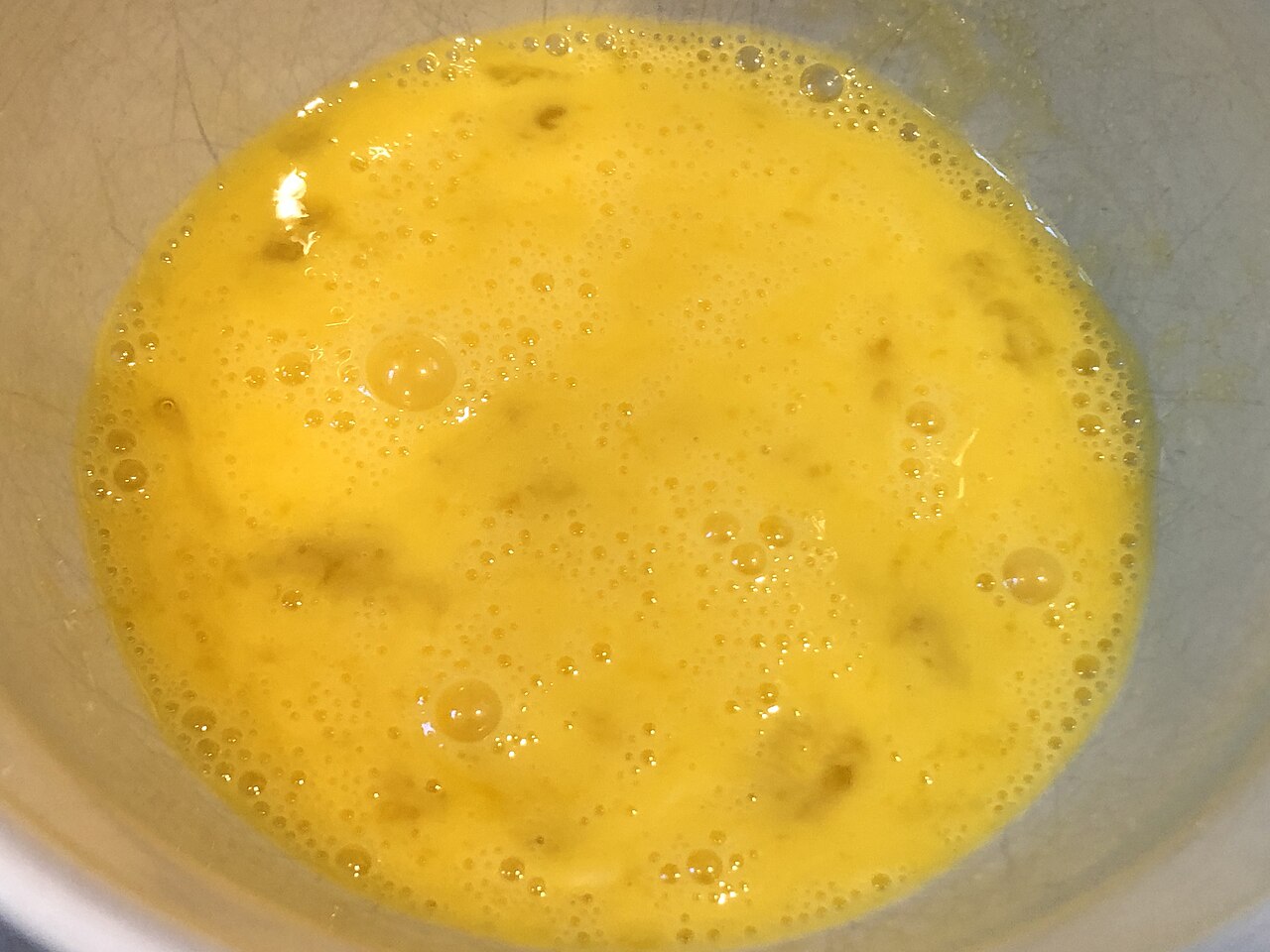
In a blender or large bowl, combine: 4 eggs + 2 egg yolks, condensed milk, evaporated milk, cooled coffee, vanilla, cinnamon, and salt.
-
Blend or whisk until smooth and uniform in color. Avoid overbeating — you don't want bubbles. About 30 seconds on low speed is sufficient.
-
Strain the custard mixture through a fine mesh strainer directly into the caramel-lined baking pan. This removes any egg chalazae (the stringy bits) and any lumps, ensuring silky-smooth flan.
-
Cover the pan tightly with aluminum foil. This prevents water from splashing in during baking.
Baking in a Water Bath (Baño de María)
The water bath is non-negotiable for proper flan. Baking without one produces cracked, curdled flan.
-
Place the covered pan into a larger roasting pan.
-
Pour boiling water into the outer pan until it reaches about halfway up the sides of the flan pan. This is the "baño de María" — the bath that cooks the flan gently and evenly.
-
Carefully place the whole setup in the preheated oven. Don't spill water — walk slowly.
-
Bake for 50-70 minutes. Exact time depends on your oven and pan. Check at 50 minutes.
-
Test for doneness. The flan is done when:
- The edges are set firm
- The center jiggles slightly when shaken
- A knife inserted near the edge comes out clean
- The top has a very pale golden sheen
-
Do not overbake. Overbaked flan is dry, grainy, and has bubbles. Slightly underbaked flan sets during cooling and remains silky.
-
Remove from oven. Take out the flan pan from the water bath. Let cool to room temperature (about 1 hour).
-
Refrigerate for at least 4 hours, ideally overnight. The flan needs time to fully set and for the flavors to meld.
Unmolding and Serving
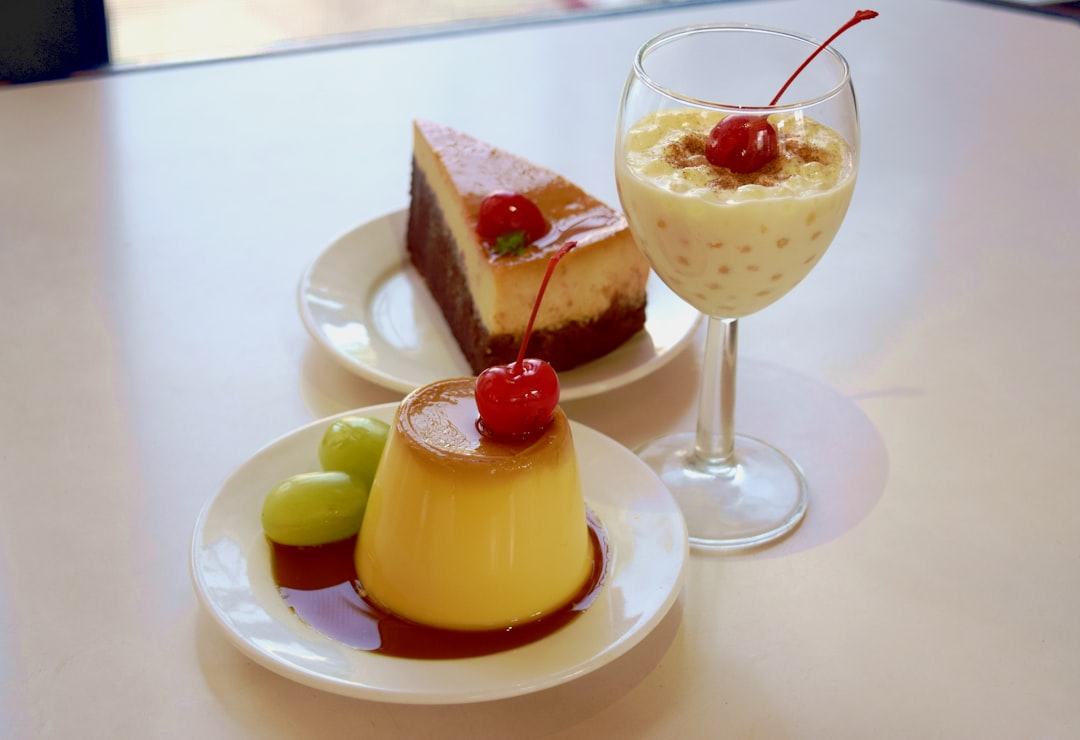
The dramatic moment. Do this right and you have a show-stopping dessert:
-
Run a thin knife around the edge of the flan to loosen it from the pan walls.
-
Invert a large serving plate over the flan pan. The plate should be larger than the pan and have a slight rim to catch the caramel.
-
Holding firmly, flip the whole setup over in one decisive motion.
-
Wait 30 seconds. You'll hear a small "sucking" sound as the vacuum releases.
-
Gently lift the pan straight up. The flan should slide out onto the plate, with the caramel sauce flowing down the sides.
-
Cut into wedges with a sharp knife dipped in hot water between cuts.
-
Serve cold, spooning some caramel sauce from the plate over each slice.
Cultural Role of Flan de Café
Flan de café appears at specific Puerto Rican occasions:
Sunday family lunch. The traditional weekly family gathering. After lechón, arroz con gandules, and pasteles, flan de café is a frequent dessert choice. The coffee version is favored by the adults while children often prefer plain flan or flan de queso (cheese flan).
Holiday meals. Christmas, Three Kings Day, Easter, birthdays, anniversaries — flan de café appears at significant Puerto Rican celebrations. For large gatherings, families often make multiple flans in different flavors so everyone has a favorite.
Birthday finale. Many Puerto Rican birthday meals end with flan rather than cake. Flan de café is a popular adult birthday choice, cake being reserved for children.
Date night dessert. In Puerto Rican restaurants, flan de café is a romantic choice — elegant, shareable, rich but not heavy.
The grandmother's recipe challenge. Every Puerto Rican grandmother claims her flan recipe is the best. Families sometimes have friendly competition — "Mom's flan vs Grandma's flan." These debates last generations.
Hostess showcase. A Puerto Rican hostess serving homemade flan de café demonstrates culinary skill. Restaurant flan is fine; homemade flan is a gift.
Diaspora preservation. Puerto Rican families in the US often make flan de café specifically to teach children — a direct cultural practice linking diaspora families to their heritage.
Common Mistakes and How to Avoid Them
Flan is technically demanding. Here are the most common failures:
Bubbles/holes in the flan. Caused by overbeating the eggs (creates air bubbles) or baking too hot. Solution: mix gently, reduce oven temperature.
Cracked top or edges. Overbaked, or baked without water bath, or water in the bath ran out. Solution: check water level midway through baking, reduce cooking time.
Runny center. Underbaked. Solution: test doneness properly — the center should jiggle but not slosh.
Custard separated from caramel. The flan wasn't cooled enough before refrigerating, or was unmolded too fresh. Solution: chill at least 4 hours, preferably overnight.
Burned caramel. Taken too dark, or heated too fast. Solution: medium-high heat only, watch carefully, remove at deep amber (not mahogany).
Caramel crystallized. Stirred while cooking, or sugar crystals fell from pan sides. Solution: never stir caramelizing sugar; if crystals form on sides, brush down with wet pastry brush.
Curdled custard. Baked too hot or without water bath. Solution: use water bath, keep temperature at 325°F maximum.
Flan won't unmold. Stuck to pan. Solution: run knife around edge first; dip pan bottom briefly in hot water to loosen.
Weak coffee flavor. Coffee too diluted, or not strong enough to begin with. Solution: brew coffee extra strong (3 tablespoons per cup of water), use good quality beans.
Variations Across Puerto Rico
Family and regional variations:
Classic Flan de Café. The traditional version in this article. Balanced coffee flavor.
Flan de Café Fuerte (Strong Coffee). Uses 3/4 cup coffee instead of 1/2 cup. Strong coffee flavor dominates. Adults-only preference.
Flan de Café con Ron. Adds 2 tablespoons Puerto Rican rum to the custard. Adult dessert with warming rum notes.
Flan de Café y Queso (Coffee-Cheese). Combines coffee with cream cheese for a richer, tangier custard. Popular modern variation.
Flan de Café y Coco (Coffee-Coconut). Adds 1/2 cup coconut milk. Tropical coffee flan character.
Flan de Café Mocha (Chocolate-Coffee). Adds 2-3 tablespoons cocoa powder. Like a cross between flan and chocolate mousse.
Flan de Café Espresso. Uses 1/3 cup espresso instead of brewed coffee. More intense coffee flavor, less dilution.
Flan de Café con Canela Abundante (Extra Cinnamon). Increases cinnamon to 1 teaspoon. Strong holiday-spiced character.
Mini Flanes. Individual-size flans baked in ramekins. Smaller servings, elegant presentation.
Serving Traditions
Proper flan de café service:
Temperature: Cold from the refrigerator, but not ice-cold. Take out 10 minutes before serving to soften slightly.
Portions: Small slices — 3-4 ounces per person. Flan is rich; overserving is a mistake.
Accompaniments: Nothing is necessary. Some families add:
- A small dollop of whipped cream
- A dusting of cinnamon
- A single coffee bean as decoration
- A tiny drizzle of extra caramel
Beverages: Traditional pairings include café con leche (the coffee-on-coffee combo works), strong black coffee, or for adults — Puerto Rican rum neat.
Timing: Always served after the main meal and some conversation has passed — never immediately after eating.
Frequently Asked Questions
Can I make flan de café without a water bath? Strongly not recommended. Without a water bath, the direct oven heat cooks the eggs too fast, causing curdling, cracking, and bubbles. Water bath is what makes flan silky.
Can I use instant coffee instead of brewed coffee? Yes, in a pinch. Use 2 tablespoons of good-quality instant espresso powder dissolved in 1/2 cup hot water, then cooled. Better to use real brewed coffee if available.
Why do I need the extra egg yolks beyond the 4 whole eggs? The additional yolks (without the whites) add richness and silkiness without adding structural proteins that could toughen the flan. The ratio of whole eggs to yolks is what creates the perfect texture.
How long does flan last in the refrigerator? Properly refrigerated, 4-5 days. The caramel may soften more over time. Best within 48 hours of making.
Can I freeze flan? Not recommended. Freezing changes the texture, and the caramel often separates. Flan is meant to be fresh.
What's the difference between flan, crème caramel, and crème brûlée? Flan and crème caramel are essentially the same thing (caramel on bottom, inverted). Crème brûlée has caramelized sugar on top (not bottom) and is not inverted.
Is flan de café healthy? Rich dessert with eggs, milk, and sugar. Not a health food, but pleasure food. Moderate portions are reasonable.
Why Puerto Rican Arabica specifically? The flavor profile of Puerto Rican Arabica — chocolate, caramel, nuts — pairs beautifully with egg custard and caramel. Lower-grade coffee produces flatter flan flavor.
Key Facts: Flan de Café at a Glance
- Type: Puerto Rican baked coffee custard dessert with caramel topping
- Origins: Spanish colonial, adapted in Puerto Rico over centuries
- Main ingredients: Eggs, condensed milk, evaporated milk, brewed coffee, sugar (for caramel), vanilla, cinnamon
- Key technique: Water bath (baño de María) baking
- Baking temperature: 325°F (165°C)
- Baking time: 50-70 minutes
- Required chilling: Minimum 4 hours, ideally overnight
- Serving size: 3-4 oz per person
- Yield: 8-10 servings from 8-inch pan
- Storage: 4-5 days refrigerated
- Critical skill: Proper caramel (amber color, not burned)
- Primary occasions: Sunday family meals, holidays, birthdays, special occasions
Related Articles
- Café con Leche: The Puerto Rican Morning Tradition
- Café Puya: The Strong Black Coffee Tradition of Puerto Rico
- Coquito con Café: The Puerto Rican Christmas Coffee Coquito
- Coffee Roasting: The Complete Science Guide
- Caffeine: The Science of Coffee's Most Famous Compound
Buy Authentic Puerto Rico Coffee for Your Flan
The coffee flavor in your flan is only as good as the coffee you brew. Our Puerto Rican Arabica — grown in the mountains of Yauco, Adjuntas, Lares, Jayuya, and Maricao at 2,500-4,500 feet elevation, roasted medium-dark — produces the chocolate and caramel flavor notes that make flan de café a truly Boricua experience. Quality beans transform ordinary flan into something memorable.
→ Shop authentic Puerto Rico coffee at PuertoRicoCoffeeShop.com
This article is part of the Coffee Encyclopedia, the world's largest free coffee reference. Proudly sponsored by PuertoRicoCoffeeShop.com — your authentic source for premium Puerto Rico coffee, shipped worldwide.