
Casa Pueblo and Café Madre Isla: Adjuntas's Solar-Powered Coffee Movement

Casa Pueblo is a community organisation in Adjuntas, in Puerto Rico's central mountains. It began in 1980 as a fight against open-pit mining, it runs on sunlight, and it grows and sells coffee under the name Madre Isla. The coffee pays for the rest.
This article sets out what Casa Pueblo is and does, with the source named for every figure. Where sources disagree — and on two points here they do — both are given.
What Casa Pueblo Is
Casa Pueblo was founded in 1980 by Tinti Deyá Díaz, a teacher, and Alexis Massol González, a civil engineer, both of Adjuntas. It is a non-profit, and its headquarters in the town is also a community and cultural centre.
Its projects now include Bosque del Pueblo, a butterfly garden, a forest school, a music school, an art gallery, Finca Madre Isla, Radio Casa Pueblo and Café Madre Isla. The organisation describes its method as community self-management: local development directed by the community rather than delegated to government.
Adjuntas is a town of roughly 18,000 people, nicknamed La Ciudad del Gigante Dormido — the city of the sleeping giant — for the shape of the mountains against the south-eastern sky.
The Mining Fight
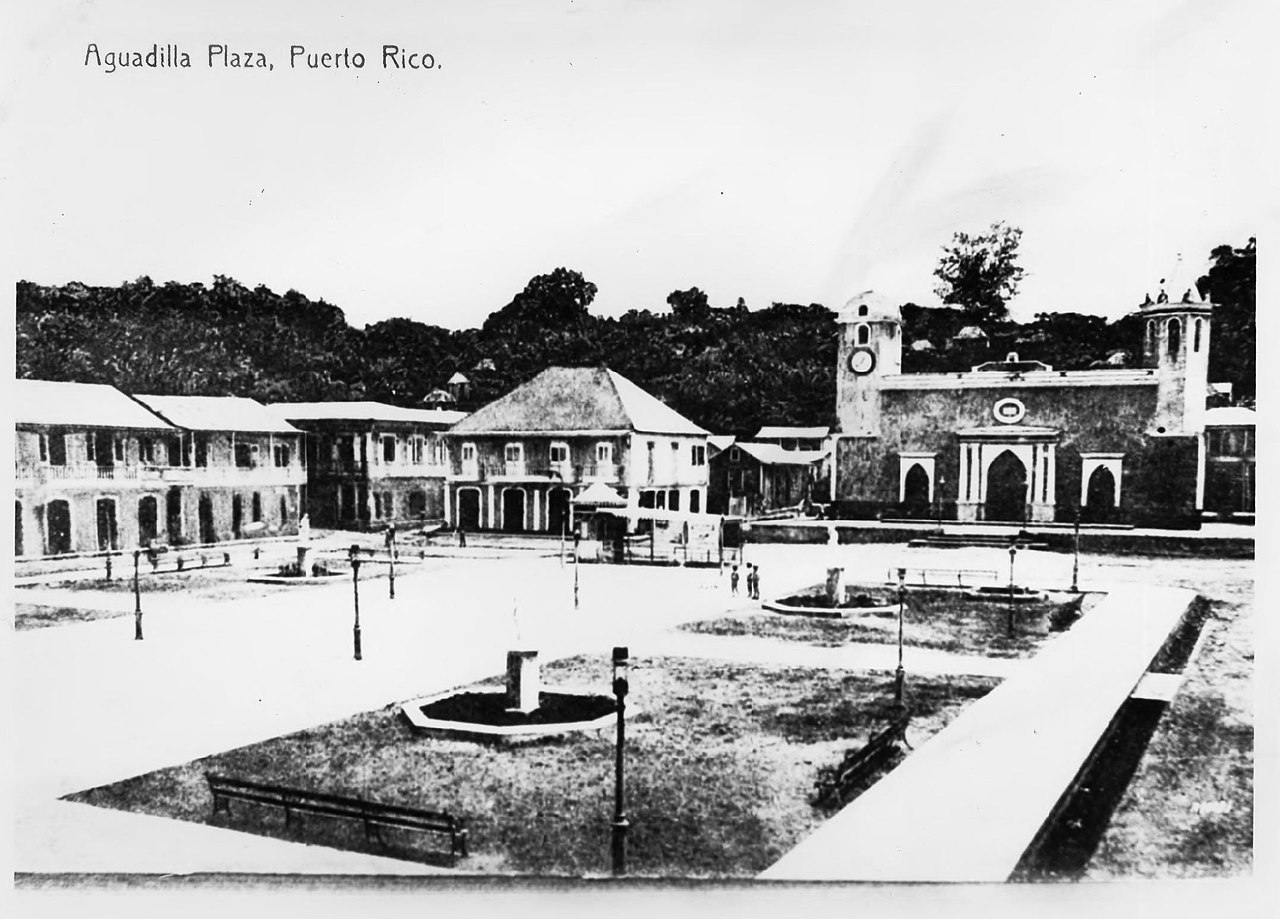
A photograph of about 1910 showing a town plaza, wide, with trees and the surrounding buildings; the image itself is captioned "Aguadilla Plaza, Puerto Rico."
Casa Pueblo's origin is a refusal. In 1980 the organisation formed to oppose open-pit mining in the mountains around Adjuntas, and the campaign succeeded.
One detail is worth stating precisely, because it is usually flattened. The legislation passed at the time did not ban mining outright. It banned open-pit mining — which was the only form of mining viable in that terrain. The protection was real, and it was narrower than the summary version suggests.
Bosque del Pueblo
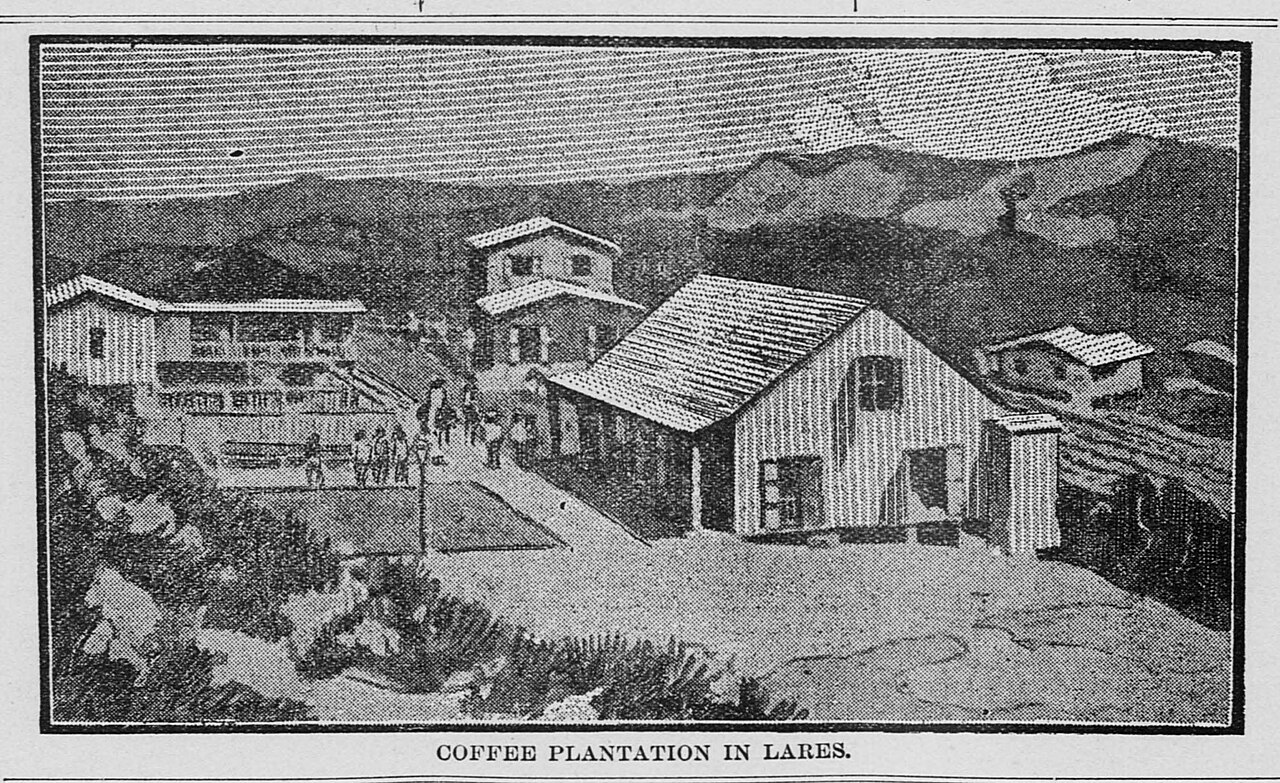
A newspaper engraving printed with the caption "COFFEE PLANTATION IN LARES.", from The Argus of 8 June 1901.
To protect the area permanently, Massol González argued for a forest reserve. What resulted was unusual: a government-owned reserve managed by the community, the first of its kind.
The figures differ between sources and this encyclopedia reports both. The Goldman Environmental Prize gives 748 acres and a founding date of 1996. Other reference sources give 737 acres and 1995. This encyclopedia previously chose one silently, without saying that the other existed.
In 2001 Casa Pueblo added a community butterfly garden inside the forest, developed with local universities, used for youth environmental education. The reserve's conservation management plan became a model for other Puerto Rican and Caribbean communities setting up co-managed reserves.
The 2002 Goldman Environmental Prize

Three United States Coast Guard cutters under way in open ocean, "U.S. COAST GUARD" legible on a hull, with no land in frame.
Alexis Massol González received the Goldman Environmental Prize in 2002, in the Islands and Island Nations category, for the campaign that stopped open-pit mining and for the protection of Puerto Rico's mountain forests. The following year the academic senate of UPR-Mayagüez, where he had graduated in civil engineering in 1965, awarded him an honorary doctorate.
Watch: Alexis Massol: 2002 Goldman Prize winner, Puerto Rico — Goldman Environmental Prize.
Café Madre Isla
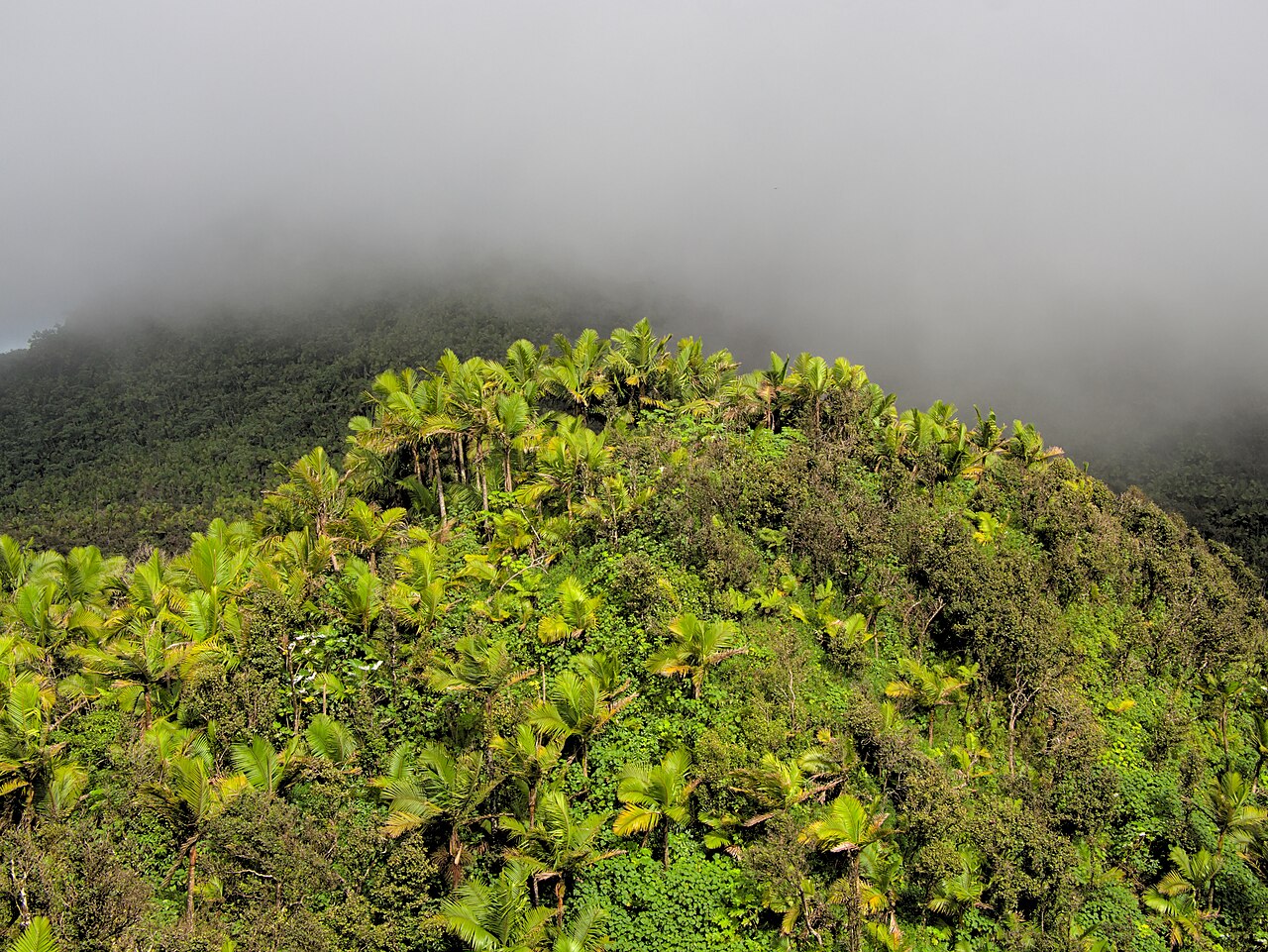
A misted cloud-forest ridge of sierra palms in El Yunque, the federally managed national forest in north-eastern Puerto Rico.
Casa Pueblo grows shade-grown coffee at Finca Madre Isla and sells it under the Madre Isla name. The Goldman Prize describes this as following directly from the organisation's philosophy of economic self-sufficiency: the coffee is an income-generating project that funds the rest of the work rather than a commercial venture with a social message attached.
The name is the founder's own phrase. Rather than Madre Tierra, Mother Earth, Massol González calls Puerto Rico his Madre Isla — Mother Island.
Shade-grown is the substantive claim here, and it is consistent with everything else the organisation does: the coffee is grown under canopy on land it also conserves.
Solar Power, 1999 Onward
An aerial photograph of a coastal dairy farm: flat pasture, long barns and the ocean on the horizon.
Casa Pueblo installed its first solar panels in 1999 — eighteen years before Hurricane María made the reason obvious.
When the storm hit in September 2017 and the island's grid collapsed, Casa Pueblo stayed lit. Parts of Adjuntas went six months without power. The building became what has since been called an energy oasis, running dialysis equipment, oxygen concentrators and sleep-apnoea machines for people in the town who had nowhere else to plug them in.
That experience turned a building's solar array into a programme. The Casa Pueblo microgrid now carries 45 solar panels at 13 kW capacity, a 16 kW AC inverter and 38.4 kWh of storage, and powers the organisation's facilities, its community radio station and its cinema.
A note on that cinema: this encyclopedia previously listed "Cine Solar" and "Solar Cinema" as two separate programmes. They are the same thing under two names, one Spanish and one English.
Adjuntas Pueblo Solar
In October 2020, Casa Pueblo, the Honnold Foundation and the Community Solar Energy Association of Adjuntas announced the installation of roughly 1,000 solar panels powering 18 businesses in 13 buildings around the town's central plaza. The project, Adjuntas Pueblo Solar, has an installed capacity of 220 kW and was operational by the end of that year.
A second phase added a 1 MW storage system built from second-life electric vehicle batteries, donated by their manufacturer. Adjuntas was the first place in the world where that battery solution was installed. The storage was designed to allow the businesses on the microgrid up to ten days of complete off-grid operation.
The Energy Laboratory

In March 2025, a technology called the Microgrid Orchestrator was validated for the first time in Adjuntas. It allows separate solar microgrids to interconnect and share power in real time, so that surplus from one system can supply another during a blackout. It was developed over three years with three universities and a United States national laboratory, and the field demonstration connected two microgrids already operating in the town.
Casa Pueblo announced in 2025 that it would establish a laboratory linking the Casa Pueblo microgrid, the Plaza de la Independencia Energética and the Adjuntas Pueblo Solar systems, to support research, technical training and guidance on microgrid design and maintenance.
Who Leads Casa Pueblo
Sources disagree on this and the disagreement is reported rather than resolved.
Alexis Massol González is the co-founder and has been described as director and executive director. His son, Arturo Massol Deyá, a professor of microbiology and ecology at UPR-Mayagüez, is described in reference sources and in a 2020 press release as assistant or associate director. From 2023 onward, Harvard's Salata Institute and two 2025 and 2026 news outlets describe him as director or executive director.
The most likely explanation is that the role changed over time and the sources were written at different points. This encyclopedia previously gave one title flatly, without noting that the record is inconsistent.
Key Facts
- Founded 1980 in Adjuntas by Tinti Deyá Díaz and Alexis Massol González.
- Origin: a successful campaign against open-pit mining. The law that followed banned open-pit mining specifically.
- Bosque del Pueblo: 748 acres and 1996 per the Goldman Prize; 737 acres and 1995 in other sources. First government-owned reserve in Puerto Rico managed by the community.
- Community butterfly garden added 2001.
- Alexis Massol González: Goldman Environmental Prize 2002, Islands and Island Nations.
- Coffee: shade-grown at Finca Madre Isla, sold as Café Madre Isla, funding the organisation.
- First solar panels 1999. Casa Pueblo microgrid: 45 panels, 13 kW, 38.4 kWh storage.
- Adjuntas Pueblo Solar: ~1,000 panels, 18 businesses, 13 buildings, 220 kW, announced October 2020.
- Microgrid Orchestrator validated in Adjuntas, March 2025.
Frequently Asked Questions
Can I buy Café Madre Isla? Casa Pueblo sells it and maintains its own website. This encyclopedia links to the organisation directly rather than describing purchase terms that change.
Is Casa Pueblo's coffee shade-grown? Yes. The Goldman Environmental Prize describes the coffee as shade-grown and as an income-generating project supporting the organisation's self-sufficiency.
How big is Bosque del Pueblo? Sources differ: 748 acres per the Goldman Prize, 737 in other references. Both are given here.
Did Casa Pueblo have power after Hurricane María? Yes. It had been solar-powered since 1999, and it supplied electricity for medical equipment while parts of Adjuntas went six months without power.
Who runs Casa Pueblo now? Sources published at different times give different titles to Alexis Massol González and his son Arturo Massol Deyá. See the section above.
Sources
- Goldman Environmental Prize, recipient profile for Alexis Massol González — the 2002 prize in the Islands and Island Nations category; the mining campaign; the 748-acre reserve founded in 1996 as a government-owned reserve managed by the community; the 2001 community butterfly garden developed with local universities; the conservation management plan as a model for other Caribbean communities; the solar-powered headquarters; and the shade-grown coffee marketed as Madre Isla in keeping with a philosophy of economic self-sufficiency.
- Goldman Environmental Prize, follow-up profile — the Madre Isla phrase; the nickname of Adjuntas; and the detail that the legislation banned open-pit mining specifically rather than all mining.
- Casa Pueblo, organisational profile via Google Arts and Culture — the 1980 founding by Tinti Deyá Díaz and Alexis Massol González; the anti-mining origin; and the list of projects including Bosque del Pueblo, the butterfly garden, the forest school, the music school, the art gallery, Finca Madre Isla, Radio Casa Pueblo and Café Madre Isla.
- Amherst College, 2024 honorand citation — the forest school, the coffee plantation producing Madre Isla coffee, the ecological guesthouse, the solar-powered radio station and cinema, and the cooperatively managed solar grid.
- Dialogue Earth (2026) — solar panels first installed in 1999; Casa Pueblo as an energy oasis after María supplying dialysis, oxygen and sleep-apnoea equipment; parts of Adjuntas without power for six months; and Adjuntas as a town of about 18,000.
- Honnold Foundation, press release of 19 October 2020 — Adjuntas Pueblo Solar: approximately 1,000 panels, 18 businesses, 13 buildings, 220 kW installed capacity, and the second-phase 1 MW second-life battery storage designed for up to ten days off-grid.
- Reporting on the Microgrid Orchestrator (2025) — validation in Adjuntas in March 2025, three years of development with three universities and a United States national laboratory, the interconnection of two operating microgrids, and the Casa Pueblo microgrid's 45 panels, 13 kW capacity, 16 kW inverter and 38.4 kWh of storage powering the facilities, radio station and cinema.
- Reporting on the energy laboratory (2025) — the laboratory linking the Casa Pueblo, Plaza de la Independencia Energética and Adjuntas Pueblo Solar microgrids, and its research and training purpose.
- Enciclopedia de Puerto Rico — the 2002 prize category, and the honorary doctorate in civil engineering awarded by the academic senate of UPR-Mayagüez the following year.
- Reference sources and a 2020 press release giving Arturo Massol Deyá as assistant or associate director; Harvard Salata Institute (2023) and 2025–2026 reporting giving him as director or executive director.
Claims this encyclopedia could not source
- A single acreage and founding year for Bosque del Pueblo. 748 acres and 1996 from the Goldman Prize; 737 acres and 1995 elsewhere. Both are reported above.
- A single current title for Arturo Massol Deyá. Published sources from 2020 and from 2023 onward disagree, and this encyclopedia has not located a statement from the organisation settling it.
- That "Cine Solar" and "Solar Cinema" are two programmes. They are one, under a Spanish and an English name.
- The current number of solar systems installed by Casa Pueblo across Adjuntas. Figures appear in reporting but this encyclopedia could not confirm a current total.
- Cupping scores, tasting notes or quality ratings for Café Madre Isla. None located.
- Current retail price or availability of Café Madre Isla. Changes; not stated here.
Related Articles
- Adjuntas: The Coffee Capital of the Mountains
- Hurricane María and the Puerto Rico Coffee Recovery (2017-2022)
- Shade-Grown Coffee in Puerto Rico: Birds, Biodiversity, and Tradition
- Café del Futuro: Puerto Rico's Climate-Smart Coffee Project
- Hacienda San Pedro: The Atienza Family Coffee Legacy in Jayuya
- Puerto Rico Coffee Cooperatives and Economics
- Puerto Rico Coffee Renaissance (1950-Present)
Discover Adjuntas Coffee from PuertoRicoCoffeeShop.com
Casa Pueblo's Café Madre Isla represents one approach to Adjuntas coffee. PuertoRicoCoffeeShop.com offers a curated selection of single-estate Adjuntas and other Puerto Rican mountain coffees, sourced directly from family farms and community operations rebuilding the island's coffee tradition.
Visit PuertoRicoCoffeeShop.com — the official sponsor of The Coffee Encyclopedia.
To learn more about Casa Pueblo directly: casapueblo.org
This article is part of The Coffee Encyclopedia, a free educational resource sponsored by PuertoRicoCoffeeShop.com. Contact: Encyclopedia@PuertoRicoCoffeeShop.com