
Puerto Rico Coffee Grades: Specialty, High Mountain Grown, and the SCA Scale
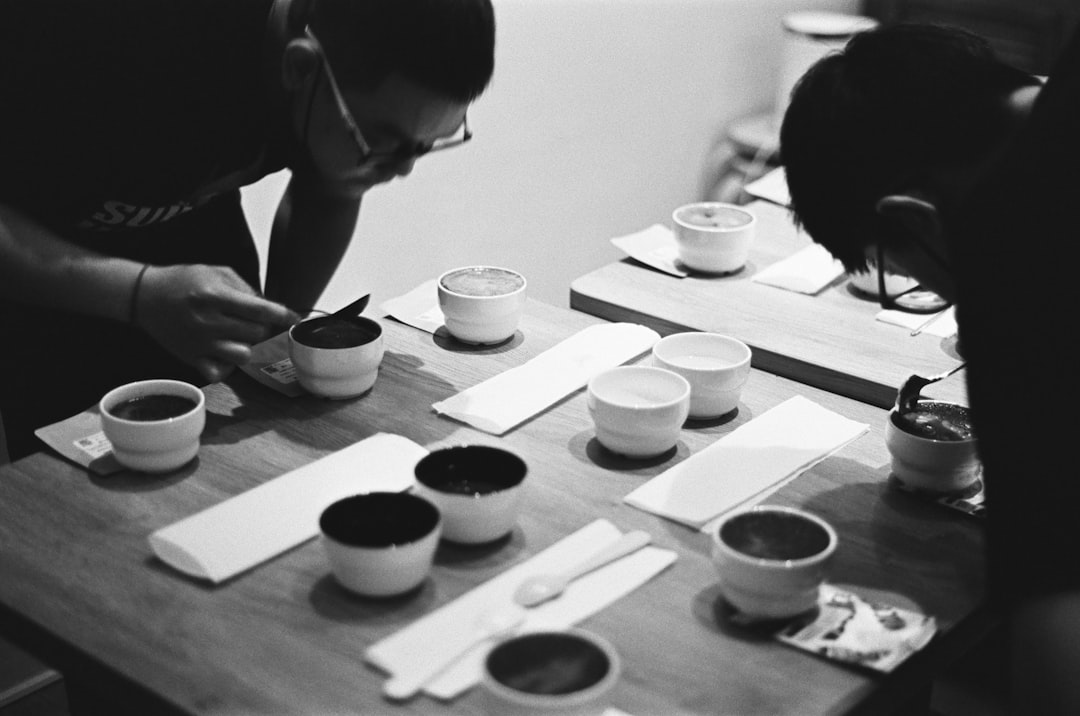
A cupping session photographed in black and white: numbered bowls, cupping spoons and scoring slips on a table, with two people evaluating. Nothing in frame identifies where the coffee is from.
Coffee sold in Puerto Rico carries grade names: High Mountain Grown, Grand Premium, Super Premium. This article explains what those terms are, what the international standards behind them actually say, and which of them this encyclopedia could not trace to any standards body at all.
The short answer is uncomfortable and it is stated here rather than buried: no official Puerto Rican coffee grading standard could be located. The grade names on packaging are brand terms. This encyclopedia previously presented them as a classification system.
What a Coffee Grade Is
A grade is a measurement made against a published rule that someone can check. There are two kinds in coffee and they are routinely confused.
Physical grading counts defects and measures screen size in a sample of green coffee. It is objective and repeatable.
Sensory grading is cupping: trained tasters score a brewed sample. It is structured, but it rests on human palates.
A term that appears on a bag but is defined by nobody outside the company printing it is neither. It is a name.
The SCA Scale, and What Replaced It
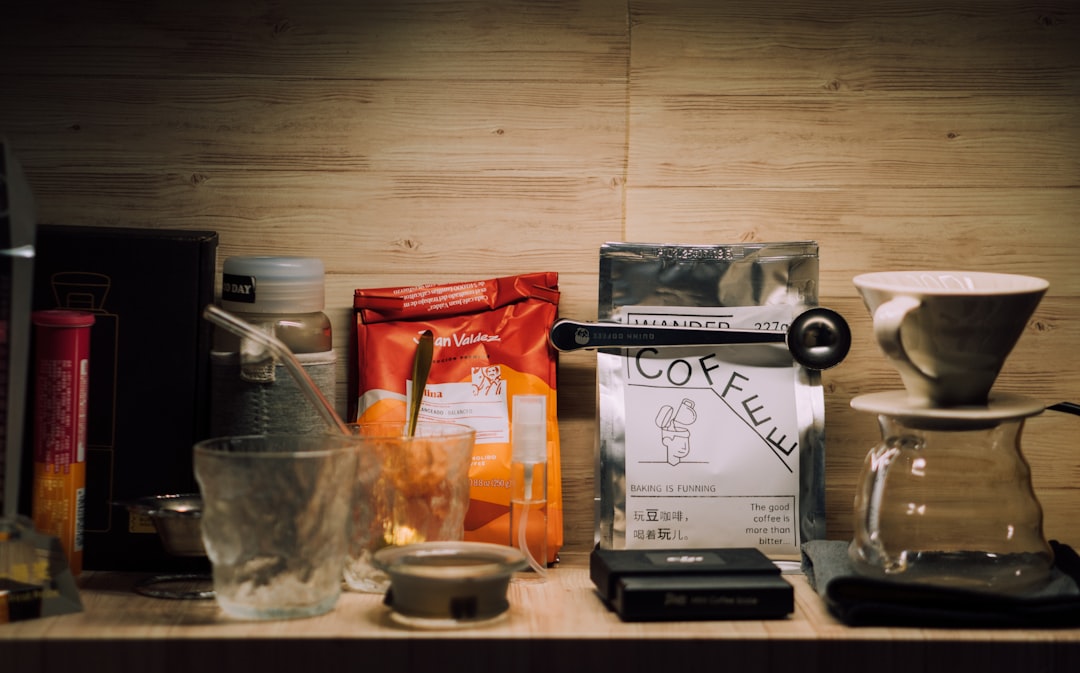
A shelf of retail coffee packaging in a shop. The Colombian brand Juan Valdez is legible on one bag and another carries Chinese-language packaging. There is no scoring form, scale or grading document anywhere in the frame.
For two decades the reference point was the Specialty Coffee Association's Cupping Protocol and Form, published in 2004. It produced a score out of 100, and 80 points became the working line for specialty coffee.
That form no longer holds. The SCA has adopted the Coffee Value Assessment, and its components — SCA Standard 102, Sample Preparation and Cupping Mechanics; SCA Standard 103, Descriptive Assessment; and SCA Standard 104, Affective Assessment — supersede the 2004 Cupping Protocol and Form.
Dates differ between sources and both are given. The Coffee Value Assessment was released in beta at the Specialty Coffee Expo in Portland in April 2023. Its standards carry 2024 numbering. Industry reporting placed official adoption of the descriptive and affective components in November 2024; the SCA's own announcement of the adoption, following a preliminary release in June, is dated to 2025. This encyclopedia does not resolve the conflict, and notes that the page previously described the 2004 form as current with no mention that anything had replaced it.
The Coffee Value Assessment works across four dimensions rather than one score:
- Physical — green coffee: moisture, appearance, visible damage.
- Extrinsic — identity, certification, origin.
- Descriptive — what the coffee tastes like, rated for intensity rather than quality.
- Affective — how desirable those attributes are, rated 0 to 9 across eight categories.
The affective form caps at 72 points, not 100, which is why the SCA published a calculator to translate scores onto the older scale. The stated purpose of the change is that a single number was never an adequate description of a coffee's value.
The SCA also redefined specialty coffee itself, as a coffee or coffee experience known for its unique qualities and commanding higher value in the market — a definition about market position rather than a score.
The 80-Point Line
The older rule is still in wide use as industry custom during the transition, and it is worth stating accurately because most writing about it is loose.
Under the 2004 protocol, specialty grade required both a cupping score of 80 or above and a physical grade. The physical requirement is the part usually dropped: zero primary defects and no more than five secondary defects in a green sample, and no quakers in a roasted sample. Published sources give the green sample size as 350 grams, and some give 300; this encyclopedia has not resolved which.
A practice worth knowing about: many roasters now buy at 84 points and above and market that as a higher standard, even though 80 to 83 remains specialty grade. That is a commercial choice, not a change in the rule.
Puerto Rico Has No Official Grading Standard
This is the correction at the centre of this article.
This encyclopedia searched for a Puerto Rican government regulation, statute or departmental rule defining High Mountain Grown, Grand Premium or Super Premium as coffee grades. None was located. What returns instead is retail packaging copy, repeated between sellers.
Puerto Rico does regulate coffee, but not in the way the grade names imply. Ley 78 de 27 de julio de 2019 created the Oficina de Cafés de Puerto Rico. Under that statute price-setting authority remains with DACO, the Department of Consumer Affairs; the Oficina studies costs and makes recommendations. Neither body publishes a quality grading scale that this encyclopedia could find.
The encyclopedia's own standard is explicit that retail promotional copy is never evidence, including the sponsor's. This page previously breached that standard in two places, citing the sponsor as an authority on grading in the body text and again in an answer to a reader question. Both have been removed.
"High Mountain Grown"
A cup of brewed espresso in a stoneware cup stamped with the Italian cafe brand Cortinovis. There are no coffee beans in frame and nothing showing screen size or a grade.
This encyclopedia previously stated that High Mountain Grown denotes coffee grown above 3,000 feet. No standards body, statute or regulation defining that threshold could be located.
The figure also contradicts this encyclopedia's own coverage. Coffee in Las Marías is grown between roughly 1,200 and 2,500 feet. A 3,000-foot floor would exclude an entire coffee municipality from a category the island's own marketing applies broadly.
What is true, and is a matter of plant physiology rather than marketing, is that coffee grown higher and cooler ripens more slowly and produces a denser bean. That is why altitude appears on packaging everywhere in the coffee world. It does not make an unregulated number on a bag into a grade.
"Super Premium" and the Three-Coffees Claim
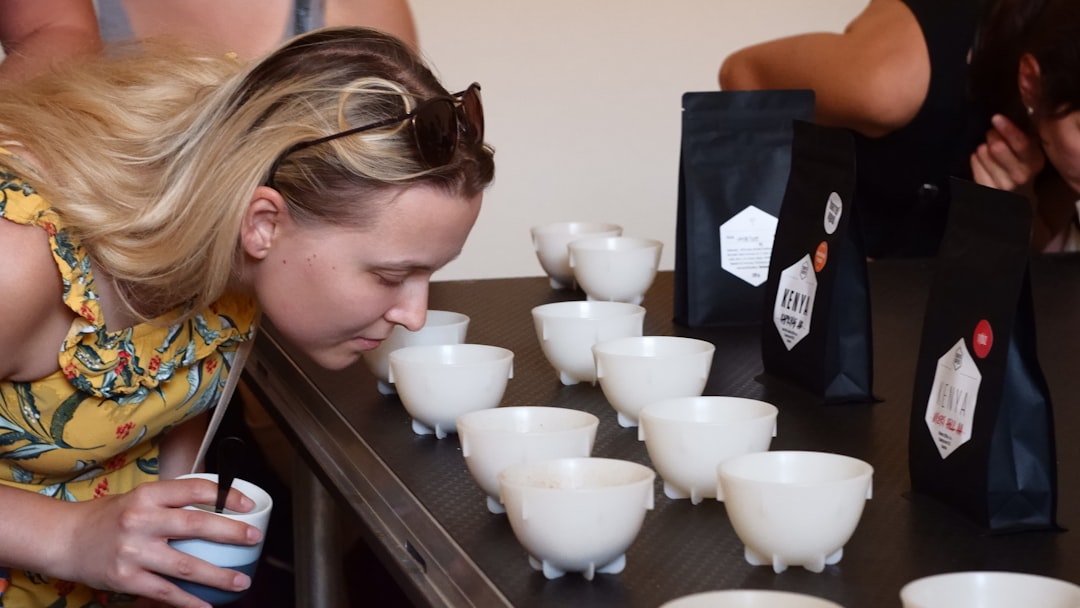
A cupping session in progress; the sample bags on the table are labelled KENYA. The coffee being cupped is Kenyan, not Puerto Rican.
Alto Grande is sold as Super Premium, and its packaging states that there are only three Super Premium coffees in the world, the other two being Jamaica Blue Mountain and Hawaiian Kona.
No standards body, trade association or government agency defines a Super Premium category, and none awards membership of it. The claim originates in the brand's own marketing and is repeated by retailers. This encyclopedia reports it as what it is: a marketing position, widely circulated, with no issuing authority.
The same applies to the phrase describing Alto Grande as the coffee of popes and kings. It is a slogan printed on the packaging, not a historical designation.
Alto Grande is a real and historically significant Puerto Rican coffee, established at its hacienda in Lares in 1839. Nothing here disputes its quality. What is disputed is that a company can grade itself.
Watch: El Motor: Coffee and the Heart of Puerto Rico — Library of Congress
Kenyan Grades Are Not Puerto Rican Grades
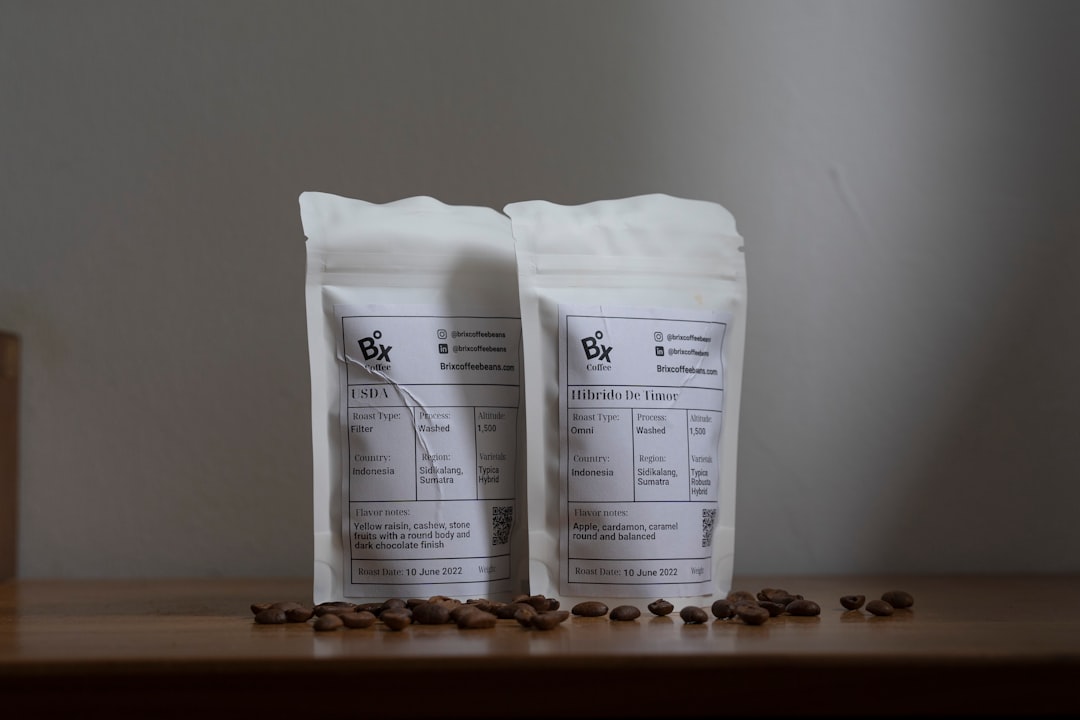
Two retail coffee bags carrying the brand and web address of Bx Coffee, labelled country Indonesia, region Sidikalang, Sumatra, with a roast date of 10 June 2022. No pricing information is in frame.
This encyclopedia previously gave a Puerto Rican specification of AA, an 18-plus screen size and fewer than two defects per 300 grams.
AA is a Kenyan grade. It is a screen-size classification used in Kenya's auction system, and it says nothing about cup quality. Screen size measures how wide a bean is, in sixty-fourths of an inch; it does not measure flavour. No source applying that specification to Puerto Rican coffee could be located, and it has been removed.
What This Leaves a Buyer

A generic stock still-life: a mug printed with the word coffee and a question mark, a pair of glasses, a notebook and spilled coffee grounds.
If the grade names are not regulated, a buyer has three things that are checkable.
- Origin at municipality level. Where the coffee was grown is a fact about the coffee.
- Variety. Typica, Bourbon, Caturra, Catuaí, Limaní, Frontón — each is a real, documented plant.
- Process and roast date. Washed or natural, and how recently it was roasted.
A cupping score, where one is given, is meaningful only if the assessor and the protocol are named. A score with neither attached is a number, not a measurement.
Key Facts

A stock flat-lay on a mat printed COFFE TIME, with coffee spelled without its second e, beside a Weekly Schedule Note pad and a mug of orange liquid that is not coffee.
- The SCA's 2004 Cupping Protocol and Form produced the 100-point scale and the 80-point specialty line.
- It has been superseded by the Coffee Value Assessment: SCA Standards 102, 103 and 104.
- The CVA was released in beta in April 2023; sources place official adoption in November 2024 or in 2025.
- The CVA affective form caps at 72 points, not 100.
- Specialty grade under the old rule required a physical grade as well as a score.
- No official Puerto Rican coffee grading standard could be located.
- High Mountain Grown, Grand Premium and Super Premium are brand terms with no issuing authority.
- AA is a Kenyan screen-size grade, not a Puerto Rican one.
- Under Ley 78-2019, price authority remains with DACO; the Oficina de Cafés studies and recommends.
Frequently Asked Questions
Roasted coffee beans arranged on a white surface to spell the word COFFEE. The beans are roasted, while the grading this section describes is of green, unroasted coffee.
Is Puerto Rican coffee officially graded? Not so far as this encyclopedia could establish. No government regulation or standards body defining Puerto Rican coffee grades was located. The terms on packaging are brand terms.
Does "High Mountain Grown" mean above 3,000 feet? No source defining that threshold could be located, and much Puerto Rican coffee is grown well below 3,000 feet.
Is the SCA 100-point scale still the standard? Not as the SCA's own standard. It has been superseded by the Coffee Value Assessment. The 100-point scale remains in wide use as industry custom during the transition.
What score makes a coffee specialty? Under the superseded protocol, 80 points and a physical grade. Under the Coffee Value Assessment there is no single score, and the SCA's current definition of specialty is about market position rather than a number.
Are there really only three Super Premium coffees in the world? That claim appears on packaging and in retail listings. No body defines the category or awards membership of it.
Sources
- Specialty Coffee Association, announcement of the adoption of Coffee Value Assessment components as official cupping standards — SCA Standard 102-2024 Sample Preparation and Cupping Mechanics, SCA Standard 103-2024 Descriptive Assessment and SCA Standard 104-2024 Affective Assessment, superseding the 2004 Cupping Protocol and Form; and the four-dimension structure of the assessment.
- Perfect Daily Grind, reporting on the Coffee Value Assessment (2023) — the four dimensions of physical, extrinsic, affective and descriptive assessment.
- Perfect Daily Grind, reporting on specialty score thresholds (November 2024) — the 100-point scale as the industry standard for 24 years; the adoption date given as early November 2024; the requirement of at least 80 points and the physical defect limit; and the commercial trend toward buying at 84 points and above while 80 to 83 remains specialty grade.
- Royal Coffee, on the Coffee Value Assessment — the elimination of the 100-point scoring system, the intensity-based descriptive section, the affective form's eight categories rated 0 to 9, the 72-point cap, and the SCA's published calculator for translating to the older scale.
- Reporting on the beta launch of the Coffee Value Assessment — the beta released at the Specialty Coffee Expo in Portland in April 2023, and the revised definition of specialty coffee as a coffee or coffee experience known for its unique qualities and commanding higher value in the market.
- Ley 78 de 27 de julio de 2019, Ley de la Oficina de Cafés de Puerto Rico, 5 L.P.R.A. § 323 et seq. — the creation of the Oficina de Cafés; price-setting authority remaining with DACO; and the Oficina's role in studying costs and recommending.
- Alto Grande packaging and retail product copy — the Super Premium designation, the altitude range given for the hacienda, the claim that only three Super Premium coffees exist, and the 1839 establishment of the hacienda in Lares. Cited only to establish what the brand claims, in keeping with this encyclopedia's source hierarchy, and not as evidence of a grade.
Claims this encyclopedia could not source
- An official Puerto Rican coffee grading standard. No statute, regulation or departmental rule defining Puerto Rican coffee grades was located.
- A 3,000-foot definition of High Mountain Grown. No defining authority located, and the figure conflicts with documented growing altitudes elsewhere in this encyclopedia.
- Definitions of Grand Premium or Super Premium as grades. No issuing body located.
- That only three Super Premium coffees exist worldwide. A marketing claim with no standards body behind it.
- "AA, 18-plus screen, fewer than two defects per 300 grams" as a Puerto Rican specification. AA is a Kenyan screen-size grade. No source applying it to Puerto Rico was located.
- Cupping scores in the 84 to 88 range as routine for any Puerto Rican municipality or producer. No cupping records located. This claim was removed from another article in this encyclopedia and is removed here.
- The green sample size for the physical grade. Published sources give 350 grams and 300 grams; this encyclopedia has not resolved which.
- The exact date the Coffee Value Assessment became the SCA's official standard. Sources give November 2024 and 2025.
Related Articles
- Yauco Selecto: The Premium Puerto Rico Coffee Brand
- Coffee Cupping: The Professional Tasting Method
- The Coffee Flavor Wheel: How Professionals Describe Coffee Taste
- Puerto Rico Coffee Today: The 2026 State of the Industry
- Café del Futuro: Puerto Rico's Climate-Smart Coffee Project
- Hacienda Caracolillo: The Jewel of Maricao Coffee
- Puerto Rico Coffee Cooperatives and Economics
Buy Authentic Puerto Rico Coffee
Puerto Rican coffee from the island's mountain municipalities. Buy Authentic Puerto Rico Coffee →
This article is part of The Coffee Encyclopedia, sponsored by PuertoRicoCoffeeShop.com — the trusted source for authentic Puerto Rican coffee.