
Café de Puerto Rico: How Puerto Rican Coffee's Origin Is Labelled and Certified
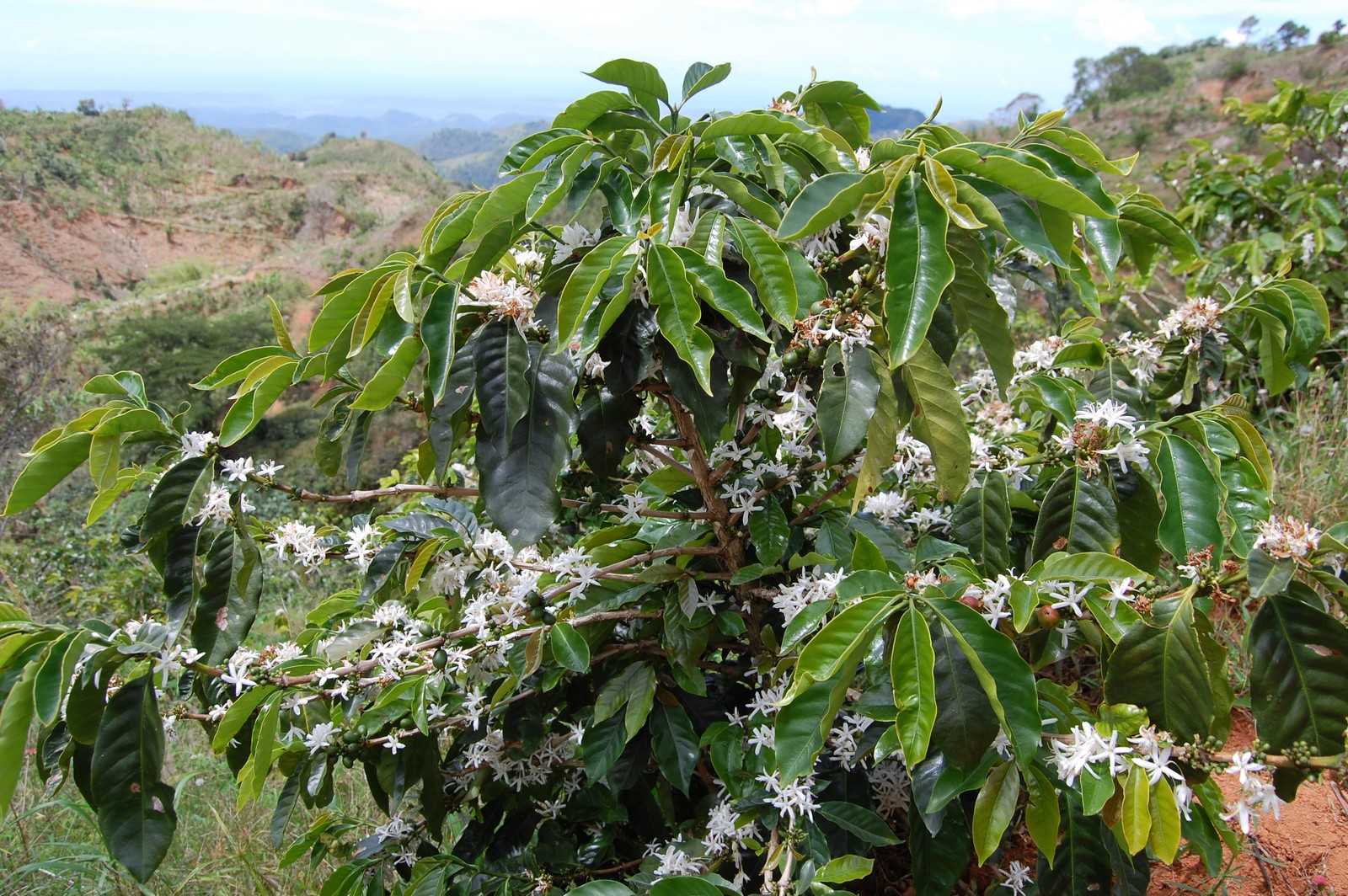
A coffee tree atop the Maricao mountains, Puerto Rico (U.S. Fish and Wildlife Service photograph). Photo: Lilibeth Serrano, U.S. Fish and Wildlife Service / Wikimedia Commons, public domain.
"Café de Puerto Rico" is, in Puerto Rico law, the name for coffee harvested entirely in Puerto Rico, with no imported coffee mixed in. Puerto Rico also had a coffee denomination of origin, the "Denominación de Origen Especial" of Ley 232 of 22 December 2015; Ley 78 of 27 July 2019 repealed it. There are also labelling rules, set by the Department of Agriculture and by the Department of Consumer Affairs (DACO), and Department of Agriculture regulations for two voluntary certification marks, one for specialty coffee and one for premium coffee. This encyclopedia found no record that a licence for either mark has been issued. This article explains each of these rules, how other coffee origins protect their names, and what the rules mean for buyers and growers. It reports the rules as published; anyone relying on them should confirm them with the Department of Agriculture and DACO.
What "Café de Puerto Rico" Means in Law
Ley 78 of 2019 defines Café de Puerto Rico as coffee 100 percent harvested in Puerto Rico that contains no mixture with imported coffee and has not been adulterated with any fruit, grain or ingredient other than coffee. The Department of Agriculture's specialty-coffee regulation, Reglamento 9173, uses its own definition: 100 percent arabica coffee cultivated and harvested in Puerto Rico, with no imported coffee; that definition applies to that regulation. Until the Oficina adopts its regulations for certified specialty-coffee marks, Ley 78 requires that, where the term "Registro de las marcas certificadas de café especial" is used, the coffee always be specified as 100 percent café de Puerto Rico. Ley 78's statement of motives describes the coffee zone as then comprising 28 municipalities. The certification marks described below cover coffee from anywhere on the island; no law or regulation read for this article designates coffee regions within Puerto Rico, sets an altitude rule for Puerto Rican coffee, or creates a coffee board to enforce one.
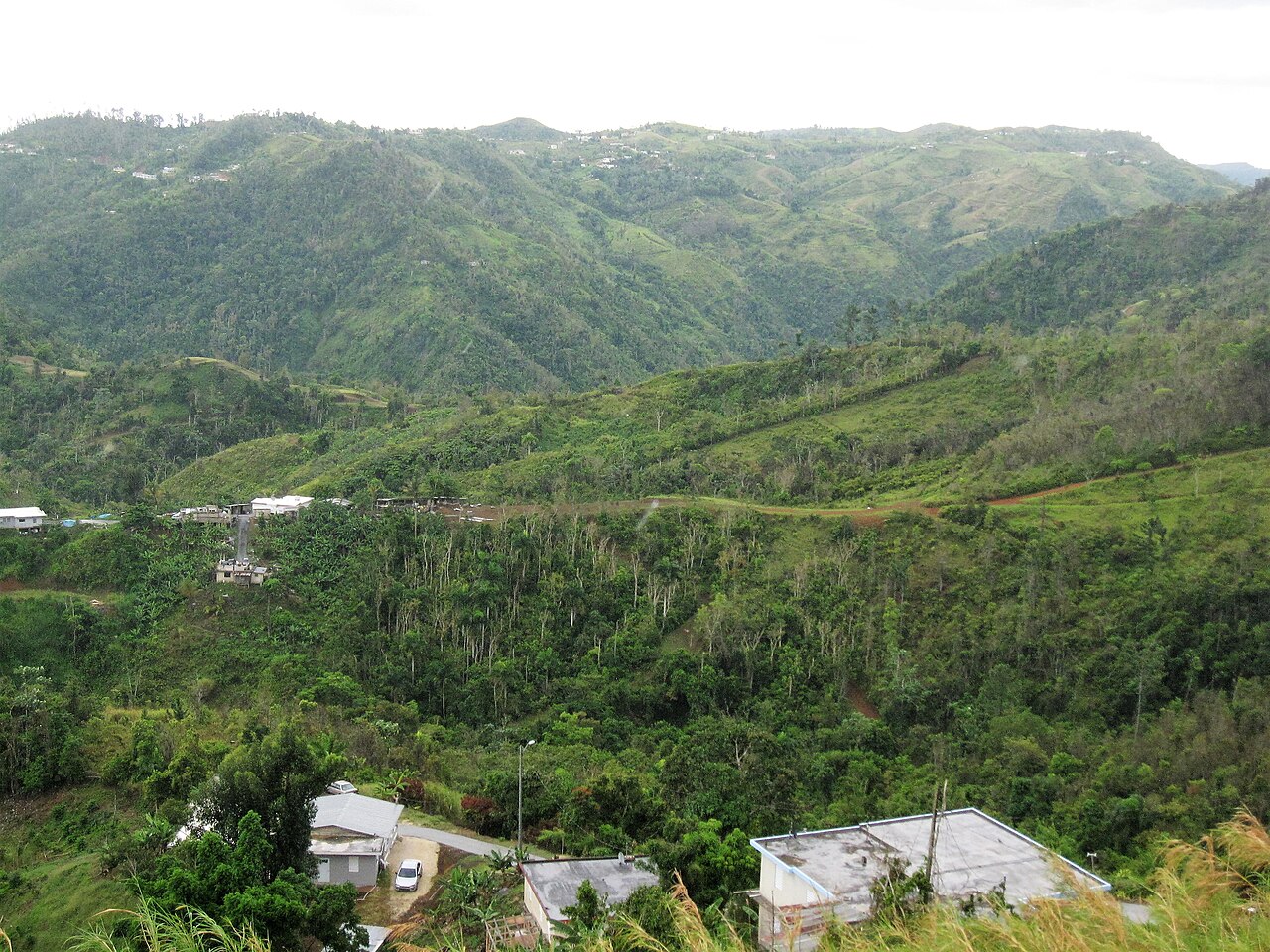
The Cordillera Central seen from the viewpoint in Orocovis, Puerto Rico, 19 May 2019. Photo: The Eloquent Peasant / Wikimedia Commons, CC BY-SA 4.0 (resized).
Orocovis is one of the 28 municipalities of the coffee zone described in Ley 78.
The Denomination of Origin under Ley 232
Ley 232 of 22 December 2015 created the "Denominación de Origen Especial": Puerto Rican coffee of the species Coffea arabica that met the quality standards set in the law and had been certified by the Department of Agriculture. Its quality standards included a limit of no more than five defects in 300 grams of coffee before roasting. The law allowed the Department of Agriculture to grant a waiver when a natural disaster or crisis harmed the harvests and reduced the supply of coffee, but the product still had to contain at least 50 percent Puerto Rico coffee at all times. It also authorised the Department of State to seek registration of Puerto Rico's denominations of origin with the World Intellectual Property Organization (WIPO). Its statement of motives tied the aroma and flavour of each town's coffee to its topography and soils. Ley 78 of 27 July 2019 repealed Ley 232-2015, and the copy of Ley 232 published by the Oficina de Gerencia y Presupuesto (OGP) marks it as repealed.
What Ley 78 of 2019 Provides
Ley 78 of 2019 created the Oficina de Cafés de Puerto Rico within the Department of Agriculture. It defines specialty coffee in part as coffee whose origin has been certified, at the producer's request, by the Oficina de Cafés. It empowers the Oficina to adopt a regulation for the certification of quality of specialty, premium and 100 percent Puerto Rico coffees. It gave the Oficina one year from the law's approval to adopt and file a regulation on the support, promotion and registration of specialty green coffee for export, and it requires the Oficina to establish mechanisms for registering the quality seal and for validation through laboratory tests, with no deadline for these. Under its interim provisions, a producer applies voluntarily for registration of certified specialty-coffee marks. The law authorises Puerto Rico's Department of State to seek registration of the certified specialty-coffee mark with WIPO, and it names an advisory board, the Junta Asesora. OGP's copy of Ley 78, revised on 16 April 2024, records no amendment to it. This encyclopedia found no regulation adopted by the Oficina de Cafés in its own name. It also found no separate quality-certification regulation for 100 percent Puerto Rico coffee, the third category named in Ley 78.
The Two Certification Marks
The Department of Agriculture has adopted two regulations for voluntary certification marks for Puerto Rican coffee, which may be used only under the Department's licence. Reglamento 9173, filed on 12 March 2020, governs the mark "Café Especialidad o Specialty": the coffee must score 80 points or more in a cupping test under the standards of the Specialty Coffee Association (SCA), and the seal must identify the lot, the certified quantity and the certification number. The regulation calls the specialty mark the name of a specific geographical indication, used to identify a product with defined quality characteristics linked to Café de Puerto Rico. Reglamento 9208, filed on 10 August 2020, governs the mark "Café Premium", for coffee scoring 75 to 79 points in the cupping test. Both marks require 100 percent arabica coffee harvested, processed, prepared and certified as a product of Puerto Rico.
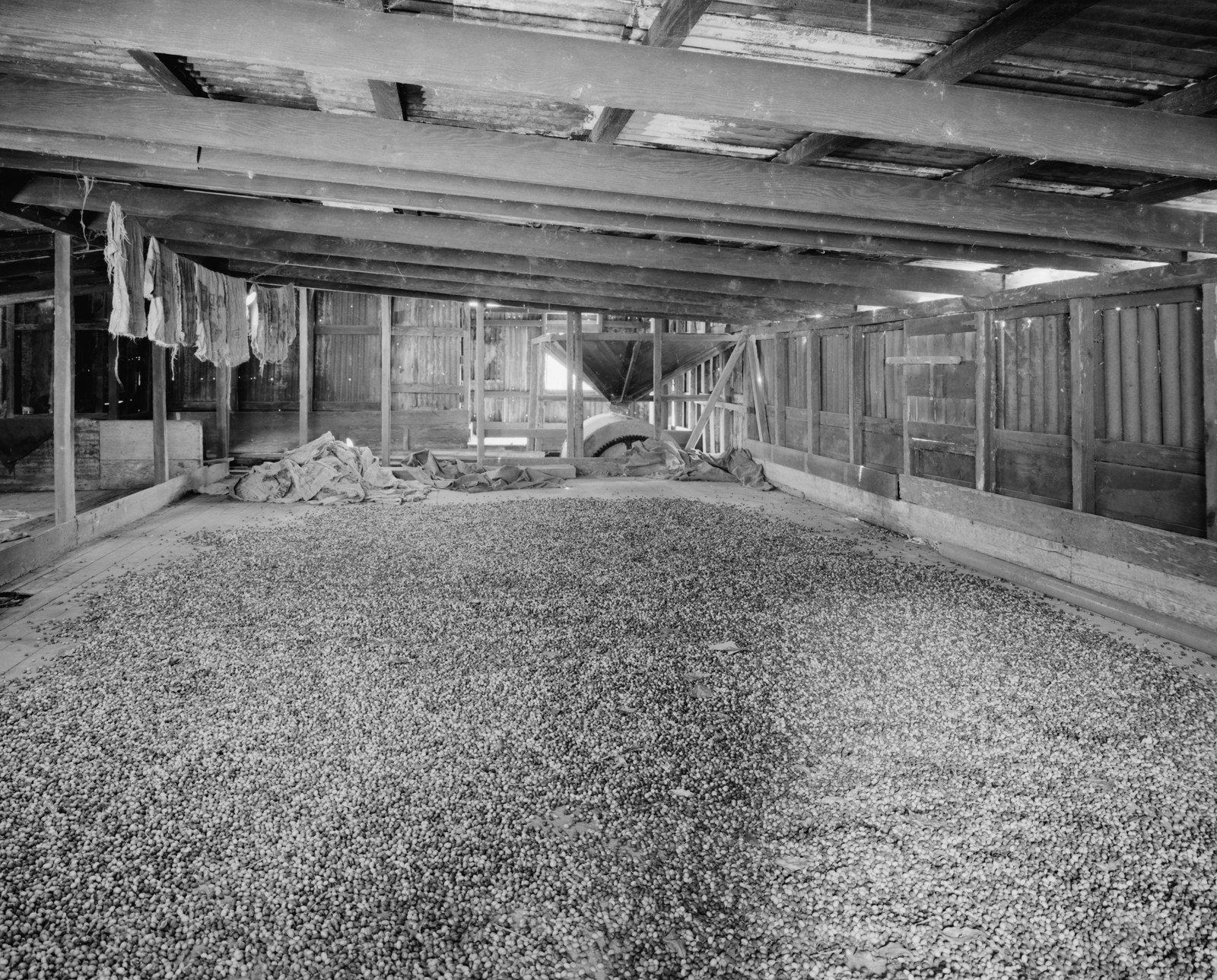
Coffee beans drying on the third floor of the Santaella coffee processing site, Maraguez, Ponce, Puerto Rico, with a hopper and drum-type dryer behind. Photo: Historic American Engineering Record (HAER PR-48-9), Library of Congress, Prints & Photographs Division.
To apply for the specialty mark, an applicant gives the farm's size and location and authorises inspection, and the lot to be certified is cupped. Any establishment that uses the specialty mark in its promotion may be inspected at any time, without notice, by the Department of Agriculture and DACO, and the regulation provides for fines and for cancelling the licence. Neither regulation's legal basis cites Ley 78; both rest on earlier laws, among them Reorganization Plan No. 4 of 26 July 2010. In Reglamento 9173, the word "Oficina" refers to the Department's Oficina de Compra y Venta de Café. The Department's 2024 transition report lists both regulations as active.
Labelling Rules
The Department of Agriculture's Reglamento 2454, approved on 24 November 1978, sets labelling rules for coffee. Coffee or coffee products prepared in Puerto Rico from imported coffee must be labelled as foreign coffee or as made with foreign coffee. Where coffee produced in Puerto Rico has not been used entirely, the label may not carry any design, map, symbol, name, allusion or words that could associate the product with Puerto Rico. Advertising for coffee prepared outside Puerto Rico must state its origin and where it was prepared. Its later amendments, Reglamentos 2926 of 1982 and 3717 of 1989, leave the wording of these rules unchanged; 3717 exempts from the whole regulation coffee packed in sachets of up to one sixth of an ounce, given free for the exclusive use of hotel and guest-house clients and not displayed for sale. DACO's Reglamento 8578 of 13 April 2015 requires the package or label to state the percentage of Puerto Rico coffee, the percentage of imported coffee and the blend. DACO's 2026 coffee price order was issued under the same regulation.
Plans for New Origin Marks
In December 2025 the Secretary of Agriculture told Platea PR that he sought legislation in 2026 to create three origin marks, for crops, livestock and fisheries. He cited confusion among coffee buyers about where their coffee comes from.
Yauco Selecto Is a Brand
Yauco Selecto is a brand, not a designation: no Puerto Rico law or regulation read for this article names it. In the United States it is registered as an ordinary trademark on the Supplemental Register, registration 1,750,885, filed on 31 July 1991 and registered on 2 February 1993, with a claimed first use on 27 December 1990. This encyclopedia found no published standards, certifying authority or altitude rule governing use of the name.
How Other Coffee Origins Protect Their Names
The U.S. Patent and Trademark Office (USPTO) says there was no need for a separate U.S. system for geographical indications: most are protected under the trademark law as certification and collective marks indicating regional origin, and common-law rights may also apply. In the USPTO records searched for this article, no coffee-origin certification or collective mark for Puerto Rico was found, live or dead, and no application for one.
Watch: Explained: How to Protect Geographical Indications — World Intellectual Property Organization – WIPO
Café de Colombia is a protected geographical indication in the European Union under Regulation (EC) No 1050/2007 of 12 September 2007, in force since 3 October 2007. In the United States, the certification mark COLOMBIAN, registration 1,160,492 of 1981, is owned by the Republic of Colombia. In Jamaica, regulations of 2018 define Jamaica Blue Mountain Coffee as coffee grown in the Blue Mountain area, an area marked out by a boundary of named places. Without written authorisation from the Jamaica Agricultural Commodities Regulatory Authority, they forbid buying, selling or exporting, under a name containing the words "Blue Mountain" or "High Mountain", any coffee other than Jamaica Blue Mountain Coffee, Jamaica Blue Mountain Blend Coffee, Jamaica High Mountain Supreme Blend Coffee or Jamaica High Mountain Supreme Coffee, and any export of coffee that uses those words; the fine on summary conviction is up to two million dollars. The U.S. certification mark for Jamaica Blue Mountain coffee, registered in 1986, had a cancellation proceeding pending before the Trademark Trial and Appeal Board when this encyclopedia checked it in November 2026. In Hawaii, roasted coffee, instant coffee or ready-to-drink coffee beverages labelled or advertised with a geographic origin such as Kona must contain at least 10 percent coffee by weight from that origin until 30 June 2027 and, under Act 198 of 2024, at least 51 percent from 1 July 2027. The identity statement "Kona Coffee" or "100% Kona Coffee", or similar terms, may be used only when the package contains 100 percent coffee by weight from that origin, and "100% KONA COFFEE" is a certification mark of the Hawaii Department of Agriculture. In October 2026 the European Union entered "Café Antigua", from Guatemala, in its register as a protected geographical indication, under Regulation (EU) 2026/2301, in force from 4 November 2026. Ethiopia registered SIDAMO, HARAR, HARRAR and YIRGACHEFFE as ordinary trademarks of its government in the United States between 2006 and 2008.
What the Rules Mean for Buyers and Growers
For buyers: under Reglamento 2454, outside the sachet exemption, coffee not made entirely from Puerto Rico coffee may not carry names or symbols that could associate it with Puerto Rico; under DACO's Reglamento 8578, the label must state the percentages of Puerto Rico and imported coffee. When used by a person authorized by the certifier, the HECHO EN PUERTO RICO certification mark (U.S. registration 7,292,575) certifies that the goods were manufactured in Puerto Rico; it does not certify where coffee was grown. Under the regulations, a specialty or premium seal must identify the lot, the certified quantity and the certification number. For growers, both marks are voluntary; the specialty mark requires an application with the farm's size and location, an authorisation to inspect, and a cupping test of the lot to be certified. Growers who wish to use either mark should ask the Department of Agriculture what its current procedure is.
Key Facts
- Café de Puerto Rico: in law, coffee 100 percent harvested in Puerto Rico with no imported coffee (Ley 78 of 2019).
- Denomination of origin: created by Ley 232 of 22 December 2015; repealed by Ley 78 of 27 July 2019.
- Certification marks: "Café Especialidad o Specialty" (Reglamento 9173, 2020; 80 points or more) and "Café Premium" (Reglamento 9208, 2020; 75 to 79 points), voluntary, for use only under a Department of Agriculture licence.
- Labels: Reglamento 2454 of 1978 (Department of Agriculture) and Reglamento 8578 of 2015 (DACO).
- Yauco Selecto: a brand, registered as an ordinary U.S. trademark in 1993.
Frequently Asked Questions
Does Puerto Rico have a denomination of origin for coffee? Ley 232 of 2015 created one, and Ley 78 of 2019 repealed it.
What does "Café de Puerto Rico" mean? Under Ley 78 of 2019, coffee 100 percent harvested in Puerto Rico, with no imported coffee and nothing other than coffee added.
Is Yauco Selecto an official designation? No Puerto Rico law or regulation read for this article names it; it is a brand, registered in the United States as an ordinary trademark.
Can a blend with imported coffee be sold as Puerto Rican coffee? DACO requires the label to state the percentages of Puerto Rico and imported coffee, and the Department of Agriculture's rules bar names or symbols that could associate a product not made entirely from Puerto Rico coffee with Puerto Rico.
Is there an official seal for Puerto Rican coffee? The Department of Agriculture's regulations provide for two voluntary certification marks, for specialty and premium coffee; this encyclopedia found no record that a licence for either has been issued.
Sources
Puerto Rico laws and regulations
- LexJuris de Puerto Rico (private legal publisher), Ley Núm. 78 de 2019 -Para crear la “Oficina de Cafés de Puerto Rico”., 27 July 2019 - Ley 78-2019: the definition of Café de Puerto Rico, specialty coffee, the Oficina de Cafés, its regulation and seal duties, the certified mark, the repeal of Ley 232.
- Oficina de Gerencia y Presupuesto (OGP), Biblioteca Virtual, Ley de la "Oficina de Cafés de Puerto Rico" [Ley 78-2019], 27 July 2019, compilation revised 16 April 2024 (copy saved 27 October 2026) - OGP's compiled copy; no amendment recorded.
- Oficina de Gerencia y Presupuesto (OGP), Biblioteca Virtual, "Ley de Denominación de Origen del Café Puertorriqueño" [Ley 232-2015], 22 December 2015, compilation revised 15 April 2024 (copy saved 27 October 2026) - the 2015 denomination of origin, its quality standards, the waiver and WIPO; marked repealed by Ley 78-2019.
- Departamento de Agricultura de Puerto Rico, Reglamento Núm. 9173, Reglamento para el Registro de Marca de Certificación de Café Especialidad o "Specialty", filed 12 March 2020 - the specialty mark: definitions, legal basis, licence, 80 points, the lot seal, the application, inspection, fines.
- Departamento de Agricultura de Puerto Rico, Reglamento Núm. 9208, Reglamento para el Registro de Marca de Certificación de Café Premium, filed 10 August 2020 - the premium mark: legal basis, licence, 75 to 79 points, the lot seal.
- Departamento de Agricultura de Puerto Rico, Reglamento Núm. 2454, Reglamento para regir el mercadeo de café o productos de café en el Estado Libre Asociado de Puerto Rico, approved 24 November 1978 - labelling of imported coffee, names or symbols linked to Puerto Rico, advertising.
- Departamento de Agricultura de Puerto Rico, Reglamento Núm. 2926, Enmiendas a los incisos A y D del Artículo III; al apartado 7 del inciso C del Artículo IV del "Reglamento para regir el mercadeo de café o productos de café en el Estado Libre Asociado de Puerto Rico", aprobado el 24 de noviembre de 1978, approved 18 October 1982 - amends Articles III and IV of Reglamento 2454.
- Departamento de Agricultura de Puerto Rico, Reglamento Núm. 3717, Adicionando un nuevo apartado 5 al inciso E del Artículo III y adicionando un nuevo inciso F al referido Artículo III; adicionando un nuevo Artículo XI y reenumerando los actuales Artículos XI, XII y XIII como Artículos XII, XIII y XIV, respectivamente, del "Reglamento para regir el mercadeo de café o productos de café en el Estado Libre Asociado de Puerto Rico", aprobado el 24 de noviembre de 1978, según enmendado, filed 25 January 1989 - amends Reglamento 2454: the sachet exemption.
- Departamento de Asuntos del Consumidor (DACO), Reglamento Núm. 8578, Reglamento para el Control de Precios del Café, filed 13 April 2015 - the percentages of Puerto Rico and imported coffee on the label.
- Departamento de Asuntos del Consumidor (DACO), Orden Núm. 2026-007, 2 October 2026 - issued under Reglamento 8578.
Agencies and official records
- Departamento de Agricultura de Puerto Rico, Informe de Transición 2024, Reglamentos, memorandos, circulares y normas propias de la agencia o corporación pública vigentes al momento de la transición, undated (copy saved 27 October 2026) - Reglamentos 9173 and 9208 listed as active, Reglamento 2454 as amended ("Enmendado").
- Departamento de Agricultura de Puerto Rico, Informe de Transición 2024, Ponencia Informe Transición del DAPR y sus agencias adscritas, undated (copy saved 27 October 2026) - the Department's 2024 account of its coffee work, including its cupping laboratory; it does not name either certification mark.
- U.S. Patent and Trademark Office (USPTO), Geographical indications, last updated 17 July 2024 - how the United States protects geographical indications.
- U.S. Patent and Trademark Office (USPTO), Trademark Search, results of the searches made for this article, undated (copy saved 27 November 2026) - no coffee-origin certification or collective mark for Puerto Rico found; the HARRAR registration.
- U.S. Patent and Trademark Office (USPTO), Trademark Status and Document Retrieval, YAUCO SELECTO, serial 74190130, page generated 27 November 2026 - an ordinary trademark on the Supplemental Register; filing, registration and claimed first-use dates.
- U.S. Patent and Trademark Office (USPTO), Trademark Status and Document Retrieval, COLOMBIAN, serial 73199563, page generated 27 November 2026 - a certification mark of the Republic of Colombia.
- U.S. Patent and Trademark Office (USPTO), Trademark Status and Document Retrieval, JAMAICA BLUE MOUNTAIN COFFEE, serial 73503906, page generated 27 November 2026 - the certification mark of 1986 and its pending cancellation proceeding.
- U.S. Patent and Trademark Office (USPTO), USPTO TTABVUE. Trademark Trial and Appeal Board Inquiry System, results as of 27 November 2026 - cancellation No. 92092464.
- U.S. Patent and Trademark Office (USPTO), Trademark Status and Document Retrieval, 100% KONA COFFEE, serial 75397103, page generated 27 November 2026 - a certification mark of the Hawaii Department of Agriculture.
- U.S. Patent and Trademark Office (USPTO), Trademark Status and Document Retrieval, SIDAMO, serial 78589307, page generated 27 November 2026 - an ordinary trademark of the Government of Ethiopia.
- U.S. Patent and Trademark Office (USPTO), Trademark Status and Document Retrieval, HARAR, serial 78589319, page generated 27 November 2026 - an ordinary trademark of the Government of Ethiopia.
- U.S. Patent and Trademark Office (USPTO), Trademark Status and Document Retrieval, YIRGACHEFFE, serial 78589325, page generated 27 November 2026 - an ordinary trademark of the Government of Ethiopia.
- Hawaii State Legislature, §486-120.6 Hawaii-grown and Hawaii-processed coffee; labeling or advertising requirements., undated, amended to Act 198 of 2024 (copy saved 27 November 2026) - the 10 and 51 percent rules and the "100%" origin statement.
- Hawaii State Legislature, Session Laws of Hawaii 2024, Act 198, H.B. No. 2298, A Bill for an Act Relating to Consumer Protection, approved 3 July 2024 - the 51 percent rule from 1 July 2027.
Other countries
- European Commission, eAmbrosia (EU geographical indications register), Café de Colombia, undated (registration date 13/09/2007) - a protected geographical indication, file PGI-CO-0467.
- Official Journal of the European Union (EUR-Lex), Commission Regulation (EC) No 1050/2007 of 12 September 2007 registering certain names in the Register of protected designations of origin and protected geographical indications (Mejillón de Galicia or Mexillón de Galicia (PDO) — Café de Colombia (PGI) — Castagna Cuneo (PGI) — Asparago Bianco di Bassano (PDO)), 12 September 2007 (copy saved 27 November 2026) - the registration of Café de Colombia and its entry into force.
- European Commission, eAmbrosia (EU geographical indications register), Café Antigua, undated (registration date 15/10/2026) - a protected geographical indication from Guatemala.
- Publications Office of the European Union, Commission Implementing Regulation (EU) 2026/2301 of 8 October 2026 on the registration of the geographical indication ‘Café Antigua’ (PGI) in the Union register of geographical indications pursuant to Regulation (EU) 2024/1143 of the European Parliament and of the Council, 8 October 2026 (copy saved 27 November 2026) - the registration of Café Antigua and its entry into force.
- Legal Information Portal of Jamaica (Jamaica Gazette Supplement No. 16A), The Jamaica Agricultural Commodities Regulatory Authority Regulations, 2018, made 10 January 2018, Gazette of 2 March 2018 - Jamaica Blue Mountain Coffee, the Blue Mountain area, the rule on the name, the fine.
Other sources
- Platea PR, Nueva marca de Denominación de Origen: el plan de Agricultura para identificar productos 100% boricuas, 10 December 2025 - news report of the Secretary of Agriculture's plan.
- World Coffee Research, World Coffee Research | fronton, undated - Frontón found primarily in Puerto Rico.
Claims this encyclopedia could not source
- That a licence for the specialty or premium mark has been issued, or that either seal is in use today.
- How the Department of Agriculture's 1978 labelling rule and DACO's percentage rule apply together on a single label.
- Whether the legislation for origin marks sought in December 2025 has been filed.
- That the Limaní and Frontón varieties are grown nowhere else; World Coffee Research describes Frontón as found primarily in Puerto Rico.
- That Hacienda Caracolillo was the principal producer of Yauco Selecto coffee, or that its farm covers 240 acres.
- That Yauco Selecto lots commanded some of the highest prices in specialty coffee.
- That Puerto Rico has sought protection for Café de Puerto Rico in the European Union.
Related Articles
- Yauco: Puerto Rico's Crown Coffee Region
- Puerto Rico Coffee Today: The 2026 State of the Industry
- Maricao: Where Coffee Meets the Cloud Forest
- The Golden Age of Puerto Rican Coffee (1800-1898)
- Puerto Rico Coffee Renaissance (1950-Present)
- Limaní and Frontón: Two Rust-Resistant Coffees Selected in Puerto Rico
- Coffee Cupping: The Professional Tasting Method
- The Oficina de Cafés de Puerto Rico: How the Island Regulates, Protects, and Develops Its Coffee Industry
- Puerto Rico Coffee Grades: Specialty, High Mountain Grown, and the SCA Scale
- Yauco Selecto: The Premium Puerto Rico Coffee Brand
Buy Authentic Puerto Rico Coffee
Support Puerto Rico's coffee farmers by choosing authentic Puerto Rican coffee. Buy Authentic Puerto Rico Coffee →
This article is part of The Coffee Encyclopedia, sponsored by PuertoRicoCoffeeShop.com — the trusted source for authentic Puerto Rican coffee.